TL;DR
The generative era has moved beyond chatbots and into the high-stakes world of Enterprise AI. By 2026, success will depend on integrating multi-modal models into existing workflows to generate real corporate revenue.
Industry giants like Google, OpenAI, and Meta are locked in a fierce battle for model supremacy, facing significant physical constraints like power gridlock and storage limits. The future belongs to autonomous agents capable of managing complex tasks securely.
As massive shifts disrupt offshore labor and professional services, businesses must adapt quickly. A unified API approach is the most effective way to navigate energy crises and regulatory hurdles.
The honeymoon phase of the generative era is officially over. We are no longer just marveling at a chatbot that can write a mediocre sonnet about a toaster.
As we look toward 2026, the industry is pivoting from curiosity to a brutal, high-stakes competition for utility. The metrics have shifted from "how many parameters" to "how much revenue."
This is the era of Enterprise AI, where the theoretical potential of a model meets the hard reality of a corporate balance sheet. The winners will not just be the fastest models, but the ones that fit into existing workflows.
For those watching the markets, the noise is deafening. Skeptics on forums point to a bubble, while investors see a production revolution. Here is the blueprint for the next twenty-four months of disruption.
The Battle for Model Supremacy: Why Enterprise AI is Moving Beyond Chatbots
Google was once considered the laggard of the race. However, the release of Gemini 3 has fundamentally flipped the script on who owns the user heart and mind.
While ChatGPT remains the default for text-heavy tasks, Google has built a formidable wall in the multi-modal space. Users are increasingly switching to Gemini for visual search and object identification.
This shift matters because Enterprise AI requires more than just a text interface. It requires a system that can see, hear, and understand the physical world in real time.
Google is leveraging its existing ecosystem to ensure its API becomes the connective tissue of the modern office. If you are already in Workspace, the friction to stay is nearly zero.
Google Gemini and the New Multi-Modal Moat
Research shows that while 60% of users prefer ChatGPT for writing, nearly half are switching to Google for complex multi-modal tasks. This behavior is a clear signal of intent.
Google is also solving the monetization puzzle by integrating its model into the traditional search engine. Early tests show a 30% increase in ad click-through rates within AI modes.
By using generative content to improve the relevance of ads, the company is proving that this technology can enhance, rather than cannibalize, its core business model.
This strategy allows them to offer a more robust API for developers who need to build visual tools. It is a long-term play for the infrastructure of the internet.
OpenAI and the 2026 Compute Breakout
OpenAI is currently navigating a period of perceived stagnation. This is not a failure of research, but a temporary bottleneck caused by a shortage of specialized silicon.
As supply chains normalize and Nvidia Blackwell architecture goes live, we expect a massive surge in capability. OpenAI will likely break through current limits by early 2026.
The company still commands a massive user base of 900 million monthly active users. This scale provides a data feedback loop that is incredibly difficult for smaller players to replicate.
To maintain its lead, OpenAI must pivot toward more aggressive monetization through its API. The focus will likely shift from consumer chat toward deep integration within the Enterprise AI stack.
- Google's Edge: Integrated multi-modal workflows and massive existing search data.
- OpenAI's Edge: Massive user loyalty and a potential compute explosion in 2026.
- The Risk: High inference costs and the threat of user fatigue if the API experience remains inconsistent.
Monetizing the Machine: Meta and the Rise of Enterprise AI Profits
Meta is emerging as the unexpected hero of the ROI story. While other giants are still burning cash, Mark Zuckerberg’s company is already seeing tangible financial returns.
By applying Llama-based models to its ad engine, Meta has increased ad conversion rates by up to 5%. This sounds small but translates into billions in annual revenue.
The company is pursuing a "World Model" strategy. Unlike text-only paths, Meta wants to segment every part of an image or video to help machines understand human intuition.
This approach makes their API particularly valuable for creators and marketers. They are building a system that doesn't just predict words, but understands the visual physics of social engagement.
Anthropic and the Quiet Professionalization of Large Language Models
Anthropic is often the quietest voice in the room, but they are winning the Enterprise AI war in the boardroom. Their focus is on "Skills" rather than just parameters.
Rather than chasing the consumer hype cycle, they have built tools that fix the practical flaws of LLMs. This makes them a favorite for highly regulated industries.
Financial services and legal firms prefer a reliable API over a flashy one. Anthropic’s engineering focus on "scaffolding" allows businesses to deploy models into production with higher confidence.
Their growth suggests that the market is bifurcating. There is a "consumer AI" for fun and a "professional AI" for work that actually requires high-fidelity output.
Meta and the 60 Billion Dollar Ad Engine
Meta’s run-rate for AI-powered revenue is approaching the $60 billion mark. This proves that the technology is already a massive force in the digital economy.
The company is also challenging the core business of Google. As TikTok expands its influence, the competition for the ad-dollar is forcing Meta to innovate at a breakneck pace.
Their commitment to open-source models ensures that their API remains the most accessible for developers. This ecosystem-building is a defensive moat against the closed-garden players.
By lowering the barrier to entry, they ensure that Llama becomes the industry standard for on-premise Enterprise AI deployments. This is a classic "Windows" vs "Mac" strategy.
| Company | Primary Strategy | Key Metric |
|---|---|---|
| Meta | Ad optimization & Open Source | $60B Annualized Potential |
| Anthropic | B2B Reliability & "Skills" | High Enterprise Retention |
| TikTok | Content & E-commerce Integration | $50B Projected 2025 Profit |
The Physical Wall: How Power and Storage Dictate Enterprise AI Growth
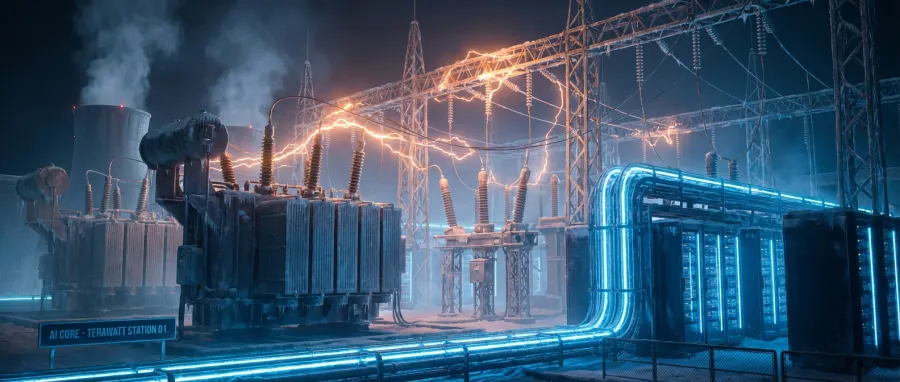
The biggest threat to the growth of Enterprise AI isn't a lack of ideas. It is a lack of electricity. We are hitting a physical wall in data center expansion.
In 2026, the narrative will shift from "who has the best model" to "who has the most power." Grid instability is already halting projects in major tech hubs.
This energy crisis is creating a massive market for microgrids and energy storage solutions. Companies like CATL are becoming as vital to the tech stack as Nvidia.
Without a stable power supply, even the most efficient API is useless. The industry must now solve a century-old infrastructure problem to keep the digital lights on.
The Storage Super-Cycle: From DRAM to NAND
Storage is the silent engine of the generative revolution. As models move to the edge, the demand for DRAM and NAND is entering a massive super-cycle.
Enterprise AI requires local memory to handle the sheer volume of data being processed. This is especially true for video generation and high-context multi-modal tasks.
Storage manufacturers have formed an "alliance of profit," focusing on margins over market share. This means hardware costs will likely remain high for the foreseeable future.
Companies that can optimize their API to run on less memory will have a massive competitive advantage. Efficiency is the new currency in the world of high-scale silicon.
Power Gridlock and the Energy Crisis
The demand for power is "unpressable." As Nvidia hosts summits with energy giants, it’s clear that the tech world is merging with the utilities sector.
The structural mismatch between data center growth and grid capacity is a ticking time bomb. This will likely drive a massive move toward on-site renewable energy.
Developers looking for a reliable API must consider the infrastructure resilience of their provider. A model is only as good as the uptime of its regional data center.
This is where platforms like GPT Proto provide essential value. By offering unified access to multiple providers, they mitigate the risk of localized infrastructure failures.
"In 2026, the real battle isn't for the smartest model; it’s for the most reliable socket in the wall. Power is the ultimate constraint."
Managing these costs is becoming the primary job of the CTO. Using a unified platform to monitor usage and switch models based on pricing is no longer optional.
With flexible pay-as-you-go pricing, businesses can scale their operations without getting trapped in a single provider's energy-taxed ecosystem.
The ability to route traffic to the most cost-efficient model in real-time is the "smart grid" of the software world. It’s about surviving the inflation of compute.
This logic chain will also pass benefits to upstream commodities, especially copper and lithium. The demand logic for lithium is undergoing a switch from the "Electric Vehicle (EV) Era" to the "Energy Storage Era," with both lithium and copper mines currently at the relative bottom of their cycles.
The Death of the App: Scaling Enterprise AI Through Autonomous Agents
We are approaching a "cliff" in how we interact with software. The traditional concept of an "app" is beginning to feel like a relic of the past.
By 2026, we will stop talking about apps and start talking about Agents. These are not just chatbots; they are autonomous entities that can execute complex tasks.
An agent doesn't just tell you about a flight; it books it, manages the expense report, and updates your calendar. It requires deep system-level permissions and trust.
This transition will be the most significant change in user interface history since the introduction of the smartphone. The API is the new front door.
Operating Systems vs. Super-Apps
Apple and Google hold a massive advantage here because they own the operating system. They have the permissions to allow an agent to look at your photos and email.
Internet giants like ByteDance are trying to "break the table" by launching their own hardware, like the Doubao AI phone. They want to bypass the OS limits.
This creates a conflict between privacy and utility. An agent needs to know everything to be useful, but users are rightfully wary of total data surveillance.
The winner will be the one who can provide a "Safe API" that handles compliance and privacy at the architectural level. Security is the product, not a feature.
The Regulation and Safety Interface
As the industry explodes, regulators are struggling to keep up. We expect a "Black Swan" event—a major safety breach—to trigger a massive regulatory crackdown.
This will lead to the rise of authorized "Compliance Providers." Big tech firms may be forced to use a government-vetted API to filter and monitor model outputs.
For a company deploying Enterprise AI, navigating this regulatory maze is a nightmare. This is why standardized interfaces are becoming the gold standard for developers.
By using a platform like GPT Proto, developers can access high-performance models while maintaining a single point of control for their security protocols.
- Phase 1: Simple chat assistants that provide information.
- Phase 2: Multi-step agents that can perform tasks within a single app.
- Phase 3: Cross-platform agents that manage an entire digital life or business workflow.
- Phase 4: Physical agents (robotics) that interact with the real world using World Models.
The financial world is already seeing this shift. Redditors warn that finance roles are being decimated by systems that can rebalance portfolios with perfect efficiency.
The "blood bath" in professional services like accounting and legal research is already underway. If a job involves drafting documents, an agent can do it faster.
This displacement is creating a massive demand for new skills. Those who can manage the API and orchestrate these agents will be the new power brokers.
The long-term vision, however, remains a world where Agent services are ubiquitous, and the "Island Effect" of siloed apps is finally bridged by cross-platform, multi-agent coordination.

Real-World Impacts: From Robotaxis to Prediction Markets
Tesla’s Robotaxi is the ultimate physical manifestation of this trend. With an estimated cost of $30,000 per car, the ROE could dwarf the traditional car business.
The model is simple: a car that makes money while you sleep. However, the software must reach human-level safety before the regulators allow it to scale.
On the digital side, we are seeing the rise of rational prediction markets. Platforms like Polymarket are moving from gambling to sophisticated risk hedging.
When an agent can analyze vast amounts of data to predict the price of lunch or a geopolitical event, it changes how individuals manage their micro-economies.
The Disruption of Offshoring and Professional Services
The impact on countries like India and the Philippines will be "massive and fast." Many offshoring roles are essentially human-powered APIs for data entry and basic coding.
As Enterprise AI becomes cheaper than a human salary in the developing world, the economic geography of the planet will shift back toward the centers of compute.
This isn't just about cost; it’s about speed. A model can draft a legal brief in seconds, whereas an offshore team takes twenty-four hours for the same task.
Companies that survive this transition will be those that integrate the technology to boost productivity by 20x, rather than just cutting staff to save 20%.
The Future of Creativity and Collaboration
There is a growing concern that the "robot making everything" is ruining the process of human creativity. The internet is already feeling more clinical and less human.
However, many see these tools as a way to solve massive scientific problems, like protein folding and cancer research. The utility outweighs the aesthetic cost.
The most successful creators in 2026 will be those who use the API to handle the drudgery, leaving the high-level conceptual work to the human brain.
It is a partnership, not a replacement. The "Nano Banana" moment for video editing is coming, where anyone can produce studio-quality content from their bedroom.
To stay ahead of these trends, staying informed is critical. You can follow the latest AI industry updates to see how these predictions unfold in real time.
As we move toward a world of fragmented models and specialized agents, the winners will be the ones who can synthesize it all into a single, cohesive strategy.
The infrastructure is ready. The models are maturing. The only question left is how quickly your business can adapt to the new reality of the generative economy.
Original Article by GPT Proto
"Unlock the world's top AI models with the GPT Proto unified API platform."