qwen plus/text to text is a sophisticated large language model developed by Alibaba Cloud, belonging to the renowned Qwen family. As a mid to high tier model, it strikes an optimal balance between reasoning capabilities and computational efficiency. Designed for complex text generation and understanding, qwen plus/text to text excels in multilingual processing, particularly in Chinese and English contexts. It differentiates itself through robust logical reasoning, mathematical proficiency, and code generation. Whether used for automated content creation or intricate data analysis, qwen plus/text to text provides a reliable and scalable solution for developers seeking enterprise-level performance without the latency of larger flagship models.
Unlock qwen plus/text to text API: The Ultimate Integration on GPT Proto
GPT Proto provides seamless access to qwen plus/text to text, empowering developers with enterprise-grade AI capabilities for diverse text processing needs. Explore our full model catalog and find the perfect solution for your next project.
Core Capabilities That Transform Your Development Workflow
The qwen plus/text to text model represents a significant advancement in the Qwen family, offering a refined balance of reasoning power and operational speed. It is engineered to handle complex prompts that require deep linguistic understanding and logical consistency over long contexts. Developers choose qwen plus/text to text for its exceptional performance in bilingual environments, where it maintains high accuracy in both English and Chinese. Its underlying architecture is optimized to minimize hallucinations, ensuring that generated content remains factual and contextually grounded. By integrating this model through GPT Proto, you gain a stable environment for building applications that require sophisticated text generation and analysis.
Streamlined API Integration for Production Applications
Integrating qwen plus/text to text into your existing software stack is effortless with our unified API. Developers can quickly implement features like automated summarization or intelligent chatbots by following our developer documentation. The API is designed for high availability and low latency, ensuring your production apps remain responsive under load.
Enterprise-Grade Reliability and Performance Optimization
Reliability is at the core of the qwen plus/text to text experience on GPT Proto. We ensure that your API calls are handled with priority, providing the uptime necessary for business-critical applications. The model's ability to handle intricate instructions makes it ideal for tasks like code generation and complex data extraction where precision is non-negotiable.
qwen plus/text to text on GPT Proto offers a powerful and cost-effective solution for developers who demand high-tier reasoning without the complexity of managing their own infrastructure.
Why Developers Choose GPT Proto for API Integration
GPT Proto simplifies the management of advanced models like qwen plus/text to text by providing a centralized dashboard and transparent billing. You can monitor your API performance and token usage in real-time, allowing for better resource allocation. Our detailed documentation ensures that you can get started in minutes, regardless of your preferred programming language.
Feature
Standard Models
qwen plus/text to text on GPT Proto
Response Speed
Moderate
Highly Optimized
Context Length
Limited
Extended Support
Bilingual Accuracy
Basic
Superior (CN/EN)
Reasoning Logic
Standard
Advanced Logical Flow
Transparent Pricing and Getting Started in Minutes
Our pricing model is built on transparency and flexibility, using a direct fund-based system. You can easily Top-up Balance to begin using qwen plus/text to text immediately without worrying about hidden subscription fees. Monitor your detailed consumption and manage your API keys through the centralized dashboard for complete control.
Ready to elevate your application with world-class AI? Start your journey today and explore more insights and tutorials on our official blog.
Build with qwen plus in Minutes
Follow these simple steps to set up your account, get credits, and start sending API requests to qwen plus via GPT Proto.
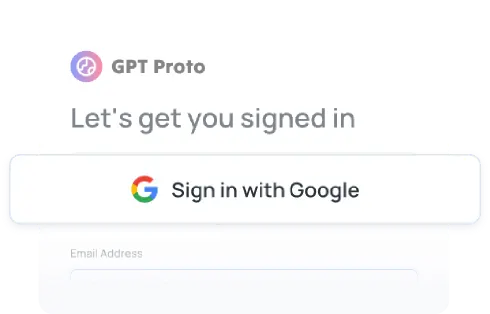
Sign up
Create your free GPT Proto account to begin. You can set up an organization for your team at any time.
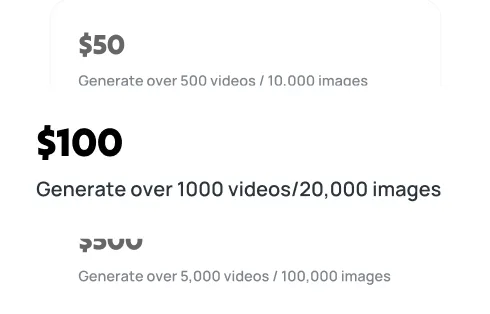
Top up
Your balance can be used across all models on the platform, including qwen plus, giving you the flexibility to experiment and scale as needed.
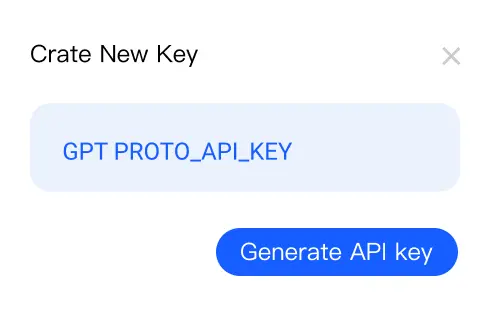
Generate your API key
In your dashboard, create an API key — you'll need it to authenticate when making requests to qwen plus.
Make your first API call
Use your API key with our sample code to send a request to qwen plus via GPT Proto and see instant AI-powered results.
qwen plus/text to text is an advanced large language model from Alibaba Cloud's Qwen series, specifically engineered to handle complex linguistic tasks with high precision. This model serves as a enhanced version within the family, offering a substantial leap in reasoning and knowledge retrieval compared to the turbo variants. It utilizes a sophisticated transformer architecture optimized for both understanding and generating human-like text across a wide array of domains. On the GPT Proto platform, qwen plus/text to text is frequently selected by developers who require a model that can follow intricate instructions while maintaining high throughput. Its architecture is fine-tuned to balance deep semantic understanding with practical execution speeds, making qwen plus/text to text a versatile tool for modern AI applications that demand both intelligence and reliability in a production environment.
What can qwen plus/text to text do?
The capabilities of qwen plus/text to text span across diverse text-based functions, including creative writing, technical documentation, and complex logical reasoning. It is particularly adept at summarizing long documents, translating languages with high cultural nuance, and generating functional code snippets in various programming languages. Furthermore, qwen plus/text to text can perform sentiment analysis, extract structured data from unstructured text, and engage in multi-turn dialogues that require consistent context retention. Developers often leverage qwen plus/text to text for building intelligent chatbots that need to handle professional inquiries with accuracy. Its ability to process mathematical problems and provide step-by-step explanations adds another layer of utility for educational tools. By using qwen plus/text to text on GPT Proto, users can automate repetitive writing tasks while ensuring the output remains coherent and contextually relevant to the specific needs of their target audience or industry.
Which company or team developed qwen plus/text to text?
qwen plus/text to text was developed by Alibaba Cloud, the cloud computing arm of the Alibaba Group. The dedicated research team behind the Qwen family focuses on advancing large-scale pre-training techniques and alignment algorithms to ensure the models are both powerful and safe for public use. Alibaba Cloud has a long-standing history of innovation in artificial intelligence, aiming to provide accessible AI infrastructure for global enterprises. The development of qwen plus/text to text represents their commitment to creating models that excel in bilingual environments, especially for users requiring high performance in Mandarin and English. This team continuously updates the model to improve its factual accuracy and reasoning logic based on massive datasets and user feedback. Integrating qwen plus/text to text through GPT Proto allows users to tap into this world-class engineering expertise via a simplified and stable API gateway.
How does qwen plus/text to text differ from GPT, Claude, or Gemini?
While models like GPT, Claude, and Gemini are world-class, qwen plus/text to text offers unique advantages, particularly in its optimization for East Asian languages alongside English. Compared to GPT-4, qwen plus/text to text often demonstrates faster inference times for similar levels of reasoning complexity, making it more cost-effective for high-volume tasks. Claude is known for its safety and long context, but qwen plus/text to text provides a very competitive performance in logical structured output and coding tasks. Gemini focuses heavily on Google ecosystem integration, whereas qwen plus/text to text is designed as a flexible, cloud-agnostic powerhouse available through platforms like GPT Proto. The primary differentiator is the model's specialized training on diverse datasets that enhance its performance in specific regional contexts and technical domains. Choosing qwen plus/text to text often comes down to its superior balance of localized linguistic excellence and general-purpose intelligence.
What are the main application scenarios for qwen plus/text to text?
Main application scenarios for qwen plus/text to text include enterprise knowledge management, automated customer support, and localized content marketing. In the corporate sector, it is used to parse internal documents and generate insightful reports or summaries. For e-commerce, qwen plus/text to text helps generate product descriptions and handle customer inquiries in multiple languages, improving global reach. Software development teams use it as a coding assistant to debug or refactor scripts efficiently. Additionally, qwen plus/text to text is highly effective in the education sector for creating personalized tutoring content or grading assistance. Its ability to handle structured data makes it ideal for financial analysis where extracting key metrics from news articles is required. By accessing qwen plus/text to text on GPT Proto, businesses can quickly deploy these solutions into their existing software ecosystems with minimal friction and maximum scalability.
Which industries or roles benefit most from qwen plus/text to text?
Industries such as Fintech, E-commerce, Legal Tech, and Education benefit immensely from the precision offered by qwen plus/text to text. Professional roles like Software Engineers find it invaluable for rapid prototyping and documentation, while Marketing Managers use it to scale content production across different demographic segments. Data Analysts leverage qwen plus/text to text to interpret complex qualitative data or to transform raw text into structured formats for further processing. Legal professionals utilize the model for initial document review and drafting standard contracts. In the customer service industry, support leads implement qwen plus/text to text to drive AI-led interactions that feel natural and solve user problems without human intervention. The versatility of qwen plus/text to text makes it a horizontal tool that adapts to the specific terminologies and compliance requirements of almost any professional field, especially when managed through the GPT Proto interface.
How strong is qwen plus/text to text in output quality, creativity, and coding?
In terms of output quality, qwen plus/text to text is consistently ranked among the top tier of mid-size models, showing high fidelity in following complex constraints. Its creativity is evident in its ability to generate varied prose, poetry, and marketing copy that avoids repetitive patterns. For coding, qwen plus/text to text demonstrates strong proficiency in Python, JavaScript, Java, and C++, often providing correct syntax and logical structures for difficult algorithmic problems. The model is also capable of explaining code logic, which is a significant plus for developers using it for peer-review tasks. While it remains a text to text model, its logical foundation allows it to simulate complex workflows and provide creative solutions to engineering bottlenecks. Users on GPT Proto often report that qwen plus/text to text provides a more grounded and less 'hallucinatory' experience than many other models in its class.
How can I call qwen plus/text to text through the API?
Calling qwen plus/text to text through the GPT Proto API is a straightforward process designed for developer convenience. First, you need to create an account on the GPT Proto dashboard and obtain your unique API key. The API follows a standard RESTful architecture, allowing you to send POST requests to the chat completion endpoint. You will specify 'qwen plus' as the model parameter in your request body. GPT Proto provides detailed documentation and SDK examples to help you integrate qwen plus/text to text into your Python, Node.js, or Go applications. The platform handles the underlying infrastructure, ensuring that your requests to qwen plus/text to text are routed through stable, low-latency servers. This unified interface means you can switch between models or scale your usage of qwen plus/text to text without changing your core integration logic, saving significant development time and resources.
How is pricing calculated for qwen plus/text to text?
Pricing for qwen plus/text to text on the GPT Proto platform is calculated based on token consumption, which includes both the input prompt and the generated output. Each request to qwen plus/text to text is metered accurately, and the cost is deducted directly from your account balance. Unlike some platforms that use complex credit systems, GPT Proto uses a transparent direct currency model. This means you can see exactly how much each call to qwen plus/text to text costs in real-time. The rates for qwen plus/text to text are competitive, reflecting its position as a high-performance yet efficient model. Factors such as context length and the number of tokens generated will influence the final price of each interaction. Developers can monitor their usage of qwen plus/text to text through the centralized dashboard to ensure their projects remain within budget while benefiting from enterprise-grade AI performance.
How do I pay for using qwen plus/text to text on GPT Proto?
To pay for using qwen plus/text to text on GPT Proto, you simply need to navigate to the Billing Center within your account dashboard. There, you can choose to Top-up Balance by adding funds via supported payment methods like credit cards or other digital payment gateways. The platform does not use a subscription-based model or 'credits'; instead, you maintain a cash balance that you use as you go. This provides maximum flexibility, as you only pay for the specific amount of qwen plus/text to text resources you consume. Once you add funds, the balance is immediately available for use across all your API calls. Managing your spending for qwen plus/text to text is easy, as the billing section provides detailed transaction logs and usage reports. This direct fund approach ensures there are no hidden fees or expiring points when using qwen plus/text to text.
Does qwen plus/text to text support multimodal input like images or audio?
The current version of qwen plus/text to text is strictly a text to text model, meaning it is specialized for processing and generating written language. It does not natively support direct image uploads or audio files for analysis in the same way a multimodal model like Qwen-VL or GPT-4o would. However, you can still use qwen plus/text to text to process text-based descriptions of images or transcriptions of audio files. Many developers use a separate speech-to-text engine and then pass the resulting text to qwen plus/text to text for reasoning or summarization. While the focus of qwen plus/text to text remains on linguistic excellence, its deep understanding of context makes it a perfect 'brain' for multimodal pipelines where text is the primary medium of instruction and output. GPT Proto offers other specialized models if your project requires native vision or audio processing alongside qwen plus/text to text.
Are there copyright risks when generating content with qwen plus/text to text?
Using qwen plus/text to text for content generation generally follows the industry standard where the user retains ownership of the input and the generated output. Alibaba Cloud and GPT Proto aim to provide a safe environment, but users should always review generated content for accuracy and originality. While qwen plus/text to text is trained on a vast dataset to ensure it produces unique and helpful text, the responsibility for how that content is published or used rests with the user. It is recommended to use qwen plus/text to text as a collaborative tool to augment human creativity rather than a complete replacement for professional review. GPT Proto also includes safety filters to minimize the generation of restricted or harmful content by qwen plus/text to text. Always ensure your use of qwen plus/text to text complies with your local jurisdiction's copyright laws and the platform's terms of service.