Alibaba Cloud AI: Beyond Token Volume to Real Value
As the AI cloud market matures, competition is shifting from raw token volume to full-stack infrastructure and industrial integration. Learn how Alibaba Cloud is leading the move from consumer hype to enterprise utility and why specialized solutions are the key to long-term success.
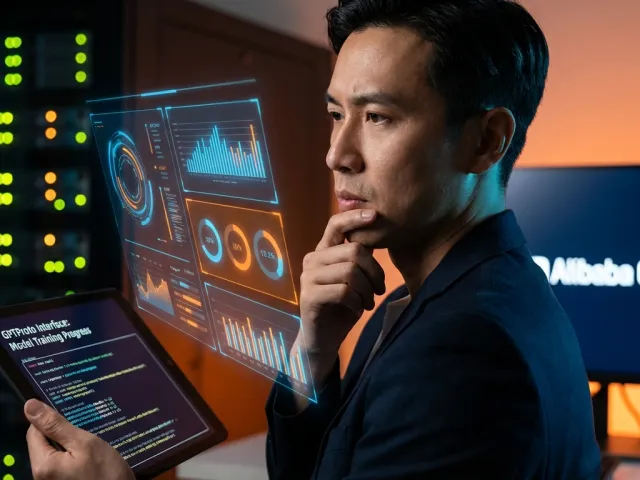
The Evolution of Alibaba Cloud AI Strategy
The digital horizon is transforming rapidly. In the competitive arenas of Silicon Valley and Hangzhou, a singular obsession has dominated recent years: the Token. Within the framework of Large Language Models, the token acts as the currency of digital thought. However, relying on token volume as a success metric is becoming an outdated practice. To understand the true power of Alibaba Cloud AI, we must look beyond these microscopic units of data and focus on the architectural cathedrals being built beneath the surface.
Current data indicates that the public cloud market is surging, with Model-as-a-Service (MaaS) sectors growing by over 400%. Yet, MaaS still represents a small fraction of total revenue. This discrepancy highlights a fundamental truth: the underlying infrastructure provided by Alibaba Cloud AI remains the essential bedrock of the modern digital economy. The competition has moved past simple API sales toward a high-stakes game of full-stack integration and specialized hardware performance.
By 2026, the AI hype cycle will collide with the cold reality of industrial requirements. Alibaba Cloud AI is navigating this transition by moving from a 'Token-first' mindset to a 'Solution-first' reality. Providing an API is merely the starting line of a marathon involving complex data governance, hardware optimization, and the radical democratization of compute costs. The future belongs to those who control the destination of the data, not just the volume of the generation.
For a provider like Alibaba Cloud AI, tokens are admittedly easy to quantify—they are the 'clicks' of the generative era. But for sophisticated enterprises, this metric is increasingly shallow. Efficiency is actually the enemy of raw volume. If Alibaba Cloud AI optimizes a model to complete a complex task using 80% fewer tokens, the value to the customer sky-rockets even as the 'volume' drops. This paradox is forcing architects to redefine what success looks like in the age of intelligence.

The 'Token economy' is just the visible tip of the iceberg. Experts at Alibaba Cloud AI note that for every standard API call, dozens of customers are diving deeper into the technical stack. These users are renting dedicated GPUs, fine-tuning open-source Qwen models, and constructing private data pipelines. The cloud is returning to its core identity: the world’s most powerful and reliable utility.
Defining Enterprise Interaction with Alibaba Cloud AI
Modern enterprises interact with Alibaba Cloud AI through several distinct layers of engagement. Standard API calls remain popular for rapid prototyping and simple linguistic tasks. However, the real enterprise value lies in post-training and fine-tuning, where proprietary data transforms generic models into specialized industry experts.
For sectors with stringent security mandates, private deployment on dedicated Alibaba Cloud AI instances is the gold standard. Furthermore, edge computing allows for model execution directly on industrial hardware, such as manufacturing robots or autonomous vehicles. In these scenarios, the cloud serves as the training ground, but the execution remains local and immediate.
The Industrial Shift: From Novelty to Utility
The era of 'AI for fun'—characterized by viral chatbots and face-swapping apps—is being replaced by the era of 'AI for work.' This shift changes the fundamental demands on Alibaba Cloud AI. Industrial applications do not care about novelty; they prioritize 99.9% reliability, ironclad security, and seamless integration into existing ERP systems. When a factory uses Alibaba Cloud AI to detect micro-defects in silicon wafers, it requires a vision system tied directly to its floor-level data.
We are witnessing a massive influx of traditional industries into the AI space. Logistics giants, agricultural firms, and heavy manufacturers are now the primary drivers of growth. For these players, Alibaba Cloud AI isn't just a software vendor; it is a critical partner in digital transformation.
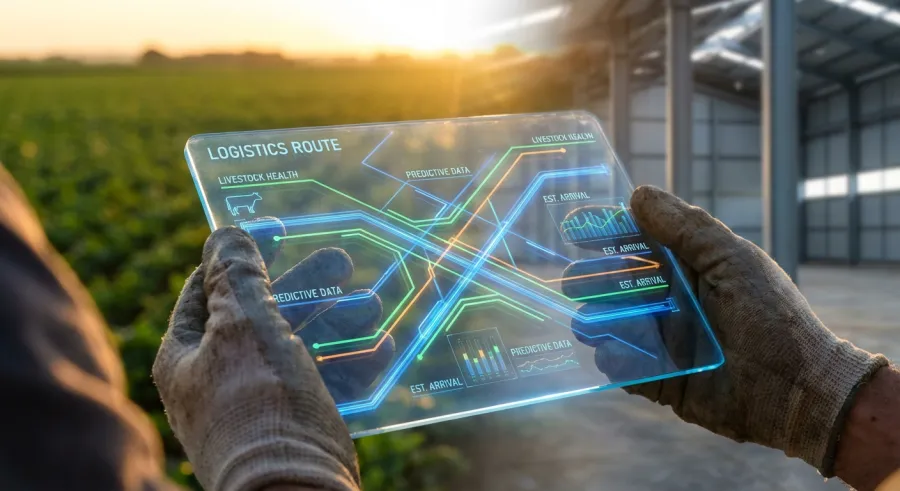
Many of these organizations are still in the 'Cloudification' phase, requiring clean data structures before AI can even be considered. This 'Data Gravity' means that Alibaba Cloud AI is pulling legacy business into the modern era, creating a secondary wave of adoption that transcends simple text generation. The focus is no longer on what the AI can say, but what the AI can do for the bottom line.
Strategic Comparisons: Hype vs. Utility
The following table demonstrates the shift from the hype phase to the utility phase within the Alibaba Cloud AI ecosystem:
| Feature | Consumer AI (Hype Phase) | Industrial AI (Utility Phase) |
|---|---|---|
| Primary Goal | Engagement and Novelty | Efficiency and ROI |
| Platform | Mobile Apps / Web Browsers | IoT / Edge / Private Cloud |
| Data Type | Public Internet Data | Proprietary / Sensor Data |
| Model Preference | General Purpose (Closed) | Specialized (Open/Fine-tuned) |
| Alibaba Cloud AI Role | API Provider | Full-Stack Infrastructure Partner |
Alibaba Cloud AI has been aggressive in supporting open-source ecosystems like Qwen. When a logistics company builds a custom routing assistant, they often avoid 'black box' proprietary models. They want transparency and control. By offering Qwen, Alibaba Cloud AI provides the engine to sell the fuel—the massive compute and storage required to run these sophisticated systems.
Infrastructure as the Ultimate Moat
In technology, 'moats' protect companies from rivals. While many thought the AI model itself would be the moat, models are commoditizing at a blistering pace. The real moat for Alibaba Cloud AI is the physical and digital infrastructure that makes running these models stable and affordable. This involves the 'dirty work' of data center optimization, custom silicon design, and advanced cooling systems.
The 'Inference Tax' is a major hurdle for AI adoption. Training is a one-time expense, but inference is a recurring cost that scales with usage. Alibaba Cloud AI leverages its control over the entire stack—from Hanguang NPU chips to distributed storage—to squeeze out efficiencies that software-only players simply cannot match. This vertical integration is the key to lowering the barrier to entry for large-scale enterprise use.
Decades of experience handling the 11.11 Global Shopping Festival have battle-tested the Alibaba Cloud AI network. High-concurrency, low-latency computing is in its DNA. When millions of users interact with an AI model simultaneously, the bottleneck is rarely the model's intelligence; it is the network's ability to move data without failure. Alibaba Cloud AI provides the high-availability zones necessary for mission-critical scenarios.
Bridging the Economic Gap with Smart Aggregators
Even as Alibaba Cloud AI builds the future, cost management remains a hurdle for smaller developers. Navigating the complexity of multiple models creates a financial and management burden. This is where smart aggregators like GPT Proto become essential. These platforms allow users to access Alibaba Cloud AI models alongside other global leaders through a single, cost-effective interface.
Solutions like GPT Proto can reduce API expenses by up to 60%. By using 'Smart Scheduling,' developers can toggle between performance-first and cost-first modes. If AI is to become as ubiquitous as electricity, it must be accessible to everyone, from the garage startup to the global conglomerate. Integration tools ensure that the power of Alibaba Cloud AI is never a luxury reserved for the elite.
The Qwen Revolution and Sovereign AI
Alibaba Cloud AI has taken a unique path by championing the Qwen open-source project. With nearly a billion downloads, Qwen is a cornerstone of the global AI community. This 'Android strategy' wins the hearts and minds of developers, ensuring that when they are ready to scale, they return to the Alibaba Cloud AI infrastructure for hosting and support.
This approach also supports 'Sovereign AI.' Many nations prefer open-source models that can be deployed within their own borders to maintain data sovereignty. By providing high-quality models that run on private Alibaba Cloud AI instances, the company positions itself as a trusted partner in a fragmented geopolitical landscape. Control over the model is a selling point that far outweighs simple token counts.
Real-World Impact: AI in the Trenches
Technology becomes real when it solves human problems. In agriculture, farmers use Alibaba Cloud AI to monitor livestock health via affordable cameras. The system analyzes movement patterns to detect early illness, saving thousands in veterinary costs. This isn't a story about tokens; it is a story about sustainable livelihoods enabled by Alibaba Cloud AI.
In education, tutoring systems powered by Alibaba Cloud AI are grading subjective essays. This allows teachers to move away from administrative grunt work and toward meaningful mentorship. In logistics, delivery firms use Alibaba Cloud AI to handle millions of customer inquiries with 80% accuracy. The goal is always the same: a better experience, a more efficient business, and a package delivered on time.
2026: The Year of Consolidation
As we head toward 2026, the 'Wild West' era of AI will likely end. The market will consolidate around those who provide stable, integrated, and cost-effective solutions. Alibaba Cloud AI is one of the few global players offering the entire stack—from subsea cables to the most advanced neural networks. The battle will be won by those with the longest vision and the deepest infrastructure.
We will soon stop talking about 'More Tokens' and start talking about 'More Value.' Benchmarks will shift to 'Cost-per-Outcome.' In this environment, the efficiency of Alibaba Cloud AI will be its most significant advantage. Running a massive model at half the cost of a competitor is more impressive than any poetic generation. Tools like GPT Proto will serve as the control centers for this new economy, providing the agility that large-scale infrastructure requires.
Conclusion: The Long Game of Alibaba Cloud AI
The journey of Alibaba Cloud AI is a marathon. While token wars provided a temporary distraction, the real progress is happening in the trenches of infrastructure and industrial integration. Alibaba Cloud AI has demonstrated a clear understanding of this long game, balancing immediate MaaS demands with long-term structural excellence.
The transition from 1% to 50% of the cloud market will be complex, but the trend is undeniable: intelligence is the new utility. Like electricity before it, the winners will be those who provide it reliably and at scale. Alibaba Cloud AI is not just a participant in this evolution; it is the primary architect of the intelligent future. For developers and leaders alike, the message is clear: look past the hype, focus on the infrastructure, and harness the true potential of Alibaba Cloud AI.
Original Article by GPT Proto
"We focus on discussing real problems with tech entrepreneurs, enabling some to enter the GenAI era first."
All-in-One Creative Studio
Generate images and videos here. The GPTProto API ensures fast model updates and the lowest prices.
Start Creating