The qwen3 max/text to text model represents the pinnacle of Alibaba Cloud's latest language model generation. Built on a sophisticated transformer architecture, qwen3 max/text to text delivers exceptional performance in complex reasoning, mathematical problem solving, and advanced coding tasks. As the flagship variant in the Qwen3 family, it offers a massive context window and refined instruction-following capabilities. Compared to its predecessors, qwen3 max/text to text provides superior logical consistency and a more nuanced understanding of diverse cultural contexts. It is ideally suited for enterprise applications requiring high-precision text generation and deep analytical insights across multiple languages and specialized domains. Integrating this model ensures top-tier performance for critical workflows.
Deploy qwen3 max/text to text with Unmatched Reliability on GPT Proto
GPT Proto provides seamless access to qwen3 max/text to text, empowering developers with enterprise-grade AI capabilities. Explore our full model catalog and find the perfect solution for your next high-impact project.
Harnessing the Power of State-of-the-Art Language Processing
The qwen3 max/text to text model stands as a testament to the rapid advancement of large language models, offering a level of cognitive depth that is essential for modern AI applications. Its architecture is specifically tuned for high-precision text generation, making it a reliable partner for tasks ranging from automated coding to complex sentiment analysis. By utilizing a massive training dataset, qwen3 max/text to text achieves a nuanced understanding of context that minimizes hallucinations and maximizes logical flow. Developers choosing this model gain access to a tool that excels in both creative expression and technical rigor, ensuring that every output meets professional standards. On the GPT Proto platform, we ensure this model is always ready to perform at its peak for your most demanding workloads.
Building Sophisticated Multilingual Agents for Global Markets
Leverage the advanced linguistic capabilities of qwen3 max/text to text to create applications that resonate with users across different cultures and languages. Our platform provides the necessary infrastructure to integrate these capabilities effortlessly, as detailed in our developer documentation.
Accelerating Complex Software Development with Logic-Based Code
Use qwen3 max/text to text to transform your development cycle by automating code generation, debugging, and refactoring with a focus on logical correctness and performance optimization. The model's ability to understand deep architectural patterns makes it an invaluable asset for any engineering team looking to scale.
A powerful linguistic engine that bridges the gap between human creativity and machine logic for enterprise applications.
Seamless Infrastructure for Your Next Generation AI Applications
When you choose to run qwen3 max/text to text on GPT Proto, you are choosing a platform built for speed and stability. Our unified API ensures that your integration is future-proof, allowing you to scale your usage as your project grows. We provide comprehensive monitoring tools and a robust backend that handles the heavy lifting of model management, so you can focus on building the features that matter to your users. Check out our API guides to see how quickly you can get started.
Feature
Standard Models
qwen3 max/text to text on GPT Proto
Response Speed
Moderate
Optimized High-Speed
Context Length
Standard
Extended Massive Window
Output Quality
Basic Reasoning
Advanced Logical Deduction
Transparent Financial Management for Enterprise Scale AI Projects
Our pricing model is designed for clarity and control, ensuring you always know exactly what you are spending. By using the top-up balance system, you avoid the complexity of recurring subscriptions or expiring credits. You can manage your funds directly and monitor your real-time usage through our intuitive user dashboard. This transparency allows for better budgeting and financial planning for both small startups and large corporations.
Stay updated with the latest AI trends and best practices for integrating qwen3 max/text to text by visiting our official blog for expert insights and tutorials.
Build with qwen3 max in Minutes
Follow these simple steps to set up your account, get credits, and start sending API requests to qwen3 max via GPT Proto.
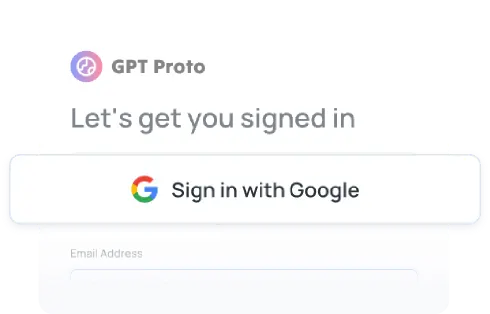
Sign up
Create your free GPT Proto account to begin. You can set up an organization for your team at any time.
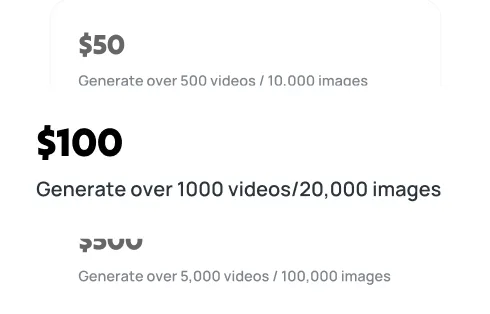
Top up
Your balance can be used across all models on the platform, including qwen3 max, giving you the flexibility to experiment and scale as needed.
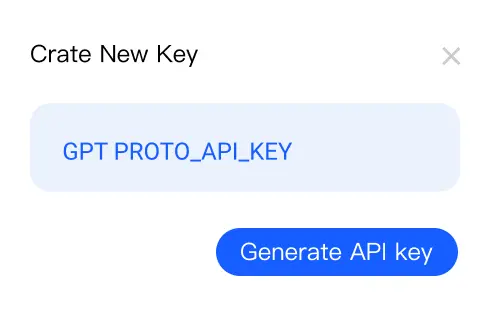
Generate your API key
In your dashboard, create an API key — you'll need it to authenticate when making requests to qwen3 max.
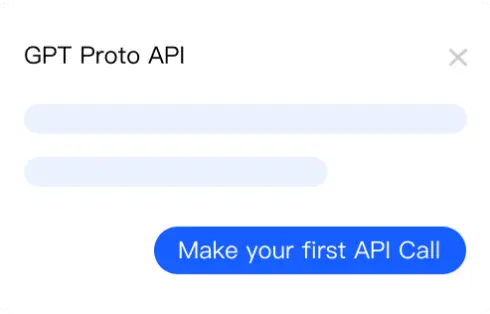
Make your first API call
Use your API key with our sample code to send a request to qwen3 max via GPT Proto and see instant AI-powered results.
The qwen3 max/text to text model is the most powerful large language model within the Qwen3 series, developed by the Alibaba Cloud team. It is designed to handle extremely complex textual tasks with high precision and logical depth. This model utilizes a massive parameter count and a refined training methodology to provide state-of-the-art performance in natural language understanding and generation. Whether you are looking to build sophisticated chatbots, automate content creation, or analyze large volumes of data, qwen3 max/text to text offers the necessary intelligence to achieve superior results. It excels in maintaining context over long conversations and following intricate instructions that require multi-step reasoning. By leveraging a diverse dataset encompassing various languages and professional domains, qwen3 max/text to text sets a new benchmark for what open-weight models can achieve in a text-only modality. It is a robust foundation for any application that demands high reliability and advanced linguistic capabilities, especially when deployed through the GPT Proto platform.
What can qwen3 max/text to text do?
As a versatile text to text powerhouse, qwen3 max/text to text can perform a wide array of cognitive tasks that were previously difficult for smaller models. It is highly proficient in advanced coding, capable of generating entire functions, debugging complex scripts, and explaining intricate technical concepts in multiple programming languages. Furthermore, qwen3 max/text to text excels in creative and professional writing, producing everything from marketing copy to detailed technical documentation with a natural flow. Its reasoning capabilities allow it to solve difficult mathematical problems and provide logical deductions based on provided premises. For businesses, qwen3 max/text to text serves as an excellent tool for sentiment analysis, long-form summarization, and high-fidelity translation across dozens of global languages. It can also act as a brainstorming partner for product development or strategy planning. The model's ability to follow system prompts with extreme precision makes qwen3 max/text to text an ideal candidate for building specialized AI agents that adhere to specific persona or operational constraints in professional environments.
Which company or team developed qwen3 max/text to text?
The qwen3 max/text to text model was meticulously crafted by the Qwen team at Alibaba Cloud, a leading force in global cloud computing and artificial intelligence research. The development of this model is part of a broader mission to advance the frontier of generative AI and make powerful intelligence accessible to developers worldwide. Alibaba Cloud has a long history of contributing to the open-source community through its Qwen series, and qwen3 max/text to text represents their most significant leap forward in scaling and optimization. The team consists of world-class researchers and engineers who focus on improving model efficiency, safety, and multilingual performance. Their commitment to excellence is reflected in the rigorous training and safety alignment processes that every version of qwen3 max/text to text undergoes. By focusing on both performance and accessibility, the developers have ensured that qwen3 max/text to text remains a top choice for enterprises and independent developers alike who are looking for a trustworthy and highly capable large language model.
How does qwen3 max/text to text differ from GPT, Claude, or Gemini?
When compared to major models like GPT-4, Claude 3.5, or Gemini Pro, qwen3 max/text to text distinguishes itself through its exceptional performance in non-English contexts and specific technical domains. While GPT models are known for their generalist capabilities, qwen3 max/text to text often demonstrates superior accuracy in East Asian languages and specific mathematical reasoning benchmarks. Unlike some models that may have strict regional limitations, qwen3 max/text to text is designed for a global audience with a particular emphasis on code generation and logical consistency. Furthermore, the architecture of qwen3 max/text to text is optimized for high-throughput environments, making it a very cost-effective alternative for developers who need high-tier intelligence without the premium price tag of some competitors. In many side-by-side evaluations, qwen3 max/text to text matches or exceeds the performance of its peers in specialized tasks such as competitive programming and scientific analysis. This makes qwen3 max/text to text a vital component of the diverse model ecosystem available on GPT Proto, offering users more choice for their specific regional and technical needs.
What are the main application scenarios for qwen3 max/text to text?
The application scenarios for qwen3 max/text to text are vast and span across numerous industries that rely on high-quality text processing. One primary use case is in the development of intelligent customer support systems where qwen3 max/text to text can handle complex inquiries with human-like empathy and accuracy. It is also frequently used in the software development lifecycle for automated unit testing and code refactoring. In the media industry, journalists and content creators use qwen3 max/text to text to summarize lengthy reports or generate drafts for articles based on raw data. Educational platforms integrate qwen3 max/text to text to provide personalized tutoring in subjects like mathematics and computer science. Additionally, financial institutions leverage the model for analyzing market sentiment from news feeds and generating comprehensive financial reports. The high degree of instruction-following in qwen3 max/text to text also makes it suitable for administrative tasks like meeting summarization and email automation, significantly boosting productivity for individual professionals and large organizations using the GPT Proto API.
Which industries or roles benefit most from qwen3 max/text to text?
Multiple industries can derive immense value from qwen3 max/text to text, particularly those where information density is high. In the legal sector, lawyers and paralegals use qwen3 max/text to text to review contracts and extract key clauses quickly. In the healthcare domain, while not a substitute for medical advice, researchers utilize the model to summarize scientific papers and organize clinical data. Software engineers and DevOps specialists find qwen3 max/text to text indispensable for writing boilerplate code and managing complex configuration files. Marketing directors and SEO specialists benefit from the model's ability to generate high-ranking content and analyze consumer trends. For researchers in academia, qwen3 max/text to text helps in drafting literature reviews and brainstorming hypotheses. Even for small business owners, the model can act as a virtual assistant for customer communication and business planning. The versatility of qwen3 max/text to text ensures that any role requiring critical thinking, linguistic precision, or technical expertise can be significantly enhanced by its integration into their daily workflow.
How strong is qwen3 max/text to text in output quality, creativity, and coding?
The output quality of qwen3 max/text to text is widely regarded as being in the top tier of currently available language models. In terms of creativity, it can produce varied and engaging narratives, avoiding the repetitive patterns often found in smaller models. For coding tasks, qwen3 max/text to text is exceptionally strong; it can write complex algorithms, translate code between languages, and offer optimized solutions for performance-critical applications. Its ability to maintain logical consistency over long outputs ensures that the generated code is not only syntactically correct but also functionally sound. In creative writing, qwen3 max/text to text adapts well to different tones and styles, making it perfect for brand-specific content. The model's reasoning capabilities also translate to high-quality analysis in structured tasks like JSON generation and data extraction. Overall, qwen3 max/text to text offers a balanced and powerful performance profile that meets the demands of professional-grade production environments, especially when high reliability is a requirement for the end-user experience.
How can I call qwen3 max/text to text through the API?
Calling qwen3 max/text to text through the API on GPT Proto is designed to be a straightforward and developer-friendly process. Once you have an account, you can access the unified API endpoint that supports a variety of models including qwen3 max/text to text. You will need to include your API key in the request header and specify the model name in your JSON payload. The API follows the standard chat completions format, making it easy to migrate from other platforms. You can customize parameters such as temperature, top-p, and max tokens to fine-tune the behavior of qwen3 max/text to text for your specific application. GPT Proto provides detailed documentation and SDKs in multiple languages to help you get started quickly. Whether you are building a simple web app or a complex enterprise system, the infrastructure behind the API ensures low latency and high availability for qwen3 max/text to text. This allows you to focus on building features rather than managing the complexities of model deployment and scaling.
How is pricing calculated for qwen3 max/text to text?
Pricing for qwen3 max/text to text on the GPT Proto platform is based on a transparent pay-as-you-go model. Instead of complex subscription tiers, you are charged based on the number of tokens processed in your requests and generated in the responses. Each token represents a small unit of text, and the cost per million tokens for qwen3 max/text to text is competitively priced to reflect its high-performance status while remaining accessible for scaling projects. There are no hidden fees or monthly minimums, allowing you to control your costs effectively. The usage is tracked in real-time, and you can monitor your consumption through the dashboard. This token-based billing system ensures that you only pay for what you actually use, making qwen3 max/text to text an economical choice for both experimental development and large-scale production deployments. By providing a clear and direct pricing structure, GPT Proto makes it easy for businesses to budget for their AI needs when using qwen3 max/text to text.
How do I pay for using qwen3 max/text to text on GPT Proto?
To pay for using qwen3 max/text to text on GPT Proto, you simply need to add funds to your account balance. Our platform does not use a credit-based system; instead, you recharge your balance with a direct dollar amount. You can visit the billing center in your dashboard to perform a top-up using various supported payment methods, including credit cards and other secure online payment gateways. Once you have successfully performed a top-up balance action, your API calls to qwen3 max/text to text will automatically deduct the appropriate amount based on your token usage. This system provides a clear view of your spending and allows you to manage your budget without worrying about expiring credits. If your balance runs low, you can easily add funds again to ensure uninterrupted service. This direct financial model is designed to be as simple and transparent as possible for developers and businesses using qwen3 max/text to text for their mission-critical applications.
Does qwen3 max/text to text support multimodal input like images or audio?
The specific variant qwen3 max/text to text is optimized exclusively for text to text interactions. While the broader Qwen3 family includes models with vision and audio capabilities, this version focuses on providing the highest possible quality for textual reasoning and generation. This specialization allows qwen3 max/text to text to have a deeper understanding of linguistic nuances and more complex logical structures than many general-purpose multimodal models. If your workflow involves processing images or audio, you may want to explore other models in the Qwen family or multimodal alternatives available on GPT Proto. however, for tasks that are purely text-based, such as coding, writing, and analysis, qwen3 max/text to text remains the superior choice due to its concentrated focus on text processing. By choosing qwen3 max/text to text, you are opting for a model that has been fine-tuned to excel in the most demanding text-based scenarios without the overhead or compromise sometimes associated with multimodal training.
Are there copyright risks when generating content with qwen3 max/text to text?
When you generate content using qwen3 max/text to text on the GPT Proto platform, the ownership and copyright of the output typically reside with the user who initiated the generation. This model is a tool for creation, similar to a word processor or a compiler. However, users should remain aware of the general legal landscape regarding AI-generated content, which can vary by jurisdiction. It is always a good practice to review the generated output from qwen3 max/text to text to ensure it does not inadvertently resemble protected third-party works, especially in highly creative or specialized fields. Alibaba Cloud and GPT Proto prioritize data privacy and safety, ensuring that the model is aligned to avoid producing harmful or infringing content. Ultimately, the responsibility for how the output from qwen3 max/text to text is used in a commercial or public setting lies with the developer or business. By using qwen3 max/text to text, you gain a powerful partner for content generation that respects professional standards of ownership and responsibility.