
The digital landscape has undergone a seismic shift, moving rapidly from simple queries to complex, autonomous reasoning. A groundbreaking analysis of 100 trillion tokens has illuminated a clear trend: the industry is pivoting hard toward agentic inference and open-source powerhouses like Llama 3. This massive dataset reveals how Llama 3 is dominating critical sectors, particularly in programming and creative workflows, effectively challenging proprietary giants. In this analysis, we unpack the rise of reasoning models, the psychology of user loyalty known as the "Cinderella Effect," and why Llama 3 is becoming the foundational infrastructure for the next generation of AI agents.
2026-02-03
Llama 3 & The 100 Trillion Token Shift in AI
Discover how Llama 3 and reasoning models are reshaping the digital landscape. This 100 trillion token study explores agentic inference, the shift to open-source models, and why Llama 3 is dominating programming and creative workflows in the global AI ecosystem.

Table of contents
The 100 Trillion Token Milestone: Mapping the AI Nervous System
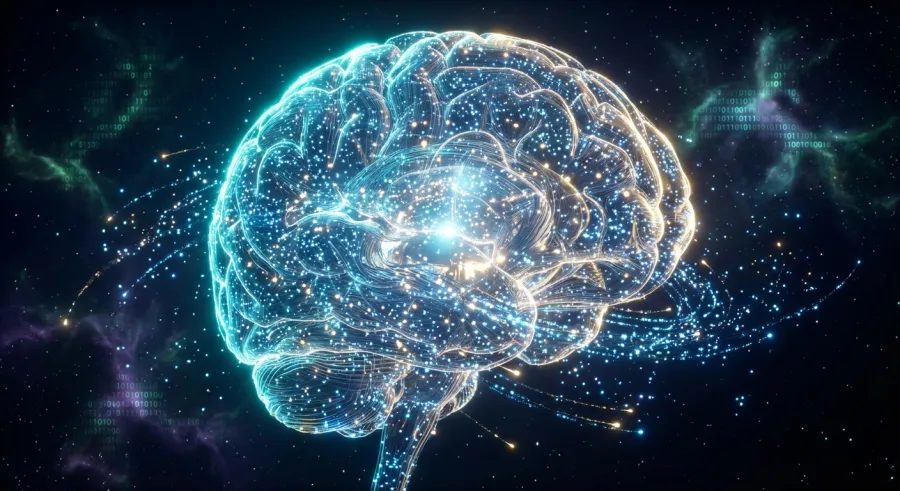
To understand where artificial intelligence is heading, we must look beyond the hype cycles and press releases. The truth lies in the data. A comprehensive study analyzing over 100 trillion tokens processed through major routing platforms has provided an unprecedented map of our digital evolution. We have officially transitioned from the era of "Generative AI"—where models simply predicted the next word—to the era of "Reasoning AI."
This shift wasn't gradual; it was a cascade. Just a year ago, the primary use case for a Large Language Model (LLM) was information retrieval or basic summarization. Today, the landscape is dominated by complex problem-solving, autonomous coding, and multi-step reasoning. At the heart of this transformation sits Llama 3, a model family that has redefined what is possible within the open-source ecosystem.
The data suggests that we are no longer treating AI as a search engine wrapper. Instead, we are delegating cognitive load. Whether it is a software engineer in Bangalore debugging a microservice architecture or a data scientist in San Francisco modeling climate trends, the reliance on robust, accessible models like Llama 3 has become systemic. This isn't just a change in software; it's a change in how the global economy processes intelligence.
The Open Source Revolution: Why Llama 3 is Winning
For years, the prevailing narrative suggested that proprietary, closed-source models would forever hold a monopoly on high-level intelligence. The 100 trillion token study shatters this assumption. We are witnessing a massive migration of enterprise and developer traffic toward open-weight models, with Llama 3 leading the charge. By late 2025, a significant portion of global AI inference had shifted away from walled gardens.
Why are businesses and developers flocking to Llama 3? The answer lies in the triad of control, privacy, and customization. Unlike proprietary APIs where data is sent into a black box, Llama 3 offers transparency. Organizations can host the model on their own infrastructure, ensuring that sensitive IP never leaves their virtual private cloud. This level of data sovereignty is non-negotiable for sectors like finance, healthcare, and defense.
Furthermore, the Llama 3 architecture has proven to be incredibly malleable. The developer community has embraced it as the standard for fine-tuning. Whether optimizing for a specific programming language or a unique dialect, Llama 3 serves as a robust foundation. This "democratization of intelligence" accelerates innovation far faster than any single centralized lab could manage.
However, leveraging these powerful open models requires infrastructure. This is where platforms like GPT Proto have become essential. By providing a unified interface that supports the entire Llama 3 family alongside other top-tier models, they solve the integration headache. Businesses can now switch between a high-performance Llama 3 70B for complex reasoning and a smaller, faster variant for routine tasks, optimizing costs without sacrificing capability.
Key Drivers for Llama 3 Adoption
- Data Sovereignty: Complete control over where data is processed and stored.
- Customizability: The ability to fine-tune Llama 3 for niche industry requirements.
- Cost Efficiency: Avoiding the premium markups associated with proprietary APIs.
- Community Velocity: Rapid improvements and optimizations driven by the global open-source community.
The New Industrial Revolution: AI in Programming
If you want to find the pulse of the AI economy, look at the code. The study reveals that programming tasks now account for over 50% of all AI token volume. This is a staggering statistic that signals a fundamental change in software engineering. AI is no longer just a "copilot" that suggests syntax; it is becoming the primary engine for code generation, refactoring, and debugging.
In this domain, Llama 3 has emerged as a powerhouse. Developers favor it for its low latency and high accuracy in understanding context. The ability to run Llama 3 locally or on edge devices allows for coding environments that are secure and lightning-fast. Input contexts have exploded in size, with developers frequently feeding entire repositories—tens of thousands of tokens—into the model to get architectural advice.
This surge in volume creates a logistical challenge: the "digital traffic jam." Processing massive codebases requires significant compute. Smart developers are solving this by adopting hybrid strategies. They might use a heavy reasoning model to architect a solution, but then deploy Llama 3 to execute the boilerplate coding. This tiered approach minimizes costs while maximizing output speed.
| Sector | Token Volume Share | Dominant Model Architecture | Primary Utility |
|---|---|---|---|
| Software Engineering | 51.2% | Llama 3 (70B/405B), Claude 3.5 | Full-stack generation, Debugging, Refactoring |
| Creative & Roleplay | 22.4% | Llama 3 (Fine-tunes), DeepSeek | Interactive Storytelling, Character Simulation |
| Enterprise Operations | 12.8% | GPT-4o, Gemini 1.5 | Data Synthesis, Report Generation |
| Advanced Research | 8.5% | o1 Reasoning Models | Hypothesis Testing, Complex Analysis |
The Cinderella Effect: The Psychology of Model Loyalty
One of the study's most intriguing findings is psychological rather than technical. Researchers have coined it the "Cinderella Effect." In a fast-moving market, one might expect users to constantly jump to the newest, shiniest model. However, the data shows intense loyalty. Once a user or organization finds a model that fits their workflow "just right," they rarely switch.
For Llama 3, this effect creates a formidable competitive moat. When a developer tunes their prompts, scripts, and expectations around the specific nuances of Llama 3, switching costs become high. Even if a competitor releases a model that scores slightly higher on a benchmark, the operational friction of switching keeps users locked in. It is the "Glass Slipper" of the AI world—perfect fit beats raw specs.
We also observe a "Boomerang Effect." Users often test a new model release, find it lacks the specific "personality" or logic flow they are accustomed to, and immediately revert to their trusted Llama 3 configuration. This underscores that "Model-Market Fit" is stickier than performance benchmarks. For businesses, this stability is crucial, and platforms like GPT Proto support this by offering access to legacy versions, ensuring workflows don't break when new models drop.
Agentic Inference: From Chatbots to Digital Employees
The era of the passive chatbot is ending. The token data highlights a dramatic rise in "Agentic Inference" and "Tool Use." This refers to AI systems that do not just talk, but act. They browse the web, execute SQL queries, manage calendars, and manipulate files. They are becoming digital employees.

To function effectively as an agent, a model requires superior reasoning capabilities. It must plan a sequence of actions, critique its own output, and course-correct if an API call fails. Llama 3 has proven exceptionally capable in this arena, particularly the larger parameter versions which possess the cognitive depth required for multi-step planning. This "Chain of Thought" processing increases token usage significantly, as the model "thinks out loud" before executing a task.
The economic implication of agentic workflows is profound. An agent that reasons through a problem might consume ten times the tokens of a simple chatbot. This creates a risk of ballooning costs. Consequently, cost-efficient inference is becoming the backbone of the agent economy. Developers are leveraging Llama 3 via optimized providers to keep the "cost of thought" manageable. By balancing the raw power of Llama 3 405B for planning with smaller models for execution, companies can deploy autonomous agents that are both smart and solvent.
Global Trends: The Rise of the Asian AI Ecosystem
The geography of intelligence is diversifying. While North America remains the largest consumer of AI tokens, the growth rate in Asia is explosive. Markets in China, Singapore, and South Korea are not just consuming AI; they are shaping it. The 100 trillion token study indicates a vibrant ecosystem of regional models emerging to compete with Western giants.
Interestingly, Llama 3 plays a pivotal role here as well. Many top-performing regional models are essentially highly specialized fine-tunes of the Llama 3 base architecture. This allows local startups to leverage world-class reasoning capabilities while adapting the language and cultural context for their specific markets. Llama 3 has effectively become the global operating system for AI innovation.
For multinational corporations, this fragmentation presents a challenge. A global strategy might require Llama 3 for the US market, a specialized Qwen model for China, and a Mistral model for Europe. Managing these distinct providers is complex. This reinforces the value of a model-agnostic aggregation layer. GPT Proto addresses this by offering a single API endpoint that routes to the best model for the region and task, effectively bridging the East-West divide.
The Hidden Giant: Creative Roleplay and Human Connection
While productivity dominates the headlines, the "Hidden Giant" of AI traffic is creative roleplay. Accounting for over 20% of global token volume, this sector is driven by users seeking entertainment, storytelling, and companionship. Here, the open nature of Llama 3 is its greatest asset.
Proprietary models often come with restrictive safety filters that stifle creative writing, particularly in genres like horror, fantasy, or mature romance. Because Llama 3 is open weights, the community has created thousands of "uncensored" or "roleplay-optimized" variants. These models prioritize narrative adherence and character consistency over rigid corporate safety guidelines. This has fostered a deeply engaged community that uses Llama 3 not for work, but for play and expression.
Conclusion: Embracing the Systems Era
The 100 trillion token data paints a clear picture: we have entered the "Systems Era" of Artificial Intelligence. The isolated chatbot is a relic. The future belongs to integrated systems where reasoning models like Llama 3 serve as the central processing unit, orchestrating agents, tools, and data streams.
For businesses and developers, the path forward is flexibility. The "Cinderella Effect" teaches us that finding the right model fit is more important than chasing benchmarks. The dominance of programming tokens tells us that AI is now a builder, not just a talker. And the ubiquity of Llama 3 proves that open, adaptable intelligence is winning the infrastructure war.
Success in this new landscape requires a strategic approach to model selection and orchestration. By leveraging platforms like GPT Proto to access the full spectrum of Llama 3 capabilities, organizations can build resilient, cost-effective, and powerful AI systems ready for the next 100 trillion tokens.
Original Analysis by GPT Proto
"We are dedicated to bridging the gap between cutting-edge AI research and real-world application, empowering entrepreneurs to lead in the GenAI era."
Grace: Desktop Automator
Grace handles all desktop operations and parallel tasks via GPTProto to drastically boost your efficiency.
Start Creating
Related Models

claude-opus-4-8-thinking/text-to-text
Claude Opus 4.8 Thinking is Anthropic's most advanced model, featuring deep reasoning blocks for complex logic. Use Claude for high-accuracy coding, agentic workflows, and 200k context tasks via our high-performance API at GPTProto.com.
$ 20
20% off
Market: $ 25
claude-opus-4-8-thinking/web-search
Claude Opus 4.8 Thinking API is Anthropic's premier model for complex logic and agentic tasks. With a 200k context window and internal reasoning blocks, it delivers high-accuracy coding and nuanced data analysis for enterprise-grade solutions.
$ 20
20% off
Market: $ 25
claude-opus-4-8-thinking/file-analysis
ai claude opus 4.8 thinking is Anthropic's pinnacle reasoning model. Featuring a 200,000 token context window and specialized thinking blocks, it masters complex coding, legal analysis, and agentic workflows with unmatched logical precision.
$ 20
20% off
Market: $ 25
claude-opus-4-8/text-to-text
Claude Opus 4.8 offers top-tier reasoning and long-context handling. Use Claude for deep research or complex coding tasks. Opus 4.8 integrates via our unified API for reliable performance and easy scaling across diverse AI applications.
$ 20
20% off
Market: $ 25