gpt 5.2 codex/text to text represents the pinnacle of OpenAI's reasoning series, specifically optimized for high-density logic and programmatic structures on the GPT Proto platform. Building upon the foundational GPT-5 architecture, this codex variant integrates specialized training for syntax accuracy and algorithmic problem solving. It functions as a high-intelligence text to text engine that excels in translating complex human requirements into executable logic or nuanced technical prose. By utilizing the refined gpt 5.2 codex on GPT Proto, developers gain a significant edge in speed and context retention compared to standard reasoning models, making it the premier choice for enterprise-grade automation and deep research applications.
$ 1.225
$ 1.75
$ 9.8
$ 14
text
text
$ 1.225
$ 1.75
text
$ 9.8
$ 14
text
API
Text To Text
curl --request POST "https://gptproto.com/v1/responses" \
  --header "Authorization: Bearer $GPTPROTO_API_KEY" \
  --header "Content-Type: application/json" \
  --data '{
    "model": "gpt-5.2-codex",
    "input": [
      {
        "role": "user",
        "content": [
          {
            "type": "input_text",
            "text": "Write a short poem about artificial intelligence and its impact on humanity."
          }
        ]
      }
    ]
  }'
Unlock gpt 5.2 codex API: The Ultimate Integration on GPT Proto
GPT Proto provides seamless, high-performance access to gpt 5.2 codex/text to text, empowering developers with enterprise-grade reasoning and coding capabilities. Browse our comprehensive model catalog to find the cutting-edge tools your next project demands.
Superior Reasoning Power for Advanced Technical Challenges
The gpt 5.2 codex/text to text model on GPT Proto represents a significant leap forward in AI-driven logic and structural accuracy. Built upon a specialized architecture that emphasizes sequential reasoning and programmatic consistency, this model is designed to handle the 'hard' tasks that leave standard models confused. It utilizes internal 'thinking steps' to verify its logic before generating a response, which drastically reduces the chances of hallucination in technical contexts. By integrating this model through GPT Proto, you gain access to a stable, low-latency environment that ensures your applications can rely on high-fidelity intelligence for everything from code refactoring to complex data synthesis. It is the ideal engine for developers who demand perfection and precision in every API call.
Precision API Integration for Modern Software Developers
Leveraging gpt 5.2 codex via our platform allows for a deep and flexible integration into your existing stack. Whether you are building an AI-powered IDE or an automated compliance checker, our official API documentation provides all the clear examples and SDKs needed to get started. By using the 'Instructions' parameter on GPT Proto, you can steer the model to adopt specific technical personas or adhere to complex formatting rules without bloating your prompts. This professional-grade control ensures that your outputs are always ready for production use.
Optimizing High-Volume Text Workflows with AI Intelligence
Speed and reliability are at the heart of the gpt 5.2 codex experience on GPT Proto. This model is optimized to process large context windows, making it perfect for summarizing long documents or maintaining consistency across thousands of lines of code. The efficiency of the 5.2 engine means you get smarter results faster, allowing your team to iterate at a pace previously thought impossible. Professionals across all sectors are using this model to automate the 'boring' logical work, freeing up human talent for high-level creative and strategic decision-making.
gpt 5.2 codex on GPT Proto is more than just a language model; it is a high-level logical partner that understands the structure of code and the nuance of language with equal mastery.
Enterprise Performance and Scalability Comparisons
When you choose to run gpt 5.2 codex on GPT Proto, you are opting for a platform that prioritizes uptime and transparent resource management. We understand that technical teams need consistent performance to meet their own SLAs, which is why our infrastructure is built to scale alongside your usage. You can monitor your consumption in real-time and trust that the model's behavior remains consistent across thousands of requests.
Feature
Standard Models
gpt 5.2 codex on GPT Proto
Logic Consistency
Fluctuating
Highly Rigorous
Coding Syntax Accuracy
Average
Exceptional (Codex-tuned)
Platform Latency
Variable
Low-latency optimized
Pricing Model
Complex Tiers
Transparent Direct Funds
Simplified Billing and Getting Started Today
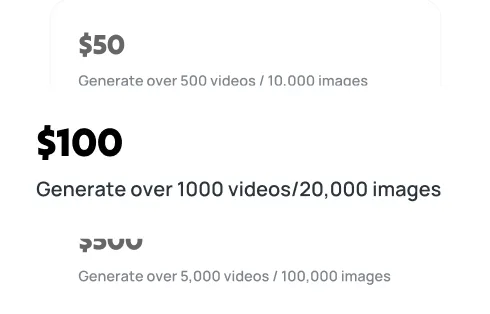
We have removed the friction from accessing world-class AI. At GPT Proto, we do not use confusing 'credits' or hidden subscription tiers. You simply Top-up Balance or 'Add Funds' to your account, and you are ready to call the gpt 5.2 codex API immediately. This direct monetary system allows you to manage your budget with total clarity. You can check your Usage Dashboard at any time to see your spend and adjust your recharge settings as needed.
Ready to push the boundaries of what is possible with AI? Start integrating gpt 5.2 codex on GPT Proto today and experience the difference that specialized reasoning makes. For more tips on prompt engineering and optimizing your AI workflows, be sure to visit our official blog for the latest developer insights and industry news.
Build with gpt 5.2 codex in Minutes
Follow these simple steps to set up your account, get credits, and start sending API requests to gpt 5.2 codex via GPT Proto.
Sign up
Create your free GPT Proto account to begin. You can set up an organization for your team at any time.
Top up
Your balance can be used across all models on the platform, including gpt 5.2 codex, giving you the flexibility to experiment and scale as needed.
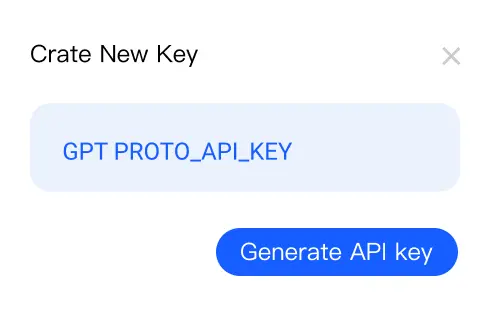
Generate your API key
In your dashboard, create an API key — you'll need it to authenticate when making requests to gpt 5.2 codex.
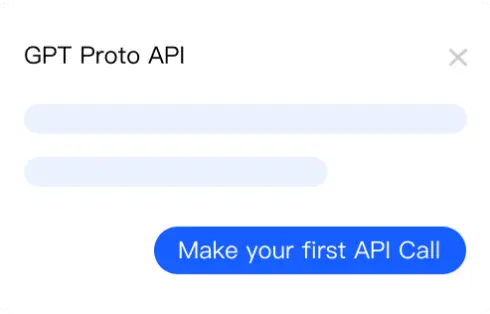
Make your first API call
Use your API key with our sample code to send a request to gpt 5.2 codex via GPT Proto and see instant AI-powered results.
What exactly is the gpt 5.2 codex/text to text model?
The gpt 5.2 codex/text to text is a cutting-edge large language model that sits at the intersection of extreme reasoning and specialized code intelligence. Developed as part of the next-generation GPT-5 family, this specific version is fine-tuned to handle tasks that require deep logical chaining and technical precision. On the GPT Proto platform, users can access this model to process complex text-based inputs and receive highly accurate, contextually aware responses. It differs from earlier versions by incorporating a larger active parameter set dedicated to algorithmic thinking and structural consistency. Whether you are generating technical documentation or solving multi-step mathematical problems, gpt 5.2 codex provides a level of clarity and depth that standard conversational models often lack. It is designed for environments where the cost of error is high and the need for logical rigor is paramount, ensuring that every output is both coherent and technically sound for professional use.
What are the primary capabilities of gpt 5.2 codex/text to text?
The gpt 5.2 codex/text to text model is a versatile powerhouse capable of much more than simple chat. Its core strengths include advanced code synthesis, structural data transformation, and sophisticated logical reasoning. When you deploy gpt 5.2 codex on GPT Proto, you can utilize it for refactoring legacy codebases, generating complex API documentation, or performing deep sentiment analysis on massive datasets. It is particularly adept at following intricate instructions that involve multiple constraints, such as writing a legal brief while adhering to specific jurisdictional styles. Beyond text, it can structure unstructured information into precise JSON or XML formats with nearly zero syntax errors. This model also serves as an exceptional brainstorming partner for architects and engineers, providing suggestions for system designs and debugging complex software issues. Its ability to maintain a long context window ensures that it can track variables and themes throughout long-form projects without losing focus or accuracy.
Which development team is responsible for gpt 5.2 codex?
gpt 5.2 codex/text to text is developed by OpenAI, the world-leading AI research laboratory known for its groundbreaking work in large-scale neural networks. This specific iteration, gpt 5.2 codex, is an evolution of their famous Codex and GPT-4 series, incorporating years of feedback from the developer community and advancements in reinforcement learning from human feedback. GPT Proto serves as an elite distribution partner, providing a stable and optimized environment for users to interact with this OpenAI technology via a robust API. The development of gpt 5.2 codex focused on enhancing 'thinking time' and internal reasoning steps, allowing the model to simulate multiple paths to a solution before providing a final answer. This collaboration between OpenAI's research and GPT Proto's infrastructure means that users receive the most advanced reasoning capabilities available on the market today, backed by enterprise-grade support and a commitment to continuous model improvement and safety alignment.
How does gpt 5.2 codex compare to Claude, Gemini, or standard GPT models?
When comparing gpt 5.2 codex/text to text to alternatives like Claude 3.5 or Gemini 1.5 Pro, the primary differentiator is its specific optimization for logical consistency and programmatic accuracy. While models like Claude are praised for their 'human-like' tone and safety guardrails, gpt 5.2 codex on GPT Proto prioritizes 'Correctness' and 'Adherence to Syntax'. Against standard GPT models, version 5.2 introduces a significantly more efficient reasoning engine that reduces hallucinations in technical contexts. Unlike Gemini, which focuses heavily on multimodal integration, the text to text variant of gpt 5.2 codex is hyper-focused on the nuances of language and code structure. This makes it significantly more reliable for developers who need code that actually compiles on the first try. Furthermore, the integration on GPT Proto ensures lower latency for these high-intelligence tasks, providing a snappier experience for real-time applications compared to the sometimes slower response times of other ultra-large-scale competitors.
What are the top industry use cases for gpt 5.2 codex/text to text?
The versatility of gpt 5.2 codex/text to text allows it to dominate several high-value sectors. In software development, it is used for automated unit testing and technical debt analysis. In the financial sector, gpt 5.2 codex on GPT Proto can parse complex regulatory filings and extract key risk factors with extreme precision. The legal industry utilizes it for contract review and identifying contradictory clauses across hundreds of pages. In education, it acts as a high-level tutor for STEM subjects, explaining complex physics or calculus concepts step-by-step. Additionally, marketing agencies use it to generate highly technical B2B content that requires a deep understanding of industry jargon. Because it handles structured outputs so well, it is also a favorite for data scientists who need to clean messy datasets or generate synthetic data for training other models. Its ability to follow strict formatting rules makes it indispensable for any industry relying on standardized reporting and compliance.
Which professional roles benefit most from using gpt 5.2 codex?
The gpt 5.2 codex/text to text model is a game-changer for roles that require a balance of creativity and technical accuracy. Software engineers and DevOps professionals are the most obvious beneficiaries, as the model can assist with everything from writing boilerplate code to architecting cloud infrastructure. Data analysts also find it invaluable for writing complex SQL queries and Python scripts for data visualization. On the non-technical side, Product Managers use gpt 5.2 codex on GPT Proto to draft detailed PRDs and technical specifications that are ready for engineering review. Researchers in academia use it to summarize peer-reviewed papers and hypothesize new experimental designs. Even technical writers and documentation specialists see massive productivity gains by using the model to translate complex engineering notes into user-friendly guides. Essentially, anyone whose job involves the translation of high-level ideas into structured, logical, or technical outputs will find that this model significantly reduces their manual workload while increasing the quality of their deliverables.
How high is the output quality and coding capability of gpt 5.2 codex?
The output quality of gpt 5.2 codex/text to text is currently at the top of its class, particularly in the realm of 'Zero-shot' performance. This means the model can often solve complex problems without needing multiple examples or elaborate prompting. Its coding capabilities are specifically enhanced to understand modern frameworks and libraries, reducing the likelihood of generating deprecated code. On GPT Proto, the model demonstrates a remarkable ability to maintain logical flow even in long-form responses, ensuring that the end of a document is consistent with the beginning. In head-to-head benchmarks, gpt 5.2 codex consistently outperforms previous iterations in debugging tasks and logical puzzle solving. It handles complex conditional logic with ease and can anticipate edge cases that many other models miss. This precision extends to its text generation as well, where it produces prose that is professional, authoritative, and free of the repetitive 'AI-isms' that characterize smaller or less sophisticated models.
What is the process for calling the gpt 5.2 codex API?
Integrating the gpt 5.2 codex/text to text API into your application is a straightforward process on the GPT Proto platform. First, you need to sign up for an account and navigate to the API documentation section to retrieve your unique API key. The API is designed to be compatible with standard REST protocols, meaning you can send a POST request with your prompt, model parameters, and context instructions. On GPT Proto, we provide SDKs for popular languages like Python, JavaScript, and Go to help you get started in minutes. You simply specify 'gpt 5.2 codex' as your model ID in the request body. We recommend using our 'Instructions' parameter to set the tone and behavior of the model, which allows you to separate system-level logic from user-level input. Detailed code samples and integration guides are available at our official documentation site, ensuring that whether you are building a simple script or a complex enterprise application, the connection process is seamless and well-supported.
How is the pricing for gpt 5.2 codex usage calculated?
Pricing for gpt 5.2 codex/text to text on GPT Proto is based on a transparent 'pay-as-you-go' model, where you are billed according to the number of tokens processed. Tokens are the basic units of text, where roughly 1,000 tokens equal about 750 words. The pricing is split between input tokens (the prompts you send) and output tokens (the responses the model generates). Because gpt 5.2 codex is a premium reasoning model, its per-token cost reflects its higher computational complexity and the superior quality of its results. However, GPT Proto offers highly competitive rates that are often more affordable than direct enterprise contracts. We provide real-time usage tracking in your dashboard so you can monitor your expenditures down to the cent. There are no hidden subscription fees or minimum monthly commitments; you only pay for the intelligence you actually use. This allows startups to experiment at low cost while enabling large organizations to scale their operations predictably and efficiently.
How do I handle payments for gpt 5.2 codex on GPT Proto?
Managing your balance for gpt 5.2 codex/text to text on GPT Proto is designed to be user-friendly and flexible. Instead of complex 'credits' or points, we use a direct monetary balance system. You can navigate to the Billing Center in your dashboard to 'Top-up' your account balance using a variety of payment methods, including credit cards and international payment gateways. When you 'Add Funds' to your account, the amount is immediately available for API usage. As you make requests to the gpt 5.2 codex model, the cost is automatically deducted from your balance in real-time. We offer features like 'Auto-Recharge' to ensure your services never go offline due to a low balance. All invoices are generated automatically and can be downloaded for your accounting needs. This direct-fund approach provides maximum transparency, as you can see exactly how much each API call costs in actual currency, making budget management much simpler for development teams.
Does gpt 5.2 codex support multimodal inputs like images or audio?
The specific variant 'gpt 5.2 codex/text to text' is a specialized engine optimized purely for text-based interactions. This specialization is what allows it to achieve such high benchmarks in reasoning and code generation. While the broader GPT-5 family may include multimodal versions, this codex-specific model focuses its entire neural architecture on processing and generating written language and code. This means it cannot 'see' images or 'hear' audio files directly. However, you can use other models available on GPT Proto to transcribe audio or describe images, and then feed that text into gpt 5.2 codex for high-level analysis. For developers, this focus is often an advantage, as it ensures the model is not distracted by irrelevant visual data and can dedicate all its reasoning steps to solving the text-based logic at hand. If your workflow requires pure text or code intelligence, gpt 5.2 codex is the most efficient and powerful tool for the job.
Are there copyright risks when using gpt 5.2 codex for content?
Using gpt 5.2 codex/text to text on GPT Proto generally falls under modern AI usage policies which state that the user owns the output generated by the model. OpenAI, the developer of the model, does not claim copyright over the text or code produced by your prompts. However, it is important to remember that as a user, you are responsible for the content you generate and publish. While gpt 5.2 codex is trained on a vast dataset, it is designed to generate original combinations of words and code rather than verbatim copying. To ensure safety and compliance, we recommend that professionals perform a final review of any output, especially for legal or medical applications. GPT Proto also implements content filters to prevent the generation of harmful or infringing material, helping you maintain a safe workflow. As with any tool, the 'originality' of the output often depends on the uniqueness of your prompts and the specific context provided during the interaction.