TL;DR
The claude code leaked source incident on March 31, 2026, exposed over 512,000 lines of Anthropic private TypeScript files due to a misconfigured npm package that included production source maps.
Security is often a game of inches, but on the last day of March 2026, the AI world saw a mile-wide gap open up. A build pipeline error didn't just leak a few secrets; it handed the blueprint for Anthropic's most advanced coding assistant to the entire internet in a matter of minutes.
While the world was distracted by a massive supply chain hit on Axios, the claude code leaked source was quietly making its way onto developer hard drives. This wasn't the work of a sophisticated hacker group. It was a simple human error involving a production source map that should have never been public.
Digging through the files revealed a treasure trove of unreleased features and internal logic. From unauthorized YOLO permission modes to a background Dream memory system, the leak gives us a rare look at how the industry's most advanced AI assistants actually tick under the hood.
Why This Matters Now: The 2026 npm Meltdown and the Claude Code Leaked Source
March 31, 2026, will be remembered as a dark day for the JavaScript ecosystem. We saw two massive security failures hit at once. First, the Axios supply chain attack rocked millions of developers. But for those of us in the AI space, the real story was the claude code leaked source.
It wasn't a sophisticated hack that caused it. There were no hooded figures or complex exploits involved. Instead, it was a simple configuration error in a build pipeline. This mistake exposed the inner workings of Anthropic’s most advanced coding assistant to the entire world within minutes.
The Collision of Axios and the Claude Code Leaked Source
The timing was almost unbelievable. While security teams were scrambling to fix the Axios @1.14.1 poisoning, the claude code leaked source was making its way onto npm. These two events were completely independent, but they shared a common stage: the npm registry.
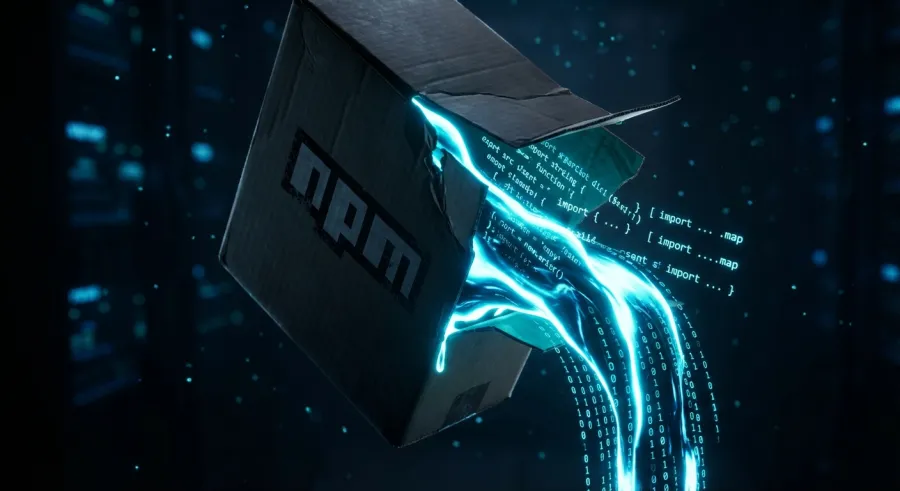
While Axios was a malicious injection, the claude code leaked source was a self-inflicted wound. A 59.8 MB source map file was accidentally included in a public package. This file acted as a master key. It allowed anyone to reconstruct the original TypeScript code for the entire tool.
The Immediate Consequences of the Claude Code Leaked Source
The speed at which the community reacted was staggering. Within an hour of the claude code leaked source hitting npm, backup repositories appeared. One specific GitHub repo, instructkr/claude-code, exploded in popularity overnight. It garnered over 11,000 stars in a single hour.
Developers didn't just look at the code; they started forking it immediately. This created a permanent record of Anthropic's intellectual property. Even though the original package was quickly pulled, the claude code leaked source remains a significant piece of AI history and a massive security lesson.
This incident proves that even the biggest AI companies are vulnerable to basic devops mistakes. When you are moving fast to ship AI features, simple things like source maps can ruin your day. It’s a reminder that security must be integrated at every step of the API lifecycle.
Core Concepts Explained: How the Claude Code Leaked Source Happened
To understand how the claude code leaked source occurred, you have to understand how modern web bundling works. Most developers use tools like Webpack or Vite to minify their code. This makes the files smaller and faster to load for users and AI applications alike.
Minified code is unreadable to humans. To fix this for debugging, developers use source maps. These are JSON files that map the minified code back to the original source. In the case of the claude code leaked source, these maps were accidentally left in the production build.
Source Maps and the Claude Code Leaked Source Risks
The file in question was v2.1.88 of the @anthropic-ai/claude-code package. When the team published it, they included a massive .map file. This wasn't just a snippet; it was the full blueprint. The claude code leaked source essentially provided the "un-minifier" for their entire logic.
For any developer using an AI API, this is a cautionary tale. If you are shipping internal tools, your build process needs to be airtight. You can access the latest Claude models and investigate the claude code leaked source context via GPT Proto to see how these models are structured safely.
Technical Anatomy of the Claude Code Leaked Source
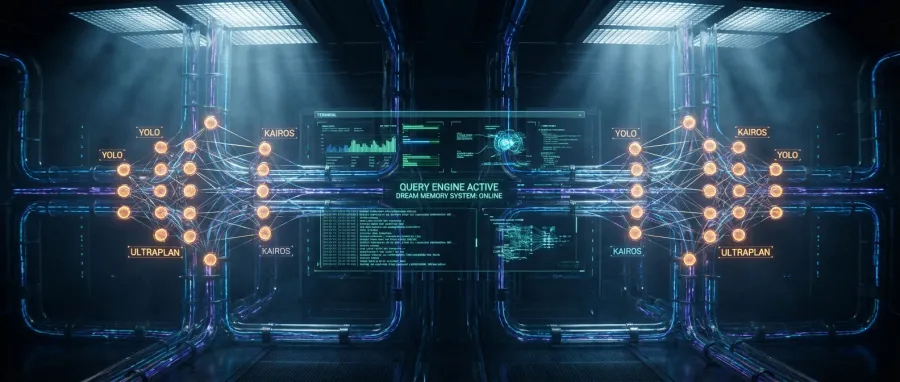
The leaked file contained roughly 512,000 lines of code across 1,900 TypeScript files. This wasn't just some front-end UI code. It was the "Query Engine," the "Dream Memory System," and the complex tool-calling logic that powers the Claude assistant. It was the brain of the operation.
We often think of AI as a black box, but the claude code leaked source showed the plumbing. It revealed how Anthropic handles streaming API responses and manages state. It also showed the specific permissions they use to keep the AI from going off the rails during code execution.
The "Dream" system in the claude code leaked source is particularly fascinating. It allows a background agent to reorganize memory files while the main agent sleeps. It’s a clever way to handle the long-term context limits of modern AI models.
Step-by-Step Walkthrough: Dissecting the Leaked TypeScript Files
Once the claude code leaked source was out, the community started digging. The structure was surprisingly organized, which is typical for a top-tier engineering firm. But the content inside those files revealed features we didn't even know existed yet in the AI market.
The largest chunk of the claude code leaked source was the Query Engine. This 46,000-line module is responsible for every API call. It handles the nuances of LLM communication, from token management to error handling. It's the core of how Claude "thinks" before it types.
Tool Permission Modes in the Claude Code Leaked Source
One of the coolest finds in the claude code leaked source was the permission system. There were four distinct modes: default, auto, bypass, and the infamous "YOLO" mode. Each mode dictates how much autonomy the AI has when executing commands on a user's machine.
- Default Mode: Standard security checks for every API action.
- Auto Mode: High-confidence actions proceed without prompting.
- Bypass Mode: Used for internal testing of core AI logic.
- YOLO Mode: Total freedom, likely used for extreme debugging by senior engineers.
Unreleased Features in the Claude Code Leaked Source
The claude code leaked source also teased a feature called KAIROS. This appears to be a resident background assistant. It can make decisions and take actions autonomously. It even has a 15-second "blocking budget" to ensure it doesn't freeze the user's workflow while making complex AI decisions.
We also saw "ULTRAPLAN," which offloads heavy tasks to remote cloud containers. This suggests Anthropic is moving toward a hybrid compute model. Instead of doing everything locally, the AI API can spin up a sandbox in the cloud to run resource-intensive code safely.
Then there’s the Buddy system. The claude code leaked source hinted at a terminal-based electronic pet, scheduled for May 2026. It’s a human touch in a very technical product. It shows that even the most serious AI developers value user engagement and personality in their tools.
Common Mistakes & Pitfalls: Source Maps and Supply Chain Risks
The claude code leaked source didn't happen in a vacuum. It was the result of a "move fast and break things" culture meeting a complex build stack. The biggest pitfall here is the lack of a robust `.npmignore` file or a CI/CD check that scans for sensitive file types.
I’ve seen many teams make the same mistake that led to the claude code leaked source. They assume that because they are publishing a package, only the "dist" folder goes out. But without proper exclusion rules, your entire source tree can be bundled into a map file and shipped to npm.
Preventing Your Own Claude Code Leaked Source Event
To avoid a claude code leaked source disaster in your own company, you need to audit your build artifacts. Every time you publish an API client or a library, you should use tools like `npm pack` to see exactly what is inside the tarball before it goes live.
- Always verify `.npmignore` and `.gitignore` files.
- Disable source map generation for production builds unless absolutely necessary.
- Use automated scanners to look for secrets and large map files in your CI/CD pipeline.
- Implement manual approval for publishing major versions of your AI tools.
The API Security Gap and Claude Code Leaked Source
Another issue the claude code leaked source highlighted was the exposure of internal project names. Code names like "Tengu" and "Capybara" were all over the source. While not a direct security threat, it leaks your roadmap to competitors. It makes your future AI strategy predictable.
In the Axios case, which happened the same day as the claude code leaked source, the problem was account hijacking. A maintainer’s account was compromised. This shows that you need MFA and strong session management for any account that has "publish" access to your codebase.
| Feature | Axios Attack | Claude Code Leak |
|---|---|---|
| Incident Type | Malicious Supply Chain | Source Code Disclosure |
| Root Cause | Account Hijack / Credential Theft | Build Configuration Error (.map) |
| Impact | Remote Access Trojan (RAT) | Intellectual Property Loss |
| Resolution | Package Removal by npm | Manual Takedowns / Internal Audit |
Expert Tips & Best Practices: Securing Your AI Development Workflow
Looking at the claude code leaked source, it’s clear we need better standards for AI software distribution. If you are building on top of LLMs, you are likely handling sensitive API keys and proprietary prompts. Keeping these safe is your number one job as a practitioner.
One way to mitigate the risk shown by the claude code leaked source is to use a unified API gateway. Instead of hardcoding logic for every individual model, you can use a service that abstracts the complexity. This reduces the surface area of your code and makes it easier to audit.
Managing API Costs and Security After the Claude Code Leaked Source
Security isn't just about code; it's about usage. The claude code leaked source revealed how Anthropic manages its own internal API quotas. You should do the same. Monitoring your usage in real-time is essential to preventing runaway costs or unauthorized access if a key is ever leaked.
If you're worried about the costs associated with top-tier models, GPT Proto offers a smart solution. You can manage your API billing efficiently and access mainstream models like Claude and OpenAI with up to 70% discounts. This keeps your development agile without the financial risk.
Integrating Multi-Modal AI Safely with Claude Code Leaked Source Lessons
The claude code leaked source showed how complex it is to manage multi-modal inputs. The "Undercover" mode found in the code was specifically designed to prevent internal Anthropic employees from accidentally leaking secrets while working in public repos. That's a high-level security feature.
You can achieve a similar level of control by using a unified interface. GPT Proto’s platform allows you to switch between performance-first and cost-first modes. This means you can test your code against different models without rewriting your entire logic every time a new claude code leaked source situation occurs in the industry.
By centralizing your AI access, you reduce the number of points where a configuration error could expose your secrets. It's about building a "moat" around your application logic. The claude code leaked source proves that even the best in the business can forget to close the gate.
What's Next: Anthropic's Future After the Claude Code Leaked Source
Anthropic has been quiet since the claude code leaked source incident. They are likely doing a massive internal audit of their entire deployment pipeline. But the damage is done. The community now has a clear roadmap of where Claude is heading over the next few months.
We are waiting to see if they will officially release the KAIROS and ULTRAPLAN features found in the claude code leaked source. These could change how we think about autonomous agents. If an AI can manage its own "Dream" memory and run cloud sandboxes, the possibilities for automated coding are endless.
The Rise of Autonomous Agents Post-Claude Code Leaked Source
The Coordinator mode revealed in the claude code leaked source suggests a shift toward multi-agent orchestration. This is where one "master" agent manages several "sub-agents" to perform tasks in parallel. It’s a massive leap forward from the single-threaded chat interfaces we use today.
As these features become mainstream, developers will need reliable ways to access them. You can explore all available AI models on GPT Proto to stay ahead of the curve. Seeing how the claude code leaked source logic works gives us a hint of the power coming to these APIs very soon.
Long-term Impact of the Claude Code Leaked Source on npm
The npm registry will likely introduce stricter checks for source map files in large packages after the claude code leaked source incident. We might see "security by default" settings that warn developers when they are about to publish a massive .map file to a public repository.
For the rest of us, the claude code leaked source is a masterclass in modern AI architecture. We’ve learned about "YOLO" modes, "Dream" systems, and the importance of build hygiene. It’s a messy way to learn, but in the fast-moving world of AI, these hard-won lessons are the most valuable.
If you want to start building your own AI-powered tools without making the same mistakes found in the claude code leaked source, it's time to use professional-grade infrastructure. Check out the read the full API documentation at GPT Proto to build securely and efficiently from day one.
Written by: GPT Proto
"Unlock the world's leading AI models with GPT Proto's unified API platform."