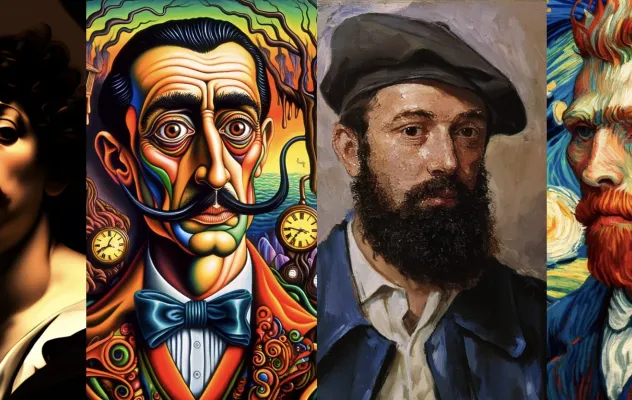
The evolution of enterprise technology is shifting from static data storage to capturing the deep reasoning behind every corporate move. This transformation centers on the Context Graph, a dynamic map of decision traces that allows AI Agents to navigate tribal knowledge and unwritten rules. While traditional SaaS giants struggle with rigid architectures, new infrastructure layers enable autonomous digital employees to operate with unprecedented sophistication. By utilizing a Context Graph, companies can bridge the gap between raw data and executable intelligence, ensuring AI Agents function as expert teammates rather than simple chatbots in a competitive market.
The Trillion Dollar Map: Why AI Agents Need the Context Graph
If you have spent any time on tech Twitter lately, you have likely seen a storm brewing. At the center of this storm are AI Agents and a concept hailed as the next trillion-dollar opportunity: the Context Graph. This represents the missing connective tissue of an organization.
While a traditional database tells you what happened, the Context Graph tells you why it happened. For AI Agents to move beyond being simple chatbots and become true digital employees, they must navigate this graph. They need to understand nuances, exceptions, and the unwritten rules that define a business. Without a Context Graph, AI Agents are essentially flying blind, trying to operate a complex machine without a manual.
The transition from data-centric software to context-centric software is the defining challenge of our era. Builders who capture the decision traces of a company will own the next decade. This is why integrating a Context Graph into your workflow is no longer optional for those deploying sophisticated AI Agents.
The Great SaaS Paradox and the Rise of AI Agents
For twenty years, the gospel of Silicon Valley was the System of Record. The goal was to become the definitive place where data lived. If you owned customer data, you were Salesforce. However, as we enter the age of AI Agents, we are discovering a paradox: these systems store the result but lose the process.
When a salesperson closes a deal with a unique discount, the CRM records the price. It doesn't record the hours of negotiation or internal debate. That intelligence is lost. When we deploy AI Agents to handle renewals, they see rigid data points without history. This is where the Context Graph becomes vital.
If an agent cannot understand the reasoning behind past actions, it cannot predict future ones. This has led to a search for new infrastructure where AI Agents use a Context Graph to act as a memory bank for collective intelligence. The value proposition is shifting from the "Record" to the "Reasoning."
What is a Context Graph, Anyway?
Think of the Context Graph as a map of every decision made within a company. It is a living history of "Decision Traces." A decision trace is the breadcrumb trail left when a human or AI Agents make a choice. It includes consulted data, people, and the final justification.
When you aggregate thousands of these traces, you get a Context Graph. This allows AI Agents to query how a company handled similar situations in the past. It transforms tribal knowledge into a searchable, usable asset. Without a robust Context Graph, your AI Agents remain limited by the narrow confines of structured tables.

For example, a fact might be a 15% discount. The context is that the customer had service outages. The Context Graph connects that discount to incident reports and Slack approvals. AI Agents leveraging this graph can operate with a level of sophistication previously impossible for any software system.
The Anatomy of a Decision Trace within the Context Graph
To build a robust Context Graph, we must break down what goes into a decision. Most corporate decisions are influenced by internal precedents. AI Agents need to identify patterns where companies break their own rules. If a company consistently favors a certain strategy, that is a data point the Context Graph must store.
Second, there are external constraints like market conditions. A decision in a bull market looks different than one in a recession. The Context Graph captures these factors so AI Agents understand the "vibe" of the market. Third are human incentives. Understanding who approved a decision and why is critical for AI Agents navigating internal politics.
Comparison: Systems of Record vs. Context Graph
Traditional SaaS focuses on the current state. In contrast, a Context Graph focuses on the process. While SaaS uses structured rows, the Context Graph uses relational traces. This allows AI Agents to use the graph as a reasoning foundation rather than just a reference material.
When these elements combine, the decision trace becomes a training tool. Newer AI Agents can be fed these traces to learn company nuances. This is more effective than generic fine-tuning. You are giving the AI Agents a memory of the company's best moments and instructive failures through the Context Graph.
Solving the Tribal Knowledge Problem
Every company has a "Kevin" who knows why systems break or why certain clients dislike specific packages. This tribal knowledge is the enemy of scale and a barrier for AI Agents. They can follow official SOPs but still fail because they lack the unwritten context Kevin possesses.
The Context Graph is the technology that finally solves the Kevin Problem. By using AI Agents to observe workflows, companies can systematically harvest tribal knowledge. Every time a human corrects an agent, that interaction is added to the Context Graph, creating a digital twin of experience.
This shift changes the human role. Humans become "Context Contributors." Their job is to guide AI Agents, providing high-level reasoning the Context Graph needs to grow. This creates a virtuous cycle where AI Agents become more autonomous, freeing humans for complex strategic challenges.
Technical Hurdles: The Problem of Two Clocks
Building a Context Graph is a massive technical undertaking. One issue is the "Two Clocks" problem. Traditional software focuses on the State Clock—what the world looks like now. However, AI Agents need the Event Clock, which cares about the sequence of events leading to the current state.
To an agent, a customer changing an address three times is a significant signal of risk. If you only have the State Clock, you lose that context. A true Context Graph requires a system that handles both clocks. AI Agents are in the perfect position to act as recorders for the Event Clock, logging every reasoning step.
This requires a new database architecture optimized for graph relations. It also requires significant computational power. Processing these streams into a coherent Context Graph is expensive, which is why the cost of running AI Agents is a critical factor for modern startups.
The Economics of Intelligence and GPT Proto
Running a fleet of AI Agents that are constantly documenting for a Context Graph is resource-intensive. Every "thought" involves an LLM call, and costs add up. For many, the dream of an autonomous workforce is stalled by the expense of API tokens needed for AI Agents.
This is where GPT Proto becomes essential. If you are building AI Agents to populate a Context Graph, you likely use multiple models like GPT-4o or Claude. GPT Proto offers a unified interface and slashes costs by up to 60%. When AI Agents must document every decision trace, this discount is the difference between a viable business and a money pit.
Since the Context Graph is multi-modal, having one access point for text, image, and video models is a game-changer. GPT Proto allows AI Agents to synthesize information from any format into the organizational map without the friction of incompatible SDKs or multiple billing accounts.
Why Incumbents Struggle with the Context Graph
You might wonder why Salesforce or Snowflake aren't doing this. These giants are victims of their own success. Their architectures are built around the State Clock and optimized for rows. To build a Context Graph for AI Agents, they would have to fundamentally rethink their software, which is difficult with thousands of legacy customers.
Incumbents are also trapped in data silos. A Context Graph is only useful if it spans the entire company. AI Agents don't care about silos; they move through them. Startups building AI-native workflows can design systems to capture context across the entire organization from day one.
The old guard views software as a tool for humans to record work. The new guard views AI Agents as the workers. If the software is the worker, it must also be the witness. This shift from recording to witnessing is why AI Agents need a Context Graph to truly succeed in the enterprise.
Three Paths for AI-Native Founders
Founders looking at AI Agents can take three strategies to capitalize on the Context Graph. The first is Vertical Displacement: building an AI-native version of a traditional system where the Context Graph is the primary byproduct of work. This is aggressive but offers total category ownership.
The second path is Modular Penetration. Focus on high-value workflows dominated by tribal knowledge, like legal compliance. By building AI Agents that handle these tasks and document traces, you become the indispensable Context Graph layer for that department without replacing the entire system.
The third is the Horizontal Orchestration Layer. The goal here is to create a persistent layer for the whole company. You build the infrastructure allowing all AI Agents to share a unified Context Graph. You become the "brain" of the organization, providing the memory and reasoning every other tool needs.
The Human Side of the Context Graph
Some fear that turning tribal knowledge into a Context Graph makes humans obsolete. If AI Agents know everything, what happens to the staff? However, a Context Graph captures what we did, but it cannot capture what we "should" do. AI Agents are masters of precedent, not vision.
By delegating precedent-based work to AI Agents, humans focus on vision-based work. When routine decisions are handled by a system that understands the Context Graph, humans are freed from being walking encyclopedias. They can focus on ethics and innovation—things a graph cannot replicate.
The Context Graph actually makes work more human. Instead of humans acting like machines following rigid SOPs, the AI Agents adapt to us. The technology stops being a barrier and starts being a partner, powered by the collective memory of the organization.
Case Study: The Renewal Agent and the Context Graph
Imagine a software company managing thousands of renewals. Traditionally, CSMs rely on intuition and sparse notes. Now, imagine they deploy AI Agents. One agent sees a healthy account, but the Context Graph reveals the main point of contact recently left for a competitor.
The Context Graph also shows a decision trace from years ago where a loyalty credit prevented a switch. Armed with this, the AI Agents don't send a standard email. They flag the account and suggest a strategy based on that precedent. The AI Agents saved a multi-million dollar account by navigating the Context Graph in seconds.
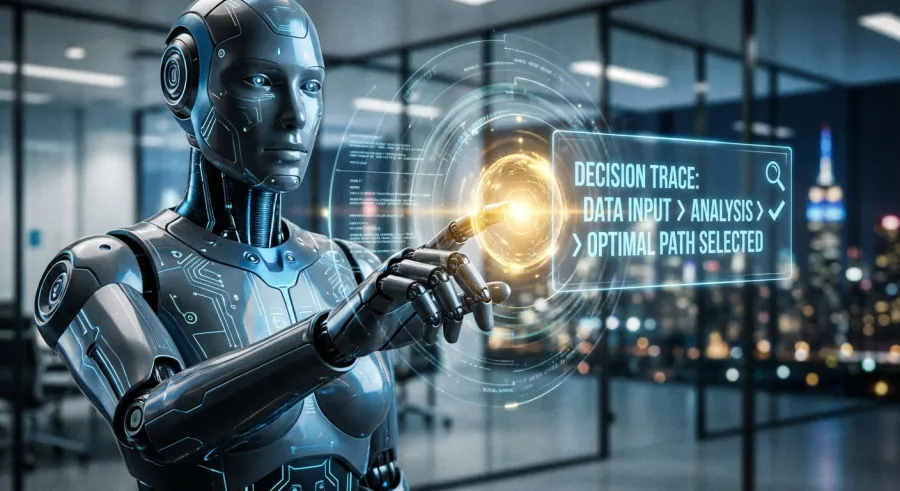
This is the power of the graph. It is not just about speed; it is about intelligence. When AI Agents can bring the full weight of company history to every interaction, the economic impact is staggering. We are seeing a massive increase in efficiency and personalization at scale through the Context Graph.
The Trillion Dollar Opportunity
The biggest tech winners always create the new base layer. In the 2020s, that layer is the Context Graph, powered by AI Agents. This is a trillion-dollar race because it touches every aspect of the economy. The first companies to map context and put it in the hands of AI Agents will have an unbeatable advantage.
The addressable market includes professional services and human labor. If AI Agents can do the work of a junior analyst because they have the Context Graph of a senior manager, the value creation is enormous. We are moving toward "Intelligence as a Service" where the graph is the core asset.
For developers, the message is clear: infrastructure must be ready for AI Agents. You need affordable models like those from GPT Proto and architectures that handle the Context Graph. The map is being drawn right now, and the AI Agents are ready to start walking.
Conclusion: The Future is Contextual
We are moving beyond the era where data is king and into an era where the Context Graph is everything. Systems of Record are being demoted to filing cabinets for the more dynamic Context Graph. AI Agents are the catalysts, acting as both creators and consumers of this new organizational intelligence.
By capturing decision traces, AI Agents allow us to build a digital memory more powerful than any database. This shift will create new giants and change the nature of work. For those who solve tribal knowledge and leverage affordable models for their AI Agents, the rewards are limitless. The Context Graph is the future, and the agents are leading the way.
Original Article by GPT Proto
"We focus on discussing real problems with tech entrepreneurs, enabling some to enter the GenAI era first."