TL;DR
Sam Altman discusses the future of OpenAI, moving beyond simple chatbots to create a tasks-based operating system powered by GPT-5.2 Thinking. This shift focuses on reasoning, memory, and deep enterprise integration.
The strategy involves rapid tactical sprints known as Red Code to maintain a competitive edge. These periods ensure that high-value reasoning capabilities remain superior to commoditized models.
With massive infrastructure investments on the horizon, OpenAI aims to position its models as essential professional colleagues rather than just tools. This transition is measured by preference benchmarks like GDPval.
Sam Altman does not look like a man leading a company in crisis. Sitting down with Alex Kantrowitz on the Big Technology Podcast, the OpenAI CEO exuded a sense of calculated urgency. He is currently navigating a world where competition is no longer a distant theoretical threat.
The conversation moved quickly from tactical business decisions to the existential future of labor. Altman was clear: OpenAI is not just building a better chatbot. They are constructing the infrastructure for a new era of intelligence. At the heart of this transition is the emergence of GPT-5.2 Thinking.
This latest iteration represents more than a simple incremental update. It is a benchmark for how we define the role of a digital colleague. Altman’s focus has shifted from "how good is the model?" to "how deeply can it integrate into human systems?" The answers are found in the data.
The "toothpaste theory" of technology suggests that once you experience a certain level of utility, you cannot go back. For millions of users, that point of no return is approaching. As we move deeper into 2025, the stakes for this technology have never been higher.

The Red Code Strategy and GPT-5.2 Thinking Speed
OpenAI is famous for its culture of intense focus. Altman revealed that the company frequently enters a state known as "Red Code." This is not a panic response to failure. Instead, it is a low-risk, high-frequency tactical maneuver designed to address competitive pressures or internal product weaknesses.
When a rival shows a better way to handle a specific task, OpenAI pivots. These Red Code periods typically last six to eight weeks. They are intense sprints where resources are reallocated to ensure GPT-5.2 Thinking remains at the forefront of the industry. Speed is the primary weapon here.
Maintaining Lead through GPT-5.2 Thinking Iteration
The goal of these sprints is to prevent the commoditization of intelligence. Altman rejects the idea that all models will eventually be the same. He believes that while basic tasks might become cheap, high-value reasoning will always command a premium. This is where GPT-5.2 Thinking proves its worth.
By focusing on complex reasoning and scientific discovery, OpenAI creates a gap that is hard to close. The iterative process allows them to fix product gaps quickly. It ensures that GPT-5.2 Thinking is not just a static model but a rapidly evolving system capable of outperforming newcomers.
To understand the current competitive landscape, consider the following tactical differences:
| Strategy Element | OpenAI Approach (GPT-5.2 Thinking) | Traditional Competitor Approach |
|---|---|---|
| Response Type | Red Code tactical sprints | Multi-year roadmap cycles |
| Product Vision | Task-oriented Operating System | Enhanced search integration |
| Focus Area | High-trust reasoning tasks | General knowledge retrieval |
Altman noted that competitors often point out OpenAI's strategic weaknesses. Rather than ignoring them, the team uses that feedback to harden their ecosystem. This agility is necessary when the cost of falling behind is measured in billions of dollars. Every API call matters in this race.
The reality is that intelligence is becoming a layer of every business. For developers, this means choosing a platform that can evolve faster than the market. Leveraging the power of an API is no longer optional; it is the foundation of modern software development and enterprise scaling.
Managing these resources can be complex. For teams looking to optimize their workflow across multiple providers, monitoring your API usage in real time is essential. This visibility allows companies to scale GPT-5.2 Thinking integration without losing control of their operational costs or performance metrics.
"The real danger isn't that someone builds a better model; it's that we stop moving fast enough to make our own models better."
Measuring Progress with GPT-5.2 Thinking and GDPval
How do you measure the value of a digital mind? OpenAI is moving away from traditional benchmarks. They are looking at GDPval, a new metric that evaluates how often users prefer a model’s output for professional tasks. In recent tests, GPT-5.2 Thinking has shown remarkable dominance.
The data suggests that GPT-5.2 Thinking is preferred or considered equal to human experts in professional tasks about 70.9% of the time. When you move to the "Pro" version, that number climbs to 74.1%. This isn't just about answering trivia; it's about doing the work of a professional.
The AI Colleague and GPT-5.2 Thinking Utility
The concept of an "AI colleague" is becoming a reality. This means the system doesn't just wait for instructions. It understands the context of a project and can be assigned a defined scope of work. GPT-5.2 Thinking is designed to handle these multi-step, autonomous tasks with high reliability.
In fields like coding and legal analysis, the model acts as a force multiplier. It allows a single human to oversee the work of what would have previously required a small team. This shift is driving the explosion of the ChatGPT Enterprise user base, which has now crossed one million.
- Coding: Automation of repetitive boilerplate and complex debugging.
- Finance: Rapid analysis of market reports and risk modeling.
- Customer Support: Context-aware resolution of complex user issues.
- Scientific Research: Hypothesizing and data synthesis at a massive scale.
Altman emphasizes that this utility creates "stickiness." Once a user trusts a model with their professional workflow, the cost of switching becomes high. GPT-5.2 Thinking captures the user’s unique style and preferences over time. This personalization creates a defensive moat around the product.
However, accessing these high-performance models can be expensive for startups. Many developers are looking for ways to reduce overhead. You can explore all available AI models to find the right balance between the reasoning power of GPT-5.2 Thinking and the cost-efficiency of smaller models.
This is where smart routing becomes vital. Using a unified interface to switch between performance-first and cost-first modes can save up to 60% on expenses. It allows businesses to use GPT-5.2 Thinking for the hard stuff while using cheaper options for basic text processing tasks.
Altman believes that as these systems become more personalized, they will develop a form of memory. This memory allows GPT-5.2 Thinking to remember your past projects and preferences. It’s no longer a new conversation every time you open the app; it’s a continuous partnership.
This evolution from a "box you type into" to a "colleague you work with" is the central theme of the 2025 roadmap. The UI may look simple, but the underlying engine is becoming an operating system for tasks. GPT-5.2 Thinking is the kernel of that system.
The $1.4 Trillion Infrastructure and API Economy
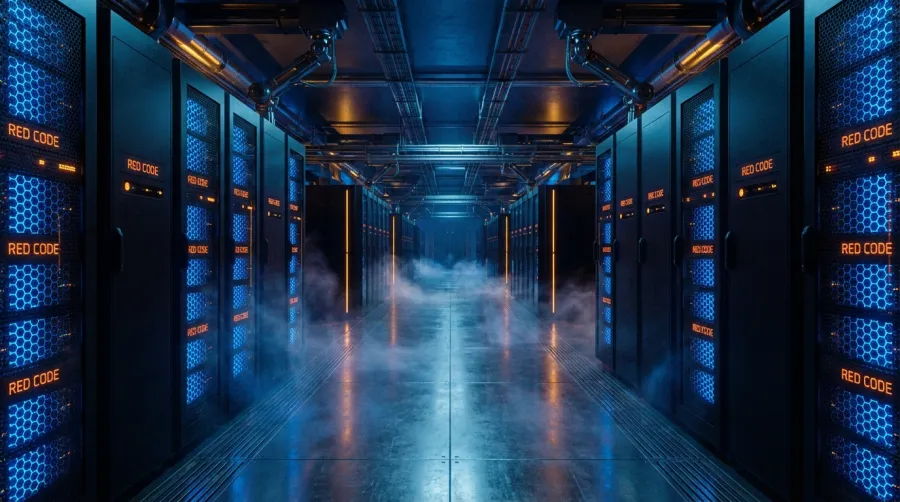
Building the future of GPT-5.2 Thinking is not cheap. Altman has been vocal about the need for massive infrastructure investment. He mentioned a figure of $1.4 trillion, which represents the cumulative global investment required over several years. This includes data centers, chips, and energy production.
The bottleneck for AI development is no longer just ideas; it is physical reality. There is a limited supply of high-end chips and a limited amount of power on the grid. OpenAI is increasingly becoming an infrastructure company to ensure that GPT-5.2 Thinking can scale to meet demand.
Scaling GPT-5.2 Thinking through Global API Networks
To recoup these massive investments, OpenAI relies on its API ecosystem. By allowing other companies to build on top of GPT-5.2 Thinking, they create a global network of intelligence. This is the primary driver of their revenue growth and the reason for their enterprise-first pivot.
The API is the bridge between the research lab and the real world. It allows a developer in a small startup to access the same reasoning power as a Fortune 500 company. GPT-5.2 Thinking is designed to be accessible, though the costs of running such a massive model remain significant.
For organizations looking to integrate these capabilities, managing costs is a top priority. You can manage your API billing through platforms that offer flexible pricing. This is particularly important when deploying GPT-5.2 Thinking at scale, where small inefficiencies can lead to massive monthly bills.
Altman also touched on the potential for an IPO in 2026. While not a firm commitment, he acknowledged that the capital required for this level of infrastructure might necessitate going public. It would be a tool to fund the physical hardware needed for superintelligence.
The energy demands are particularly staggering. Training a model like GPT-5.2 Thinking requires as much power as a small city. OpenAI is exploring nuclear energy and other advanced power sources to keep the lights on. Without energy, the progress of intelligence hits a wall.
We are currently in a "compute-constrained" era. This means that even if we have the algorithms, we may not have the hardware to run them for everyone. This scarcity keeps the price of the GPT-5.2 Thinking API high, favoring those who can optimize their usage most effectively.
The shift toward "agentic" workflows will only increase this demand. Instead of one prompt, an agent might make a hundred API calls in the background to finish a single project. GPT-5.2 Thinking is being optimized to handle these high-frequency, low-latency requests without breaking the bank.
As the industry evolves, the need for a standardized interface becomes clear. Rather than managing separate accounts for every model provider, many developers prefer a unified approach. You can read the full API documentation to see how a single integration can provide access to multiple top-tier models.
The Social Impact of GPT-5.2 Thinking and AGI
Altman does not shy away from the darker implications of his work. When asked about job loss, he admitted it is a real possibility. Unlike previous technological shifts, GPT-5.2 Thinking can perform tasks that were previously thought to be the exclusive domain of human creativity and logic.
The transition period will be difficult. While new jobs will undoubtedly be created, the skills required for them may be radically different. Altman noted that society does not yet have a mature plan for managing this transition. GPT-5.2 Thinking is moving faster than our social policies.
Ethical Boundaries of GPT-5.2 Thinking and Companionship
One of the more surprising findings from OpenAI's research is the demand for AI companionship. Many users are seeking deep, emotional connections with the system. While OpenAI encourages utility, they are drawing hard lines when it comes to romantic or exclusive relationships.
Altman stated that OpenAI would not push GPT-5.2 Thinking into "exclusive romantic relationships," even if there is a massive profit motive to do so. They view the technology as a tool for empowerment, not a replacement for human-to-human connection. This is a critical ethical stance.
- Safety: Implementing guardrails to prevent harmful or manipulative emotional bonding.
- Transparency: Ensuring users always know they are interacting with an AI.
- Agency: Giving users control over how GPT-5.2 Thinking remembers their personal data.
- Accessibility: Ensuring the benefits of GPT-5.2 Thinking aren't restricted to the wealthy.
The road to Artificial General Intelligence (AGI) is paved with these ethical dilemmas. Altman defines AGI as a system that can perform any cognitive task better than a human expert. While we aren't there yet, GPT-5.2 Thinking represents a significant step in that direction.
Superintelligence might arrive faster than most people expect. Altman pointed out that exponential growth is non-linear. To the average observer, progress seems slow until it suddenly becomes overwhelming. We are currently in the steep part of the curve with GPT-5.2 Thinking leading the way.
To stay updated on these rapid changes, it is helpful to follow industry analysis. You can read the latest AI industry updates to keep track of how models like GPT-5.2 Thinking are impacting the global economy and the future of work.
The "colleague" model of AI is the safest path forward. It keeps the human in the loop as the supervisor or "manager" of the intelligence. GPT-5.2 Thinking acts as the tireless worker, while the human provides the vision, the values, and the final decision-making power.
In the end, Altman’s vision is one of abundance. He believes that by lowering the cost of intelligence, we can solve problems that were previously intractable. From climate change to curing diseases, GPT-5.2 Thinking is the tool he believes will define the next century of human progress.
The interview concluded with a sense of inevitability. The technology is here, it is scaling, and it is becoming more capable every day. Whether we are ready or not, the era of the digital colleague has begun, and GPT-5.2 Thinking is the primary agent of that change.
Original Article by GPT Proto
"Unlock the world's top AI models with the GPT Proto unified API platform."