TL;DR
While many AI image generators chase cinematic beauty, ideogram focuses on the technical challenge of perfect typography. It remains the gold standard for designers who need readable text, even as competitors struggle with basic spelling.
The real question isn't just about pretty pixels. It's about precision. We look at how ideogram holds its ground against Midjourney, addresses recent photorealism critiques, and fits into a professional developer workflow.
Why You Should Care About Ideogram Right Now
If you've spent any time trying to get an AI to write a simple sentence on a t-shirt or a storefront, you know the frustration. For years, most models treated text like a suggestion, often outputting a mess of unreadable runes. That's where ideogram changed the game. It didn't just try to make pretty pictures; it focused on the technical hurdle of typography within generated art.
But here's the thing: the market isn't static. While early versions of ideogram were revolutionary for their text rendering, users are now asking if the tool still holds its crown. Is the trade-off in photorealism worth the precision? If you are a designer or a brand owner, that's the only question that actually matters when you're looking at your subscription budget.
The Text Problem That Ideogram Solves
Most AI image generators prioritize the "vibe" of an image over the specific details of a prompt. You ask for a coffee shop, and you get a beautiful, moody scene where the sign says "C0f33" or something equally useless. With ideogram, the logic is reversed. The model treats your text strings as high-priority constraints rather than optional decor.
This focus on text makes ideogram the go-to choice for logo design, posters, and social media assets. You don't need to be a prompt engineer to get results. You just type what you want, and ideogram puts it on the canvas. It's about reducing the friction between your idea and the final render, which is why practitioners keep coming back to it.

Breaking Down Ideogram Prompt Adherence
Prompt adherence is the measure of how well an AI listens to you. Some models are like talented but rebellious artists; they do what they want. In contrast, ideogram is like a disciplined illustrator. If you specify a red hat, a blue background, and the word "VINTAGE" in bold yellow letters, that is exactly what you get. It avoids the "aesthetic drift" common in other platforms.
"The core strength of ideogram lies in its predictability. You spend less time rolling the dice and more time refining a specific vision."
This predictability is a massive time-saver for professional workflows. When you're using an API to generate hundreds of variants, you can't afford a high failure rate. The consistent logic of ideogram ensures that the output matches the input parameters, making it a reliable pillar in any automated creative pipeline.
Ideogram vs Midjourney: The Battle for Creative Control
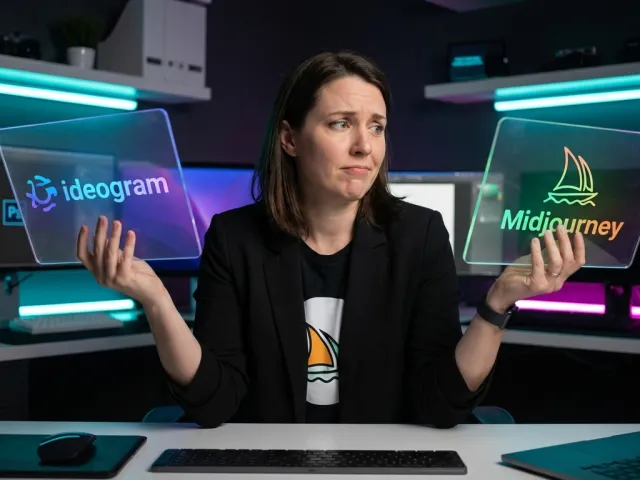
The biggest rivalry in this space is undoubtedly ideogram versus Midjourney. They represent two very different philosophies of AI art. Midjourney is famous for its "wow" factor—images that look like they were shot by a world-class photographer or painted by a master. But that beauty often comes at the cost of control and, more importantly, readability.
Many users find that Midjourney requires a "prompt wizardry" that ideogram simply doesn't demand. You don't need a 50-word string of technical camera settings and artist names to get a clean result in ideogram. It's a more direct experience. However, this simplicity can sometimes lead to a "flatter" look compared to the cinematic depth Midjourney provides.
Where Ideogram Wins the Aesthetic War
It sounds counterintuitive to say ideogram wins on aesthetics, but it depends on what you're building. For graphic design—think clean lines, clear layouts, and modern branding—ideogram often produces a more usable final file. Midjourney can be too detailed, adding textures and lighting that actually make it harder to isolate a logo or a piece of text.
- Text clarity: ideogram is the undisputed champion.
- Layout control: ideogram follows spatial instructions better.
- Ease of use: No complex parameters or Discord-only interfaces.
- Brand consistency: Easier to replicate a specific style across multiple generations.
And then there's the issue of censorship. A common complaint among the Midjourney crowd is the increasingly "hardcore" censorship filters that can block even innocent creative concepts. While ideogram has its own safety guidelines, users often find it less restrictive, allowing for more creative freedom without constant "forbidden prompt" warnings.
Aesthetic vs Precision in Ideogram
There is a recurring debate in the community about the "soul" of the images. Midjourney prioritizes beauty and aesthetics over strict prompt adherence. It will fill in the gaps for you, often making your prompt look better than you imagined. But if you have a very specific technical layout in mind, that "helpfulness" becomes a hurdle that only ideogram can clear.
If you're looking to explore all available AI models, you'll see that different tools serve different masters. Ideogram serves the user who needs the output to look exactly like the mockup. It’s the difference between hiring an "artist" who does their own thing and a "graphic designer" who follows the brief to the letter.
So, which one do you pick? If you need a stunning wallpaper or a conceptual landscape, Midjourney is great. But if you need a promotional banner where the text actually says the name of your company, ideogram is the tool you pull out of the bag every single time.
Performance Benchmarks and Ideogram Pricing
Let's talk about the actual experience of sitting in front of the screen. How fast is ideogram? In my experience, even on "slow" settings, you're looking at about 30 seconds for a render. That’s competitive. It’s fast enough that it doesn't break your flow, but slow enough that you can actually think about your next iteration while it processes.
Speed is a critical factor when you are integrating these tools into a professional environment. If you're using an API to handle bulk requests, those seconds add up. Ideogram remains consistently snappy, which is a testament to its underlying infrastructure. It doesn't seem to suffer from the same peak-hour slowdowns that plague some smaller startups.
Speed and Efficiency with Ideogram
Efficiency isn't just about raw seconds; it's about the "hit rate." If you get the right image on the first try with ideogram, it's faster than a tool that generates in 10 seconds but takes 10 tries to get the text right. This efficiency is why many are now using the ideogram replace background v3 tool to speed up their e-commerce workflows.
| Metric | Ideogram Performance |
|---|---|
| Average Render Time | ~30 Seconds |
| Prompt Adherence | High (Top Tier) |
| Text Accuracy | 95% + |
| API Availability | Stable and Scalable |
For developers, the ideogram API provides a way to bake this efficiency directly into their own apps. Whether you're building a meme generator or a professional design suite, having a reliable endpoint for high-quality text-heavy images is a massive competitive advantage. You don't have to worry about the heavy lifting of model hosting or GPU management.
Evaluating the Ideogram Cost-to-Value Ratio
Pricing is always the elephant in the room. Most users are happy with the free tier for casual use, but the paid plans are where the real power lies. Compared to high-end design software, the monthly cost of ideogram is negligible. However, if you are a heavy user, you need to look at the credits and the priority processing times.
Is it worth it? If you are a freelancer who does branding, the answer is a resounding yes. One saved hour of manually fixing text in Photoshop pays for a year of ideogram. But for those concerned about costs, you might want to manage your API billing through a platform that aggregates these costs, offering more flexibility than a single-model subscription.
Ultimately, the value of ideogram depends on how much you value your time. If you find yourself fighting with other AI models to get letters to look like letters, you are wasting money. Ideogram is a specialized tool, and like any specialized tool, it’s worth a premium for those who actually need its specific capabilities.
Real User Experiences with Ideogram Photorealism
It hasn't been all sunshine and rainbows for ideogram recently. A vocal segment of the user base has started to complain that the photorealistic quality of the images has taken a hit. They argue that while the text is still great, the people and environments are starting to look a bit more "plastic" or overly smoothed compared to earlier versions.
I’ve seen this myself in a few tests. Sometimes a face will look a bit too perfect, lacking those tiny imperfections that make a photo look real. However, there is a counter-argument. Some users say they haven't noticed any decline at all. This suggests that the "quality" might be highly dependent on the complexity of the prompt and the specific settings used during generation.
Troubleshooting Ideogram Image Quality Issues
If you're finding that your ideogram renders look a bit off, there are ways to fix it. Usually, it's about being more descriptive with your lighting and texture keywords. Don't just say "a person"; say "a person with visible skin pores, natural lighting, shot on 35mm film." This forces the AI to move away from its default "clean" aesthetic and back toward realism.
- Use "raw" or "unprocessed" as keywords.
- Experiment with different aspect ratios.
- Avoid over-prompting; sometimes less is more.
- Check if you are using the latest model version.
The debate over photorealism is a classic example of the "AI moving target." As models update, their training data shifts, and what worked yesterday might not work today. This is why staying active in the community and reading the GPT Proto tech blog is so important for keeping your skills sharp and your outputs high-quality.
Why Some Users Prefer Local Ideogram Alternatives
For the power users who demand total control, even ideogram can feel like a "black box." This is why some are turning to local software like Stable Diffusion. With a local setup, you can use LoRAs and ControlNet to force an image into a specific shape. But let's be real: that requires a beefy GPU and a lot of technical patience.
"Local software offers more control, but ideogram offers more results per hour. It’s a trade-off between the depth of the tool and the speed of the output."
If you don't have the time to learn the intricacies of Stable Diffusion, ideogram remains the best middle ground. It gives you more control than the basic "one-button" generators without the steep learning curve of a local installation. It's built for the professional who needs to get work done, not the hobbyist who wants to spend all day tweaking settings.
Choosing the Best Fit for Your Ideogram Use Case
So, where does ideogram actually live in the real world? It's not just for making funny pictures for Reddit. We're seeing it used in serious commercial environments. Branding agencies use it for rapid prototyping. Instead of spending three days on three concepts, they can generate thirty concepts in thirty minutes, use them to gauge client interest, and then refine the winner.
The "replace background" features and the recent v3 updates have made it even more versatile for e-commerce. Imagine being able to take a product shot and instantly place it in a realistic setting with text-based signage that perfectly matches the brand’s font and style. That is the kind of power ideogram brings to the table for modern businesses.
Branding and Graphic Design via Ideogram
The branding potential is massive. Because ideogram understands typography so well, you can use it to create cohesive visual identities. You can tell it to use a specific font style across business cards, letterheads, and social media posts. While it won't replace a human designer, it acts as a powerful "force multiplier" for the creative process.
And it's not just about the text. The color palettes generated by ideogram tend to be very balanced and design-forward. It seems to have a better "eye" for what looks good on a printed page compared to models that were trained primarily on digital photography. This makes it an essential tool for anyone working in the print-on-demand space.
Scaling Production with the Ideogram API
For those looking to scale, the next logical step is exploring ideogram generate v3 capabilities through an API. This allows you to integrate the generation process directly into your website or internal tools. If you're a developer, you can use the full API documentation to get started in minutes.
Here’s why the API approach matters:
- Consistency: Use the same seed and parameters for thousands of images.
- Cost-efficiency: Only pay for what you use without multiple monthly subs.
- Automation: Set up workflows that generate social media content on a schedule.
- Customization: Build unique interfaces that only show the features your team needs.
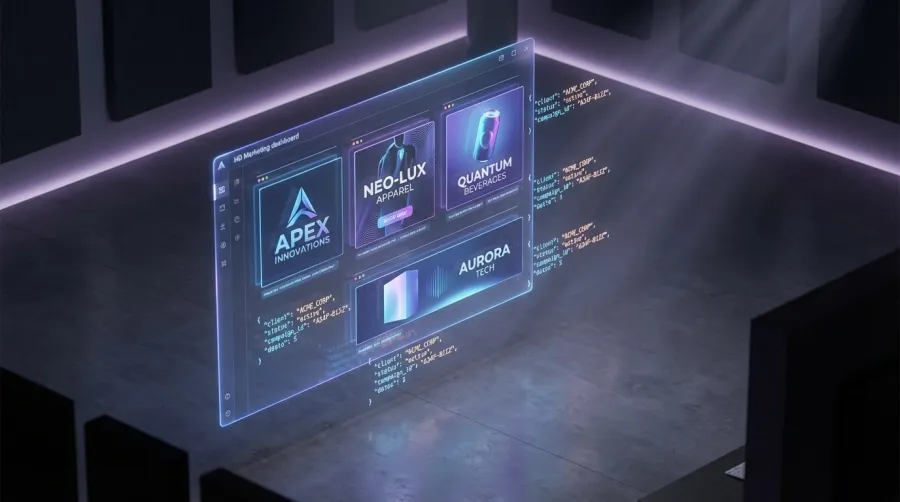
By using a unified platform like GPT Proto, you can access the ideogram API alongside other models like Claude or GPT-4. This is a game-changer for building multi-modal apps. You can use an LLM to write the perfect image prompt and then send it straight to ideogram for the final render, all within the same environment. This saves you from managing five different API keys and billing cycles.
The Final Verdict on Ideogram in the 2024 Market
Is ideogram still worth your time? If your work involves even a single word of text, the answer is yes. Despite the debates about photorealism, there is still no other AI that handles typography with the same level of grace and accuracy. It has carved out a niche that it continues to dominate, even as larger competitors try to catch up.
But don't take my word for it. The best way to know if it fits your style is to run a few tests. Compare it to Midjourney. Compare it to the free alternatives like GenTube. You'll quickly see that while other tools might be "prettier" in a traditional sense, ideogram is more useful for the practical, day-to-day tasks of a working professional.
Is Ideogram Still the King of Typography?
Yes, for now. Other models are getting better at text, but they still feel like they're "guessing." Ideogram feels like it "understands." This subtle difference is what prevents the weird spelling errors and distorted letters that ruin an otherwise perfect AI generation. It’s the king because it solved the hardest problem in the field first and continues to refine that solution.
However, the competition is closing in. To stay ahead, ideogram will need to address the concerns about image texture and photorealism. If they can combine their world-class text rendering with the aesthetic depth of Midjourney, the conversation will be over. Until then, it remains a specialized, high-performance tool for a specific set of problems.
Future-Proofing Your Ideogram Workflow
The best way to future-proof is to not rely on any single tool. The AI landscape moves too fast for that. Instead, focus on building a workflow that can adapt. Use ideogram for what it's best at—text and layout—and perhaps use other tools for the high-end photorealistic finishing touches. This hybrid approach is how the pros are staying ahead of the curve.
If you're ready to take your creative game to the next level, I highly recommend checking out how GPT Proto can simplify your access to these tools. With up to 70% discounts on mainstream APIs and a unified interface, it's the smartest way to experiment with ideogram and other top-tier models without breaking the bank. You can even try GPT Proto intelligent AI agents to help automate your prompt engineering and image generation tasks.
At the end of the day, ideogram is a tool. And like any tool, its value is determined by the person holding it. If you have the vision, ideogram has the precision to help you build it. Don't get bogged down in the "which is best" tribalism; just use the one that helps you ship your project faster. Right now, more often than not, that tool is ideogram.
Written by: GPT Proto
"Unlock the world's leading AI models with GPT Proto's unified API platform."