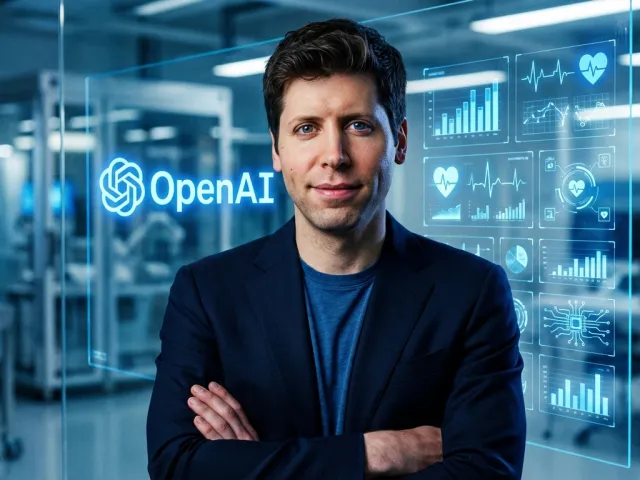
Silicon Valley was shaken this week when OpenAI announced the acquisition of Torch, a boutique medical data startup, for a staggering $100 million. This deal, effectively valuing a four-person team at $25 million per head, signals a decisive pivot for OpenAI towards verticalized healthcare intelligence. By absorbing Torch's specialized capabilities in unifying fragmented clinical records, OpenAI aims to transform ChatGPT Health from a generalist assistant into a clinically relevant tool. This strategic move addresses the industry's most persistent bottleneck—data interoperability—and positions OpenAI to dominate the burgeoning sector of personalized medical AI.
The Hundred-Million Dollar Quartet: OpenAI's Strategic Bet
In the fiercely competitive landscape of Silicon Valley, acquisition numbers often feel abstract, but the recent move by OpenAI to acquire Torch has grounded the industry in a startling new reality. OpenAI has purchased a company with exactly four employees for approximately $100 million. At first glance, this valuation appears to defy traditional economic logic. However, seasoned analysts recognize this not as a mere purchase of a startup, but as a surgical strike for high-value human capital. OpenAI is executing a masterclass in talent acquisition, securing a team that possesses rare, battle-tested expertise in the most complex sector of the digital economy: healthcare data.
The logic driving OpenAI is precise. As the company transitions from building general-purpose Large Language Models (LLMs) to creating "Vertical Intelligence," it faces hurdles that raw compute power cannot solve. Healthcare data is notoriously messy, fragmented, and siloed. OpenAI realized that to win in healthcare, they didn't need more servers; they needed the best "plumbers" in the world—engineers who understand the chaotic infrastructure of modern medicine. The Torch team, led by former executives of the medical startup Forward, represents the missing link in the OpenAI product roadmap.
This acquisition marks a defining moment for 2025, a year that is rapidly shaping up to be the era of specialized AI. While previous years focused on the generative capabilities of models—their ability to write code or poetry—OpenAI is now focusing on integration. By bringing Torch in-house, OpenAI is signaling that the future of ChatGPT Health lies in its ability to ingest, clean, and reason across real-world patient data. If OpenAI can successfully unify data from wearables, insurance claims, and hospital EMRs, they will effectively build the operating system for human health.
Deconstructing the Talent: Why OpenAI Paid a Premium
To understand the valuation OpenAI placed on this deal, one must look at the pedigree of the Torch founders, Adrian Aoun and Ilya Abyzov. These are not typical software developers. They are veterans of Forward, a high-profile attempt to reinvent the doctor's office with Apple-like aesthetics and advanced technology. Forward raised over $600 million but struggled with the immense overhead of physical real estate. However, in the process of failing to scale physical clinics, the team learned invaluable lessons about the digital infrastructure of healthcare. OpenAI recognized that this specific failure provided the Torch team with insights that no amount of academic research could replicate.
Torch was essentially built on the premise that the hardest part of medicine isn't the diagnosis, but the data logistics. When a patient visits a specialist, their primary care records rarely follow them efficiently. OpenAI saw that Torch had built a "connective tissue" capable of pulling data from disparate sources like Kaiser Permanente, Prenuvo imaging, and Apple Health. This capability is critical for OpenAI as it seeks to make ChatGPT Health a proactive companion rather than a reactive search bar.
The structure of the deal—$60 million in cash and the remainder in equity—is a classic retention strategy. OpenAI is buying 14 months of intensive R&D and the proprietary knowledge of how to navigate medical coding and insurance labyrinths. For a giant like OpenAI, $100 million is a justifiable expense to shave years off their development timeline. It underscores the urgency OpenAI feels to establish dominance in the healthcare vertical before competitors like Google or Anthropic can entrench themselves.
The Technical Challenge: Solving the Data Silo Crisis
The primary utility OpenAI gains from Torch is the ability to resolve data conflicts. Medical data is rarely clean. A lab result from one facility might use different units of measurement than a lab across town. A patient's self-reported symptoms might contradict their wearable device data. Standard AI models often hallucinate or provide generic advice when faced with such discrepancies. OpenAI needs a system that can weigh the reliability of different data sources, and Torch has built the logic to do exactly that.
Consider a scenario where an Oura ring indicates a patient is well-rested, but clinical blood panels suggest chronic fatigue. A basic LLM might simply report the contradiction. With Torch's integration, OpenAI can build a system that understands the hierarchy of medical evidence—prioritizing biochemical markers over consumer wearables while still acknowledging the longitudinal trend data from the device. This nuanced reasoning is the differentiator OpenAI is betting on.
The table below illustrates the leap in capability OpenAI expects to achieve through this integration:
| Capability | Standard Health App | OpenAI + Torch Enhanced System |
|---|---|---|
| Data Ingestion | Manual input or single API sync | Automated multi-source ingestion (EMR, Labs, Wearables) |
| Conflict Logic | Ignores conflicts or errors out | Weighted verification based on clinical reliability |
| User Insight | Static charts and graphs | Conversational synthesis of health trends |
| Outcome | Generic advice ("See a doctor") | Personalized prep and data summary for clinicians |
OpenAI is essentially constructing a "Universal Translator" for the medical industry. There are thousands of EMR formats in the United States alone. By acquiring Torch, OpenAI has effectively skipped the line, absorbing a team that has already done the heavy lifting of mapping this ecosystem. This allows OpenAI to focus its vast compute resources on the generative intelligence layer, rather than the backend plumbing.

Infrastructure and Efficiency: The Hidden Costs of AI Healthcare
While the headline is the $100 million acquisition, the underlying story is about the cost of intelligence. Processing medical data is computationally expensive. Every time OpenAI runs a query that involves cross-referencing imaging data, lab reports, and historical text, the inference costs skyrocket. For OpenAI to make this technology accessible to the masses, they must optimize not just for accuracy, but for efficiency.
This economic reality is why many developers in the healthcare space turn to orchestration layers like GPT Proto. While OpenAI builds its internal stack, external companies need ways to manage API costs effectively. A startup might use GPT Proto to route complex diagnostic queries to OpenAI's most powerful models (like GPT-4 or o1) while sending routine data categorization tasks to cheaper, faster models. This "Smart Scheduling" is critical for the viability of AI in healthcare, where margins can be tight.
OpenAI is moving toward a multi-modal future. Healthcare is not just text; it is X-rays, MRIs, heart sounds, and dermatological images. The Torch team's expertise helps OpenAI structure this multi-modal data so it can be fed into the model without losing context. For developers watching OpenAI, the lesson is clear: the future belongs to those who can seamlessly integrate text, image, and structured data into a cohesive workflow. Tools that simplify this aggregation—similar to how GPT Proto offers unified access to OpenAI, Claude, and Gemini—are becoming essential infrastructure.
The Competitive Landscape: OpenAI vs. Anthropic
OpenAI is not operating in a vacuum. The acquisition of Torch comes immediately on the heels of major announcements from rivals. Anthropic, founded by former OpenAI executives, recently unveiled "Claude for Healthcare" at the J.P. Morgan Healthcare Conference. While OpenAI is aggressively targeting the consumer-patient interface through ChatGPT Health, Anthropic has initially focused on the institutional side, partnering with major healthcare providers and insurers.
However, the lines are blurring. Anthropic's integration with massive citation databases like PubMed and CMS data positions it as a research heavyweight. OpenAI knows that to compete, it cannot just be a chatbot; it must be a research assistant and a data analyst. The Torch acquisition is a defensive move by OpenAI to prevent this specific talent pool from joining Anthropic or Google. In the AI arms race, denying your opponent access to top-tier talent is just as important as acquiring it for yourself.
The danger for the industry is the creation of new "walled gardens." If OpenAI and Anthropic each lock patient data into their proprietary ecosystems, the promise of interoperability could fail. OpenAI has stated its goal is to empower patients, but as they vertically integrate, the temptation to lock users into the OpenAI ecosystem grows. The Torch team's background in building connectors suggests OpenAI aims to be the central hub, the "Default Health Layer" of the internet.
Privacy, Trust, and the Regulatory Minefield
As OpenAI penetrates deeper into the medical sector, privacy becomes the paramount concern. Health data is the most sensitive asset a person owns. OpenAI is asking users to trust their most intimate biological details to a machine learning model. The company is betting that the utility—early disease detection, personalized wellness plans, and medication management—will outweigh the privacy risks in the minds of consumers.
OpenAI claims that over 230 million users already use ChatGPT for health-related queries weekly. By formalizing this behavior with Torch's technology, OpenAI hopes to move these interactions into a more secure, compliant framework. The Torch team's experience at Forward is crucial here; they have operated under HIPAA regulations and understand the necessity of "privacy-by-design." OpenAI will likely implement architectures where personal identifiers are stripped before processing, ensuring the model "learns" from the medical logic without retaining the patient's identity.
Success for OpenAI hinges on trust. A single data breach or a high-profile medical hallucination could set the entire industry back years. OpenAI is investing heavily to ensure their compliance infrastructure is as robust as their neural networks. They are not just buying code; they are buying a "compliance brain trust" that can navigate the regulatory minefields of the FDA and global health authorities.
The Rise of the Micro-Monopoly
The OpenAI-Torch deal illuminates a shift in the startup economy: the rise of the hyper-efficient, small team. Historically, a $100 million exit required hundreds of employees. Today, aided by tools from OpenAI itself, a team of four can generate enough value to command a nine-figure price tag. This phenomenon, which we might call a "Micro-Monopoly," occurs when a tiny team corners a specific, high-value problem.
The Torch team didn't need a sales department. They needed deep domain expertise and the ability to solve a technical problem that OpenAI found difficult. This is a blueprint for future founders. OpenAI is acting as an aggregator of these specialized teams, plugging them into its general intelligence engine to fill gaps in its capabilities.
Why Small Teams Win in the OpenAI Era
- Leverage: AI tools allow small teams to execute with the output of 50 people.
- Focus: Solving one "impossible" problem (data integration) is more valuable to OpenAI than solving ten easy ones.
- Agility: Small teams can pivot faster than giants like OpenAI can internally reorganize.
We can expect OpenAI to continue this shopping spree. They are not looking for legacy corporations; they are hunting for agile teams that have mastered edge cases. The Torch acquisition is likely the first of many as OpenAI seeks to complete its "World Model" with human expertise in law, finance, and engineering.

Implications for Developers and the Ecosystem
For developers observing the OpenAI strategy, the takeaways are significant. First, data utility trumps data volume. OpenAI didn't need more data; they needed cleaner, more structured data. Developers who build tools to clean, verify, and structure data in niche industries are creating high-value targets for acquisition by platforms like OpenAI.
Second, cost efficiency is paramount. OpenAI has the capital to spend $100 million, but most businesses do not. This drives the market toward model-agnostic solutions. Platforms like GPT Proto allow smaller teams to emulate the efficiency of the Torch team by orchestrating different models—using OpenAI for reasoning, Midjourney for visuals, and Claude for text analysis—without the massive overhead. This orchestration capability is the new coding literacy.
Finally, verticality is the future. General-purpose AI is powerful, but it lacks the "last mile" context for regulated industries. OpenAI is actively seeking vertical solutions. Whether it is a "Torch for Legal Discovery" or a "Torch for Supply Chain," the opportunity lies in making invisible data visible to the AI. That is the $100 million secret OpenAI just validated.
Conclusion: A New Standard of Care
The acquisition of Torch by OpenAI is more than a business transaction; it represents a fundamental shift in how humanity will interact with healthcare. By fusing the conversational prowess of ChatGPT with the rigorous data integration of Torch, OpenAI is crafting a "Digital Health Twin" for every user. This democratization of elite medical intelligence has the potential to redefine the standard of care globally.
We are entering an epoch where the quality of your healthcare may be determined by the quality of the AI processing your data. OpenAI is racing to prove it can be the most accurate and trustworthy provider in this space. While valid concerns regarding privacy and the displacement of human professionals persist, the potential to reduce medical error and democratize access is undeniable. OpenAI is betting its reputation—and a significant amount of capital—that it can lead this revolution.
As the Torch team integrates into OpenAI, we can expect ChatGPT Health to evolve rapidly. We will likely see features for verified data tracking, deeper integration with pharmacy systems, and proactive health monitoring. OpenAI is no longer just a window into the world's information; it is becoming a mirror into our own biology. For patients, developers, and investors alike, the OpenAI strategy is the one to watch as the future of digital medicine unfolds.
Original Article by GPT Proto
"We focus on discussing real problems with tech entrepreneurs, enabling some to enter the GenAI era first."