TL;DR
OpenAI’s Sora represents a significant leap in generative media, allowing users to transform simple text prompts into high-definition, photorealistic video content. While the tool has impressed audiences with its visual fidelity, early users have highlighted challenges regarding strict content filters and evolving competition in the AI video space.
To maximize the utility of this technology, creators are developing sophisticated prompt strategies and looking toward API integrations for professional workflows. As we look toward future iterations like Sora 3, the industry is balancing creative freedom with the need for safety and scalable infrastructure.
The Initial Spark and Promise of Sora
Imagine a world where your wildest dreams manifest as high-definition cinema in seconds. That was the dream sold to us when OpenAI first pulled the curtain back on Sora. It promised to bridge the gap between human imagination and digital reality with unprecedented ease.
For many tech enthusiasts, the arrival of Sora represented a major milestone in generative media. It wasn't just another tool; it felt like a glimpse into a future where professional-grade video production was democratized. Everyone could suddenly become a director without needing a million-dollar studio budget.
The early buzz around Sora was electric, fueled by clips of photorealistic landscapes and stylized animations. These demonstrations showed a level of physical consistency that previous models simply could not match. It seemed like the era of "uncanny valley" video was finally coming to an end.

However, as early users and testers have spent more time with Sora, a more nuanced picture has emerged. The initial awe has been met with a healthy dose of skepticism and practical feedback. To understand where we are going, we must look at how Sora is actually performing today.
- Hyper-realistic texture rendering and lighting effects.
- Complex scene understanding with multiple moving subjects.
- Longer durations compared to traditional generative video tools.
- Seamless integration of different artistic styles and aesthetics.
How Sora Redefines Visual Storytelling
One of the most praised aspects of Sora is its sheer creative potential. Users on platforms like Reddit have noted that it is particularly skilled at making "stupid crap." This might sound like a slight, but it is actually a testament to the versatility of the engine.
When a tool allows you to create humorous or imaginative scenarios instantly, it opens up new avenues for viral content. Creators are using Sora to generate surreal memes and short-form stories that would have been impossible to animate manually. This accessibility is driving a new wave of digital expression.
The realism of the outputs remains a primary talking point in the community. When Sora works as intended, the results are often indistinguishable from actual camera footage. This level of fidelity is what keeps users coming back despite some of the early-stage growing pains.
For the professional community, the implications are massive for storyboarding and pre-visualization. A director can now use Sora to block out a scene before a single actor steps onto a physical set. This saves time and resources while allowing for more creative experimentation early on.
| Feature Category | Sora Performance | User Impact |
|---|---|---|
| Visual Realism | Industry-leading textures | High immersion for viewers |
| Physics Simulation | Consistent but prone to glitches | Good for short clips, risky for long ones |
| Creative Freedom | Extremely high potential | Enables rapid prototyping of ideas |
The Reality Check of Sora Limitations
Despite the high praise, the journey with Sora hasn't been without its hurdles. Many users have begun reporting a phenomenon often referred to as quality degradation. Some early adopters feel that the outputs are starting to lose their initial "wow" factor as the model evolves.
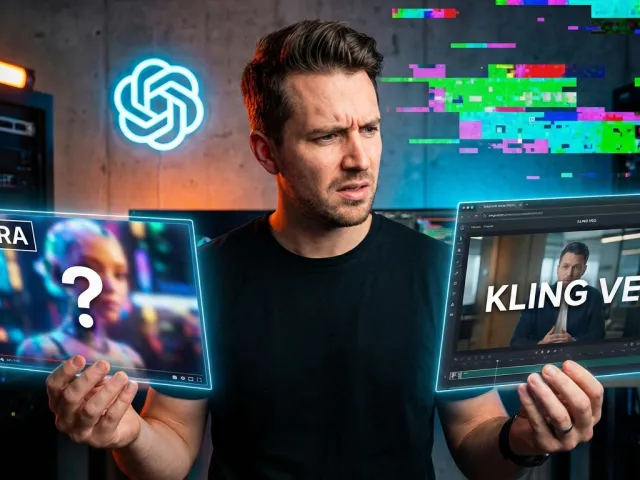
Comparisons are frequently drawn between Sora and emerging competitors like Kling or VEO. In some cases, testers argue that Sora has dipped to a level below its rivals in specific categories. This competition is healthy for the AI industry, but it puts pressure on OpenAI to maintain its lead.
Another major point of friction involves the heavy censorship within the platform. Users have expressed frustration when simple prompts are blocked for being "suggestive" or "inappropriate." This is a delicate balance for any company providing an AI service to the public at large.
For instance, something as innocent as a gymnastics routine might trigger a content violation in Sora. This leads to a trial-and-error process that can be exhausting for creators. When the AI is too sensitive, it limits the types of stories that can be told effectively.
"It is frustrating when you can't even generate a classic superhero like Spider-Man because the safety filters are too aggressive. We need a better balance between safety and creative utility."
Navigating Content Blocks Within Sora
The struggle with censorship has led to a subculture of prompt manipulation. Users have found that giving Sora a very detailed or "bullshit" background can sometimes bypass unnecessary blocks. It is a game of cat and mouse between the human prompter and the machine safety layer.
By providing elaborate context, creators coax Sora into generating the desired content without triggering red flags. This requires a deep understanding of how the underlying AI processes language. It is essentially a new form of digital literacy that power users are quickly mastering for their projects.
Beyond censorship, there is also the issue of intellectual property. Many creators are disappointed that they cannot easily reference famous brands or characters in Sora. This makes it difficult for fan-content creators to utilize the tool for their specific niches and hobbyist communities.
However, the AI industry is moving fast, and these restrictions are often temporary fixes for complex legal questions. As the Sora API becomes more widely available, we expect to see more nuanced controls. Developers need these tools to build professional applications that don't constantly hit a brick wall.
- Use highly descriptive, non-generic language in prompts.
- Avoid terms that might be flagged by overly sensitive safety filters.
- Build complex scenes layer by layer rather than in one go.
- Leverage external tools to clean up or enhance Sora outputs.
Why the Sora API Matters for Developers
For the tech world, the real power of Sora lies in its eventual integration into other software. A robust API allows developers to bake video generation directly into their own products. This could revolutionize everything from video editing suites to marketing automation platforms.
Imagine a social media management tool that uses the Sora API to generate personalized ads for every customer. Or a video game that creates real-time cutscenes based on player choices. The possibilities are truly endless once the technology is no longer confined to a single web interface.
Accessing these advanced models can be expensive and technically challenging for smaller teams. This is where platforms like monitor your API usage in real time become incredibly valuable. They provide a bridge to the best technology without the massive overhead of managing multiple accounts.
Using a unified API interface allows you to switch between models effortlessly. If Sora is experiencing downtime or strict limits, a developer can pivot to another high-performance video model. This flexibility is essential for maintaining a reliable service in the fast-moving AI landscape.
- Standardize your input formats for various video generation models.
- Implement smart routing to choose the most cost-effective model per task.
- Monitor usage through a centralized dashboard to avoid billing surprises.
- Keep your integration updated as new versions of the Sora model release.
Scaling Your Sora Workflow Efficiency
Efficiency is the name of the game when working with high-end generative tools. Because rendering video with Sora is computationally expensive, every prompt counts. You don't want to waste credits or time on generations that end up in the digital trash bin.
Many professional users are turning to cost-optimization strategies to handle their AI needs. Platforms like GPT Proto offer a way to access these models at significantly lower costs than official pricing. This is a game-changer for startups that need to scale their video production quickly.
By using a unified API, you can also benefit from volume discounts that wouldn't be available to individual users. This makes it feasible to run large-scale experiments with Sora and other visual models. Lowering the barrier to entry encourages more innovation across the entire creative industry.
Managing your flexible pay-as-you-go pricing is crucial for long-term project sustainability. You want a partner that provides transparency into how your API calls are being billed. This ensures that you can focus on the creative side while the infrastructure stays stable and affordable.
| Optimization Goal | Action Step | Benefit |
|---|---|---|
| Cost Reduction | Use a unified API provider | Up to 60% savings on model calls |
| Workflow Speed | Batch your prompt submissions | Reduced idle time for creative teams |
| Quality Control | Iterate on low-res previews first | Avoid wasting budget on bad renders |
Comparing Sora to the Competition
The market for AI video is becoming increasingly crowded, which is a win for consumers. While Sora grabbed the headlines first, others have been quick to catch up with their own innovations. Tools like Kling have gained a massive following for their impressive motion consistency and fewer restrictions.
VEO is another strong contender that has forced OpenAI to keep iterating on Sora. Users often debate which model produces the most "human-like" movement. Some feel that Sora excels at lighting, while others prefer the way VEO handles complex character interactions and environmental physics.
The competition is driving a race toward longer video durations and higher frame rates. Early versions of these tools could only manage a few seconds of coherent video. Now, we are seeing the path toward full-minute clips that maintain their logic from start to finish with Sora.
For those building products, it is wise to explore all available AI models rather than locking into just one. The "best" model changes almost every month in this industry. Staying model-agnostic via a versatile API ensures that your product always uses the cutting edge of technology.
"The rapid evolution of Kling and VEO 3 has put Sora on notice. We are seeing a healthy competition that pushes every developer to improve their physics engines and prompt accuracy."
The Problem with Watermarking in Sora
A recurring complaint in the user community is the presence of intrusive watermarks on generated videos. While intended for safety and attribution, they can hinder the professional use of Sora outputs. Creators often have to find ways to crop or mask these elements for their final edits.
Tools like savesora have emerged as common workarounds for removing these digital stamps. This highlights a tension between the platform's desire for control and the user's need for clean assets. It is a debate that spans across all AI media, from images to audio.
Most professionals would prefer a system where watermarking is handled via metadata rather than a visual overlay. This would allow for verification of AI origin without ruining the aesthetic of the shot. As Sora matures, we hope to see more professional-grade options for handling these technical requirements.
Until then, the community continues to share tips on how to work around these limitations. The goal is always to get the highest quality footage from Sora with the least amount of post-production friction. This DIY spirit is what defines the current era of generative media experimentation.
- Use high-resolution upscalers after the initial generation.
- Apply color grading to unify Sora clips with filmed footage.
- Experiment with different aspect ratios to minimize watermark impact.
- Keep a detailed log of successful prompts for future reference.
Future Expectations for Sora 3
Looking ahead, the anticipation for Sora 3 is already building. Users are hopeful that the next iteration will address the current issues with censorship and quality dips. There is a strong desire for more nuanced control over the "physics" of the generated scenes.
Some rumors suggest that Sora 3 might arrive before late 2026, though timelines in AI are always fluid. The expectation is that it will offer better temporal consistency, meaning objects won't randomly morph or disappear. This has been a persistent challenge for all video-based AI models to date.
Another exciting prospect is the integration of Sora with major intellectual property brands. If OpenAI can strike deals with movie studios, we might see official tools for generating content within famous cinematic universes. This would bridge the gap between fan art and professional media production.
The ultimate goal for Sora is to become a true partner in the creative process. It should be a tool that enhances human vision rather than replacing it. As the underlying API grows more sophisticated, the line between "AI-generated" and "human-made" will continue to blur in fascinating ways.
| User Expectation | Likely Feature in Sora 3 | Impact on Creation |
|---|---|---|
| Lower Restrictions | Better context-aware filters | Less frustration with innocent prompts |
| Higher Consistency | Advanced temporal memory | Stable characters across long clips |
| Brand Integration | Licensed IP modules | Official high-end fan content tools |
Sora and the Shift in Content Economics
The rise of Sora is fundamentally changing the economics of the creator economy. Previously, high-quality video was a bottleneck that required either extreme skill or a large team. Now, the bottleneck is moving from "how do I make this" to "what should I make."
This shift puts a premium on original ideas and storytelling rather than technical execution alone. While Sora handles the rendering, the human must still provide the soul and the direction. We are entering an era of the "one-person studio" where a single creator can rival a small production house.
However, this transition also raises questions about the value of traditional craft. As AI becomes more capable, the barrier to entry drops, leading to an explosion of content. Standing out in this crowded market requires more than just a good Sora prompt; it requires a unique voice.
For businesses, the focus is on how to integrate these tools into existing workflows without losing quality. They need a reliable API infrastructure to ensure that their AI-powered features are always available. Consistency and cost-control are the pillars of any successful commercial AI implementation today.
"The real magic isn't in the code of Sora itself, but in how people choose to use it to tell stories that were previously stuck in their heads."
How to Start with the Sora Ecosystem
If you are looking to get started, the first step is to experiment with the basic interface. Get a feel for how Sora reacts to different adjectives and verbs. You will quickly learn that some words carry more weight than others when the AI interprets your scene.
Once you have mastered the basics, consider how you can scale your efforts. For those with a technical background, looking into the Sora API is the logical next step. It allows you to automate your creative process and build custom tools tailored to your specific needs.
Don't be afraid to try multiple platforms to see what fits your style. You can read the full API documentation on unified platforms to see how easy it is to switch between models. Having access to a variety of tools makes you a more versatile and resilient creator.
Finally, stay connected with the community. Places like Reddit and specialized Discord servers are goldmines for the latest Sora tips and tricks. The AI landscape moves so fast that the best information often comes from fellow users who are experimenting in the trenches every day.
- Start with short, simple prompts to understand the AI's logic.
- Gradually add complexity and stylistic directives.
- Use a unified API to keep your costs manageable as you scale.
- Join creator communities to stay updated on the latest model shifts.
The Long-Term Impact of Sora on Media
We are still in the early innings of the AI video revolution. Sora is a pioneer, but it is certainly not the final destination. The technology will continue to shrink in cost and grow in capability until it is a standard part of every creative toolkit.
In the future, we might look back at these early Sora clips the same way we look at the first silent films. They were grainy and limited, but they held the seed of something that would change the world. The transition from static images to moving worlds is a profound shift in human history.
The key for any tech-forward individual is to remain adaptable. Whether you are using Sora for fun or building a business around its API, the ability to learn and pivot is essential. The tools will change, but the human desire to share stories through video is eternal.
As we wait for Sora 3 and beyond, the current version offers plenty of room for exploration. It is a imperfect, frustrating, and absolutely brilliant piece of technology. It challenges us to rethink what is possible and invites us to build the future of visual media, one prompt at a time.
Original Article by GPT Proto
"Unlock the world's top AI models with the GPT Proto unified API platform."