TL;DR
Google's veo2 finally brings accurate physics and temporal consistency to text-to-video generation, though accessing it requires navigating a complex and potentially expensive cloud environment.
The days of gelatinous water and objects melting through solid walls are ending. While earlier video generators struggled to understand basic gravity, veo2 treats objects as physical entities with actual weight and momentum. Users are rendering collisions, curling burnt paper, and bouncing basketballs that obey the laws of physics rather than just hallucinating pixels.
This leap in realism comes directly from Google's massive TPU infrastructure. You are not just typing a prompt into a simple web app. Accessing this capability means interfacing with a professional-grade cloud environment where you manage endpoints, track tokens, and monitor rendering latency.
That raw computing power introduces a steep financial reality. Every second of generated footage drains your cloud budget, making precise prompting and strict cost management essential. For artists and developers willing to respect the architecture, the results separate amateur generations from studio-quality simulations.
Why Realistic Physics in veo2 Matters Right Now
If you have been following text-to-video for more than a week, you know the "uncanny valley" isn't just about faces. It is about how things move. Most AI video generators make water look like gelatin and fire look like orange gauze. But then comes veo2, and suddenly, objects have weight.
I remember looking at video AI from just twelve months ago. It was a hallucinogenic mess. People melting into chairs, cars drifting through buildings like ghosts. But with veo2, we are seeing a fundamental shift in how a neural network understands the physical world.
The buzz on Reddit isn't just hype this time. Users are pointing out specific details that usually break AI models. We are talking about two balls striking each other and reacting with the right momentum. That is a massive hurdle for any AI to clear.
"This is literally fucking incredible lol. Remember where text to video was literally one year ago."
It is not just about looking "cool." For creators, the realism in veo2 means less time fixing glitches in post-production. When physics works, the story works. But why is this happening now? It’s all about the training data and how Google is teaching the AI to "see" gravity.
The Leap in veo2 Physics Understanding
Let's talk about the burnt paper example. Most AI would just show a black shape appearing. In veo2, users noticed the paper actually curling upward as it chars. That is a nuanced understanding of heat and material tension that was missing in earlier versions of video AI.
This level of detail suggests that the veo2 model isn't just predicting pixels. It is simulating a 3D environment. When you prompt for a collision, the AI calculates the impact rather than just guessing what a "crash" looks like. It’s a subtle distinction but a vital one.
However, don't think for a second that veo2 is perfect. It still hits walls. For example, while it can handle a basketball bounce perfectly, it might still struggle with the complex, multi-jointed physics of human movement. But for inanimate objects, veo2 is currently the gold standard in the AI space.
Core Concepts Behind the veo2 Architecture
To understand why veo2 is a heavyweight, you have to look at Google Cloud Platform (GCP). This isn't a toy you run on your laptop. It’s a massive infrastructure play. The AI is built to leverage the same TPU clusters that power Google's core search engine.
The architecture of veo2 relies on a massive transformer-based diffusion model. Unlike older AI methods, this allows the system to maintain "temporal consistency." That is just a fancy way of saying the video doesn't flicker or change its mind halfway through a five-second clip.
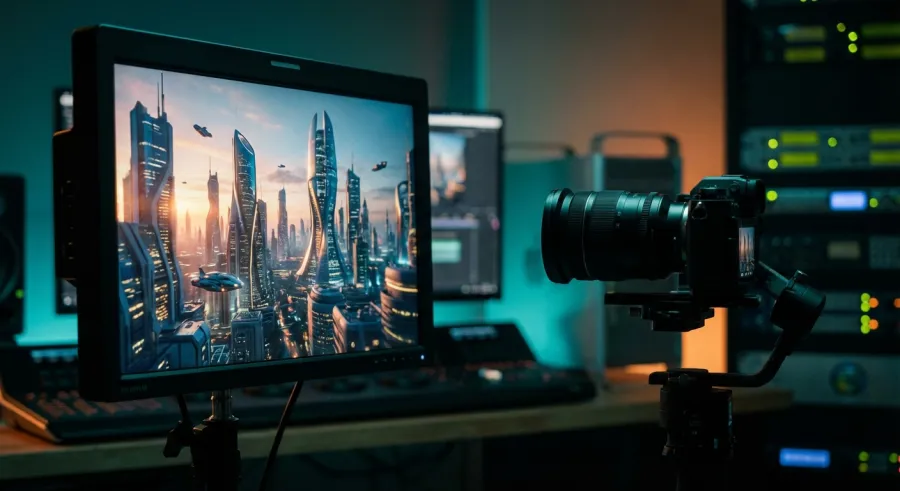
But here's the catch: that power comes with complexity. When you use the veo2 API, you aren't just sending a text string. You are interacting with a high-level cloud environment. This requires a bit of technical "know-how" that might scare off casual users.
- Diffusion-based video synthesis
- Temporal consistency across frames
- Integration with Google Cloud vertex AI
- High-fidelity physics simulation
The beauty of the veo2 system is its scale. Because it is integrated into the Google ecosystem, it can pull from a diverse range of high-quality video data that other AI companies simply don't have access to. That is the "unfair advantage" Google brings to the table.
How the veo2 API Handles Video Requests
The way the veo2 API functions is through a series of "endpoints." You send your prompt, specify your resolution, and the API returns a job ID. Because video generation is computationally expensive, it doesn't happen instantly. You have to poll the API to see when it's done.
For developers, this API structure is standard. But for artists, it can feel like a barrier. You aren't just clicking "generate." You are managing tokens, latency, and cloud buckets. It’s a professional-grade AI tool, not a consumer-grade plaything.
If you want to see how this compares to other models, you can explore the latest google veo2 model alongside other multimodal options. Seeing the raw output versus other AI models really highlights the physics gap we mentioned earlier.
So, is the complexity worth it? If you need a video where the light interacts correctly with moving objects, then yes. The API gives you control over parameters that simpler AI tools often hide from the user, allowing for more precise creative direction.
Step-by-Step Walkthrough for veo2 Access
Ready to get your hands dirty with veo2? The first thing you need is a Google Cloud account. Don't let the "Cloud" name scare you. It’s basically just a dashboard for all of Google’s high-end tech. But be warned: you will need to put a credit card on file.
Google offers a $300 credit for new users. This is a huge win if you want to test veo2 without spending a dime. But—and this is a big "but"—you have to watch your usage like a hawk. AI video is expensive to render, even for a tech giant.
- Sign up for a Google Cloud Platform account.
- Claim your $300 free trial credit.
- Navigate to the Vertex AI section in the dashboard.
- Enable the veo2 API for your project.
- Generate your first API key for local testing.
Once you are in, the interface is fairly straightforward for an AI tool of this caliber. You can start with basic prompts to see how the model reacts. I recommend starting with something simple, like a ball rolling across a wooden floor, to see the veo2 physics in action.
Setting Up Your First veo2 Prompt
Prompting for video is different than prompting for images. In veo2, you need to describe the action, not just the subject. Instead of "a cat," try "a ginger cat jumping from a velvet sofa to a hardwood floor, with realistic fur movement."
The veo2 engine loves verbs. It wants to know how things are moving. If you are vague, the AI will fill in the gaps, and sometimes that leads to those weird AI hallucinations we are trying to avoid. Be specific about the lighting and the camera angle too.
If you find the technical setup too daunting, don't worry. You can read the full API documentation to get a better handle on the syntax. The documentation is surprisingly clear for a Google product, even if you aren't a senior engineer.
Keep in mind that every second of video counts. The veo2 API is priced per second, so a 10-second clip costs ten times more than a 1-second clip. Start with short bursts—3 to 5 seconds—to dial in your prompt before committing to a longer render.
Common Mistakes and Pitfalls in veo2
Let's be real for a second. Even though veo2 is incredible, it still fails in some hilarious and frustrating ways. The biggest one? Fingers. For some reason, AI still thinks humans have seven fingers or that hands can turn into tentacles. Veo2 is no exception here.
Another major issue is "long-term memory." If you try to make a video longer than a few seconds, the veo2 model might forget what the character looked like at the start. The shirt might change color, or the background might morph into something else entirely. It’s a common AI hurdle.
Then there is the billing surprise. I’ve seen horror stories on Reddit about people who left their API scripts running and woke up to a massive bill. Google Cloud doesn't play around when it comes to resource costs. If you aren't careful, the veo2 experience can get pricey fast.
"Be careful with this. I have billing connected... I ran just a few prompts and it yanked 50 straight from my account."
It’s important to set billing alerts. You don't want your experiments with veo2 to cost you a car payment. AI is power-hungry, and someone has to pay for those GPUs. In this case, that someone is you if you blow through your free credits.
Managing Costs with the veo2 API
The current pricing is roughly $0.35 USD per second of video. That sounds cheap until you realize how many takes it takes to get a "perfect" shot. A single minute of generated video via the veo2 API will set you back $21. That adds up fast if you are a hobbyist.
To keep costs down, I suggest using lower resolution for your initial tests. Don't jump straight to 1080p or 4K. Get the movement right first. Once you know the veo2 physics are doing what you want, then you can "up-res" the final version.
If you're worried about the financial side of things, you should definitely manage your API billing closely. Setting a hard limit on your account is the only way to sleep soundly while experimenting with these heavy-duty AI models.
And remember, some service errors are inevitable. Users have reported the veo2 service occasionally goes down or returns errors. If that happens, don't keep hitting "refresh" or you might get charged for failed attempts. Just walk away and try again in an hour.
Expert Tips and Best Practices for veo2 Users
If you want to get the most out of veo2, you need to think like a cinematographer. The AI responds well to technical camera terms. Use words like "low-angle shot," "cinematic lighting," or "bokeh effect." This gives the veo2 engine a better "frame" to work within.
Another tip: use reference images if the API allows it in your region. Giving the AI a starting point helps maintain consistency. If you want a specific character, describe their clothing in every single prompt to keep the veo2 model from wandering off-script.
Many pros are actually combining veo2 with other tools. They might use a cheaper AI for the storyboard and only bring in veo2 for the final, high-fidelity physics shots. It’s about being smart with your resources and your API budget.
Here's a quick comparison of how people are using different AI tools for video:
| Feature | veo2 (Google) | Kling 3.0 | Sora (OpenAI) |
|---|---|---|---|
| Physics Realism | High / Excellent | Moderate | High |
| Prompt Adherence | Moderate | High | High |
| Price per Sec | $0.35 | Lower (~$0.10) | Limited Access |
| Accessibility | GCP API | Web App | Waitlist |
As you can see, veo2 is the "premium" choice for physics, but Kling 3.0 often wins on prompt adherence and price. If you find the veo2 costs too high, you might want to look at model aggregators that offer better rates or unified access.
Optimizing Your veo2 Workflow with GPT Proto
One way to handle the high cost of the veo2 API is through smart scheduling. Some platforms allow you to choose "cost-first" modes. If you are doing development work, you don't always need the fastest response time—you need the best price for your AI calls.
This is where a service like GPT Proto can really change the game. By offering up to 70% discounts on mainstream AI APIs, it makes high-end models like veo2 more accessible to independent developers. You get the same power without the "Google-sized" bill at the end of the month.
You can explore all available AI models on the GPT Proto platform to see how they stack up. Whether you are using OpenAI, Google, or Claude, having a single interface makes managing your AI workflow much less of a headache.
The unified API standard means you don't have to rewrite your code every time Google updates the veo2 documentation. You can swap models in and out based on performance or cost. That is the kind of flexibility that professional AI practitioners live for.
What's Next for the veo2 Ecosystem
The future of veo2 isn't just better fingers. It is interactive video. Imagine a world where the AI doesn't just generate a clip, but allows you to move the camera in real-time. Because the veo2 model understands physics, this isn't as far-fetched as it sounds.
Google is likely to integrate this deeper into YouTube and Workspace. We might see "AI b-roll" generators built directly into video editors. This would democratize high-quality production, allowing anyone to add a realistic collision or a sweeping landscape to their project using the veo2 API.
But there is also a cautionary side. As AI video gets better, distinguishing between "real" and "veo2" becomes harder. We will need better watermarking and verification tools to ensure that the realism of the physics isn't used to deceive people. That is a challenge for the whole AI industry.
For now, the focus is on refinement. Google will likely push updates to the veo2 model that address the consistency issues and the anatomical errors. Every week, the gap between AI and reality gets a little smaller, and veo2 is currently leading that charge.
Learning More Without the veo2 Price Tag
If you are still on the fence about spending money on the API, there are free ways to learn. Google Cloud Skill Boost is a fantastic resource. It allows you to run labs in a "sandbox" environment where you don't risk your own credit card. It is a great way to practice using the veo2 infrastructure.
Also, keep an eye on the Reddit communities. The "r/LocalLLaMA" and "r/StableDiffusion" crowds are often the first to find workarounds or better ways to prompt the veo2 model. There is a lot of hard-won knowledge being shared for free by people who have already spent their $300 credits.
In the end, veo2 is a tool. Like any tool, it takes practice to master. Don't expect to be a Pixar-level director on your first day. But if you respect the physics, watch your billing, and keep experimenting, the results you can get from veo2 are genuinely mind-blowing.
The AI video revolution is just getting started. Whether you are using the veo2 API for a professional project or just to see a ball curl paper with perfect realism, the power at your fingertips is unprecedented. Just remember to watch those fingers—both the AI’s and the ones on your credit card.
Written by: GPT Proto
"Unlock the world's leading AI models with GPT Proto's unified API platform."