TL;DR
The generative artificial intelligence market usually forces creators into expensive, proprietary subscriptions to access top-tier features. Alibaba's wan video breaks that cycle by offering an open-source model capable of rendering highly fluid text-to-video and image-to-video sequences.
You no longer have to guess what happens inside the algorithmic black box. Because the weights are publicly available, developers and digital artists can run the software on consumer-grade graphics cards or scale it through robust API pipelines. This level of access drastically lowers the barrier to entry for cinematic storytelling.
Getting good results still requires technical intent. Success depends heavily on how you structure your prompts, describe camera movements, and manage hardware constraints to maintain temporal consistency across every frame.
Why Wan Video Matters in the Open Source AI Movement
The generative AI space moves fast, but every so often, a model arrives that actually shifts the ground beneath our feet. Alibaba’s wan video is exactly that. While proprietary giants keep their weights locked behind expensive subscriptions, this open-source powerhouse gives creators a real alternative for high-fidelity video generation.
It is not just about having another tool in the belt. The wan video model represents a shift toward democratized creative power. If you have been following the chatter on Reddit or tech forums, you know the excitement is real because it bridges the gap between professional quality and community access.

The Real-World Context of Wan Video Technology
Most people are tired of the "black box" approach to AI. With wan video, you can see the nuts and bolts. It is an open-source model developed by Alibaba that handles image-to-video and text-to-video tasks with surprising grace. This transparency matters for developers and artists alike.
But here is the kicker: being open source means the community can optimize it. We have already seen people running wan video on consumer GPUs like the RTX 4090 and 5090. That kind of accessibility was unthinkable just a couple of years ago in the video generation world.
Core Concepts of the Wan Video Generation Model
At its heart, wan video is designed to interpret complex prompts and turn them into fluid motion. It is not just about moving pixels; it is about understanding physics and consistency. Whether you are generating a 5-second clip or a single frame, the underlying logic remains robust.
The model architecture allows for versatility. You can go from a simple text prompt to a full scene, or use a image as a foundation. This flexibility is why the wan video ecosystem is growing so rapidly among enthusiasts who want more than just a "generate" button.
The true power of wan video lies in its openness; it's a model that belongs to the community as much as its creators.
Core Concepts of Wan Video Explained for Beginners
If you are new to this, the terminology can feel like a brick wall. Let's break it down. The wan video model works by taking your input—either words or a picture—and predicting how those elements should evolve over time across multiple frames. It's essentially a high-level prediction engine for visual storytelling.
One interesting quirk about this AI is its multi-modal capability. While we call it a wan video tool, it is secretly a very capable image generator too. By simply setting your frame count to one, you can produce high-quality stills that rival some of the best dedicated image models available today.
Understanding the Text-to-Video Workflow in Wan Video
Text-to-video is where the magic happens. You write a description, and the AI builds the world. When you use the wan video text-to-video generator, the model parses your adjectives and verbs to determine lighting, movement, and composition in a coherent sequence.
It is important to remember that prompt engineering still matters. The wan video model responds best to descriptive, clear language. Instead of just saying "a cat," you might say "a ginger cat leaping through a sunlit window," which gives the AI more data to work with.
How Image-to-Video Works Within Wan Video
Image-to-video is a different beast entirely. Here, you provide a starting point—a base image—and the wan video model animates it. This is perfect for bringing characters to life or adding cinematic motion to a landscape you already love. It maintains the visual identity of your original file.
This process requires the AI to maintain "temporal consistency." That is just a fancy way of saying the person's face shouldn't change halfway through the clip. The wan video algorithms are specifically tuned to keep these details stable, which is a major pain point in older video models.
| Feature | Text-to-Video | Image-to-Video |
|---|---|---|
| Starting Point | Natural Language Prompt | Static Image File |
| Creative Control | High (Builds from scratch) | Medium (Follows source image) |
| Best Use Case | New scenes and concepts | Animating existing art/photos |
Step-by-Step Walkthrough to Create Your First Wan Video
Ready to get your hands dirty? You have two main paths: using the web interface or running it yourself. For most people, starting at the official website is the way to go. It’s free to use with a logo, which is a fair trade for the compute power you're burning.
If you want to remove that logo or get faster generation times, there are paid tiers. But the core wan video experience is accessible to everyone. Just head to the official site, drop in a prompt, and watch the progress bar. It is a straightforward entry point into the world of AI.
Navigating the Official Wan Video Website
The official hub for this technology is wan.video. Be careful here—don't just click the first link on a search engine, as there are plenty of clones. Once you're on the legitimate site, you will see options for text-to-video and image-to-video right on the dashboard.
Type your prompt in the text box. If you are doing text-to-image, remember the trick: set your frames to 1. This tells the wan video engine to stop after the first frame, giving you a high-resolution still. It’s a great way to test prompts before committing to a full video render.
Optimizing Your Prompts for Better Wan Video Results
Good results don't happen by accident. You need to be specific. The wan video model loves details about camera movement. Try adding keywords like "cinematic pan," "slow motion," or "handheld camera" to give your footage a specific feel. It helps the AI understand the "intent" behind the motion.
Also, think about lighting. Using terms like "golden hour" or "neon lighting" helps the wan video model set the mood. If your first result looks a bit flat, don't give up. Tweak the words, adjust the descriptors, and try again. AI generation is often an iterative process of discovery.
- Use descriptive verbs (e.g., "galloping" instead of "running").
- Specify the environment (e.g., "dense tropical jungle").
- Define the lighting (e.g., "soft volumetric lighting").
- Include camera instructions (e.g., "drone shot from above").
Common Mistakes and Pitfalls Users Face with Wan Video
Look, no technology is perfect. One of the biggest shocks for new users is the time it takes to generate a clip. If you are running wan video locally on modest hardware, it might take 5 minutes just to get a 5-second video. That’s a long time to wait if you’re used to instant gratification.
Another common issue is "hallucinations" in the video. Sometimes the wan video model gets confused and adds an extra limb or makes a background object morph into something else. This is common in the current state of AI, and it usually requires a re-roll of the prompt to fix.
Identifying and Avoiding Wan Video Scams
This is a big one. Because wan video is so popular, scammers have set up fake websites that look almost identical to the real one. They might try to steal your login credentials or get you to pay for "pro" features that don't exist. Always double-check the URL before you enter any info.
The official domain is wan.video. If you see something like "wan-video-free-ai.com," run away. The community on Reddit is usually quick to flag these, but staying vigilant is your best defense. Don't let the excitement of the wan video model cloud your judgment when it comes to web security.
Hardware Limitations When Running Wan Video Locally
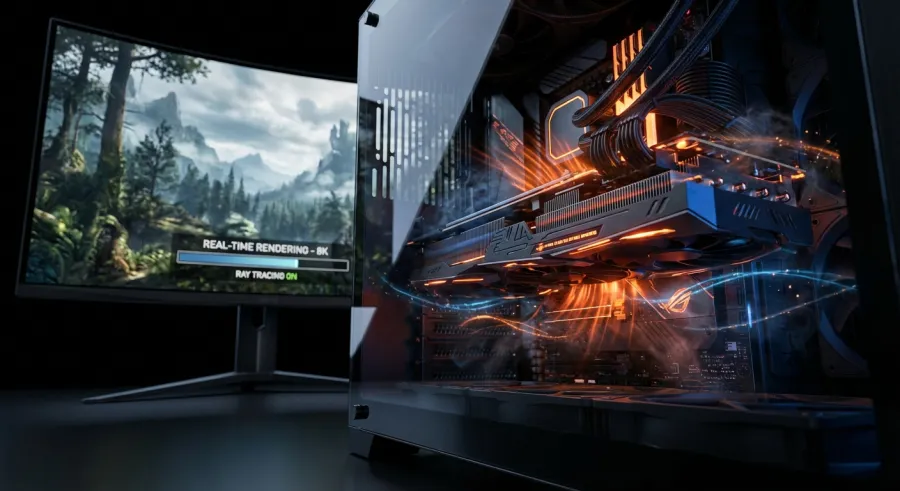
Not everyone has an RTX 5090 lying around. If you try to run wan video on an old laptop, you are going to have a bad time. The model is compute-intensive. You need a significant amount of VRAM to handle the video frames without the system crashing or slowing to a crawl.
If your hardware is struggling, consider using a cloud-based API. This lets you send the heavy lifting to a remote server. You can explore wan video image-to-video capabilities through an API provider if your local machine just isn't up to the task.
Pro Tip: If your local generation is taking forever, check your VRAM usage. If you're maxed out, your system is likely swapping to much slower system RAM.
Expert Tips and Best Practices for Wan Video Mastery
Once you’ve mastered the basics, it’s time to level up. Experienced practitioners don't just use the standard workflows. They use tools like ComfyUI or Pinokio to integrate wan video into more complex pipelines. This allows for much more granular control over the final output than a simple web interface ever could.
One advanced trick is using "self-forcing" or specific LORAs. These are small, specialized plugins that you can add to the model to change its style. For example, a "FusionXI" LORA might help you achieve near real-time frame generation on a 4090, which is a massive performance boost for any wan video project.
Using Wan Video as a Refiner for Other AI Models
Here is a secret from the pros: you don't have to start with wan video. Many creators use a model like Flux or SDXL to generate a high-quality base image first. Then, they use the wan 2.2 low noise model to refine that image and add motion. It’s like having a digital director polish your raw artwork.
This "refiner" workflow often yields much better results than doing everything in one go. It allows each AI to play to its strengths. SDXL handles the initial composition, and the wan video model handles the physics and movement. It is a professional-grade strategy that most casual users overlook.
Scaling Performance with the Wan Video API
For developers building apps or creators doing high-volume work, the local approach doesn't scale. This is where an API becomes essential. By using an API, you can trigger wan video generations programmatically. It’s faster, more reliable, and allows you to monitor your API usage in real time without heating up your office.
Using a unified interface like GPT Proto can save you a ton of headache here. Instead of managing multiple different setups, you get a single access point for various models. You can monitor your API usage in real time and scale your wan video projects without worrying about hardware bottlenecks or complex local installations.
- Start with high-quality base images from Flux or SDXL.
- Use low-noise refiner models for cleaner motion.
- Experiment with LORAs for specific aesthetic styles.
- Move to an API once you need to generate more than a few clips a day.
What's Next for the Wan Video Ecosystem?
The future of wan video looks incredibly bright. Because it is open source, we are seeing daily improvements in efficiency and quality. We are moving toward a world where high-definition, AI-generated video is as easy to create as a text message. The barrier to entry is falling every single week.
Expect to see better integration with standard creative tools like Premiere Pro or After Effects. As the wan video API ecosystem matures, these models will become background processes that assist human editors rather than just standalone tools. We are only at the very beginning of what this tech can do.
Managing the Costs of High-End Video AI
Let's talk money. Running these models is expensive, whether you pay in electricity or subscription fees. If you're looking for a way to stay budget-conscious, you might want to manage your API billing through a provider that offers pay-as-you-go options. It beats a flat monthly fee if you only use it occasionally.
The wan video model is efficient, but it's not "free" in terms of resources. By leveraging a unified API, you can often get better rates than trying to host everything yourself. Plus, you get access to the latest updates as soon as they drop, without having to manually pull the latest code from GitHub.
Exploring the Full Range of Wan Video Models
Don't stop at just one version. The team at Alibaba is constantly iterating. To stay ahead of the curve, you should explore all available AI models to see how the new releases compare to the ones you're currently using. The wan video family is expanding, and each new iteration brings better temporal consistency.
Whether you are a hobbyist making memes or a pro building a startup, wan video is a tool you can't afford to ignore. It’s powerful, it's open, and it's changing the way we think about digital content. The only thing left to do is start prompting and see what you can create.
Written by: GPT Proto
"Unlock the world's leading AI models with GPT Proto's unified API platform."