


PRICE
Per Time
INPUT
image
OUTPUT
video
Input
Output

{}Pricing Details
| Duration | Price |
|---|---|
5 | $1.12 |
10 | $2.24 |
Examples








Kling v2.1 Master AI Video: Performance Analysis and API Integration
If you are looking to push the boundaries of generative media, you can browse Kling v2.1 Master and other models on our platform to find the perfect fit for your creative pipeline.
Kling v2.1 Master entered the AI space as a heavyweight contender for high-fidelity video production. It was designed to handle complex prompts and deliver cinematic results. But the world of AI moves fast. I've spent considerable time testing Kling v2.1 Master against newer releases, and the results are nuanced. While Kling v2.1 Master is technically a 'master' tier model, many professional users find that the newer Turbo versions actually offer a better balance of price and visual clarity. This doesn't mean Kling v2.1 Master is obsolete; it just means you need to know exactly when and how to use it to get your money's worth from the API.
Why Some Creators Prefer Kling v2.1 Master Over Newer Versions
Despite the release of Kling 2.5 and 3.0, Kling v2.1 Master still holds a place in certain professional workflows. Some users report that Kling v2.1 Master has a specific aesthetic texture that is hard to replicate in the more 'sanitized' look of later versions. When working with the Kling v2.1 Master API, you might find that it handles certain lighting conditions with a more classic cinematic feel. However, you should be prepared for the higher cost. In my experience, Kling v2.1 Master often requires more careful prompt engineering to avoid the artifacts that newer models have largely solved.
The biggest challenge with Kling v2.1 Master isn't the quality itself, but the value proposition compared to 2.5 Turbo. Unless you need a very specific legacy look, the Turbo builds usually win on speed and cost-effectiveness.
How to Get the Best Results From Kling v2.1 Master's API
To truly excel with Kling v2.1 Master, you need to think about your workflow differently. Most successful creators don't just throw a text prompt at Kling v2.1 Master and hope for the best. Instead, they use an Image to Video (I2V) approach. By generating a hyper-consistent static shot first—perhaps using a high-end image AI—and then feeding that into the Kling v2.1 Master API, you can maintain much better control over the final output. This technique minimizes the 'hallucinations' that can sometimes occur when Kling v2.1 Master tries to build a scene from scratch. You can learn more on the GPTProto tech blog about optimizing these multi-stage video workflows.
Comparing Kling v2.1 Master Technical Specifications
When comparing Kling v2.1 Master to its siblings, the differences in motion and consistency become clear. While Kling v2.1 Master was a massive leap forward at launch, users have noted that it can suffer from identity drift in longer clips. This is where a character's features slowly morph over time. If you are building a project that requires long-term character stability, you might want to compare Kling v2.1 Master with the 3.0 builds, which have significantly improved identity retention. You can track your Kling v2.1 Master API calls in our dashboard to see how your usage patterns affect your creative output.
| Feature | Kling v2.1 Master | Kling 2.5 Turbo | Kling 3.0 |
|---|---|---|---|
| Render Speed | Moderate | Fast | Fast |
| Cost per Sec | High | Lower | Standard |
| Motion Quality | Good | Very Good | Exceptional |
| Identity Drift | Present | Low | Minimal |
| Prompt Following | Standard | High | High |
What Makes Kling v2.1 Master Different From 2.5 Turbo?
The primary feedback from the community is that Kling 2.5 Turbo consistently provides cleaner renders. During my testing, Kling v2.1 Master sometimes produced more grain or noise in dark areas of the frame. Furthermore, the 2.5 Turbo model seems to follow prompts with a bit more precision. However, a known quirk of the Turbo version is that facial features can change quite a bit if a character turns away from the camera. If your scene involves a lot of head-turning or complex 360-degree motion, Kling v2.1 Master might actually provide a more stable facial structure in some edge cases. It's always worth testing both via the API to see which handles your specific subject matter better. You can manage your API billing and swap between models easily on our platform.
Integrating Kling v2.1 Master Into Your Production App
Integration is straightforward when you use the right tools. You don't need to worry about complex credit systems or expiring tokens when you use GPTProto. Our system provides a unified interface for the Kling v2.1 Master API, allowing you to focus on the creative side. Whether you are building a social media automation tool or a professional video editor, Kling v2.1 Master can be a powerful asset. Make sure to read the full API documentation to understand how to pass seeds and motion strength parameters to Kling v2.1 Master for maximum control. We also offer a way to earn commissions by referring friends to our AI services, which can help offset your production costs.
Maximizing Efficiency With Kling v2.1 Master
Cost efficiency is key in the AI world. Since Kling v2.1 Master is positioned as a premium model, you should use it sparingly for final renders rather than for brainstorming. For the ideation phase, use a cheaper model, then switch to Kling v2.1 Master once your prompt is perfected. This strategic use of the Kling v2.1 Master API ensures you aren't overspending during the trial-and-error phase. You can always stay informed with AI news and trends on our site to see if newer, more efficient models are released that might replace Kling v2.1 Master in your specific use case.

Kling v2.1 Master in Action
How real companies are using Kling v2.1 Master to solve creative challenges.

Creating High-Consistency Character Ads
A fashion brand needed consistent models for their digital ads. By generating static images of the models first and then using Kling v2.1 Master via I2V, they achieved lifelike motion without the character morphing into someone else mid-video.

Rapid Prototyping for Film Pre-visualization
A production house used the Kling v2.1 Master API to create quick 'moving storyboards.' This allowed the director to see lighting and motion concepts before committing to expensive CGI, saving thousands in the pre-production phase.

Automated Social Media Video Production
An AI-powered content platform integrated Kling v2.1 Master to provide users with cinematic video backgrounds. Using GPTProto's stable API, they scaled to thousands of daily renders, providing high-quality visual content to their global user base.
Getting Started with GPT Proto — Build with kling v2.1 master in Minutes
Follow these simple steps to set up your account, get credits, and start sending API requests to kling v2.1 master via GPT Proto.
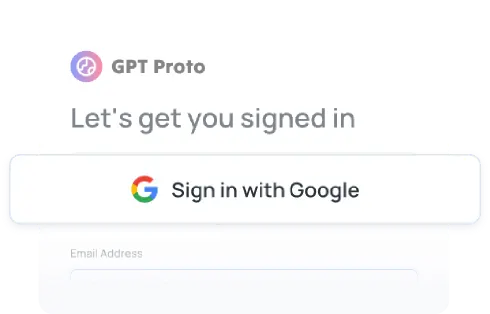
Sign up
Create your free GPT Proto account to begin. You can set up an organization for your team at any time.
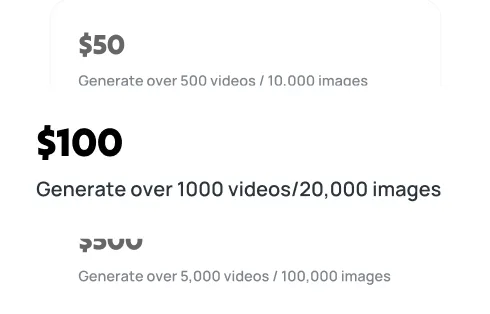
Top up
Your balance can be used across all models on the platform, including kling v2.1 master, giving you the flexibility to experiment and scale as needed.
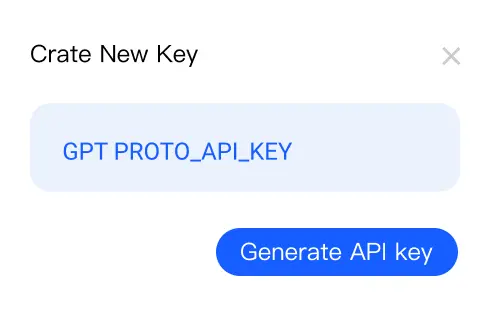
Generate your API key
In your dashboard, create an API key — you'll need it to authenticate when making requests to kling v2.1 master.
Make your first API call
Use your API key with our sample code to send a request to kling v2.1 master via GPT Proto and see instant AI‑powered results.
Kling v2.1 Master Frequently Asked Questions
Further Reading
More Blogs
Kling 3.0: The Real Cost of Flawless AI Video
Kling 3.0 delivers unmatched video realism, but confusing pricing and strict censorship get in the way. Find the best access point for your next project.
Kling 2.6: Breaking New Ground with Synchronized Audio-Visual AI Generation
Kling 2.6 debuts synchronized audio-visual generation, creating complete videos with dialogue, sound effects, and ambient audio in one step. Explore features, examples, and practical applications.

Kling 3.0 AI Video Generator: Release Date & Comparison
Is Kling 3.0 out yet? Discover its anticipated release date, expected features, and other details about Kuaishou’s Kling AI model.
Master Kling O1: The Future of AI Video Editing
Discover Kling O1, the world's first unified AI video model combining generation and editing. Learn features, use cases, and how this "video world's Nano Banana" is transforming content creation.
Kling v2.1 Master User Reviews