


INPUT PRICE
Input / 1M tokens
text
OUTPUT PRICE
Output / 1M tokens
text


MiniMax M2.5 API: High-Efficiency Reasoning for Modern Apps
Choosing the right AI model for production often feels like a balancing act between raw power and operational stability. If you are looking to browse MiniMax M2.5 and other models, you'll find that this particular version holds a unique spot in the MiniMax ecosystem. It provides the architectural foundation that paved the way for the latest reasoning breakthroughs.
What Makes MiniMax M2.5 a Reliable Choice for Large-Scale AI?
When I talk to developers about the MiniMax M2.5 API, the conversation usually circles back to one thing: reliability at scale. MiniMax M2.5 was built to handle massive token throughput. Unlike some experimental models that struggle when you throw a million tokens at them, MiniMax M2.5 is designed for high-concurrency environments. The vendor specifically focused on batched inference for this version, which is why many teams still use MiniMax M2.5 for background processing tasks that don't require the instant 'blazing fast' speed of its successor, the M2.7.
The MiniMax M2.5 model shines when you need consistent reasoning without the volatility sometimes seen in newer, less-tested checkpoints. It handles complex instruction following well, making it a solid candidate for building task-oriented bots. If you want to manage your API billing efficiently, utilizing MiniMax M2.5 for these heavy-lifting tasks is often the smartest financial move for a growing startup.
MiniMax M2.5 vs MiniMax-M2.7: Identifying the Key Differences
It is no secret that the community has been buzzing about the M2.7 release. While users report that M2.7 is significantly smarter in planning and 'blazing fast,' MiniMax M2.5 remains the dependable workhorse for many. The transition from MiniMax M2.5 to the newer versions highlighted areas where the original model struggled, specifically in high-level coding tasks and intricate multi-step planning. However, for standard NLP tasks—like summarization, sentiment analysis, and basic extraction—MiniMax M2.5 is more than capable.
"MiniMax M2.5 represents a crucial milestone in MiniMax's journey toward multimodal intelligence. While the coding performance is better in later versions, the core reasoning architecture of MiniMax M2.5 remains incredibly stable for high-volume API consumers." — GPTProto Product Team
If your project involves deep coding assistance, you might find MiniMax M2.5 slightly behind. But if you are building a tool that needs to process vast amounts of customer feedback or generate structured reports, MiniMax M2.5 is likely your best bet for cost-to-performance ratio. You can check this MiniMax AI multimodal guide to see how these models are evolving toward handling diverse data types.
How to Get the Best Results From the MiniMax M2.5 API
To get the most out of MiniMax M2.5, you need to understand its limitations. It isn't a 'magic' model that knows your intent from a three-word prompt. I've found that MiniMax M2.5 responds best to clearly structured, verbose instructions. Use delimited sections (like XML tags or Markdown headers) within your prompt to help the MiniMax M2.5 reasoning engine parse your request. This is especially true when you are trying to emulate the behavior of a MiniMax Agent.
For those looking to integrate, you should read the full API documentation. It covers how to handle the batched inference calls that make MiniMax M2.5 so efficient. Remember that MiniMax M2.5 is particularly optimized for scenarios where you need to process tokens in large chunks rather than one-by-one real-time chat interactions. This makes MiniMax M2.5 an AI powerhouse for backend data enrichment.
Technical Performance Comparison
In our testing at GPTProto, we've compared MiniMax M2.5 against other industry standards. Here is how MiniMax M2.5 stacks up in a typical production environment:
| Metric | MiniMax M2.5 | Standard GPT-4o Mini | Claude 3 Haiku |
|---|---|---|---|
| Reasoning Depth | High | Moderate | Moderate |
| Coding Ability | Standard | High | High |
| Batch Processing | Excellent | Good | Good |
| Cost per 1M Tokens | Very Low | Low | Low |
Why Developers Switch to MiniMax M2.5 on GPTProto
The primary reason developers choose to run MiniMax M2.5 through our platform is our 'No Credits' policy. We don't force you into expensive monthly tiers. You can monitor your API usage in real time and pay only for what MiniMax M2.5 consumes. This flexibility is vital when you are testing new features or scaling a product that has unpredictable traffic patterns.
Furthermore, staying informed about the latest AI industry updates will show you that MiniMax is moving toward open-weights. This means the knowledge you gain from working with the MiniMax M2.5 API today will be highly transferable as the ecosystem becomes more open. If you want to learn more on the GPTProto tech blog, we frequently post tutorials on how to optimize prompts for the MiniMax family of models.
Building Intelligent Workflows with MiniMax M2.5
Even though MiniMax M2.5 isn't natively multimodal in the way a vision model is, it functions as a fantastic 'orchestrator' for multimodal workflows. You can use MiniMax M2.5 to reason through a user's request and then trigger other tools—like those found in our AI agents and creative tools section—to generate images or audio. This 'agentic' approach is exactly what the MiniMax Agent was designed for, and MiniMax M2.5 serves as a great entry point for these experiments. If you enjoy our platform, don't forget you can earn commissions by referring friends who are looking for stable MiniMax M2.5 access.

MiniMax M2.5 in Action
How businesses are solving complex problems using MiniMax M2.5.

Scaling Automated Content Moderation
A social media startup needed to process millions of comments for policy violations. By using MiniMax M2.5 in batched inference mode, they were able to categorize and moderate content with 94% accuracy at a fraction of the cost of higher-end models.

Enterprise Document Summarization
A law firm had thousands of legacy contracts that needed summary metadata. They integrated the MiniMax M2.5 API to extract key dates, parties, and clauses, transforming a six-month manual project into a two-week automated workflow.

Building Task-Oriented Support Agents
An e-commerce brand wanted an agent that could not only chat but also format refund requests for their backend. MiniMax M2.5 was used to reason through customer complaints and output structured JSON, allowing for seamless integration with their existing CRM system.
Getting Started with GPT Proto — Build with minimax m2.5 in Minutes
Follow these simple steps to set up your account, get credits, and start sending API requests to minimax m2.5 via GPT Proto.

Sign up
Create your free GPT Proto account to begin. You can set up an organization for your team at any time.
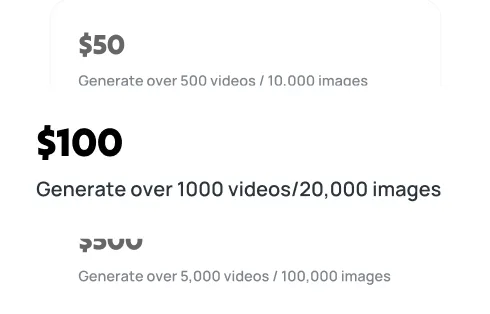
Top up
Your balance can be used across all models on the platform, including minimax m2.5, giving you the flexibility to experiment and scale as needed.
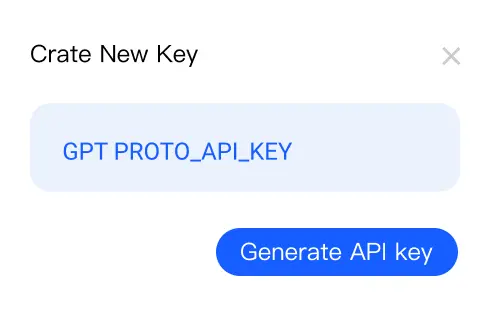
Generate your API key
In your dashboard, create an API key — you'll need it to authenticate when making requests to minimax m2.5.
Make your first API call
Use your API key with our sample code to send a request to minimax m2.5 via GPT Proto and see instant AI‑powered results.
MiniMax M2.5 FAQ
You may also like
More Blogs
Mastering MiniMax-Speech-02 for AI Voice Cloning
Discover MiniMax-Speech-02, the leading TTS model with zero-shot voice cloning. Learn implementation, features, and GPT Proto integration options.

MiniMax AI: The Multimodal Powerhouse
Explore the rise of MiniMax AI, its powerful M2.7 model, and efficient MoE architecture. Discover how to access these multimodal features today!

How to Use Claude AI: A Complete Beginner's Guide (2026)
Not sure how to use Claude AI? This guide covers Chat, Cowork, Code, Projects, Skills, and more — everything you need to get real work done with Claude, no coding background required.

google vids: Mastering AI Analysis and Ads
Master the google vids ecosystem with AI analysis, smarter ad auditing, and seamless business verification tactics. Scale your video workflow today.
MiniMax M2.5 User Reviews