TL;DR
While internet rumors sometimes dismiss AI Grid Solutions as employment scams, the reality is a transformative approach to solving the massive power bottlenecks currently facing modern data centers.
By shifting from rigid power demands to flexible grid connections and utilizing Bring-Your-Own Capacity models, tech facilities can bypass years of red tape and launch operations faster. This strategic partnership between energy utilities and AI infrastructure significantly reduces costs while improving overall electrical grid stability.
Furthermore, coupling this physical energy flexibility with smart software governance allows developers to dynamically optimize their API usage, ensuring maximum efficiency and lower operational costs in the fast-paced AI economy.
The Truth About AI Grid Solutions and the Great Energy Crunch
If you spend any time on Reddit, you have probably seen the chatter. The term AI Grid Solutions is currently popping up in two very different contexts. In one thread, it is a warning about suspicious recruitment calls and "error checking" tasks that smell like a classic employment scam.
In another community, it is discussed as the holy grail of infrastructure. This version of the technology promises to fix our aging electrical networks. It claims to use machine learning to predict storm damage and optimize power distribution. The contrast between these two worlds is striking and confusing.
The skepticism is grounded in real-world frustration. One Redditor recently shared a story about being asked to perform strange Google searches for packers and movers. They were told it was part of a job for a firm claiming to offer AI Grid Solutions, which they quickly flagged as fraudulent.
However, beyond the noise of recruitment scams, a very real technical movement is happening. Large-scale data centers are facing a massive problem. They simply cannot get the power they need to operate. The timeline for a new power hookup has ballooned to seven years in some regions.
"The current approach of 'build first, connect later' is broken. We need a strategy that lets us connect now and operate flexibly as the grid evolves."
This is where the legitimate side of the industry comes in. New research from Princeton University’s ZERO Lab and Camus Energy suggests a path forward. They propose a model where data centers stop being passive loads. Instead, they become active participants in maintaining the health of the electrical system.
Understanding the Skepticism and the Reality of Modern Infrastructure
We have to address the "scam" concerns first. Legitimate AI Grid Solutions are not about asking random people to take screenshots of search results. Real solutions involve heavy-duty engineering and sophisticated software. They focus on managing the massive electricity demand of the modern AI economy.
The real crisis is one of timing. It only takes about 18 to 24 months to build a state-of-the-art data center. But getting that building connected to the local utility can take five years or more. This creates a massive bottleneck for companies trying to deploy a new API or model.
Current power grids were not designed for the concentrated load of a 500-megawatt facility. These buildings use more electricity than some small cities. When a company requests this much power, the utility often has to build new transmission lines. That process is buried in red tape and construction delays.
- Transmission Constraints: Lines cannot carry more power without overheating or failing.
- Generation Constraints: The utility does not have enough power plants to meet peak demand.
- Economic Friction: Existing customers fear their electricity bills will go up to pay for new infrastructure.
To navigate these hurdles, developers are looking for a smarter way to manage energy. They need a system that can throttle usage during peak times. This is the legitimate core of what people mean when they talk about a professional AI Grid Solutions framework in 2025.
How Flexible Connections Are Redefining AI Grid Solutions
The breakthrough concept in recent studies is the "flexible grid connection." This is a contractual agreement between a data center and a utility. Instead of waiting for a 100% "firm" connection that never goes out, the data center accepts a "conditional" connection. This speeds up deployment significantly.
Under this model, the facility gets the power it needs 99% of the year. During the few hours when the grid is stressed, the facility agrees to dial back its usage. This might happen during a summer heatwave or a winter storm. It allows for a much faster hookup.
A data center using this approach can reach full operation in roughly two years. This is three to five years faster than the traditional process. For a tech company, those years are an eternity. Speed is the primary driver for adopting these new AI Grid Solutions in competitive markets.
| Feature | Traditional Connection | Flexible Connection |
|---|---|---|
| Time to Power | 5 to 7 Years | ~2 Years |
| Grid Reliability | 100% Firm (Theoretical) | >99% Grid Availability |
| Infrastructure Cost | High (Requires Upgrades) | Lower (Uses Existing Capacity) |
| On-Site Resources | Backup Only | Active Demand Management |
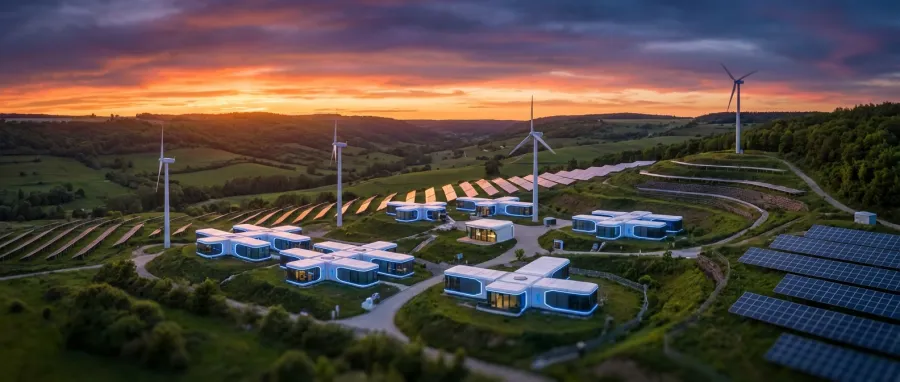
This flexibility is powered by on-site resources like massive battery arrays or clean backup generators. When the utility sends a signal that the grid is full, the data center switches to its own supply. This prevents a blackout for the surrounding neighborhood. It is a symbiotic relationship.
The technical implementation relies on a sophisticated software API to coordinate between the utility and the data center. Without real-time data, this level of coordination would be impossible. The system must know exactly how much power is available at any given second to keep everything stable.
The Role of Bring-Your-Own Capacity in the Modern Energy Mix
Another key pillar of the new AI Grid Solutions is Bring-Your-Own Capacity, or BYOC. In this scenario, the data center developer doesn't just ask for power. They actually procure or build new energy sources themselves. They might sign a deal for a new wind farm or solar field.
This bypasses the long wait for utility-led procurement. Traditionally, utilities have to go through a multi-year process to buy more power. With BYOC, the data center brings its own "accredited capacity" to the table. This satisfies the utility’s requirement for a reliable power supply for the new load.
By combining flexible connections with BYOC, companies can avoid the "interconnection queue" that has stalled thousands of projects. It turns the data center into a "good citizen" of the grid. It pays for its own impact rather than shifting costs to other residential or commercial electricity customers.
This strategy also helps manage the costs associated with running a modern AI API. Energy is the single largest operating expense for these facilities. By generating their own power or managing it more efficiently, they can keep their service prices competitive. This is vital for long-term business sustainability.
Research shows that each gigawatt of new demand usually adds $764 million in system costs. However, using these flexible strategies can reduce that net cost by nearly 100%. The data center ends up covering the incremental costs through its own investments and specialized energy payments.
- Investment: The developer pays for on-site batteries and solar.
- Savings: The utility avoids building expensive new transmission lines.
- Stability: The grid gets a new source of flexibility to use during emergencies.
This shift from "passive consumer" to "active partner" is the most significant change in utility history. It moves us away from the rigid, centralized models of the 20th century. We are entering an era of distributed, intelligent, and highly responsive power networks that can scale with technology.
The Software Layer: Managing AI Grid Solutions with Governance
Building the physical infrastructure is only half the battle. The other half is the software layer that governs how these systems interact. As one Redditor noted, governance is the "only thing holding big companies back." We need tools that provide total observability over these complex energy and data systems.
If you are running a massive multi-agent system, you need to track cost, power, and performance in real time. This requires a robust API that can talk to both the electrical grid and the compute cluster. It ensures that the AI workloads are shifted to the most efficient times.
For developers, managing these costs is becoming a primary concern. This is where platforms like GPT Proto enter the conversation. While the grid handles the physical power, GPT Proto handles the logical efficiency. It provides a unified gateway to access various models through a single interface.
By using GPT Proto’s smart routing, companies can optimize their usage for cost-first or performance-first modes. This mirrors the flexible power grid model. You use the most expensive resources only when absolutely necessary, switching to more affordable options during normal operations to save money.
"Governance and observability are the twin pillars of a stable AI economy. Without them, we are just guessing at our true operational costs and risks."
A unified API platform helps solve the "nested agent" problem. When one AI calls another, the costs can spiral out of control. Effective governance tools allow for PII redaction and cost attribution. This ensures that the high energy demand of the grid is matched by high business value.
Optimizing for Costs and Compliance in the AI Era
The economic impact of these new AI Grid Solutions extends to the developer's bottom line. In the traditional model, high energy costs are passed directly to the user. This makes deploying advanced models expensive. Using an optimized platform can significantly lower those barriers for startups and established firms.
For example, GPT Proto offers pricing that can be up to 60% lower than official API rates. This is achieved through volume discounts and standardized interfaces. It allows a business to scale its operations without worrying about the underlying infrastructure bottlenecks that plague the physical grid.
Furthermore, staying compliant with new environmental and data regulations is easier with a centralized management tool. As utilities demand more transparency about energy usage, having a clear audit trail of every API call becomes essential. This is the intersection of "green energy" and "clean data."
You can explore the documentation to see how a unified interface simplifies these complex workflows. Instead of managing dozens of different credentials and billing cycles, everything is consolidated. This efficiency at the software level complements the efficiency of a flexible power connection.
- Cost Transparency: Know exactly what each query costs in real time.
- Global Reach: Access models from OpenAI, Google, and Claude through one door.
- Scalability: Move from a prototype to a global deployment without rewriting your infrastructure.
The goal is to create a seamless loop. The power grid provides the raw energy through a flexible connection. The data center converts that energy into intelligence. The software layer ensures that intelligence is delivered to the user at the lowest possible cost with the highest degree of reliability.
The Long-Term Outlook for AI Grid Solutions
Is the hype around AI Grid Solutions justified? If we are talking about the "screenshot" scams on Reddit, then the answer is a resounding no. But if we are talking about the integration of flexible power agreements and intelligent software governance, then the answer is a definitive yes.
We are currently in a transition period. The physical grid is struggling to keep up with the digital demand. But as we have seen, the tools to fix this are already being tested. According to the full research report, these strategies are a "repeatable blueprint" for utilities nationwide.
The implications for the average person are positive. If data centers can connect faster and pay for their own upgrades, it reduces the pressure on public utility rates. It means more investment in renewable energy. It also means that the AI tools we use every day will become more reliable and affordable.
We should expect to see more companies adopting the "conditional firm" model. It is the only way to meet the 2030 sustainability goals while also satisfying the 2025 demand for compute power. The grid is becoming more like the internet: a dynamic network of nodes that can balance itself in real time.
| Metric | Legacy Grid Model | The AI Grid Solutions Future |
|---|---|---|
| Response Time | Hours/Days | Milliseconds (via AI) |
| Energy Source | Centralized Coal/Gas | Distributed Wind/Solar/Storage |
| Customer Role | Passive Consumer | Active Prosumer/Partner |
| Data Usage | Limited/Manual | Full Stack Observability |
Ultimately, the "grid of the future" will be defined by its ability to handle complexity. Whether it is managing the fluctuating output of a solar farm or the sudden burst of a million API requests, the principles remain the same. Flexibility, transparency, and intelligent governance are the only way forward.
The next time you see a post about AI Grid Solutions, look closely at the details. If it involves a job offer that sounds too good to be true, walk away. But if it involves the quiet, complex work of rebuilding our energy infrastructure, pay attention. That is the work that will actually power the next decade.

We are moving toward a world where energy and data are two sides of the same coin. By optimizing both, we can build a more resilient society. This requires collaboration between power engineers, software developers, and policy makers. It is a massive task, but the foundation is already being laid.
For those building in this space, the future is bright. The constraints we face today are forcing us to be more innovative than ever before. We are replacing "waiting" with "working," and in the tech world, that is always the right move. The grid is finally getting its long-overdue upgrade.
Original Article by GPT Proto
"Unlock the world's top AI models with the GPT Proto unified API platform."