TL;DR
While OpenAI leads the charge toward artificial general intelligence, the current reliance on reinforcement learning and "pre-baking" skills is hitting a massive economic bottleneck. This analysis explores why current models lack the human-like ability to learn on the job and how shifting to a cost-efficient, multi-model infrastructure is the only viable path for businesses in the transition to an AI-driven economy.
The Trillion-Dollar Delusion: Why OpenAI and the Quest for AGI Face a Reality Check
As we stand at the threshold of 2026, the tech world is caught in a strange, shimmering paradox. On one hand, we are witnessing a gold rush of unprecedented proportions, with OpenAI leading a charge that promises to redefine the very nature of human labor. On the other hand, if you look closely at the gears turning behind the curtain, there is a growing sense of friction. While the hype suggests we are just one more GPU cluster away from a god-like intelligence, a sober analysis of how OpenAI and its competitors are actually building these systems suggests a different story. We are currently in a phase where we are moderately bearish in the short term, but explosively bullish in the long term, and understanding that gap is the key to surviving the next decade of disruption.
The core of the confusion lies in what we are actually scaling. Right now, the industry is obsessed with reinforcement learning (RL) on top of large language models. The narrative pushed by OpenAI is that by rewarding models for correct outputs—like a dog getting a treat for sitting—we can bridge the gap to true reasoning. But there is a fundamental tension here. If we are truly close to a human-like learner, this entire approach of \"pre-baking\" specific skills into OpenAI models through massive, expensive training runs is, frankly, a bit of a dead end. We are treating the most advanced technology in history like a 1980s expert system, and that should give every investor and developer pause.
Think about how we currently \"teach\" these models. There is an entire shadow economy of companies building specialized environments to teach OpenAI products how to navigate a web browser, use Excel, or write complex financial models. This is what the industry calls \"mid-training.\" But here is the catch: if OpenAI were actually on the verge of AGI, these models would learn those skills on the job, just like a human intern does. The fact that we have to spend billions of dollars to manually rehearse every single software interaction suggests that the \"intelligence\" we are scaling might be missing a vital organ.
\"The labs’ actions hint at a world view where these models will continue to fare poorly at generalizing and on-the-job learning, making it necessary to build in the skills they hope will be economically valuable.\"\n
The Expert System Trap: Lessons from History
To understand why the current trajectory of OpenAI feels a bit \"schleppy,\" we have to look back at the history of artificial intelligence. In the 1980s, the world was convinced that \"Expert Systems\" were the future. These were massive databases of \"if-then\" rules meticulously programmed by human experts. If a patient has a fever and a cough, then check for X. It worked, but it didn't scale. It was brittle. It couldn't handle the messy, unpredictable nature of the real world because it didn't actually understand anything; it just followed a script. The current push by OpenAI to use RL for specific reasoning tasks feels like a high-tech reprise of that era.
Instead of paying experts to write code, we are now paying PhDs and MDs to write thousands of example reasoning chains for OpenAI to mimic. We are effectively trying to \"brute force\" intelligence by showing the model every possible right answer.
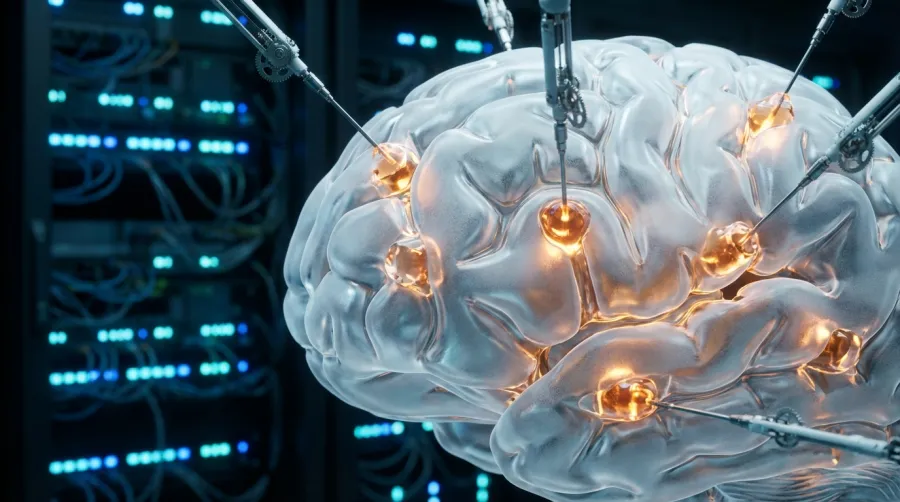
But as any teacher will tell you, there is a world of difference between a student who memorizes the textbook and a student who understands the underlying principles. If OpenAI continues down this path of behavioural cloning, we might end up with a very polished calculator that still doesn't know how to handle a situation it hasn't seen before.
This is most evident in the world of robotics. We often think of robotics as a hardware problem—making better joints or more sensitive sensors. But in reality, it is a learning problem. A human can learn to operate a remote-controlled robot arm in minutes to perform a task. If OpenAI had a human-like learner, we wouldn't need to go into a thousand different homes to teach a robot how to fold laundry. The robot would just... watch and learn. The fact that we are still struggling with these basic physical tasks shows that the current OpenAI paradigm lacks the critical core of learning that an actual AGI must possess.
- Memorization vs. Generalization: Current models excel at repeating high-quality trajectories they've seen in training.
- The Training Loop Tax: Building custom training pipelines for every micro-task is incredibly inefficient compared to human on-the-job learning.
- The Reasoning Wall: RL can improve verifiable outcomes (like math or code), but it struggles with subjective judgment calls where OpenAI has no \"ground truth\" to follow.
- The Illusion of Progress: Benchmark scores for OpenAI models are rising, but real-world utility in messy, non-standardized jobs is lagging behind.
The High Cost of \"Schleppy\" Intelligence
For businesses trying to integrate these technologies, this \"learning gap\" translates directly into dollars and cents. If you want to use OpenAI to automate a complex workflow, you often find yourself spending more on prompt engineering, fine-tuning, and specialized data than you would on just hiring a person. This is because OpenAI doesn't have \"situational awareness.\" It doesn't know your company's culture, it doesn't understand the unspoken rules of your industry, and it can't learn them through a simple conversation. You have to \"bake\" that knowledge in, which is an expensive and slow process.
This is where the economic reality hits the hype. Many companies are finding that the cost of running high-end models from OpenAI at scale is simply too high for the marginal value they provide. When you’re paying top-tier API prices for a model that still requires a human-in-the-loop to fix its \"hallucinations\" or lack of context, the math stops adding up. This is a primary reason why we are seeing a shift toward more efficient, multi-model strategies where developers don't put all their eggs in the OpenAI basket.
In practice, staying competitive means being smart about your \"intelligence budget.\" Startups and enterprises are increasingly looking for ways to bypass the high overhead of direct OpenAI integration. This is where unified platforms like GPT Proto come into play. By offering up to 60% off mainstream API prices and a single interface to switch between models like OpenAI, Claude, and Gemini, developers can mitigate the \"schleppy\" nature of current AI. If one model requires too much \"pre-baking\" for a certain task, you switch to another that handles it better, all while keeping costs low through smart scheduling and volume discounts.
| Feature | Current OpenAI Approach | Human-Like Learning (AGI Goal) |
|---|---|---|
| Learning Method | Massive RL & Fine-tuning | Semantic feedback & observation |
| Context Acquisition | Pre-baked in training data | On-the-job experience |
| Adaptability | Low (requires new training) | High (instant adjustment) |
| Economic Cost | High (GPU & Data intensive) | Low (Incremental learning) |
Human Labor: The Value of Being \"Low Maintenance\"
Why are humans still so valuable in a world where OpenAI can write poetry and code? It’s not just about raw intelligence; it’s about the lack of \"shlep.\" I recently heard a story about a biologist and an AI researcher. The biologist described her day-to-day work: looking at microscope slides to determine if a tiny dot was a macrophage (a type of immune cell) or just a speck of dust. The OpenAI enthusiast immediately claimed that image classification is a solved problem and they could easily train a model for that. But they missed the point.
The human biologist is valuable because she doesn't need a million-dollar training pipeline to adapt to how this specific lab prepares its slides today. She doesn't need a specialized RL environment to understand that the lighting changed or that the chemicals are slightly different this week. She learns from semantic feedback—her boss saying, \"Actually, that's just a smudge\"—and she generalizes that insight instantly. OpenAI, currently, cannot do this. It requires a rigid, structured loop of data and rewards to learn even the simplest variation of a task.
This is the \"Schleppy Training\" bottleneck. If every single micro-task in a company requires a custom-built AI pipeline, then OpenAI will never replace the majority of human labor. We don't need AIs that are just \"smart\"; we need AIs that are \"low maintenance.\" We need models that have the \"cognitive core\" to understand instructions and then the ability to pick up context on the fly. Until OpenAI solves this, the economic impact will be limited to tasks that are easily digitized and highly standardized.
The Coping Mechanism: Economic Diffusion Lag
When you ask AI bulls why OpenAI hasn't already boosted global GDP by 5%, they often point to \"diffusion lag.\" The idea is that technology takes decades to move through the economy—like the electric motor or the internet. But I think this is, in many ways, a form of cope. If OpenAI models were truly as capable as a high-skilled human employee, they would diffuse almost instantly. Think about how fast a talented human immigrant integrates into a new economy. They don't need decades; they need a few weeks to learn the local language and customs.
An actual AGI on a server would be the easiest employee to onboard in history. It could read your entire company Slack history, ingest every document in your Google Drive, and be fully \"up to speed\" in minutes. It wouldn't need a desk, a benefits package, or a 401k. The reason OpenAI hasn't been integrated into every facet of business yet isn't because managers are slow; it's because the models still lack the basic reliability and on-the-job learning capabilities of a human. We are essentially hiring a very smart person who has permanent amnesia and needs to be retrained every time the wind blows.
If the capabilities of OpenAI were truly at a human replacement level, businesses would be spending trillions of dollars on tokens right now. Instead, the revenue of the major AI labs is several orders of magnitude lower. This gap between the \"potential\" and the \"reality\" is a direct reflection of the fact that OpenAI models, while impressive, are not yet \"drop-in\" replacements for human cognitive labor. They are powerful tools, yes, but they require a massive amount of human scaffolding to remain useful.
\"We keep solving what we thought were the sufficient bottlenecks to AGI—general understanding, few-shot learning, reasoning—and yet the fact that model companies are not making trillions in revenue reveals that our definition of AGI was too narrow.\"\n
Goalpost Shifting: A Rational Response?
There is a lot of talk about how \"the goalposts keep moving\" for OpenAI. Critics say that as soon as a model passes the Turing Test or beats a human at math, the skeptics just find a new thing it can't do. But moving the goalposts is actually a rational response to new data. If you had shown me the current state of OpenAI models five years ago, I would have bet my life savings that they would have automated half of all office work by now. The fact that they haven't means that I was wrong about what constitutes \"useful intelligence.\"
We are discovering that intelligence is not a single \"IQ\" score, but a collection of traits that include situational awareness, social intelligence, and, most importantly, the ability to learn continuously. OpenAI has achieved incredible feats in reasoning and few-shot learning, but it turns out those were only a fraction of what makes a human worker valuable. It’s like building a car with a 1,000-horsepower engine but no steering wheel. It’s powerful, and it’s a marvel of engineering, but you can’t use it to go to the grocery store yet.
By 2030, I expect OpenAI will have made significant progress on my \"hobby horse\": continual learning. We will see models that can actually remember their interactions with you over months, adapting their tone and their knowledge base to your specific needs without requiring a massive fine-tuning run. When that happens, the revenue will jump from billions to hundreds of billions. But even then, we will probably still be saying, \"It's not AGI yet because it can't do X, Y, or Z.\" The bar for OpenAI will always move because as we solve one problem, we realize how much deeper the ocean of human cognition really is.
The Laundering of Prestige: RL vs. Pre-training
One of the more subtle shifts in the AI discourse is how OpenAI and others are using the success of pre-training to justify the current focus on reinforcement learning. Pre-training scaling was a miracle of physics. It was a clean, predictable trend where more data and more compute led to a steady drop in \"loss\" (basically, how well the model predicts the next word). It was as reliable as gravity. But RL is different. It's messy. It depends on human feedback, which is subjective and often inconsistent.
We are seeing people try to \"launder the prestige\" of pre-training to make bullish claims about RL scaling for OpenAI. But there is no publicly known \"power law\" for RL that is as robust as the one for pre-training. In fact, some researchers have pointed out that to get a GPT-4 level leap in performance solely through RL, we might need a 1,000,000x increase in compute. That is simply not sustainable. We are hitting a point where OpenAI cannot just throw more GPUs at the problem of \"reasoning\" and expect the same linear returns we saw with language modeling.
This reality is forcing a diversification of the AI ecosystem. If OpenAI hits a diminishing return on RL, the advantage of having \"one model to rule them all\" disappears. Instead, we move toward a world of specialized models. This is precisely why the GPT Proto philosophy of \"Write once, integrate all\" is becoming the standard. When you can't rely on a single vendor like OpenAI to solve every problem through brute force, you need a flexible infrastructure that lets you pivot to whichever model is currently winning the \"reasoning race\" or the \"cost-efficiency race.\"
- Smart Scheduling: Automatically switching between Performance-First (for complex reasoning) and Cost-First (for high-volume tasks).
- Unified Standards: Using a single interface for OpenAI, Google, and Claude means you don't have to rewrite your code every time a new model drops.
- Volume Discounts: Saving money is the best way to fund the \"schleppy\" training you still have to do.
The Variance Problem: Why We Overestimate AI
A common mistake we make when evaluating OpenAI is comparing it to the \"median\" human. We see a model that can pass the Bar exam or write a better essay than a typical high schooler and think, \"Wow, it’s smarter than most people!\" But the economy doesn't run on median performance. In white-collar work, value follows a power law. The \"village idiot\" adds zero value to a law firm, while a top-tier partner is worth millions. The problem for OpenAI is that its performance is currently very flat. It’s roughly as capable as a very smart college grad across the board, but it lacks the specialized, high-variance peaks of human expertise.
Because humans have huge variance, we systematically overestimate the value that OpenAI can generate in its current state. We are looking at the \"median\" and ignoring the fact that the most valuable jobs require \"top percentile\" performance in very specific, niche areas. However, this sword cuts both ways. When OpenAI finally does match top-tier human performance in a specific domain, the impact will be explosive. Because while you can only hire one top-tier human researcher, you can spin up a million copies of a top-tier OpenAI model on a server.
This is the \"Broadly Deployed Intelligence Explosion\" we all talk about. It won't happen because OpenAI becomes a god; it will happen because OpenAI becomes a \"top-tier expert\" that can be copied infinitely. But to get there, we need to solve the continual learning problem. We need these models to go out into the world, do jobs, learn from their mistakes, and then bring that knowledge back to the \"hive mind.\" This is the next great frontier for OpenAI and the industry at large.
The Future: Hive Minds and Specialized Agents
If we look ahead five to ten years, the way we interact with OpenAI will likely change. Instead of one giant model that knows everything about everything, we will likely see a \"cognitive core\" from OpenAI that is then specialized by millions of \"agent\" instances. Think of it like a hive mind. A thousand OpenAI consultants are deployed to a thousand different firms. They each learn the specific quirks of their environment. At the end of the day, they \"sync\" their learnings back to the central model, which distillates that experience into a smarter version of itself.
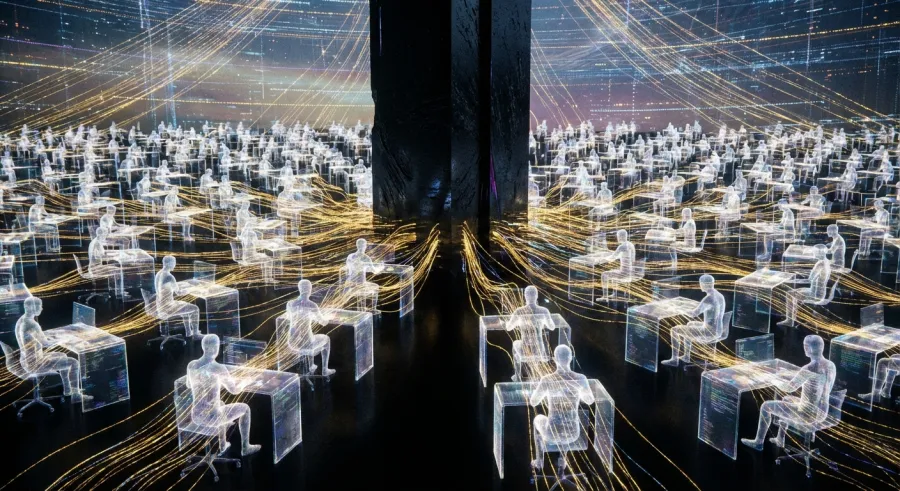
Solving this \"continual learning\" won't be a single moment in time. It will feel like the way we solved \"in-context learning.\" When GPT-3 came out, we were amazed it could learn from a few examples in a prompt. Since then, OpenAI has steadily improved that capability, making it more robust and lengthening the \"context window.\" Continual learning will follow a similar path. Next year, OpenAI might release a feature that allows for \"long-term memory.\" It will be buggy and limited, but it will be the start. By 2030, it will be the standard.
This progression is why I don't expect a single lab to \"win\" and take over the world. The moment OpenAI figures out a new trick for learning, every other lab will reverse-engineer it or poach the talent that built it. Competition will stay fierce because the flywheels we expected (like user data or synthetic data) haven't actually created a runaway lead for any one company. Every month, the \"Big Three\"—OpenAI, Anthropic, and Google—rotate on the podium. This is great for the consumer, but it means you need to stay agile in your tech stack.
The Pragmatic Path Forward
So, where does this leave us? If you are a business leader or a developer, the message is clear: don't get blinded by the \"AGI is imminent\" hype, but don't ignore the massive progress being made either. We are in a transition period where OpenAI models are becoming incredibly powerful but still require a lot of \"shlep\" to be truly useful. The goal is to build systems that are model-agnostic, cost-effective, and ready for the day when continual learning finally arrives.
While we wait for OpenAI to solve the deep algorithmic problems of human-like learning, the smartest move is to optimize for the present. That means using platforms that give you the most flexibility for the lowest price. Whether you are using OpenAI for its reasoning or Claude for its long context, you shouldn't be paying a premium just for the brand name. The era of the \"Single Model Monopoly\" is over; we are moving into the era of the \"Smart AI Infrastructure.\"
In the end, OpenAI is just one part of a much larger story. The real revolution isn't just about building a smarter brain; it's about building a brain that can actually function in the messy, unscripted world we live in. We’re not quite there yet, but the trajectory is clear. The short-term bearishness is just a reality check for the long-term bullishness that will eventually change everything.
Conclusion
The journey toward AGI is proving to be more of a marathon than a sprint, and the hurdles are more about \"on-the-job\" learning than raw processing power. OpenAI remains at the forefront of this evolution, but the current limitations in how these models learn and generalize mean that human labor will remain essential for the foreseeable future. We are learning that intelligence is deeply tied to experience and context—things that cannot be easily \"pre-baked\" into a model during a single training run.
As we look forward, the focus will shift from simply scaling parameters to solving the problem of continual, self-directed learning. Until then, the most successful companies will be those that use OpenAI strategically, balancing its power with cost-efficiency and multi-model flexibility. The transition to a post-labor economy won't happen overnight, but by building on a unified, cost-effective standard, we can prepare for the explosive growth that actual AGI will eventually bring.
Original Article by GPT Proto
\"We focus on discussing real problems with tech entrepreneurs, enabling some to enter the GenAI era first.\"