TL;DR
The highly anticipated raphael ai model relies on a 3-billion parameter Mixture-of-Experts (MoE) architecture to accurately render complex text prompts into high-fidelity images. Despite impressive benchmark scores, the software remains unavailable for public testing, leaving developers eager for an official API release.
Most open-weights image generators struggle the moment you introduce more than three distinct subjects into a single prompt. You ask for a specific texture, a precise color, and a defined lighting style, only to watch the system merge your requests into an averaged blur. The developers behind raphael ai recognized this limitation and built a system entirely around strict prompt adherence.
By routing data through specialized sub-networks rather than a single dense model, raphael ai can dedicate distinct compute power to specific nuances—like ink illustration styles or cyberpunk aesthetics—simultaneously. It achieved a zero-shot FID score of 6.61 on the COCO dataset, significantly outperforming established names like DALL-E 2 in early academic testing.
The current frustration in the developer community stems from access. We have the research papers and the impressive sample galleries, but no tangible code or API to integrate today. For engineers building creative tools, preparing an agnostic API infrastructure right now is the most practical way to handle the eventual release of this massive model.
Why Raphael AI Matters Now
The generative scene is moving faster than most of us can keep up with. Just when we thought Stable Diffusion or Midjourney had the market cornered, a new player like raphael ai enters the chat. It’s not just hype; the numbers behind raphael ai suggest a massive shift in image quality.
Most models struggle with complex prompts. You know the drill: you ask for a specific scene, and the model ignores half your adjectives. That’s where raphael ai claims to be different. It isn’t just guessing; it’s processing language with a level of granularity we haven’t seen in open-weights models yet.
Researchers are talking about raphael ai because it achieved a zero-shot FID score of 6.61. For the non-scientists, that basically means the images are incredibly close to real-world data distributions. This puts raphael ai ahead of major names like DALL-E 2 and even some versions of Stable Diffusion.
But here is the catch. While the technical papers for raphael ai are impressive, the actual software isn't in everyone's hands yet. This creates a weird tension in the community. We see what raphael ai can do on paper, but we’re all waiting to break it in person.
"raphael ai creates images using various words such as nouns, adjectives, and verbs with a precision that makes current models look like they’re just guessing."
The Technical Leap of Raphael AI
The secret sauce for raphael ai isn't just more data. It is the way the model handles that data. By using a 3-billion parameter architecture, raphael ai manages to balance complex reasoning with artistic output. It’s a heavy-hitter in the world of image generation.
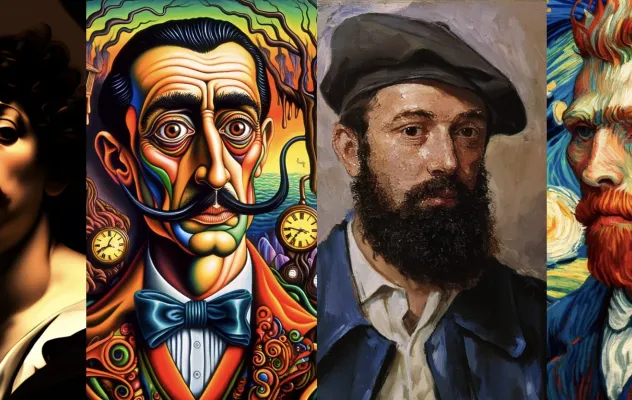
Many people wonder why we need another model. The answer lies in how raphael ai handles nuances. If you want a cyberpunk city with ink illustration textures, raphael ai doesn't get confused. It layers those concepts rather than mashing them into a digital soup.
We are seeing raphael ai tackle the "prompt adherence" problem head-on. Most AI systems fail when you give them more than three or four distinct subjects. However, the developers of raphael ai claim their system can track multiple nouns and verbs without losing the plot.
This leap is why industry veterans are keeping a close eye on the project. If raphael ai delivers on these promises, it could change how we think about professional-grade image synthesis via an API. The potential for high-end creative workflows is staggering.
Core Concepts Behind Raphael AI
To understand why raphael ai is generating so much buzz, you have to look under the hood. It’s not a standard diffusion model. The engineers behind raphael ai utilized something called Mixture-of-Experts, or MoEs. This is a game-changer for scaling.
Think of MoEs as a team of specialists. Instead of one giant brain trying to learn everything, raphael ai uses specific sub-networks for different tasks. When raphael ai sees a prompt about "Japanese comics," it activates the "expert" paths best suited for that specific style.
This allows raphael ai to have billions of potential diffusion paths. It’s like a choose-your-own-adventure book but for pixels. The path the data takes through raphael ai depends entirely on what you’re asking for, which leads to much cleaner results.
Training this thing was no small feat. The team used 1,000 A100 GPUs for two straight months to bake raphael ai. That is a massive amount of compute power, showing that raphael ai is a serious industrial-scale effort, not just a weekend project.
- 3 Billion parameters for deep conceptual understanding
- Stacked MoE layers for specialized image synthesis
- 1,000 A100 GPU training run for maximum stability
- Zero-shot FID score of 6.61 on the COCO dataset
Understanding the Raphael AI MoE Architecture
The Mixture-of-Experts layers in raphael ai are what set it apart from the competition. Most AI systems use a "dense" architecture where every part of the model works on every prompt. That is inefficient and leads to the "averaging" effect where images look generic.
With raphael ai, only a fraction of the model is active at any given time. This sparsity means raphael ai can be much larger and more "knowledgeable" without becoming impossibly slow. It’s a clever way to pack more intelligence into the raphael ai framework.
When you use an API to call a model like this, latency matters. The MoE structure in raphael ai helps manage that. By routing the request to the right experts, raphael ai keeps the generation process focused and high-quality without wasting cycles on irrelevant data.
This architecture also explains why raphael ai is so good at switching styles. Whether it is realism, cyberpunk, or ink illustrations, raphael ai has a specific "expert" path for it. This modularity is the future of large-scale image models.
How Raphael AI Processes Complex Prompts
Have you ever noticed how some models ignore adjectives? If you ask for a "small, blue, wooden chair," an average AI might give you a large red one. The raphael ai model is designed to map every word in the prompt to a specific visual attribute.
Because raphael ai uses these stacked expert layers, it can dedicate specific neurons to color, texture, and size simultaneously. This "decoupling" of attributes is a massive win for users. It means raphael ai actually listens to what you are saying.
If you're building an application around an API, this reliability is everything. You can't have a system that works half the time. The raphael ai approach aims to provide a consistent output that matches the input string with surgical precision.
How Raphael AI Compares to Current Models
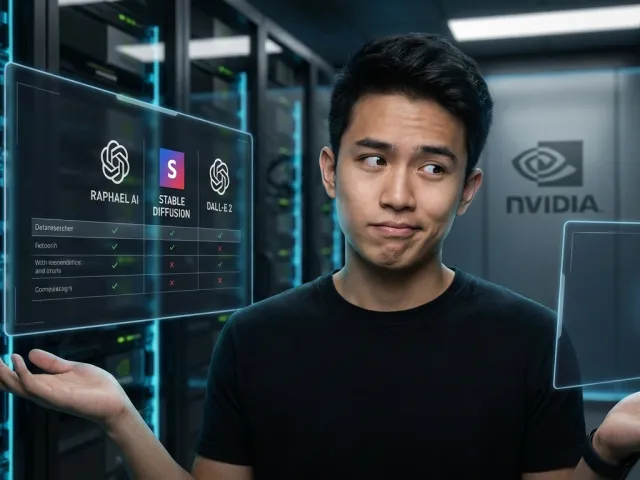
Let's talk about the elephant in the room. How does raphael ai stack up against the tools we already use? Most of us are comfortable with Stable Diffusion or Midjourney. But the benchmarks show raphael ai is outperforming them in several key areas.
In side-by-side aesthetic tests, raphael ai consistently scores higher for "image appeal." This is a subjective metric, but when you show 1,000 people two images, and they pick raphael ai every time, you have to pay attention to those results.
The technical comparison is even more stark. Models like ERNIE-ViLG 2.0 and DeepFloyd are heavyweights, but raphael ai still beats them on zero-shot FID scores. This suggests that raphael ai is better at generalizing concepts it has never seen before.
But performance isn't just about scores. It’s about how it feels to use. While we can't test the raphael ai interface yet, the sample outputs suggest a level of detail that makes current open-source models look a bit blurry or "dream-like" in comparison.
| Model Name | Architecture Type | Key Strength |
|---|---|---|
| raphael ai | Mixture-of-Experts (MoE) | Prompt Adherence & Style Switching |
| Stable Diffusion | Standard Diffusion | Community Support & Customization |
| DALL-E 2 | UnCLIP | Ease of Use & Composition |
| DeepFloyd | Pixel-space Diffusion | Text Rendering in Images |
Benchmarking Raphael AI Against Stable Diffusion
Stable Diffusion is the gold standard for many because it is free and local. Some Redditors are skeptical that raphael ai can actually beat a well-tuned SDXL model. "I don't see anything here that standard SD can't do," is a common sentiment.
However, the raphael ai team points to the "zero-shot" capabilities. While you can train Stable Diffusion to do almost anything with LoRAs, raphael ai does it out of the box. That’s a huge difference for people who don't want to spend hours fine-tuning.
If you're looking to explore all available AI models, you'll see that convenience often wins. raphael ai provides high-end quality without the massive setup time. That is the value proposition they are betting on for their future API release.
And let's be real—1,000 A100s for two months produces a model weight that is simply more "baked" than most community models. The raphael ai weights contain a depth of visual information that is hard to replicate on a home PC.
Raphael AI vs. DALL-E 2 and DeepFloyd
DALL-E 2 was the pioneer, but it’s starting to show its age. Compared to raphael ai, DALL-E often feels a bit too "plastic" or over-smoothed. The texture work coming out of raphael ai looks much more grounded in reality or specific artistic styles.
DeepFloyd is famous for its ability to handle text, which is a weak spot for many. raphael ai doesn't focus solely on text, but its ability to handle multiple nouns and verbs means it understands spatial relationships better than the older DeepFloyd versions.
When you look at raphael ai in this context, it isn't just a replacement. It’s an evolution. It takes the best parts of its predecessors—the composition of DALL-E and the flexibility of SD—and combines them using the raphael ai MoE framework.
Common Concerns and Raphael AI Accessibility
Here is where things get a bit frustrating. Despite all the papers and the hype, raphael ai is currently "ghostware" for most of us. You can't just go to a website and start generating. This has led to a lot of skepticism in the community.
Redditors in r/StableDiffusion are particularly vocal about this. If there is no demo and no code, why should we believe the benchmarks? It’s a fair question. Until raphael ai is available for public testing, those FID scores are just numbers on a PDF.
There are also rumors about geographical restrictions. Some speculate that if raphael ai is released as a paid API, it might be gated behind Chinese identification requirements. This would be a massive blow to global researchers who want to use raphael ai.
And then there’s the cost. Training raphael ai cost millions of dollars in compute time. They aren't going to give that away for free. We can expect raphael ai to be a premium product, which might push casual users back toward free alternatives.
"If I'm not allowed to test raphael ai out, why should I believe the claims of superiority? We need a public demo to see if raphael ai is the real deal."
The Public Access Gap for Raphael AI
The gap between a research paper and a usable product is huge. Right now, raphael ai is firmly in the research phase. There are no official raphael ai demos on ArXiv or their project page, which is unusual for a model claiming to be the new king.
This lack of transparency makes people nervous. In the AI world, things move so fast that if raphael ai waits six months to release, it might already be obsolete. The raphael ai team needs to move quickly if they want to capitalize on this interest.
For developers, the wait for a raphael ai API is the most painful part. Integrating a model this powerful into an existing app would be a dream, but right now, we’re all just staring at the raphael ai sample gallery and hoping for an update.
In the meantime, the best we can do is follow the news. You can check the latest AI industry updates to see if there is any movement on the raphael ai release front. Until then, keep your expectations tempered.
Expert Perspectives on Raphael AI Potential
Despite the access issues, experts are genuinely excited about the raphael ai architecture. The use of MoE in diffusion is a "frontier" technique. It’s what allowed LLMs like Mixtral to dominate, and seeing it applied to raphael ai is a sign of things to come.
If raphael ai can successfully scale image generation this way, it opens the door for even larger models. Imagine a 10-billion or 50-billion parameter version of raphael ai. The level of detail and conceptual "wisdom" would be unlike anything we have ever seen.
We’re also looking at the impact on professional industries. Concept artists and illustrators could use raphael ai to generate high-fidelity bases that require almost no touch-up. The ink illustration style of raphael ai is already being praised for its authentic feel.
The bottom line is that raphael ai isn't just a toy. It’s a tool for serious work. Whether it’s for gaming, marketing, or research, the raphael ai framework represents a massive leap in how we turn text into high-quality visual data.
- Potential to revolutionize professional concept art workflows
- Sets a new standard for Mixture-of-Experts in visual AI
- Proves that massive compute (1000 A100s) yields superior results
- Moves the industry away from "one-size-fits-all" dense models
Future Industry Impact of Raphael AI
The long-term impact of raphael ai could be the democratization of high-end art styles. Styles that were previously hard for AI to mimic, like complex cyberpunk layouts, are now within reach of raphael ai. This lowers the barrier for creators everywhere.
In academia, raphael ai provides a new case study for efficient scaling. Researchers will be dissecting the raphael ai MoE layers for years to see how they can apply those lessons to other modalities like video or 3D generation.
And then there is the commercial side. A robust raphael ai API would be a hot commodity. Companies are desperate for models that don't hallucinate weird artifacts, and raphael ai seems to have solved many of those early-generation problems.
We are watching a shift where the "best" models aren't just the ones with the most data, but the ones with the smartest architecture. raphael ai is leading that charge. It’s an exciting time to be following the raphael ai development cycle.
What to Do While Waiting for Raphael AI
Since we can't get our hands on raphael ai today, what's the move? You shouldn't stop your projects just because raphael ai is in a closed-beta or research state. There are plenty of high-end models you can use right now via a unified API.
The smart play is to build your infrastructure to be model-agnostic. That way, when the raphael ai API finally drops, you can just plug it in. You don't want to be caught off guard when raphael ai becomes the industry standard overnight.
Focus on models that offer similar multi-modal capabilities. While they might not have the raphael ai "expert" layers yet, they are getting closer every day. You can learn more on the GPT Proto tech blog about how to stay ahead of these trends.
The goal is to be ready. raphael ai is a signal that the next generation of image AI is almost here. Whether you're a hobbyist or a developer, keeping raphael ai on your radar is essential for staying competitive in this fast-moving space.
Exploring Current Raphael AI Alternatives via GPT Proto
If you need that raphael ai level of quality today, you should check out GPT Proto. They offer a unified API that gives you access to the world's leading models. It’s the perfect way to bridge the gap while we wait for raphael ai to go public.
One of the best things about GPT Proto is the cost. You can get up to a 70% discount on mainstream AI APIs. This makes it much easier to experiment with different styles and models without breaking the bank while you wait for raphael ai.
You can get started with the API today and explore models from OpenAI, Google, and Midjourney all in one place. It’s a clean, standard interface that saves you the headache of managing multiple keys and billing cycles.
GPT Proto even has smart scheduling. If you want the absolute best performance—similar to what raphael ai promises—you can set it to Performance-first mode. It’s the closest you can get to the raphael ai experience in the current market.
So, while the raphael ai team continues their work, don't let your creativity stall. Use the tools available to you. Once raphael ai finally releases its code or API, you'll already have the platform in place to take full advantage of it.
Written by: GPT Proto
"Unlock the world's leading AI models with GPT Proto's unified API platform."