TL;DR
By 2026, AI evolves from simple text-based interaction to sophisticated World Models capable of simulating physical reality. This shift enables 'Civilization Technology,' allowing fat startups to swallow legacy industries like logistics and healthcare through deep GPT-4 integration and cost-efficient scaling.
Beyond the Chatbot: Why 2026 is the Year AI Finally Becomes Real
By Your Tech Correspondent
Think back to the first time you used GPT-4. For many of us, it was a "lightbulb" moment. Suddenly, the computer wasn't just a filing cabinet or a calculator; it was a creative partner. But as we move closer to 2026, we’re realizing that the "chat" interface was just the opening act. We are currently in the "horseless carriage" phase of GPT-4 and its peers—where we are using a revolutionary new engine to pull an old-fashioned cart.
The visionaries at Andreessen Horowitz (a16z) recently released their "Big Ideas 2026," and it’s a startling departure from the way we talk about technology today. They aren't talking about better email summaries or faster coding. They are talking about a fundamental shift in how civilization functions. We are moving from "efficiency technology"—stuff that saves you ten minutes on a Tuesday—to "civilization technology"—the kind of stuff that builds new cities, new economies, and new ways of being human.
To understand where we are going, we have to look past the hype. We have to look at the plumbing, the business models, and the very fabric of how GPT-4 is being integrated into the "real" world. In this deep dive, we’ll explore the six pillars of this 2026 vision and what they mean for your job, your business, and your daily life.
This isn't just about silicon and code. It’s about a world where the "economy of scale" is replaced by the "economy of self," and where the most stagnant industries on earth—the ones that haven't changed since your grandfather was in school—are suddenly the hottest playgrounds for innovation.
1. The Simulation Revolution: AI World Models
For the last couple of years, GPT-4 has been a master of language. It knows how words fit together. But it doesn't really "know" that if you drop a glass on a tile floor, it shatters. It doesn't "know" how gravity feels or how a crowd moves through a subway station. That is about to change with the rise of "World Models."
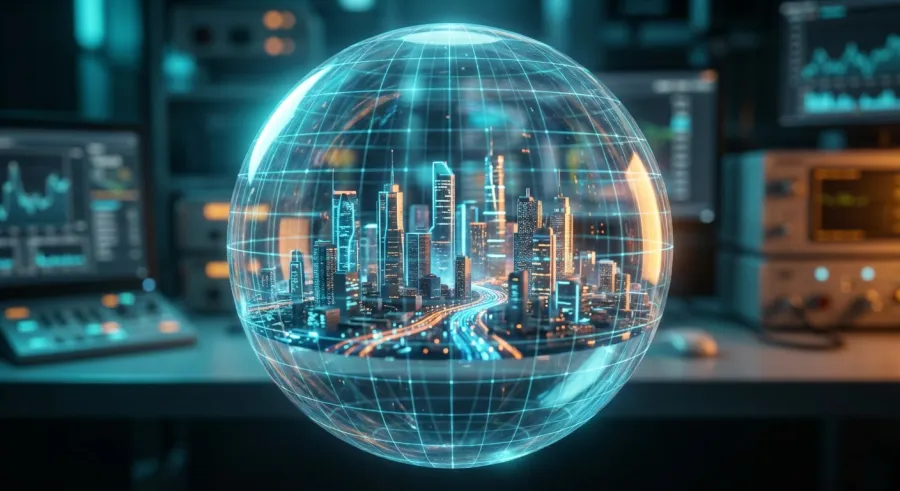
A world model is a type of Generative AI that doesn't just predict the next word; it predicts the next state of a physical environment. Imagine a video game where the developers didn't have to program the physics of water or the way light hits a leaf. Instead, the AI has "watched" millions of hours of real-world video and understands the underlying rules of reality. It can simulate a world that feels as "heavy" and "real" as our own.
By 2026, these world models will be the engine behind storytelling. We won't just watch movies; we will step into them. These won't be the clunky "metaverses" we were promised a few years ago. These will be high-fidelity, interactive experiences where the world reacts to you with the logic of GPT-4 combined with the physics of the real world.
Why does this matter for business? Because simulation is the ultimate shortcut. If you can simulate a factory floor perfectly using Generative AI, you can test every possible configuration before you even buy a single bolt. If you can simulate a retail store, you can predict how customers will walk through the aisles. The "digital twin" is moving from a buzzword to a living, breathing reality.
From Chatbots to Physics Engines
- Predictive Reality: AI that understands cause and effect in the physical world.
- Infinite Content: Games and films that evolve based on player interaction, powered by GPT-4 level logic.
- Zero-Cost Testing: Simulating complex engineering projects in a virtual "world model" before building them.
- Digital Economies: Virtual worlds with their own functioning markets and resource scarcity.
The leap from a text-based GPT-4 to a world-model-based AI is like moving from a radio play to a 4D cinema. It changes the "bandwidth" of human experience. We are no longer just communicating with machines; we are co-existing with them in simulated spaces that feel indistinguishable from reality.
2. Beyond Efficiency: Technology for Civilization
Most tech we use today is "thin." It's an app that helps you order a burrito 2% faster, or a spreadsheet that calculates your taxes. Marcus Segal argues that by 2026, we will move into the era of "Civilization Technology." This is the move from incremental gains to foundational shifts. It’s about using Generative AI to solve the "big" problems: energy, housing, and infrastructure.
Think about the 1950s. We weren't just making better horses; we were building the interstate highway system and the nuclear power grid. That is civilization-level thinking. For the last 20 years, the best minds in Silicon Valley have been focused on getting people to click on ads. But with the power of GPT-4 and advanced robotics, the focus is shifting back to the physical world.
We are seeing entrepreneurs use Generative AI to design new materials that can store more energy, or to manage power grids that are thousands of times more complex than what we have today. This isn't just "efficiency"; it’s building the hardware of a new society. When AI starts designing the cities of the future, we’ve moved past the "app" era.
"We are going to start seeing entrepreneurs use AI to move beyond 'efficiency technology' and into true 'civilization' technology." — Marcus Segal
This shift requires a massive amount of computing power and, more importantly, a way to manage that power affordably. This is where the underlying infrastructure becomes critical. As companies move to build these civilization-scale tools, they need access to GPT-4 and other models without the enterprise-crushing price tags that usually come with them.
3. The Rise of "Fat" AI Startups
In the early days of the internet, we had "lean" startups. A few guys in a garage could build an app and reach millions. But the "Fat AI Startup" is a different beast entirely. Andrew Lee suggests that the winners of 2026 won't be the companies building "point tools"—like a specialized AI for writing emails. Instead, they will be the companies that tackle the "slow" markets: trucking, utilities, healthcare, and construction.
These markets are "slow" because they are messy. They involve unions, regulations, physical hardware, and decades of "that's how we've always done it." Generative AI is the first technology powerful enough to actually penetrate these layers. A "Fat" startup doesn't just sell software to a trucking company; it *becomes* a trucking company powered by GPT-4-driven logistics.
This is a high-stakes game. These startups require more capital, more expertise, and more integration. They don't just "disrupt" an industry from the outside; they swallow it from the inside. They own the entire value chain. While the tech world is busy trading AI "point tools" like baseball cards, the real wealth is being created by those who are automating the back-office of the global economy.
| Feature | Lean "Point" AI | Fat AI Startup |
|---|---|---|
| Focus | Single task (e.g., copywriting) | Full industry (e.g., healthcare) |
| Integration | API or Web App | Deeply embedded in physical ops |
| Moat | First-mover advantage | Operational complexity & Data |
| Example | Grammarly-style plugins | AI-first Logistics/Energy firms |
To support these "Fat" startups, the cost of intelligence must drop. If you are running an entire trucking fleet on Generative AI, you can't afford to pay retail prices for every API call. This is why services like GPT Proto are becoming the "secret sauce" for these heavy hitters. By offering up to 60% off mainstream API prices and a "write once, integrate all" interface, they allow these massive startups to scale without their margins being eaten by the model providers.
Whether you need the reasoning power of GPT-4 or the creative flair of Midjourney, GPT Proto acts as a smart scheduler. It can switch between "Performance-First" modes for critical decisions and "Cost-First" modes for routine tasks. For a "Fat" startup, this isn't just a convenience—it's the difference between profit and bankruptcy.
4. Venture Capital Eats Private Equity
For decades, there was a clear line. Venture Capital (VC) bought high-risk, high-growth tech companies. Private Equity (PE) bought "boring" businesses—accounting firms, dental practices, HVAC companies—and optimized them for profit. Troy Kirwin argues that by 2026, those lines will vanish. Generative AI is the reason.
Today, VC-backed AI platforms aren't just selling software to legacy businesses; they are *acquiring* them. Why sell a GPT-4-powered tool to a legacy law firm when you can buy the law firm, replace the billable-hour grind with AI automation, and own the entire profit margin? This is "software eating the world" on steroids.
The "value chain" is being collapsed. In the past, you had the tech provider and the service provider. In 2026, the tech provider *is* the service provider. If a startup can use Generative AI to do the work of 100 accountants, it doesn't need to sell that software to an accounting firm. It can just be the most efficient accounting firm in the world.
This creates a massive opportunity for entrepreneurs who understand both code and "real-world" business. The barrier to entry isn't just writing the code—it's understanding how to apply GPT-4 to a messy, human-centric service and make it run like a machine. We are entering an era of the "Tech-Enabled Conglomerate."
5. AI: From Single-Player to Multi-Player
Right now, our experience with Generative AI is incredibly lonely. You sit at your desk, you type a prompt into a box, and GPT-4 gives you an answer. It’s a "single-player" experience. But Fareed Mosavat points out a fundamental truth of tech history: every single-player tool eventually loses to a multi-player version.
Think about word processing. We had Microsoft Word (single-player), and then Google Docs (multi-player) changed how we work by letting us collaborate in real-time. Think about design. We had Photoshop (single-player), and then Figma (multi-player) became the industry standard. AI is about to go through the same transformation.
By 2026, Generative AI will be something we do *together*. We will have "shared context" agents that live in our team chats, understanding not just what I’m doing, but what you’re doing, and how our work fits together. It’s the move from an "AI assistant" to an "AI teammate."
The Evolution of Collaboration
- Individual Phase: Using GPT-4 to draft your own emails or code snippets.
- Shared Knowledge Phase: AI that learns from your team's internal documentation and "style."
- Agentic Phase: AI agents that coordinate between different team members to finish a project autonomously.
- Multi-Player Creativity: Real-time co-creation where multiple people and multiple AI models build worlds together.
This transition will be driven by the need for seamless integration. If your team is using GPT-4 for text, Claude for coding, and Midjourney for design, you need a way to make them all talk to each other. This is where a unified standard becomes vital. The "write once, integrate all" philosophy allows teams to build complex, multi-modal workflows without getting bogged down in technical jargon or API "digital traffic jams."
6. The Year of Me: The Economy of Self
Finally, we come to the most personal shift: "The Year of Me." For the last century, our economy has been built on "Economies of Scale." To make something cheap, you had to make a million of them exactly the same. Whether it was a Ford Model T or a Hollywood blockbuster, the goal was mass production. Josh Lu argues that Generative AI turns this on its head.
In 2026, we enter the "Economy of Self." Because Generative AI makes personalization cheap and fast, we can have products tailored to a market of one. Imagine a movie where you are the lead character, or a medicine that is synthesized specifically for your unique DNA, or a pair of shoes designed for the exact pressure points of your feet.
This isn't just about luxury; it’s about efficiency. Mass production is actually very wasteful—we make things "close enough" for most people, leading to returns, waste, and dissatisfaction. A GPT-4-powered economy can listen to the specific needs of an individual and generate a solution in real-time. The "scale" no longer comes from making the same thing a million times; it comes from having an AI that can design a million different things simultaneously.
This "Economy of Self" will touch every aspect of our lives:
- Education: A tutor that understands exactly where you are struggling and adapts the curriculum to your hobbies.
- Entertainment: Music and stories that evolve based on your mood and your past preferences, powered by Generative AI.
- Health: Hyper-personalized nutrition and fitness plans based on real-time biometric data.
- Retail: Clothes that are "rendered" to fit you before they are ever physically manufactured.
The Road Ahead: Making the Future Affordable
The vision of 2026 is breathtaking, but there is a major hurdle: cost and complexity. To build "Civilization Tech" or run a "Fat Startup," you need an incredible amount of "brainpower" from models like GPT-4. If the cost of that brainpower remains high, only the massive tech giants will be able to build this future.
This is why the work of GPT Proto is so essential to this transition. By providing a unified interface for every major model—from the reasoning of GPT-4 to the visual prowess of Midjourney—and doing so at a fraction of the cost, they are democratizing the tools of 2026. They are the "smart scheduler" for the AI era, ensuring that a startup can switch between models as easily as a consumer switches channels on a TV.
Think of it as the difference between building your own power plant and simply plugging into the grid. GPT Proto provides the "AI Grid." It handles the messy back-end stuff—the billing, the API switches, the modal formats—so that entrepreneurs can focus on the big ideas. Whether it's "Performance-First" for a critical medical diagnosis or "Cost-First" for a personalized greeting card, the platform adapts to the need.
Conclusion: Embracing the 2026 Mindset
We are standing at the edge of a new era. The "chat" phase of AI was the invitation; 2026 is the event itself. We are moving from toys to tools, and from tools to infrastructure. The world models are being built, the "Fat" startups are being funded, and the "Economy of Self" is beginning to take shape.
The winners of the next five years won't just be the ones with the best GPT-4 prompts. They will be the ones who understand how to weave Generative AI into the physical world, the social world, and the personal world. They will be the ones who see tech not as a way to save five minutes, but as a way to build a new civilization.
As we look toward 2026, the question isn't whether AI will change the world. The question is: are you ready to stop using it as a "single-player" chatbot and start using it as the foundation for everything you build? The future is coming fast, and for the first time in history, it’s being personalized just for you.
Original Article by GPT Proto
"We focus on discussing real problems with tech entrepreneurs, enabling some to enter the GenAI era first."