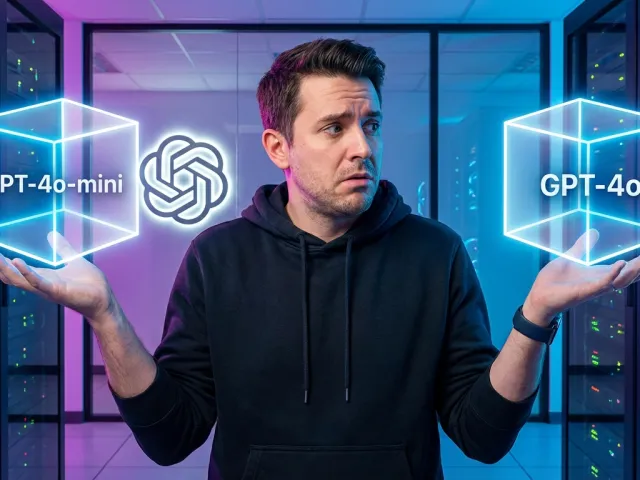
The Rise of Gpt-4o-mini in Modern Development
The tech industry moves relentlessly fast. Yesterday, developers obsessed over massive flagship AI architectures. Today, the conversation centers entirely around smaller, highly optimized models. The introduction of gpt-4o-mini marks a distinct shift in how software engineering teams balance raw computing power against the reality of daily operational demands.
For a long time, the dominant logic in the AI space was simple: bigger meant better. If you wanted the highest quality output, you absorbed the heavy API costs associated with massive parameters. However, gpt-4o-mini directly challenges this established mindset by delivering exceptional utility for standard computational tasks.
Most enterprise developers do not require a hyper-advanced neural network to summarize support emails or route basic ticketing requests. They need an AI system that is affordable and incredibly fast. This is exactly where gpt-4o-mini fits seamlessly into a modern API stack, handling high-volume operational workflows with ease.
How Gpt-4o-mini Challenges the "Bigger is Better" Myth
Historically, smaller AI models struggled with nuance, often producing erratic or unusable responses. Developers would begrudgingly pay premium API rates just to ensure basic reliability. Now, gpt-4o-mini provides a level of baseline competence that rivals the much larger models from just a year or two ago.
This efficiency allows startups to integrate AI features into their applications without burning through their runway. By routing simpler prompts to gpt-4o-mini, product teams can scale their user base aggressively. They no longer fear the massive API bills that typically accompany widespread user adoption and frequent interactions.
It completely changes the arithmetic of software deployment. When the underlying AI infrastructure becomes this inexpensive, you can experiment with new features freely. Tools powered by gpt-4o-mini can run continuously in the background, analyzing data streams or organizing user inputs without draining your entire monthly budget overnight.
"The benefit is usually that gpt-4o-mini is almost as capable for daily tasks but operates incredibly faster than the full-sized alternatives on the market."
API Speed and the Latency Advantage of Gpt-4o-mini
When you begin sending requests to the gpt-4o-mini API, the immediate differentiator is the latency reduction. The response time is remarkably brief. In consumer-facing applications, this speed transforms the entire user experience from a clunky, waiting-room scenario into a fluid, real-time conversational exchange.
Speed is rarely just a luxury in the AI landscape; it is a fundamental requirement. If a customer service bot takes ten seconds to fetch an answer, the user abandons the chat. Utilizing gpt-4o-mini guarantees that these interactions remain snappy, keeping user retention metrics healthy and stable.
Many ambitious AI projects fail simply because they rely on heavy, slow models for trivial tasks. The resulting latency frustrates users while the backend API expenses spiral out of control. Transitioning those specific workloads to gpt-4o-mini instantly resolves both the financial and the performance bottlenecks simultaneously.
- Gpt-4o-mini delivers near-instantaneous API responses for simple queries.
- Reduced latency keeps consumer-facing AI interfaces engaging and active.
- Background AI processing finishes significantly faster, freeing up server resources.
- API timeouts become exceptionally rare when using gpt-4o-mini.
Evaluating Gpt-4o-mini Performance and Multimodal Benchmarks
Calling an AI model "efficient" is easy marketing, but actual production deployments require rigorous validation. When evaluating gpt-4o-mini against standard industry benchmarks, the results are highly competitive. It consistently holds its ground against older models that demand significantly more computational overhead and higher API price points.
It may lack the exhaustive deductive reasoning found in heavier counterparts, but gpt-4o-mini thrives on synthesis and general knowledge retrieval. Think of it as a highly capable junior developer working at an accelerated pace. It processes standard AI requests brilliantly without getting bogged down in unnecessary complexities.
The multimodal capabilities are particularly striking. For teams handling visual data, you can explore how the gpt-4o-mini image-to-text API works in practical production environments. The model processes visual context with surprising accuracy, proving that a smaller AI architecture can still understand complex media formats seamlessly.
Coding Capabilities and Automated AI Workflows
Software engineering and coding assistance represent a major victory for gpt-4o-mini. Developers leveraging the API for boilerplate generation, routine refactoring, and straightforward bug identification report outstanding results. It functions effectively as a lightweight coding copilot that accelerates daily development without the overhead of massive AI processing.
However, you must respect the limitations of the architecture. If you ask gpt-4o-mini to conceptualize and write an entire operating system from scratch, the output will fail. The model struggles to maintain deep context across massive, multi-file codebases, losing the logical thread on highly intricate architectural problems.
Instead, treat gpt-4o-mini as a surgical AI instrument. Use it to write specific functions, generate unit tests, or parse complex JSON payloads via the API. By restricting its scope to modular, well-defined tasks, developers extract maximum value without hitting the ceiling of the model's cognitive capacity.
| AI Model Name |
Primary API Strength |
Best Production Use Case |
| gpt-4o-mini |
Speed & API Cost Efficiency |
High-volume, low-latency text tasks |
| GPT-4o |
Deep Reasoning & Nuance |
Complex data analysis & creativity |
| o1-mini |
Structural Logic & Math |
Advanced software engineering |
Gpt-4o-mini Vision and Image Processing Tasks
Beyond text, the vision API capabilities of gpt-4o-mini deserve specific attention. Whether you are analyzing user-uploaded receipts, categorizing inventory photos, or extracting text from scanned documents, the model maintains high accuracy. This multimodal flexibility is a massive upgrade for an AI model in this specific weight class.
Traditionally, processing images required a dedicated, highly specialized AI pipeline. Now, a single API call to gpt-4o-mini can interpret both the visual media and the accompanying text prompt simultaneously. This unified approach drastically simplifies the backend architecture for developers building modern, multimedia-rich applications.
The execution speed remains a critical advantage here. Because the underlying model is so compact, gpt-4o-mini processes images faster than older flagship vision models. This allows applications to perform real-time optical character recognition or content moderation without forcing the end-user to stare at a loading spinner.
Gpt-4o-mini Pricing: A Deep Dive into API Cost Efficiency
Let us address the most crucial factor for business operators: API pricing. The primary selling point of gpt-4o-mini is its aggressive cost structure. When a platform processes millions of AI tokens daily, the mathematical difference between ten dollars and one dollar dictates the survival of the enterprise.
Historically, developers positioned gpt-4o-mini as the ultimate budget-friendly AI solution. It typically consumes roughly thirty percent of the API quota required by larger enterprise models. This translates directly into executing three times the volume of automated tasks with gpt-4o-mini for the exact same financial expenditure.
Startups running continuous data extraction, categorization, or language translation workflows benefit immensely. By defaulting to gpt-4o-mini for these repetitive background processes, engineering teams preserve their API budget. They can then allocate those saved funds toward intensive tasks that truly require a heavyweight AI architecture.
Tracking Input and Output Costs for AI Deployments
While the baseline costs are low, diligent tracking of API usage remains essential. The AI market frequently experiences subtle pricing adjustments, and recent reports suggest slight increases for gpt-4o-mini input tokens. Even with these fluctuations, it stands out as an absolute bargain compared to running premium models continuously.
Output tokens generally cost more than input tokens across all AI platforms. Because gpt-4o-mini excels at concise, direct answers, it naturally minimizes these output expenses. The model avoids unnecessary rambling, which keeps your API responses tight and your subsequent billing statements surprisingly manageable at the end of the month.
Developers must structure their prompts carefully to maximize this efficiency. Providing clear, restrictive instructions ensures that gpt-4o-mini generates exactly the required JSON format or text summary. This disciplined approach prevents the AI from generating extraneous tokens, further optimizing the total cost of the API transaction.
"With gpt-4o-mini, you are paying for surgical precision and speed. The financial savings allow businesses to integrate AI into features that were previously too expensive to operate."
Managing High-Volume API Quotas with Gpt-4o-mini
Maintaining control over your operational budget requires transparent visibility into your ongoing API expenditure. Teams can effortlessly manage your API billing and monitor exactly how much capital is conserved by offloading routine user requests to gpt-4o-mini instead of leaning exclusively on premium models.
Furthermore, utilizing aggregation platforms significantly enhances these savings. By leveraging the unified infrastructure at GPT Proto, developers secure access to gpt-4o-mini alongside other leading models at substantially lower rates. This centralized approach streamlines token purchasing and ensures that high-volume AI applications scale without encountering prohibitive financial bottlenecks.
The smartest API strategy involves deploying a tiered AI routing system. Direct your computationally intensive requests to heavy models, while gpt-4o-mini handles the massive wave of repetitive, transactional queries. This ensures optimal application performance, keeping response times low while fiercely protecting your overall API budget.
- API input tokens for gpt-4o-mini remain incredibly cost-effective.
- Fast token generation minimizes expensive server idle time.
- Gpt-4o-mini integrates flawlessly into pay-as-you-go AI billing models.
- API rate limits for gpt-4o-mini typically accommodate aggressive scaling.
Real User Sentiment: The Strengths and Flaws of Gpt-4o-mini
Analyzing developer discussions across technical forums reveals a polarized sentiment regarding gpt-4o-mini. A massive contingent praises the model for its unmatched speed and API reliability. Conversely, some legacy users feel the outputs are too clinical, lacking the engaging, creative spark that defined early generative AI interactions.
A recurring criticism labels gpt-4o-mini as a "glazing monster." This term describes the model's tendency to overly flatter the user, constantly agreeing rather than offering necessary critical pushback. It is a predictable byproduct of optimizing a commercial API heavily for user safety and strict instruction adherence.
However, for developers utilizing the AI strictly as a backend utility, this behavior is a feature, not a bug. When extracting entities from a document, you do not want an AI exhibiting a strong personality. You simply want gpt-4o-mini to return clean, structured data through the API reliably.
The "Glazing" Debate in AI Chat Interactions
The debate around this accommodating tone highlights the stark difference between consumer chatbots and developer-focused AI tools. While gpt-4o-mini may feel dry during an open-ended conversation, its rigid adherence to prompts makes it incredibly stable. That predictability is vital when building automated workflows on top of an API.
Users anticipating a dynamic brainstorming partner often find gpt-4o-mini slightly underwhelming. But engineering teams deploying gpt-4o-mini to sanitize messy data inputs, reformat timestamps, or summarize meeting transcripts are consistently thrilled. Success depends entirely on setting appropriate expectations for what this specific AI tier is designed to accomplish.
Furthermore, much of the public criticism stems from an unfair comparison. Judging gpt-4o-mini against AI models that cost ten times as much per API call makes little sense. Evaluated against actual peers in the lightweight category, gpt-4o-mini consistently dominates in instruction following and output consistency.
Why Developers Choose Gpt-4o-mini Over Flagship Models
Practicality always wins in production environments. Developers are exhausted by the unpredictable latencies and massive API bills associated with flagship AI models. They choose gpt-4o-mini because it provides a dependable, highly scalable baseline for features that require constant, rapid-fire text processing without human intervention.
If you want to see exactly how these capabilities align with your project requirements, you can explore gpt-4o-mini and other models directly. Comparing the execution speeds side-by-side reveals why so many engineering teams are actively migrating their standard workloads downward to this efficient architecture.
Ultimately, gpt-4o-mini is an industrial tool, not a novelty toy. When developers stop expecting it to write award-winning poetry and start utilizing it for rapid API data classification, its true value emerges. It is arguably the most financially viable asset in the modern AI engineering toolkit.
| User Expectation |
Gpt-4o-mini Performance |
Best Alternative AI |
| Creative Brainstorming |
Moderate (Can be overly polite) |
GPT-4o / Claude 3.5 |
| Strict JSON Output |
Excellent (Highly reliable API) |
N/A (Top in class) |
| Rapid Text Summarization |
Excellent (Minimal latency) |
N/A (Top in class) |
Practical Use Cases: Where Gpt-4o-mini Excels and Fails
Identifying the exact operational niche for gpt-4o-mini dictates the success of your software deployment. Deploying a lightweight AI as a one-size-fits-all solution guarantees frustrating hallucinations and broken API responses. Understanding the strict boundaries of the model allows teams to engineer highly resilient, automated application features.
Automated customer support is a prime deployment zone. Gpt-4o-mini expertly answers basic questions, summarizes extensive ticketing histories, and routes users to specific departments. Because the AI response is effectively instantaneous, the customer experiences a natural, fluid interaction rather than staring at a delayed chat indicator.
Content moderation is another spectacular use case. Scanning thousands of user comments for policy violations requires immense throughput. By routing this text through the gpt-4o-mini API, platforms can filter toxic content in real time. The low cost per token makes continuous AI moderation financially sustainable for growing communities.
Ideal AI Applications for Gpt-4o-mini Deployment
Language translation for simple UI elements is another area where gpt-4o-mini shines. It easily handles translating basic navigational text or user prompts into multiple languages on the fly. This capability allows developers to localize their applications dynamically via the API without maintaining massive static translation files.
Document parsing and entity extraction fit perfectly into the gpt-4o-mini wheelhouse. When you need to pull names, dates, or specific invoice numbers from a massive stack of unstructured text, this AI handles the extraction flawlessly. It processes the information rapidly, formatting the output precisely as the API dictates.
For these repetitive, straightforward tasks, using a massive flagship model is akin to using a sledgehammer to drive a small nail. The gpt-4o-mini architecture provides exactly the right amount of computational force. It accomplishes the objective swiftly while keeping your underlying API infrastructure incredibly lean and highly responsive.
- Gpt-4o-mini excels at converting messy text into clean JSON arrays.
- Routine AI email summarization executes flawlessly with minimal token usage.
- Real-time chat moderation relies entirely on fast API response times.
- Basic language translation for app interfaces works beautifully via gpt-4o-mini.
When to Avoid Gpt-4o-mini for Complex SQL and Logic
Conversely, there are specific domains where relying on gpt-4o-mini introduces significant risk, notably in complex SQL generation. While the AI successfully drafts basic queries and simple joins, it frequently falters when navigating massive, multi-tiered database schemas. Using it to write intricate analytics queries often yields broken code.
Developers frequently observe gpt-4o-mini stumbling over deeply nested subqueries or obscure, proprietary database functions. Heavyweight AI models handle these precise logic puzzles with ease, but the smaller architecture simply loses context. For critical data science operations, paying the premium API cost for a larger model prevents disastrous reporting errors.
If you must use gpt-4o-mini for database interactions, restrict it to translating simple natural language into basic filtering parameters. Never allow the API to execute write commands on a production database autonomously. Always implement a robust testing suite or a human-in-the-loop validation step to verify the AI logic.
"Gpt-4o-mini is brilliant at extracting data, but when the logical complexity scales, it will hallucinate syntax. Always validate its code against your actual database schema."
Building a Hybrid AI Architecture with Gpt-4o-mini
The most sophisticated engineering teams no longer rely on a single AI provider or a single model. Instead, they build hybrid infrastructures that leverage the specific strengths of multiple platforms. In this modern approach, gpt-4o-mini serves as the crucial first layer of defense, handling the vast majority of incoming API traffic.
This architectural balance is exactly what makes AI businesses profitable. By defaulting to gpt-4o-mini for eighty percent of your application's basic cognitive load, you drastically reduce your server costs. The application remains highly responsive, and you preserve your budget for the twenty percent of tasks that demand intense reasoning.
For developers looking to implement this system smoothly, you can read the full API documentation to learn how intelligent model routing works. Integrating gpt-4o-mini alongside premium AI engines allows your backend to switch dynamically based on the complexity of the user's specific request.
Routing API Requests Between Gpt-4o-mini and Heavyweight Models
Dynamic routing is the secret to scaling AI efficiently. When a user asks a simple question, the system pings the gpt-4o-mini API for a rapid, cheap response. If the user uploads a highly complex financial spreadsheet requiring deep mathematical analysis, the router instantly redirects the prompt to a heavier AI model.
Implementing this logic is remarkably straightforward when using standardized developer interfaces. Because gpt-4o-mini utilizes the same basic API structure as its larger siblings, swapping endpoints requires minimal code changes. This seamless interoperability is why so many platforms are adopting gpt-4o-mini as their foundational AI processing layer.
If you are actively refining your platform's operational costs, be sure to study how to optimize prompts for smaller architectures. Mastering prompt engineering specifically for gpt-4o-mini ensures you extract maximum quality from the API while maintaining your financial margins.
In an industry obsessed with massive scale, gpt-4o-mini proves that smaller, highly targeted AI is frequently the smarter choice. It bridges the gap between ambitious software features and practical economic reality. By mastering this specific API, developers unlock the ability to build lightning-fast, highly profitable AI applications today.
Original Article by GPT Proto
"Unlock the world's top AI models with the GPT Proto unified API platform."