Why Visual Quality Defines the wan.2.2 Experience
If you have been playing with generative video lately, you know the frustration of "melted" pixels. We have all seen those clips where a person turns around and suddenly has three arms. This is exactly where wan.2.2 steps in to change the conversation for creators.
The wan.2.2 model has earned a massive reputation in the Stable Diffusion community for one simple reason: it looks better. While other models might prioritize speed, wan.2.2 focuses on the actual aesthetic integrity of the video frame. It feels like a professional tool rather than a toy.
When we talk about wan.2.2, we are talking about a model that respects the source material. It does not just guess what should happen next in a sequence. Instead, the wan.2.2 architecture calculates motion with a level of realism that makes it a favorite for high-end AI video projects.

But beauty is not everything in the AI world. You need control. If you are looking to get started with the wan.2.2 plus model, you will quickly notice that the visual fidelity is matched by its technical depth. It handles textures and lighting in a way that feels intentional.
The Superior Prompt Adherence of wan.2.2
Prompt adherence is the holy grail of video AI, and wan.2.2 is leading the pack. Have you ever typed "a red cat jumping over a blue fence" only to get a purple dog? That is a prompt adherence failure. With wan.2.2, that rarely happens.
The community has benchmarked wan.2.2 against LTX 2.3, and the results are telling. While LTX has made strides, wan.2.2 still follows complex instructions with much higher accuracy. This makes wan.2.2 the preferred choice when you have a very specific vision that cannot be compromised.
Expert Insight: "The wan.2.2 model manages to maintain semantic consistency across frames better than almost any other open-weights model available today."
Working with an API for your video needs requires this level of reliability. If your API is pumping out junk because the model cannot understand the prompt, you are wasting money. That is why the wan.2.2 logic is so valuable for developers and artists alike.
So, why does wan.2.2 win here? It comes down to how the AI interprets language. The wan.2.2 transformer blocks are tuned to weigh every word in your prompt. This means wan.2.2 does not just ignore the "details" you spent ten minutes writing.
Mastering the ComfyUI Workflow for wan.2.2 Projects
Here is the truth: if you are not using ComfyUI with wan.2.2, you are missing out on half the power. ComfyUI allows you to peek under the hood of the wan.2.2 engine and tweak things that would be hidden in a standard interface.
Setting up a wan.2.2 workflow in ComfyUI might look intimidating at first. You see a screen full of nodes and wires. But once you hook up the wan.2.2 model loaders, you realize the flexibility is unmatched. You can swap VAEs or add LoRAs to wan.2.2 effortlessly.
Most practitioners start with a basic image-to-video setup for wan.2.2. You feed an image into the system, and wan.2.2 breathes life into it. This specific use case is where the wan.2.2 prompt interpretation really shines, as it anchors the motion to your static pixels.
If you want to see this in action, you can explore wan.2.2 image-to-video capabilities through a simplified interface before building your own complex node tree. It helps to understand what the wan.2.2 raw output looks like first.
Managing Performance and Hardware Loads for wan.2.2
Let's be real: wan.2.2 is a resource hog. You cannot run a full wan.2.2 14B model on a potato. You need serious VRAM to get the best out of wan.2.2 without waiting an hour for a five-second clip.
This is where using a high-performance AI API becomes a lifesaver. Instead of burning out your local GPU, you can offload the wan.2.2 heavy lifting to the cloud. This allows you to scale your wan.2.2 production without worrying about hardware limitations or thermal throttling.
| Feature |
wan.2.2 Requirement |
Practical Impact |
| VRAM |
24GB+ Recommended |
Ensures wan.2.2 runs smoothly |
| Inference Speed |
Moderate to Slow |
wan.2.2 favors quality over raw speed |
| API Integration |
High Compatibility |
Easily read the full API documentation for wan.2.2 |
And remember, the way you structure your API calls for wan.2.2 matters. If you are running multiple wan.2.2 batches, you need a system that can handle the queue. The wan.2.2 model is powerful, but your infrastructure must be ready to support it.
Many users find that a "distilled" version of wan.2.2 can help with speed, but you often lose that signature wan.2.2 crispness. My advice? Stick to the full wan.2.2 model through a solid API if you care about the final look of your AI video.
Extending Video Length and Consistency in wan.2.2
One of the biggest hurdles with wan.2.2 is the "five-second wall." If you try to push wan.2.2 beyond five seconds in a single pass, things usually start to fall apart. The wan.2.2 pixels begin to drift, and the subject might transform into something else.
But don't let that discourage you. The community has found brilliant workarounds for the wan.2.2 length limitation. You don't just give up; you adapt your wan.2.2 workflow to handle temporal consistency across multiple segments. It takes effort, but the results are worth it.
The trick is to use wan.2.2 as a foundational block. You generate your initial five seconds with wan.2.2, then use the last frame as a seed for the next wan.2.2 generation. This "chaining" method keeps the wan.2.2 style consistent throughout a longer video.
Using an API dashboard to monitor your API usage in real time is essential when doing this. Chaining wan.2.2 clips can eat through credits quickly, so you need to keep a close eye on your wan.2.2 generation counts and costs.
Using SVI Pro for Longer wan.2.2 Generations
If you want to get serious, you need to look into the SVI Pro workflow for wan.2.2. This is a community-developed method that specifically targets the longevity of a wan.2.2 clip. It works like a dream for keeping the wan.2.2 output stable.
SVI Pro essentially acts as a stabilizer for wan.2.2. It prevents the model from hallucinating too much new information that doesn't fit the scene. When you apply SVI Pro to wan.2.2, you can actually produce longer videos that maintain the wan.2.2 visual high bar.
- Reduces temporal flickering in wan.2.2 videos
- Maintains character consistency across wan.2.2 segments
- Allows for more complex camera movements within wan.2.2
- Optimizes the wan.2.2 sampling process for better flow
And here is the thing: SVI Pro isn't just a filter; it's a fundamental shift in how wan.2.2 processes motion. It forces the wan.2.2 model to prioritize the "history" of the previous frames. This makes your wan.2.2 AI creations look like a single, cohesive film.
But be warned, SVI Pro adds another layer of complexity to your wan.2.2 setup. It's not a "one-click" solution. You'll need to spend some time tuning the wan.2.2 parameters to get it just right for your specific AI video style.
Overcoming the Practical Limitations of wan.2.2
No model is perfect, and wan.2.2 has its quirks. We've talked about the speed and the length, but there's also the issue of sound. Currently, the wan.2.2 14B version does not support native audio. You're essentially making silent films with wan.2.2.
For many, this is a dealbreaker. But in the professional AI world, we usually handle audio separately anyway. You generate your stunning wan.2.2 visuals and then layer in sound using other AI tools or traditional foley. The wan.2.2 visual quality is worth the extra step.
Another issue is the "slow-motion" effect that sometimes plagues wan.2.2 generations, especially when using 4-step LoRAs. It can feel like your wan.2.2 video is stuck in molasses. This is a known byproduct of how wan.2.2 handles motion vectors during sampling.
To fix this, the community has turned to specific tools like PainterI2V. When you integrate PainterI2V into your wan.2.2 pipeline, you can correct the pacing. It's about taking the raw power of wan.2.2 and refining it until it behaves exactly how you want.
Fixing Motion Issues with PainterI2V and wan.2.2
PainterI2V is a game-changer for wan.2.2 users who are tired of sluggish movement. It essentially "paints" the motion paths for wan.2.2 to follow. This gives you director-level control over the wan.2.2 AI output that was previously impossible.
By using PainterI2V with wan.2.2, you can dictate exactly where a character moves or how the camera pans. This bypasses the wan.2.2 tendency to be overly cautious with motion. It turns wan.2.2 from an unpredictable artist into a reliable technician.
Pro Tip: "When using PainterI2V with wan.2.2, keep your motion strokes simple. Over-complicating the path can confuse the wan.2.2 temporal layers."
And since we are talking about high-end workflows, managing your costs is vital. You can manage your API billing to ensure you don't overspend while experimenting with these advanced wan.2.2 techniques. It's easy to get carried away when the wan.2.2 results look this good.
So, is the extra effort worth it? Absolutely. When you combine wan.2.2 with motion-control tools, you are no longer just rolling the dice with AI. You are actually directing. That is the shift that wan.2.2 enables for serious creators.
Expert Tips for wan.2.2 Interpolation and Upscaling
If you want your wan.2.2 videos to look like they belong on a 4K screen, you need to talk about frame interpolation. The native wan.2.2 4X frame interpolation is actually incredible—some say it beats closed-source commercial software. That’s a bold claim for wan.2.2.
Interpolation in wan.2.2 works by generating "in-between" frames to smooth out movement. If your raw wan.2.2 output is 8 frames per second, the interpolation can bump it up to a buttery-smooth 32 or 60 fps. This gives wan.2.2 a cinematic feel that is hard to replicate.
But don't just crank the wan.2.2 interpolation to the max and expect magic. High interpolation can sometimes introduce "soap opera effect" or weird artifacts if the wan.2.2 motion was already choppy. It’s better to have a clean 2x interpolation on a solid wan.2.2 base.
To find the best settings, you should browse wan.2.2 and other models to see how different architectures handle upscaling. Comparing wan.2.2 interpolation to other models will help you understand where its specific strengths lie in the AI ecosystem.
Choosing the Right API for wan.2.2 Deployment
When you're ready to move from local testing to a real project, the wan.2.2 API choice is the most important decision you'll make. Not all APIs are created equal. You need one that supports the full wan.2.2 feature set, including the heavy 14B weights.
Here’s the catch: many providers throttle wan.2.2 because it's so intensive. You want an API that offers smart scheduling. GPT Proto, for instance, allows you to toggle between cost-first and performance-first modes for your wan.2.2 calls. This is huge for managing a budget.
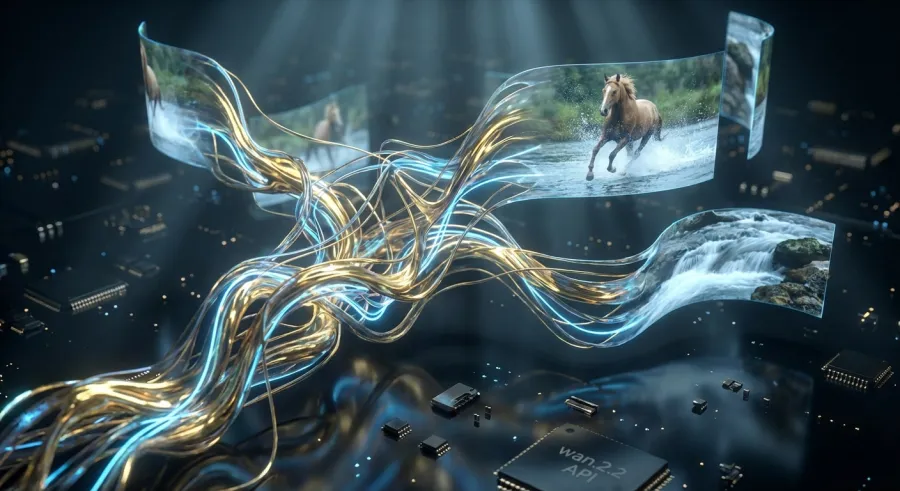
Using the GPT Proto unified API gives you access to wan.2.2 alongside other heavy hitters like OpenAI and Claude. You can use a LLM to write your wan.2.2 prompts and then pipe them directly into the wan.2.2 engine through the same interface. It streamlines everything.
- Unified API interface for wan.2.2 and other multi-modal models
- Up to 70% discount on mainstream AI APIs, including wan.2.2-adjacent tools
- Smart scheduling to balance wan.2.2 performance and cost
- One-stop access to Midjourney and SD models to supplement your wan.2.2 work
And since the wan.2.2 community is always moving, having a flexible API provider means you can pivot when the next version drops. You're not locked into a single piece of hardware or a single limited wan.2.2 implementation. That's the freedom you need.
The Future Roadmap: What’s After wan.2.2?
As much as we love wan.2.2, the AI world never stands still. The developers behind wan.2.2 have already started teasing what's next. While wan.2.2 remains a powerhouse for now, the horizon is looking even brighter for the "Wan" family of models.
The rumor mill—and some official statements—suggest that Wan 2.7 is just around the corner. If you think wan.2.2 is good, the next jump is supposed to be massive. We're talking better native audio support and much longer video durations than the current wan.2.2 limits.
But does that mean you should wait and skip wan.2.2? Definitely not. The skills you learn mastering the wan.2.2 prompt logic and the wan.2.2 ComfyUI workflows will transfer directly to future versions. wan.2.2 is the perfect training ground for the next generation of AI video.
Stay updated with the latest AI industry updates to know exactly when the successor to wan.2.2 drops. Being an early adopter of wan.2.2 has already given many creators a head start; you don't want to lose that momentum now.
Preparing for Wan 2.7 After Using wan.2.2
The transition from wan.2.2 to 2.7 will likely focus on efficiency. One of the main complaints about wan.2.2 is that it's slow. The next iteration aims to solve this by using better distillation techniques, potentially making it twice as fast as the current wan.2.2.
However, the "full" versions will always be the king of quality. Just as we prefer the 14B wan.2.2 over smaller versions, the high-parameter future models will be where the real magic happens. Start saving your compute credits now; you're going to want them when the post-wan.2.2 era begins.
In the meantime, keep pushing the boundaries of what wan.2.2 can do. Try combining wan.2.2 with different LoRAs, or experiment with multi-model workflows. The versatility of wan.2.2 is its greatest strength, and we haven't seen its full potential yet.
And if you ever feel stuck, remember that the wan.2.2 community is incredibly supportive. From Reddit to Discord, there are thousands of people sharing their wan.2.2 workflows and tips every day. We are all learning the intricacies of wan.2.2 together.
Written by: GPT Proto
"Unlock the world's leading AI models with GPT Proto's unified API platform."