GPT Proto
claude-opus-4-1-20250805-thinking
Claude Opus 4.1 stands as a premier AI model for developers who need deep reasoning and sophisticated coding assistance. Known for its ability to connect non-obvious dots in complex architectural problems, Claude Opus 4.1 excels where smaller models falter. While it is more token-intensive, the output quality often justifies the cost, especially when used for high-level planning. On GPTProto, you can integrate Claude Opus 4.1 into your workflow using our stable API without worrying about restrictive credit systems. Explore the potential of Claude Opus 4.1 for your next big project today.

INPUT PRICE

$ 10.5
30% off
$ 15

Input / 1M tokens

text

OUTPUT PRICE

$ 52.5
30% off
$ 75

Output / 1M tokens

text

Claude Opus 4.1 API: Superior Coding Reasoning and Integration Guide

If you've been searching for an AI model that doesn't just autocomplete code but actually understands the underlying architecture, you need to browse Claude Opus 4.1 and other models available on our platform. Claude Opus 4.1 has earned a reputation for being the 'thinking person's' model, particularly when dealing with intricate constraints and multi-layered logic.

Claude Opus 4.1 Performance in Complex Problem Solving

Developers often report that Claude Opus 4.1 handles problems that make other models hallucinate. It isn't just about syntax; it's about the deep reasoning Claude Opus 4.1 brings to the table. When you provide a prompt with twenty different constraints, Claude Opus 4.1 manages to respect every single one, often finding connections you didn't explicitly mention. This makes the Claude Opus 4.1 API a top choice for backend architecture and algorithmic challenges.

"Claude Opus 4.1 is the best coding model I’ve used so far. Where it genuinely shines is when you give it a complex problem with lots of constraints and it somehow connects dots you didn't even specify."

Using the Claude Opus 4.1 API through GPTProto allows you to manage your API billing with a simple pay-as-you-go model. This is crucial because Claude Opus 4.1 can be quite token-intensive. Its deep 'thinking' process means it generates comprehensive responses, which can drain usage quickly if you aren't careful. However, for high-stakes tasks, the accuracy of Claude Opus 4.1 is well worth the investment.

Why Developers Choose Claude Opus 4.1 for Planning and Architecture

A common strategy in the AI community is the 'Opus for Planning' approach. You use Claude Opus 4.1 to draft the technical requirements and the overall system design, then use a faster, cheaper model for the repetitive execution. Claude Opus 4.1 acts as the senior architect who sees the big picture. While newer versions like Opus 4.5 offer cost reductions, many veterans still prefer the specific reasoning style of Claude Opus 4.1 for certain legacy projects.

FeatureClaude Opus 4.1GPT-4o StandardClaude Sonnet
Reasoning DepthExtremeHighModerate
Coding Precision9.5/109.0/108.5/10
Token UsageHighMediumLow
Primary UseArchitectureGeneral TasksFast Refactoring

To get started, you should read the full API documentation for Claude Opus 4.1. This will help you understand how to structure your system prompts. For instance, Claude Opus 4.1 can sometimes over-architect solutions—creating entire project structures for a simple test file. By using specific directives, you can keep Claude Opus 4.1 focused and efficient.

Claude Opus 4.1 vs Sonnet: Finding the Right Balance for Your Project

Comparing Claude Opus 4.1 to its sibling models is necessary for budget management. While Sonnet is great for finding bugs and writing tests, Claude Opus 4.1 is the one you want for the initial logic. Many GPTProto users monitor their API usage in real time to switch between models as needed. If you find Claude Opus 4.1 is getting too complex with its code, try simplifying your prompt or moving the execution phase to a faster AI model.

How to Optimize Token Usage with Claude Opus 4.1 API

Since Claude Opus 4.1 is a heavyweight model, optimization is key. Use detailed system prompts to tell the model exactly what to ignore. This prevents Claude Opus 4.1 from generating unnecessary boilerplate code. Also, stay updated by reading technical blog posts on our site regarding the latest prompting techniques for the Claude Opus 4.1 API.

We also suggest checking the latest AI industry updates regarding model deprecation. Some platforms are phasing out Claude Opus 4.1, but at GPTProto, we strive to maintain access to the versions that developers trust most. If you love the results you're getting, you can also earn commissions by referring friends to use our platform's Claude Opus 4.1 integration.

Building Intelligent Workflows with Claude Opus 4.1

Beyond simple chat, you can try GPTProto intelligent AI agents that utilize Claude Opus 4.1 as their core brain. This allows for automated problem-solving where Claude Opus 4.1 breaks down a task and assigns sub-tasks to other models. This multi-model approach is the future of AI development, and Claude Opus 4.1 is the perfect anchor for such a system.

GPT Proto

Claude Opus 4.1 Real-World Applications

See how Claude Opus 4.1 solves complex problems across different industries.

Media Makers

Accelerating Multi-Domain App Development

A developer needed to build four separate applications across different domains (finance, healthcare, and logistics) within a single month. By using Claude Opus 4.1 for the core logic and architectural planning, they were able to handle the unique constraints of each industry without manual errors. Claude Opus 4.1 provided the structural blueprint that allowed for rapid development and testing, resulting in four functional MVPs delivered on schedule.

Code Developers

Optimizing Complex Software Architecture

A startup was struggling with a legacy codebase that had become too complex to manage. They used Claude Opus 4.1 to analyze the existing scripts and suggest a modular refactoring plan. Claude Opus 4.1 identified redundant components and suggested a new architecture that improved performance by 30%. The reasoning depth of Claude Opus 4.1 ensured that no breaking changes were introduced during the transition.

API Clients

High-Constraint Algorithmic Problem Solving

A logistics company needed an algorithm to manage driver schedules with over 20 unique constraints, including rest times, fuel efficiency, and delivery windows. Claude Opus 4.1 was given the raw data and the list of constraints. It produced a comprehensive logic flow that accounted for variables the team hadn't even explicitly mapped out. Using the Claude Opus 4.1 API, they integrated this logic into their dispatch system, significantly reducing planning time.

Get API Key

Getting Started with GPT Proto — Build with claude opus 4.1 20250805 thinking in Minutes

Follow these simple steps to set up your account, get credits, and start sending API requests to claude opus 4.1 20250805 thinking via GPT Proto.

Sign up

Sign up

Create your free GPT Proto account to begin. You can set up an organization for your team at any time.

Top up

Top up

Your balance can be used across all models on the platform, including claude opus 4.1 20250805 thinking, giving you the flexibility to experiment and scale as needed.

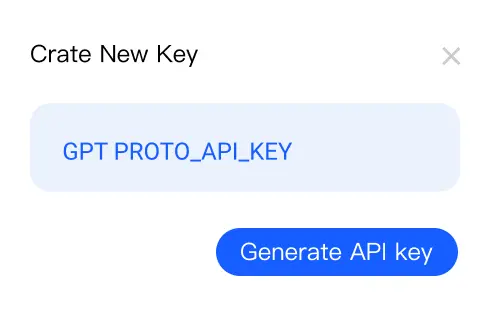
Generate your API key

Generate your API key

In your dashboard, create an API key — you'll need it to authenticate when making requests to claude opus 4.1 20250805 thinking.

Make your first API call

Make your first API call

Use your API key with our sample code to send a request to claude opus 4.1 20250805 thinking via GPT Proto and see instant AI‑powered results.

Get API Key

Frequently Asked Questions about Claude Opus 4.1

User Feedback on Claude Opus 4.1