GPT Proto
claude-opus-4-5-20251101 / web-search
The Claude Web Search tool represents a massive leap for developers who need their AI agents to interact with the live internet. Unlike static models, this tool allows Claude to fetch, filter, and cite real-time information from the web. With the introduction of the web_search_20260209 version, Claude can now execute code to dynamically filter search results, significantly reducing token bloat and improving accuracy. Whether you are using Claude Opus 4.6 for complex reasoning or Sonnet 4.6 for speed, the integration through GPTProto ensures a stable, pay-as-you-go experience without the headache of managing multiple vendor accounts or restrictive credit systems.

INPUT PRICE

$ 3.5
30% off
$ 5

Input / 1M tokens

text

OUTPUT PRICE

$ 17.5
30% off
$ 25

Output / 1M tokens

text

Claude Web Search API: Real-Time Integration and Dynamic Filtering

The latest evolution of the Claude ecosystem brings direct web access to your applications, solving the problem of knowledge cutoffs. By integrating the Claude Web Search tool, developers can build agents that verify facts, check current prices, and research technical documentation in real-time.

How Claude Web Search Transforms AI Agent Capabilities

Static knowledge is a major bottleneck for most large language models. With the Claude API, that limitation is gone. When a user asks a question about today's market trends or a software release from yesterday, Claude doesn't just guess. It decides whether it needs to search, executes the query, and synthesizes an answer with clear citations. This isn't just a basic search wrapper; it's a sophisticated tool-use loop where Claude can perform multiple searches in a single turn to find the truth.

For those managing high-volume applications, you can manage your API billing efficiently on GPTProto. We offer a unified billing system that covers the $10 per 1,000 searches fee alongside standard token costs, so you don't have to juggle different payment methods for your AI infrastructure.

The introduction of dynamic filtering in Claude means we are finally moving away from 'context window stuffing.' Instead of dumping raw HTML into the model, Claude intelligently selects what matters before it even hits your token count.

Dynamic Filtering Performance in Claude Opus 4.6 and Sonnet 4.6

The newest tool version, web_search_20260209, introduces a feature called dynamic filtering. This allows models like Claude Opus 4.6 and Claude Sonnet 4.6 to write and execute code to post-process search results. If you've ever dealt with irrelevant search noise, you know why this is huge. By filtering results before they are loaded into the context window, the AI remains focused on the primary task while saving you money on input tokens. You can read the full web search tool documentation for technical specifics on implementation.

Comparing Claude Models for Web Search Tasks

Choosing the right model for your search-enabled application depends on your balance of cost and reasoning depth. Below is a comparison of how different Claude models handle web search via the GPTProto API.

FeatureClaude Opus 4.6Claude Sonnet 4.6Claude Haiku 4.5
Dynamic FilteringSupported (Full)Supported (Fast)Basic Search Only
Search LatencyModerateLowVery Low
Reasoning DepthHighestHighBalanced
Best ForComplex ResearchDaily ProductionSimple Fact Checks

Advanced Parameters for the Claude Web Search API

Developers have granular control over how Claude interacts with the web. The tool definition supports parameters like max_uses to prevent run-away search loops and allowed_domains to ensure the AI only pulls from trusted sources. This is vital for enterprise applications where reliability is non-negotiable. If you need to stay localized, the user_location parameter allows you to provide approximate coordinates so Claude can find the nearest service or current local weather. To see how these calls look in practice, you can monitor your API usage in real time through our dashboard.

Why Developers Choose GPTProto for Claude Integration

Integrating a powerful AI like Claude shouldn't come with a steep learning curve or complex credit management. GPTProto provides a streamlined environment where you can get started with the Claude API in minutes. Our platform supports Zero Data Retention (ZDR) for eligible organizations, ensuring that your search queries and results aren't stored after the response is generated. This is a critical feature for industries like legal and finance where data privacy is paramount.

Furthermore, our pay-as-you-go model means you only pay for what you use. No more buying massive blocks of credits that expire. You can also earn commissions by referring friends to the platform, making it the most cost-effective way to scale your AI products. To keep up with the fast-moving AI space, we recommend you stay informed with AI news and trends on our blog and news feeds.

Optimizing Claude Output with Citations

One of the best features of this AI tool is its built-in citation system. Claude doesn't just give you an answer; it provides an array of citations with cited_text, titles, and URLs. This transparency builds trust with end-users. When displaying these results, always include the original source links to maintain integrity. For more tips on building trust with AI, check out our deep-dive tutorials and guides on the GPTProto tech blog.

GPT Proto

Real-World Claude Web Search Applications

How companies are leveraging the Claude API for real-time intelligence.

Media Makers

Automated Technical Support

Challenge: A software company needed their AI to answer questions about rapidly changing API documentation. Solution: They integrated Claude Sonnet 4.6 with the web search tool restricted to their 'docs.example.com' domain. Result: Users received accurate, cited answers from the latest docs, reducing support tickets by 30%.

Code Developers

Real-Time Market Analysis

Challenge: An investment firm needed a way to summarize breaking news and financial data instantly. Solution: They used Claude Opus 4.6 with dynamic filtering to search financial news sites and calculate ratios using live data. Result: Analysts received deeply reasoned briefs with verifiable citations in seconds rather than minutes.

API Clients

Competitive Price Monitoring

Challenge: An e-commerce platform wanted to track competitor prices without manual searching. Solution: They deployed a Claude agent using the web search tool to visit specific competitor paths and extract product prices. Result: The company could adjust its pricing strategy hourly, maintaining a competitive edge in a volatile market.

Get API Key

Getting Started with GPT Proto — Build with claude opus 4.5 20251101 in Minutes

Follow these simple steps to set up your account, get credits, and start sending API requests to claude opus 4.5 20251101 via GPT Proto.

Sign up
Sign up

Create your free GPT Proto account to begin. You can set up an organization for your team at any time.

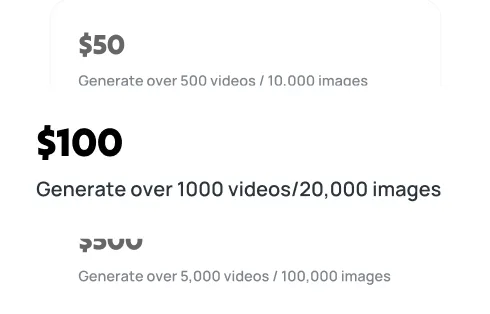
Top up

Top up

Your balance can be used across all models on the platform, including claude opus 4.5 20251101, giving you the flexibility to experiment and scale as needed.

Generate your API key

Generate your API key

In your dashboard, create an API key — you'll need it to authenticate when making requests to claude opus 4.5 20251101.

Make your first API call

Make your first API call

Use your API key with our sample code to send a request to claude opus 4.5 20251101 via GPT Proto and see instant AI‑powered results.

Get API Key

Claude Web Search FAQ

User Reviews for Claude Web Search