INPUT PRICE
Input / 1M tokens
file
OUTPUT PRICE
Output / 1M tokens
text
File Analysis
curl --location 'https://gptproto.com/v1/messages' \
--header 'Authorization: GPTPROTO_API_KEY' \
--header 'Content-Type: application/json' \
--header 'anthropic-version: 2023-06-01' \
--data '{
"model": "claude-opus-4-6",
"max_tokens": 1024,
"messages": [
{
"role": "user",
"content": [
{
"type": "text",
"text": "Please analyze this PDF document and provide a summary of its content"
},
{
"type": "document",
"source": {
"type": "url",
"url": "https://tos.gptproto.com/resource/gptproto.pdf"
}
}
]
}
]
}'
Stop manually transcribing PDFs and start extracting intelligence. The claude opus 4.6/file analysis model on GPT Proto is a specialized iteration designed for high-stakes document processing, combining vision-language capabilities with an expansive memory. claude opus 4.6/file analysis doesn't just read text; it understands the spatial relationships of data, allowing it to interpret tables, charts, and diagrams as a human expert would.
Traditional OCR (Optical Character Recognition) often fails when faced with complex layouts, such as three-column newsletters or academic journals with nested tables. The claude opus 4.6/file analysis engine bypasses these limitations by utilizing a multimodal transformer architecture. Instead of treating a document as a flat string of characters, claude opus 4.6/file analysis analyzes the visual hierarchy and semantic structure of every page. This allows for the precise extraction of data from PDFs that contain hundreds of pages, ensuring that the claude opus 4.6/file analysis output remains contextually accurate regardless of the document's length.
In the financial sector, auditors frequently grapple with thousand-page annual reports filled with dense balance sheets and complex footnotes. By deploying claude opus 4.6/file analysis, firms can automate the cross-referencing of figures across different sections of a PDF. For instance, claude opus 4.6/file analysis can extract a specific figure from a nested table on page 45 and reconcile it with a chart's legend on page 302, flagging discrepancies instantly. The ability of claude opus 4.6/file analysis to maintain state across such a wide context is a game-changer for risk management.
Legal teams often face the challenge of "unsearchable" image-only PDFs in discovery. claude opus 4.6/file analysis excels at transforming these artifacts into searchable, structured data. Beyond simple text conversion, claude opus 4.6/file analysis can identify specific clauses—such as force majeure or indemnification—even when they are formatted in non-standard ways. Lawyers using claude opus 4.6/file analysis on GPT Proto report a 70% reduction in time spent on initial document triaging.
"The reliability of claude opus 4.6/file analysis in interpreting visual data is what sets it apart. It doesn't just guess the numbers in a bar chart; it understands the axis, the scale, and the nuance of the legend, providing a degree of accuracy that was previously impossible without human intervention."
Accessing claude opus 4.6/file analysis through GPT Proto offers several enterprise advantages. Our infrastructure ensures high availability and low latency, which is critical when running massive claude opus 4.6/file analysis workloads. Furthermore, the GPT Proto unified API allows you to switch between models or combine claude opus 4.6/file analysis with other tools in your pipeline seamlessly. To learn more about our integration capabilities, visit the GPT Proto Documentation.
| Feature | Standard OCR Models | claude opus 4.6/file analysis on GPT Proto |
|---|---|---|
| Context Window | 4,000 - 32,000 tokens | 200,000 tokens (Supports massive PDFs) |
| Visual Reasoning | Basic Image Recognition | Advanced Chart, Graph, and Layout Analysis |
| Data Structure | Plain Text Output | Structured JSON/Markdown Preservation |
| Multilingual Support | Variable Reliability | Native Global Language Proficiency |
GPT Proto believes in transparency and cost-efficiency. To start using claude opus 4.6/file analysis, users simply need to Top-up Balance in their accounts. We do not use confusing credit systems; your Recharge Amount is applied directly to your usage of claude opus 4.6/file analysis based on token consumption. This ensures you only pay for what you use, whether you are processing a single invoice or a million-page archive.
Ready to redefine your document workflows? Explore the possibilities of claude opus 4.6/file analysis on our official blog for the latest updates and advanced prompting techniques.

Case studies demonstrating the transformative power of claude opus 4.6/file analysis in enterprise environments.
Challenge: A logistics firm had 50,000 legacy shipping manifests in unsearchable PDF format. Solution: Using claude opus 4.6/file analysis, they automated the extraction of weights, dates, and destinations into a structured SQL database. Result: A 90% reduction in data entry costs and a 400% increase in searchable historical data.
Challenge: Medical staff struggled to find patient history across thousands of pages of fragmented PDFs. Solution: They implemented claude opus 4.6/file analysis on GPT Proto to create semantic summaries and indexed tags for every record. Result: Doctors saved an average of 15 minutes per patient evaluation.
Challenge: Analyzing hundreds of startup pitch decks and financial statements during a funding cycle. Solution: The team used claude opus 4.6/file analysis to extract key KPIs from charts and tables across multiple documents simultaneously. Result: The firm was able to screen 3x more startups without increasing headcount.
Follow these simple steps to set up your account, get credits, and start sending API requests to claude opus 4.6 via GPT Proto.
Sign up
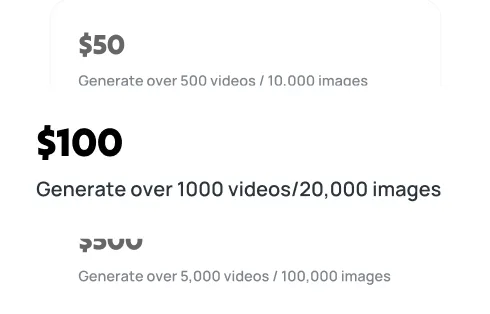
Top up
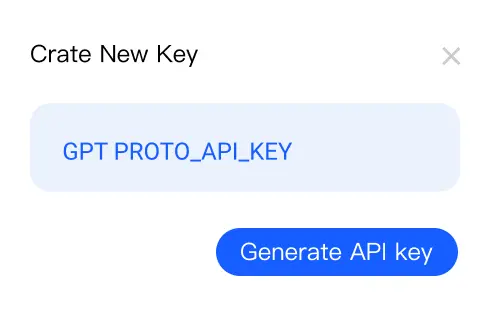
Generate your API key
Make your first API call
Master 14 Claude Code CLI commands for developers. Learn interactive sessions, automation, project setup, and workflow integration to boost coding productivity.

Discover how Claude AI is revolutionizing software development. From Boris Cherny's 13 essential workflows to using Opus 4.5 and automated verification, learn how to turn Claude into a high-performance autonomous coding partner for your engineering team.

What is Model Context Protocol (MCP)? Discover the open standard that enables AI to seamlessly connect with data sources and external tools.
Discover how vertical AI agents are transforming industries by boosting efficiency and automating workflows with GPT Proto.
Professional User Reviews for claude opus 4.6/file analysis