INPUT PRICE
Input / 1M tokens
file
OUTPUT PRICE
Output / 1M tokens
text
Submit Task
curl -X POST "https://gptproto.com/v1/messages" \
-H "Authorization: Bearer YOUR_API_KEY" \
-H "anthropic-version: 2023-06-01" \
-H "Content-Type: application/json" \
-d '{
"model": "claude-sonnet-4-20250514",
"max_tokens": 1024,
"messages": [
{
"role": "user",
"content": [
{
"type": "text",
"text": "Please analyze this PDF document and provide a summary of its content"
},
{
"type": "document",
"source": {
"type": "url",
"url": "https://www.bt.cn/data/api-doc.pdf"
}
}
]
}
]
}'If you're looking for a model that bridges the gap between raw logical power and developer-friendly utility, you should explore all available AI models to see how Claude Sonnet 4 stacks up against the competition. It's a tool designed for those who value context over fluff.
Claude Sonnet 4 has stirred up quite a conversation in the developer community. While it brings a sense of 'quiet competence' to the table, it’s not without its growing pains. We've seen a shift from the flowing, creative prose of earlier versions toward a more clipped, logical output. For some, this is exactly what an API needs; for others, it feels like the model is taking shortcuts. Whether you're building a coding assistant or a complex reasoning engine, understanding these nuances is key to getting your money's worth.
When it comes to building software, Claude Sonnet 4 is often cited as a top-tier choice. Many developers swear by 'Claude Code,' noting that the model handles complex repository structures with a level of awareness that others lack. However, the sentiment isn't universal. Some users have reported a dip in coding reliability compared to previous iterations, citing instances where Claude Sonnet 4 might use ellipses to skip over important code blocks or ignore specific formatting instructions. To get the best results, you'll want to read the full API documentation to implement structured prompting that keeps the model on track.
"Claude Sonnet 4 feels like a focused engineer who occasionally forgets the documentation requirements because they're too busy solving the core logic. It has a maturity in its reasoning that makes it feel less like a bot and more like a collaborator, even if you have to remind it not to take shortcuts."
One of the biggest talking points is the change in writing style. Claude Sonnet 4 has developed a bit of a habit—much like ChatGPT—of overusing em-dashes and colons. This can make the AI output feel a bit repetitive if you're using it for long-form content or roleplay. Users who loved the 'flow' of version 3.7 might find Claude Sonnet 4 a bit too concise, sometimes feeling more like a Haiku model than a prose powerhouse. However, in terms of memory and reasoning, Claude Sonnet 4 is a beast. It manages context brilliantly, making it ideal for tasks where the AI needs to remember details from much earlier in the conversation.
If you find that Claude Sonnet 4 is taking too many shortcuts, the solution is 'atomic steps.' Instead of giving the API a massive list of requirements, break your tasks into verifiable checkpoints. This prevents the model from eliding instructions or changing requirements mid-stream. Another pro tip: use custom instructions to tell Claude Sonnet 4 exactly what habits to avoid. If you hate the em-dashes, tell it. If you want longer responses, specify the depth. You can monitor your API usage in real time to see how different prompt structures affect your token consumption and output quality.
In head-to-head comparisons, Claude Sonnet 4 often takes a more explanatory stance. While a model like GPT-5.4 might be more decisive in investment theories or direct recommendations, Claude Sonnet 4 prefers to lay out the logic. This makes it a safer bet for educational tools or research assistants. Interestingly, there's a known quirk where Claude Sonnet 4 might misidentify itself as DeepSeek when prompted in Chinese without a system prompt—a strange hallucination that highlights the complexity of modern AI training sets. To test these boundaries yourself, you can manage your API billing and start running your own side-by-side benchmarks.
| Feature | Claude Sonnet 4 | Standard Claude 3.5 | GPT-4o Equivalent |
|---|---|---|---|
| Prose Quality | Concise / Logical | Flowing / Creative | Structured / Detailed |
| Coding Ability | High (Claude Code) | Moderate | High / Decisive |
| Context Memory | Excellent | Good | Very Good |
| Writing Habit | Em-dash heavy | Natural | Formulaic |
The move to Claude Sonnet 4 is often driven by its ability to reason through complex problems without getting lost in the weeds. While the prose might be shorter, the logical density is higher. This means you spend fewer tokens on 'fluff' and more on actual problem-solving. Plus, on GPTProto, you don't have to deal with complex credit systems. Our 'No Credits' approach means you get stable, predictable access to the Claude Sonnet 4 API. You can even try GPTProto intelligent AI agents that are already optimized for this specific model's strengths. If you're looking for the latest industry insights on how these models are evolving, be sure to stay informed with AI news and trends on our site.
To start using Claude Sonnet 4, you'll need a reliable gateway that handles the heavy lifting of API management. GPTProto provides the stability you need to deploy this model in customer-facing apps. Whether you are using it for automated code reviews or complex data analysis, the key is consistency. By using the deep-dive tutorials and guides available on our blog, you can learn how to mitigate the model's tendency to take shortcuts. Don't forget to join the GPTProto referral program to earn commissions while you build with the most advanced AI tools on the market today.

Discover how businesses are utilizing Claude Sonnet 4 to solve complex problems.
Challenge: A legacy codebase required significant refactoring, but manual review was too slow and other models frequently hallucinated syntax. Solution: Implementation of Claude Sonnet 4 with 'Claude Code' integration to analyze dependencies. Result: The team reduced refactoring time by 40% while maintaining high code quality, despite initial hurdles with model brevity.
Challenge: Analyzing hundreds of pages of legal documents where the AI needs to maintain consistency across the entire dataset. Solution: Leveraging Claude Sonnet 4 and its superior context management to track case law references. Result: Attorneys were able to query deep connections between documents that shorter-context models missed entirely.
Challenge: A support bot that was too 'wordy' and often confused users with unnecessary prose. Solution: Switching to Claude Sonnet 4 for more concise, logical, and explanatory responses. Result: Customer satisfaction scores improved as the AI provided direct, easy-to-follow technical steps without the previous 'AI-written' fluff.
Follow these simple steps to set up your account, get credits, and start sending API requests to claude sonnet 4.20250514 via GPT Proto.
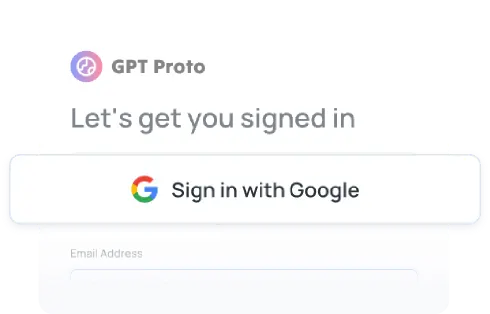
Sign up
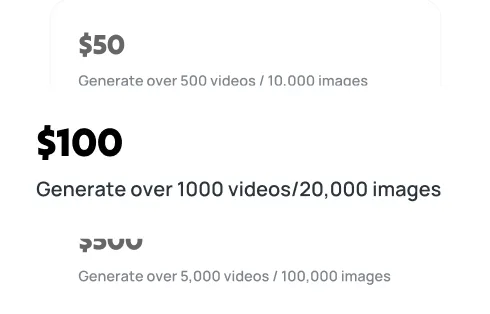
Top up
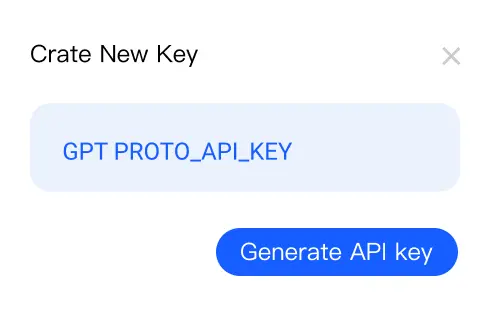
Generate your API key
Make your first API call
Master 14 Claude Code CLI commands for developers. Learn interactive sessions, automation, project setup, and workflow integration to boost coding productivity.

Discover how Claude AI is revolutionizing software development. From Boris Cherny's 13 essential workflows to using Opus 4.5 and automated verification, learn how to turn Claude into a high-performance autonomous coding partner for your engineering team.

What is Model Context Protocol (MCP)? Discover the open standard that enables AI to seamlessly connect with data sources and external tools.
Discover how vertical AI agents are transforming industries by boosting efficiency and automating workflows with GPT Proto.
Claude Sonnet 4 User Reviews & Feedback