PRICE
Per Time
INPUT
image
OUTPUT
image
If you're looking for an image model that doesn't just generate from scratch but actually transforms existing visuals, you should browse Flux Kontext Pro and other models on GPTProto. This 12B parameter giant has quickly become a favorite for those needing speed and dramatic photo editing capabilities without the wait times typical of smaller, less efficient models.
When you first run a task through Flux Kontext Pro, the immediate takeaway is the sheer velocity. In a world where high-fidelity image processing can take tens of seconds, Flux Kontext Pro feels rapidly fast. This isn't just a subjective feeling; the architecture is optimized for low-latency responses, making it suitable for applications where users expect real-time or near-real-time feedback. Developers often find that Flux Kontext Pro manages to strike a difficult balance between being a massive 12B parameter model and delivering results in a fraction of the time compared to older Diffusion-based tools. If you're building a consumer app, you can manage your API billing and scale these fast responses without hitting the performance walls seen elsewhere.
One of the most impressive technical feats of Flux Kontext Pro is its ability to handle complex compositional changes. Instead of just adding a filter, you can use the model to modify specific elements. For example, you can tell the model to 'Give her a red hoodie and blue jeans while she is covered in snow in a snowy place,' and Flux Kontext Pro will rewrite the pixels while maintaining the structural integrity of the original subject. This makes it a fantastic choice for e-commerce or creative agencies. To get the best out of these workflows, you should read the full API documentation for specific implementation details on masking and prompt weights.
"I am surprised to see the results and it's rapidly fast. Flux Kontext Pro does a great job adding color to old black and white images, making it a go-to for restoration experts." — AI Research Analyst
For those using advanced node-based setups like ComfyUI, Flux Kontext Pro introduces interesting possibilities with image stitching. You can use an Image Stitch node to combine a person and their pet, then feed that result back into Flux Kontext Pro to add a third element, like a specific background. This iterative process is where the model shines, allowing for a level of control that standard text-to-image models simply can't match.
It's important to be realistic about the constraints. Flux Kontext Pro is known for being heavily censored. Users have reported that even something as common in cinematic imagery as weaponry can trigger safety filters and block the output. This is a design choice by the developers to ensure safety, but it means that for certain creative industries like game asset generation or gritty film pre-visualization, Flux Kontext Pro might be too restrictive. Furthermore, while the model is powerful, its prompt adherence can occasionally be inconsistent. You might find yourself 'ripping your hair out' trying to get a specific small detail exactly right if the prompt isn't perfectly structured.
While Flux Kontext Pro is a leader in speed and colorization, it's always wise to compare. Many users are looking at Flux Kontext Pro alongside Qwen Image Edit 2511 or Flux Klein. Each has its niche. Flux Kontext Pro remains the king of rapid transformation, but others might offer better adherence to highly complex, multi-subject prompts. Use the table below to see how Flux Kontext Pro stacks up against standard options available on our platform.
| Feature | Flux Kontext Pro | Flux.1 [dev] | Qwen Image Edit |
|---|---|---|---|
| Model Size | 12B Parameters | 12B Parameters | Variable |
| Primary Strength | Edit/Colorize Speed | General Quality | Instruction Adherence |
| Latency | Very Low | Moderate | Low |
| Best Use Case | Photo Restoration | Creative Art | Detailed Modifying |
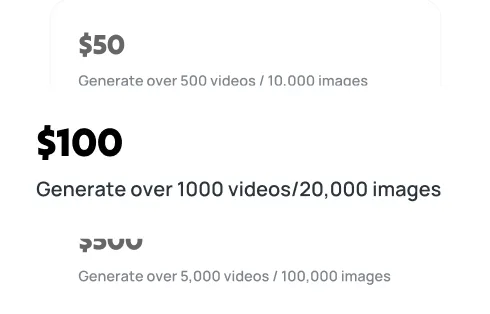
To ensure your project stays within budget while testing these various models, you can utilize flexible pay-as-you-go pricing on our platform. This allows you to A/B test Flux Kontext Pro against other models to see which one handles your specific prompts with the least amount of friction.
To get the highest quality output from Flux Kontext Pro, focus on descriptive grounding. Since the model relies on the 'context' of the original image, your prompt should explicitly bridge the gap between the source and the target. If you are using Flux Kontext Pro for sketch blending—where you take a hand-drawn sketch and turn it into a photo—the model works best when the sketch has clear outlines. You can monitor your API usage in real time through our dashboard to see how different prompt lengths and complexities affect your processing time. We also recommend checking out the deep-dive tutorials and guides on our blog to master the art of sketch-to-photo conversion using Flux Kontext Pro.
Ultimately, Flux Kontext Pro is a tool of immense potential that is likely to be supplanted by even larger models soon, but for now, its 12B parameters provide a sweet spot for production-grade image editing. Whether it's the hope for future Photoshop plugin integration or just the need to colorize a family archive, Flux Kontext Pro delivers results that were impossible just a year ago.

Discover how Flux Kontext Pro solves real-world image editing challenges.
Challenge: A museum needed to colorize thousands of black and white historical archives quickly. Solution: By using the Flux Kontext Pro API, they automated the colorization process, utilizing the model's 12B parameter knowledge of textures and skin tones. Result: The project was completed 5x faster than manual editing with high historical accuracy.
Challenge: A fashion retailer wanted to show a single model in multiple clothing colors and environments without re-shooting. Solution: Flux Kontext Pro was used to manipulate image elements, changing 'blue jeans' to 'red leggings' and 'studio' to 'mountain'. Result: Significant reduction in photography costs and a faster time-to-market for new collections.
Challenge: An interior design firm needed to turn rough client sketches into realistic 3D-like visualizations. Solution: They used Flux Kontext Pro for sketch blending, overlaying photographic textures onto hand-drawn layouts. Result: Clients could visualize the final product instantly, leading to higher approval rates on initial concepts.
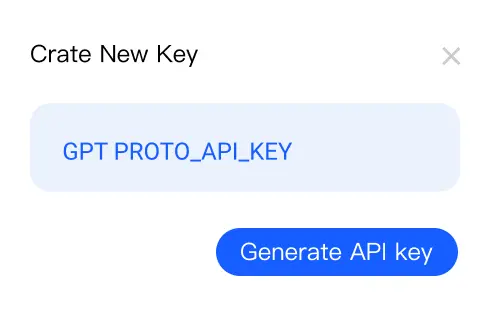
Follow these simple steps to set up your account, get credits, and start sending API requests to flux kontext pro via GPT Proto.

Sign up

Top up

Generate your API key

Make your first API call

Discover how Flux Pro 1.1 is redefining photorealistic AI imagery through its professional-grade API. Learn how to optimize your creative workflow today.

Discover how Flux Kontext is revolutionizing digital creativity. This comprehensive guide covers precision editing, hardware optimization for ComfyUI, and platform comparisons to help you master professional AI image generation and selective retouching with ease.

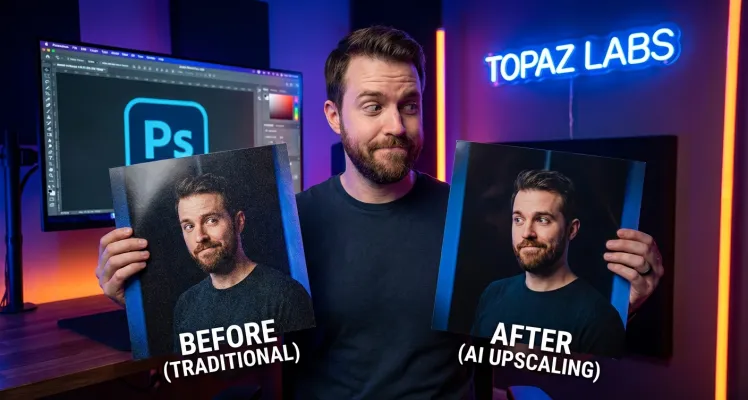
Discover how to increase resolution of image assets using neural networks and AI models for professional photography, e-commerce, and historical archiving.

Discover how AI and tools like GPTProto are transforming the pro image from a captured moment into a computational masterpiece for modern brands.
Flux Kontext Pro User Reviews