INPUT PRICE
Input / 1M tokens
file
OUTPUT PRICE
Output / 1M tokens
text
If you want to explore all available AI models, you will quickly notice that Google is leading the pack in multimodal document analysis. Unlike older systems that just scrape text, Google uses native vision to see the entire context of a file.
When I first started testing Google for document tasks, I was impressed by how it handles visual hierarchies. Most AI models struggle when a chart is placed in the middle of a paragraph. Google doesn't. Because the Google engine processes pages as images, it maintains the relationship between a figure and the text describing it. This Google approach is vital for legal teams and researchers who deal with non-standard formatting. You aren't just getting a text dump; you're getting an intelligent interpretation of the document's structure.
The current Google API allows for massive context windows. We are talking about documents up to 1000 pages or 50MB in size. That is a massive amount of data for a single Google request. On GPTProto, you can read the full API documentation to see how we implement these high-capacity Google endpoints for our users. I've found that using Google for these large files is much more reliable than trying to chunk text manually and losing the visual context in the process.
To get the most out of Google, you need to understand the media resolution parameter. Google now gives us granular control over how it 'looks' at each page. If you are just extracting text from a clean PDF, a lower resolution setting with Google might save you latency. But if you have tiny footnotes or complex schematics, setting the Google resolution to high is a necessity. You can check the Google document processing reference for specific technical specs on how these images are scaled.
I recommend rotating your pages to the correct orientation before sending them to Google. While the Google vision system is smart, giving it upright text results in faster and more accurate processing. Also, always place your text prompt after the document data. In my experience, this helps the Google model focus on the instructions once it has already 'seen' the content it needs to analyze.
For large-scale operations, the Google Files API is your best friend. Instead of uploading the same 50MB PDF every time you ask a question, you upload it once to the Google servers. It stays there for 48 hours, allowing you to run multiple Google queries against the same data. This reduces bandwidth and speeds up your response times significantly. You can monitor your API usage in real time through our dashboard to see exactly how much faster your Google calls become when using this method.
Google has effectively ended the era of basic OCR. By integrating native vision into the core Google model, we can now treat a 1000-page document as a single, searchable visual entity without losing the nuance of the original layout.
Comparing Google to other major players like GPT-4o reveals some interesting trade-offs. While both are multimodal, the Google tokenization for documents is incredibly predictable. Each page is exactly 258 tokens. This makes budgeting for your Google API calls much easier than with models that have variable token costs based on content density. Here is a quick comparison of what you get with Google on GPTProto versus standard alternatives.
| Feature | Google (Gemini 3) | Standard Competitors |
|---|---|---|
| Max Page Limit | 1000 Pages | 20-50 Pages |
| Token Cost | 258 per page | Variable |
| Native PDF Vision | Yes (High Fidelity) | Limited/OCR-based |
| File Persistence | 48 Hours (Files API) | Often Session-based |
| Max File Size | 50MB | 20MB |
Many developers are moving their heavy document workflows to Google because of the stability and the 'No Credits' pricing model we offer at GPTProto. You can manage your API billing with a transparent pay-as-you-go system that doesn't expire. This is especially useful for Google users who have seasonal spikes in document processing needs. You don't want to lose your budget because you didn't use all your Google tokens this month.
Furthermore, the Google system's ability to output structured data like JSON or HTML directly from a PDF layout is a massive time-saver. Instead of writing complex regex to clean up Google outputs, you can just ask the Google API to 'transcribe this into an HTML table.' It works surprisingly well, even with merged cells and complex headers. If you want to see this in action, try GPTProto intelligent AI agents which are already optimized for these Google-powered document tasks. We've seen users reduce their data entry time by 90% simply by switching to a Google-backed workflow.
When scaling, remember that Google processes native text and images differently. The Google system doesn't charge you for tokens originating from native text embedded in the PDF; it only charges for the visual processing. This makes Google extremely cost-effective for 'text-heavy' PDFs that still require vision for the occasional chart or diagram. You can learn more on the GPTProto tech blog where we deep-dive into these specific Google cost-saving measures and integration hacks.

Real-world scenarios where Google AI transforms document workflows.
Challenge: A law firm needed to search through thousands of 500-page contracts for specific indemnity clauses. Solution: They used Google to process the files via GPTProto, utilizing the Files API to avoid repeated uploads. Result: Search time was reduced from weeks to minutes, with Google identifying nuances that keyword searches missed.
Challenge: Nurses were spending hours summarizing handwritten notes and printed charts. Solution: The hospital integrated Google vision capabilities to scan patient PDFs and generate structured summaries. Result: Google correctly identified lab results within charts, allowing staff to focus more on patient care and less on data entry.
Challenge: An investment firm struggled to pull data from complex quarterly report diagrams into Excel. Solution: They employed Google to 'see' the charts and output the raw data as a CSV-ready string. Result: Data accuracy reached 99%, and the firm could analyze 10x more companies than before using Google.
Follow these simple steps to set up your account, get credits, and start sending API requests to gemini 3 pro preview via GPT Proto.
Sign up
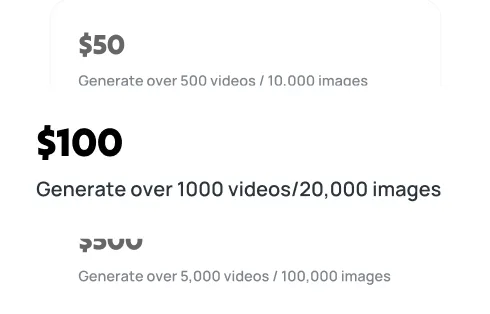
Top up
Generate your API key
Make your first API call
Learn how gemini3 redefines AI with multimodal reasoning and massive context windows. Master the next generation of agentic AI models.

Google's gemini 3 flash trades deep reasoning for raw speed and low costs. Learn how to optimize prompts and avoid hallucinations in your next project.

Analyze Gemini 3 Pro speed and logic performance. Discover the best use cases for Google's latest model and API. Get started today.

The gemini veo 3 limits you to 720p and 8-second clips, but its character consistency is unmatched. Learn how to optimize your storyboarding workflow now.
What Developers Are Saying About Google Document Understanding