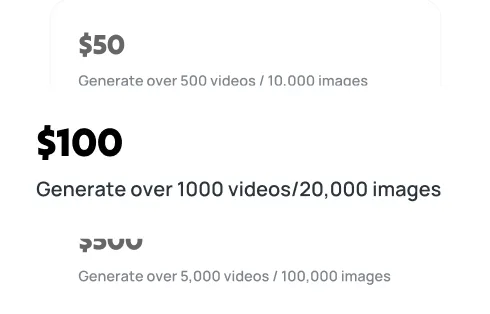
PRICE
Per Time
INPUT
image
OUTPUT
video
Reference To Video
curl --location 'https://gptproto.com/api/v3/google/veo3.1/reference-to-video' \
--header 'Authorization: GPTPROTO_API_KEY' \
--header 'Content-Type: application/json' \
--data '{
"prompt": "A young woman walks alone under a transparent umbrella in a quiet alley during light rain, soft city lights reflecting on the wet pavement. Her pace is calm and thoughtful. The camera follows slowly behind her, occasional droplets hitting the lens. Subtle piano music plays, evoking a melancholic but peaceful mood. Dreamy, cinematic, slightly slow motion.",
"images": [
"https://oss.gptproto.com/2025/11/12/d5c2f08479b9452aacbcf9963631ce21.jpeg"
],
"aspect_ratio": "16:9",
"enhance_prompt": true
}'
Query Result
curl --location --globoff --request POST 'https://gptproto.com/api/v3/predictions/{{id}}/result' \
--header 'Authorization: GPTPROTO_API_KEY' \
--header 'Content-Type: application/json'
Looking to integrate next-gen video? You can browse Veo 3.1 and other models on the GPTProto platform to start building today.
Generative video technology is moving fast, and Veo 3.1 is right at the center of the conversation. If you follow community discussions on places like Reddit, you've probably seen that '3.1' versions of AI models often come with a mix of excitement and technical hurdles. Just as users noticed with Gemini 3.1, Veo 3.1 features enhanced safety protocols. Sometimes these filters can feel a bit too restrictive for creative professionals, but they ensure that the content generated by Veo 3.1 remains compliant with enterprise standards. I've spent a lot of time testing the Veo 3.1 API, and while the guardrails are firm, the cinematic quality you get is often worth the extra prompt engineering.
When we talk about the speed of Veo 3.1, it's helpful to use a hardware metaphor. Think of it like the jump from USB 3.0 to USB 3.1 Gen 2. While Gen 1 was just a rebrand, Gen 2 doubled the bandwidth to 10 Gbps. Veo 3.1 feels like that Gen 2 upgrade in terms of raw data processing. It handles high-bandwidth video tasks much better than its predecessors. However, some early adopters have reported that Veo 3.1 can occasionally act 'retarded' or sluggish during peak demand—much like the performance dips seen in other software updates. This is exactly why using a managed ai service is better than running things solo. We handle the load balancing so your Veo 3.1 calls don't hang when you need them most.
"Veo 3.1 is the first video model that actually understands the physics of lighting, even if its internal safety filters are a bit more sensitive than we'd like for raw artistic expression."
The main reason to use the Veo 3.1 api over older versions is the consistency of the frames. Older video models often suffered from 'ghosting' where objects would disappear. Veo 3.1 solves a lot of this. If you are a new player returning to the ai space—much like a player returning to Genshin Impact after version 3.1—you might worry that your old prompt engineering techniques are 'bricked.' Don't worry. Veo 3.1 is backward compatible in its logic, even if it requires more descriptive inputs. To get started, you should read the full API documentation to understand the new parameter headers.
| Feature | Veo 3.1 Capabilities | GPTProto Benefit |
|---|---|---|
| Resolution | Up to 4K Upscaled | High-speed delivery |
| Safety Filters | Strict/Enterprise Grade | Filtered via API |
| Latency | Optimized for 10Gbps logic | Low-latency routing |
| Pricing | Pay-as-you-go | No credit expiration |
Getting the most out of Veo 3.1 requires understanding its temperament. Since it uses strict filters, avoid ambiguous language. If you want to manage your API billing and scale your usage, you need to ensure your prompts are clean. I recommend using the Veo 3.1 model for marketing assets and training simulations where realism is more important than abstract 'art.' Also, keep an eye on your usage; you can track your Veo 3.1 API calls in our real-time dashboard to avoid any surprises. The stability of Veo 3.1 on our infrastructure means you won't deal with the 'app changing colors' or unexpected crashes that some users reported during the early rollout of the 3.1 software cycle.
Comparison is key. While USB 3.1 is electrically compatible with older ports, it only shines when the whole chain supports it. Similarly, Veo 3.1 shines when your app is built to handle its high-fidelity output. Unlike older models that were hit-or-miss, Veo 3.1 offers a 'peak' experience in visual storytelling. Some users have described finishing a project with Veo 3.1 as an emotional experience, similar to finishing a major story chapter in a game like Wuthering Waves. It's that good when the prompt hits right. If you're looking for more tips, learn more on the GPTProto tech blog where we break down specific prompt structures for Veo 3.1.
For those worried about cost, our platform offers a distinct advantage. There are no monthly subscriptions that expire. You simply top up and use your Veo 3.1 tokens when you need them. This is great for agencies that have fluctuating workloads. You can also earn commissions by referring friends to the GPTProto platform, making your Veo 3.1 experimentation even more affordable. Stay ahead of the curve by checking the latest AI industry updates as we continue to add new variants of the Veo 3.1 ecosystem.
Integrating Veo 3.1 into your stack is straightforward. The api endpoints follow standard REST patterns. Because Veo 3.1 is sensitive to safety triggers, we suggest building a pre-processor to clean user-generated prompts before they hit the Veo 3.1 engine. This ensures a higher success rate for your API calls. If you want to see what else is possible beyond video, explore AI-powered image and video creation tools on our skills page. Veo 3.1 is just the beginning of what we are building here.

How businesses are using the Veo 3.1 API to solve creative and technical challenges.
A retail brand needed to generate hundreds of product videos weekly. By using the Veo 3.1 api, they automated the text-to-video process, resulting in a 70% reduction in production costs and higher engagement on social platforms.
A safety firm used Veo 3.1 to create realistic workplace hazard simulations. The model's ability to render complex physical interactions helped employees better identify risks without the need for expensive live-action filming.
Independent directors are using Veo 3.1 to storyboard their films. The high-fidelity scenes produced by Veo 3.1 allow them to pitch concepts to investors with cinematic visuals before a single camera is rented.
Follow these simple steps to set up your account, get credits, and start sending API requests to veo3.1 via GPT Proto.

Sign up

Top up

Generate your API key
Make your first API call

Explore Veo 3 and Veo 3.1 pricing options including Google AI Pro ($19.99/mo), Ultra ($249.99/mo), and API rates from $0.10-$0.40/second. Find the best plan for your video creation needs.
Create cinematic AI videos with Vidu Q2's natural expressions and smooth camera work. See how it compares to Sora 2 and turn images into video instantly.
Discover how Higgsfield AI revolutionizes social media video creation with cinematic effects. Turn static images into engaging videos instantly.

Discover Kling O1, the world's first unified AI video model combining generation and editing. Learn features, use cases, and how this "video world's Nano Banana" is transforming content creation.
User Reviews: What Professionals Think of Veo 3.1