PRICE
Per Time
INPUT
text
OUTPUT
video
Input
Output
{}Pricing Details
| Duration | Price |
|---|---|
5 | $0.168 |
10 | $0.336 |
Examples
For creators looking to push the boundaries of digital content, the Kling series represents a massive step forward in generative media. You can browse Kling and other models on our platform to start building today.
The newest iteration of Kling, the 3.0 series, solves one of the biggest headaches in AI video: consistency. Whether you are using Kling Video 3.0 or the Omni variant, the model maintains subject identity with incredible precision. This isn't just about faces; it's about clothing textures, environmental lighting, and background stability. When you trigger a Kling API call, the system processes multi-modal inputs to ensure that a character in frame one looks exactly like the character in frame five hundred.
We have seen developers use this for everything from short-form marketing clips to complex cinematic storyboards. The Kling Video 3.0 Omni model is particularly impressive because it introduces native audio-visual synchronization. This means the audio isn't just an afterthought slapped onto a silent clip; it's generated in tandem with the visual movement, supporting multiple speakers and even regional accents in languages like Japanese, Korean, and Spanish.
"Kling's ability to maintain subject consistency across 15 seconds of footage is a massive leap for independent filmmakers and marketing agencies alike."
Storyboarding used to be a manual, time-consuming process. With Kling Image 3.0 Omni, you can now output 2K and 4K ultra-high-definition images that serve as the perfect foundation for film production. The model supports a new storyboard image set generation feature, which keeps reference image features intact while shifting the scene context. This allows for a unified visual style across an entire project.
If you are working on a high-stakes campaign, you can manage your API billing to scale your generation tasks. The Kling 3.0 All-in-One approach means you don't have to hop between different models for text-to-image and image-to-video tasks. It is a unified pipeline designed for efficiency. The detail modification response is remarkably precise, allowing you to tweak style and tone without losing the core essence of your prompt.
While many models struggle with movement, Kling excels at complex motion. The API allows for granular camera control, including pan, tilt, zoom, and roll. You can specify horizontal or vertical translation with values ranging from -10 to 10, giving you directorial control over the virtual lens. This makes Kling more of a virtual camera than just a prompt-to-video tool.
| Feature | Kling Standard | Kling Pro (V2.6+) | Kling 3.0 Omni |
|---|---|---|---|
| Max Duration | 5 Seconds | 10 Seconds | 15 Seconds |
| Audio Support | None | Native Sync | Advanced Multi-Speaker |
| Resolution | 720p | 1080p | Up to 4K (Images) |
| Language Support | CN/EN | CN/EN/JP/KR/ES | Global Accents |
Furthermore, the Kling 3.0 series supports up to 6 shots within a single generation task. This allows for actual scene transitions, which is a rarity in the current AI space. You can define a storyboard and let the Kling API handle the cuts between shots while maintaining character and product consistency throughout the sequence.
Integrating the Kling API through our gateway is straightforward. We provide a standardized environment where you can read the full API documentation and start making POST requests immediately. One of the primary benefits of using GPTProto for your Kling tasks is the stability. We handle the load balancing and provide a clear callback protocol so your application knows the exact moment a video is ready for download.
To get started, simply configure your request body with the `model_name` (such as `kling-v2-6` or `kling-v3-omni`), your prompt, and your desired aspect ratio (16:9, 9:16, or 1:1). You can also monitor your API usage in real time through our dashboard to ensure your project stays within budget. We remove the need for confusing credit systems, offering a transparent path to high-end video generation.
When comparing Kling to other major players, the control parameters are its greatest strength. While other models might offer a 'black box' experience, Kling gives you the handles. The `cfg_scale` parameter (available on v1 and some v2 models) allows you to determine how closely the model follows your prompt versus its own creative freedom. On the newer 3.0 series, the focus has shifted toward 'Pro' and 'Std' modes, where Pro mode offers high-performance rendering for those who need peak quality.
For those interested in technical tutorials, you can learn more on the GPTProto tech blog where we break down specific prompt engineering tactics for Kling. Whether you are generating a rabbit drinking cappuccino or a complex sci-fi transition, understanding how to utilize the `negative_prompt` field is key to avoiding artifacts. Kling handles negative prompts up to 2500 characters, giving you plenty of room to filter out unwanted elements. Stay updated with the latest AI industry updates to see how Kling continues to evolve.

Discover how businesses are leveraging Kling to transform their content strategies.
Challenge: An e-commerce brand needed 100+ unique product videos for a seasonal sale but lacked the budget for a full film crew. Solution: They used the Kling API to generate 10-second clips using high-quality product photos as references. Result: A 70% reduction in content production costs and a significant increase in social media engagement using Kling-generated visuals.
Challenge: A director needed to visualize a complex sci-fi sequence to secure funding but couldn't afford a storyboard artist for the 50+ frames required. Solution: They utilized Kling Image 3.0 Omni to generate 4K storyboard sets that maintained character consistency across different environments. Result: The professional visual deck helped the team secure a production grant within weeks.
Challenge: An EdTech startup wanted to create short educational videos for multiple markets but struggled with lip-syncing and audio localization. Solution: By deploying Kling 3.0 Omni, they generated videos with native audio-visual sync in English, Spanish, and Japanese. Result: They launched their platform in three new regions simultaneously with high-quality, localized video content.
Follow these simple steps to set up your account, get credits, and start sending API requests to kling v2.5 turbo std via GPT Proto.

Sign up

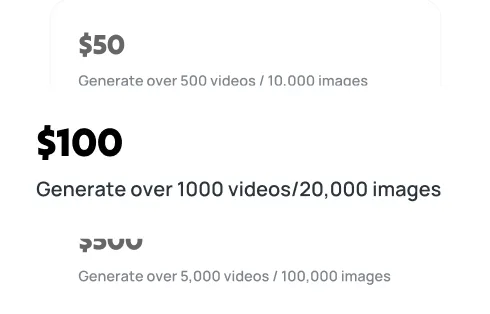
Top up

Generate your API key

Make your first API call

Discover the top AI video generation models in 2025. Compare pricing, explore free APIs, and find the best AI video generator for your needs with our guide.

Discover Sora 2, OpenAI's breakthrough AI video generator with synchronized audio and 4K quality. Learn how to get invite code and use key features.

Kling 2.6 debuts synchronized audio-visual generation, creating complete videos with dialogue, sound effects, and ambient audio in one step. Explore features, examples, and practical applications.

Discover Kling 2.5, the latest AI video generator with improved motion physics, enhanced quality modes, and cost-effective pricing.
What Developers Are Saying About Kling