GPT Proto
gpt-4.1-mini / web-search
OpenAI is redefining how developers interact with large language models by introducing native web search, agentic reasoning, and deep research capabilities. This evolution allows the OpenAI API to move beyond static training data, fetching real-time information with sourced citations directly from the internet. Whether you are building a simple lookup tool or a complex agentic workflow that requires hours of investigation, OpenAI provides the tools via the Responses API and Chat Completions. At GPTProto.com, we simplify the integration of these high-tier models, offering flexible billing and technical support for your production-ready AI applications.

INPUT PRICE

$ 0.28
30% off
$ 0.4

Input / 1M tokens

text

OUTPUT PRICE

$ 1.12
30% off
$ 1.6

Output / 1M tokens

text

Web Search

curl --location 'https://gptproto.com/v1/responses' \
--header 'Authorization: GPTPROTO_API_KEY' \
--header 'Content-Type: application/json' \
--data '{
  "model": "gpt-4.1-mini",
  "tools": [
    {
      "type": "web_search_preview"
    }
  ],
  "input": [
    {
      "role": "user",
      "content": [
        {
          "type": "input_text",
          "text": "What are the latest breakthroughs in quantum computing and their potential applications?"
        }
      ]
    }
  ]
}'

OpenAI API: Mastering Real-Time Web Search and Agentic Intelligence

The way we build with large language models is shifting. It’s no longer enough for an AI to just predict the next token; it needs to interact with the world. You can browse OpenAI and other models on our platform to see how this intelligence is manifesting. The introduction of native web search tools within the OpenAI ecosystem means your applications can finally break free from the constraints of knowledge cutoff dates.

Why Developers Are Choosing OpenAI for Complex Agentic Workflows

I’ve talked to dozens of engineers who were struggling with RAG (Retrieval-Augmented Generation) pipelines. They were spending more time managing vector databases than building features. The OpenAI web search tool changes that. It allows models like GPT-5 to manage the search process actively. Instead of a simple query-response loop, the OpenAI API now supports agentic search where the model analyzes results, decides if it needs more data, and continues searching until the goal is met.

This level of autonomy is perfect for workflows where the answer isn't on the first page of Google. When you read the full API documentation, you'll see that you can even adjust the reasoning level of OpenAI to balance between speed and depth. It's a pragmatic approach to building more capable software.

How Does OpenAI Web Search Compare to Traditional LLMs?

Standard models are stuck in the past. OpenAI, specifically with its new search-preview models, acts as a bridge to the live internet. There are three distinct modes you should understand before you start coding:

  • Non-reasoning Search: Fast, straightforward, and ideal for quick lookups like sports scores or weather.
  • Agentic Search: Available with reasoning models like GPT-5, where the model plans its search steps.
  • Deep Research: A specialized mode for extended investigations, tapping into hundreds of sources over several minutes.

On GPTProto, we’ve compared how these OpenAI modes perform against legacy models. The difference in factual accuracy for recent events is staggering.

FeatureOpenAI GPT-5Standard GPT-4oo3-Deep-Research
Web AccessNative ToolLimited PreviewFull Agentic
Search CitationsDetailed AnnotationsBasic LinksComprehensive List
Reasoning EffortAdjustableFixedHigh Only
Primary Use CaseReal-time AppsGeneral ChatMarket Analysis

OpenAI Deep Research: Handling Long-Horizon Tasks with Ease

Deep research is perhaps the most impressive addition to the OpenAI suite. It’s designed for tasks that would take a human researcher an hour or more. Because it can run for several minutes in background mode, it's not meant for a chat interface where the user expects an instant reply. It's meant for generating massive, data-driven reports. You can learn more on the GPTProto tech blog about how to handle these long-running tasks asynchronously.

"The shift from 'chat' to 'research' marks the beginning of the agentic era. OpenAI isn't just providing answers; it's providing labor." — Senior Systems Architect at GPTProto

When using these features, you'll notice the OpenAI API returns a web_search_call object. This includes specific actions like search, open_page, and find_in_page. It gives you a granular view of what the ai is actually doing behind the scenes.

How to Get the Best Results From OpenAI's API Tools

Getting the most out of the OpenAI web search tool requires a few technical tweaks. First, ensure you are using the Responses API for the most control. You can use domain filtering to limit results to high-authority sites like government databases or specific news outlets. This is a massive win for enterprise users who need to avoid hallucinations from unreliable blogs.

Also, don't ignore user location. By passing city and country parameters to the OpenAI API, the web search becomes localized. If a user asks for 'restaurants near me,' the OpenAI search tool uses that metadata to provide relevant, local results rather than generic global ones. You can track your OpenAI API calls and see exactly how these parameters affect your output in real time.

Managing Costs and Stability for Your OpenAI Integration

One concern I hear often is about the complexity of billing when using advanced tools like deep research. On our platform, we focus on transparency. You can manage your API billing with a flexible pay-as-you-go model. We advocate for a 'No Credits' philosophy—meaning you don't have to worry about pre-purchased credits expiring or complex token-to-credit conversions for OpenAI usage.

Stability is another factor. The OpenAI web search tool is subject to rate limits, but using GPTProto as your infrastructure layer helps smooth out those peaks. We ensure that your OpenAI requests are handled efficiently, allowing you to focus on building the next generation of AI-powered applications.

GPT Proto

Real-World OpenAI Applications

How businesses are using OpenAI search and agentic tools to solve complex problems.

Media Makers

Real-Time Financial Reporting

A Fintech firm needed to provide real-time updates on volatile stock shifts. By using OpenAI with web search enabled, they created a system that fetches the latest news and SEC filings instantly, providing investors with cited, accurate summaries that a standard LLM would miss.

Code Developers

Automated Legal Research Assistant

A law firm used OpenAI Deep Research to perform preliminary case law searches. The challenge was the hours spent browsing databases. The solution utilized OpenAI to conduct multi-minute investigations across hundreds of legal sources, resulting in a 70% reduction in research time for paralegals.

API Clients

Hyper-Local Travel Concierge

A travel app implemented OpenAI web search with approximate user location. Instead of generic 'things to do in London,' the ai uses the user's specific district to find today's pop-up events and restaurant openings, resulting in much higher user engagement and retention.

Get API Key

Getting Started with GPT Proto — Build with gpt 4.1 mini in Minutes

Follow these simple steps to set up your account, get credits, and start sending API requests to gpt 4.1 mini via GPT Proto.

Sign up

Sign up

Create your free GPT Proto account to begin. You can set up an organization for your team at any time.

Top up

Top up

Your balance can be used across all models on the platform, including gpt 4.1 mini, giving you the flexibility to experiment and scale as needed.

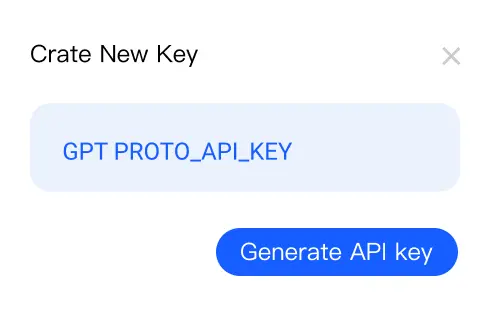
Generate your API key

Generate your API key

In your dashboard, create an API key — you'll need it to authenticate when making requests to gpt 4.1 mini.

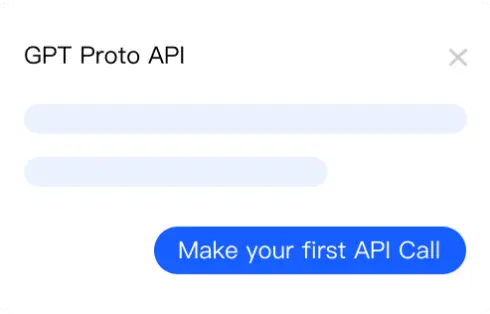
Make your first API call

Make your first API call

Use your API key with our sample code to send a request to gpt 4.1 mini via GPT Proto and see instant AI‑powered results.

Get API Key

OpenAI API Frequently Asked Questions

User Reviews & Feedback on OpenAI Integration