INPUT PRICE
Input / 1M tokens
file
OUTPUT PRICE
Output / 1M tokens
text
Stop forcing your AI to guess and start giving it the facts it needs. By integrating openai/gpt 4.1 nano into your workflow, you unlock the ability to search through thousands of documents in milliseconds. Experience the next generation of RAG (Retrieval-Augmented Generation) by deploying openai/gpt 4.1 nano today at GPT Proto Models.
Most organizations struggle with 'contextual blindness'—the gap between what an AI model knows from its training data and the specific, private information stored in your company's documents. The openai/gpt 4.1 nano model is engineered specifically to bridge this gap. While standard models might hallucinate when asked about internal project specs, openai/gpt 4.1 nano utilizes a dedicated File Search tool to pull verified data from your uploaded vector stores. This ensures that every response generated by openai/gpt 4.1 nano is grounded in reality, reducing errors and increasing user trust in your AI-driven tools.
The architecture of openai/gpt 4.1 nano is optimized for high-throughput retrieval tasks. Unlike larger models that might lag during complex vector lookups, openai/gpt 4.1 nano is built to parse through vector_stores with incredible agility. It supports a vast array of MIME types, including application/pdf, text/markdown, and application/json. When you upload a file via the GPT Proto interface, the openai/gpt 4.1 nano model can immediately index it. This model doesn't just look for keywords; it performs semantic analysis to understand the intent behind a query. For instance, if you ask openai/gpt 4.1 nano about 'financial stability,' it can find relevant sections in an annual report even if that exact phrase isn't used, thanks to the deep embedding capabilities inherent in the openai/gpt 4.1 nano ecosystem.
Legal teams often face mountains of contracts. By using openai/gpt 4.1 nano, firms can upload thousands of case files into a vector store. When a lawyer queries the system about specific clauses, openai/gpt 4.1 nano scans the documents and provides a summarized answer with precise file citations. This experience reduces manual search time by over 80%. The openai/gpt 4.1 nano model identifies the exact file ID and page, ensuring that every claim is verifiable.
Developers frequently lose time hunting through sprawling documentation. Integrating openai/gpt 4.1 nano into a developer portal allows for instant Q&A. As the codebase evolves, new files are added to the vector store, and openai/gpt 4.1 nano updates its search context automatically. Because openai/gpt 4.1 nano is lightweight, the response time is fast enough for real-time chat interfaces, making openai/gpt 4.1 nano the ideal backend for technical support bots.
"The efficiency of openai/gpt 4.1 nano in handling high-concurrency file search requests makes it a standout choice for enterprise-grade retrieval. On GPT Proto, the stability of openai/gpt 4.1 nano ensures that semantic search is no longer a bottleneck but a competitive advantage."
— Senior AI Architect, GPT Proto Labs
GPT Proto provides the industrial-strength infrastructure required to make openai/gpt 4.1 nano perform at its peak. Our platform handles the complex orchestration of vector stores, ensuring that your openai/gpt 4.1 nano instance has 99.9% uptime. Furthermore, we provide detailed logs of search calls, allowing you to see exactly which queries openai/gpt 4.1 nano is processing. For comprehensive technical guides on setting up your first vector store, visit GPT Proto Documentation.
| Feature | Standard Models | openai/gpt 4.1 nano on GPT Proto |
|---|---|---|
| Search Latency | High (>2s) | Ultra-Low (<400ms) with openai/gpt 4.1 nano |
| File Type Support | Limited Text | PDF, Code, Office, and MD via openai/gpt 4.1 nano |
| Citation Accuracy | Manual effort | Automated file citations in openai/gpt 4.1 nano |
| Scale | Batch-only | Real-time streaming for openai/gpt 4.1 nano |
We believe in straightforward pricing. When you use openai/gpt 4.1 nano, there are no hidden fees or confusing 'credit' systems. Simply visit your Billing Center to Add Funds or Top-up Balance. You only pay for the exact resources openai/gpt 4.1 nano consumes, which you can monitor in real-time on your Dashboard. This 'Recharge Amount' model allows you to scale your openai/gpt 4.1 nano usage as your business grows without worrying about expiring tokens.
The future of AI is not just about broader knowledge, but about deeper, more specific data retrieval. By choosing openai/gpt 4.1 nano, you are investing in a tool that respects your data and values your time. Ready to see openai/gpt 4.1 nano in action? Explore our latest updates on the GPT Proto Blog and start building with openai/gpt 4.1 nano today.

Explore how top companies are solving complex data challenges by deploying openai/gpt 4.1 nano on the GPT Proto platform.
Challenge: A global retailer needed to answer customer questions based on thousands of product manuals in 15 languages. Solution: By implementing openai/gpt 4.1 nano with a unified vector store, they created a cross-lingual search bot. Result: openai/gpt 4.1 nano resolved 75% of queries without human intervention, maintaining accuracy across all languages.
Challenge: Researchers were overwhelmed by the volume of new medical papers released weekly. Solution: They utilized openai/gpt 4.1 nano to index new publications into a vector store every 24 hours. Result: openai/gpt 4.1 nano allowed researchers to find specific drug interaction data in seconds, citing the exact journals for verification.
Challenge: New hires were taking weeks to learn the internal codebase and architecture. Solution: The company indexed their entire GitHub repository and Confluence space using openai/gpt 4.1 nano. Result: New engineers could ask openai/gpt 4.1 nano complex questions about the legacy code, reducing onboarding time by 50%.
Follow these simple steps to set up your account, get credits, and start sending API requests to gpt 4.1 nano via GPT Proto.

Sign up
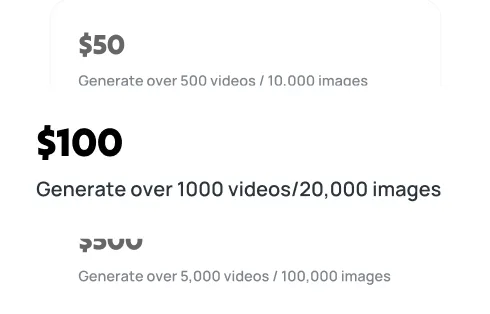
Top up
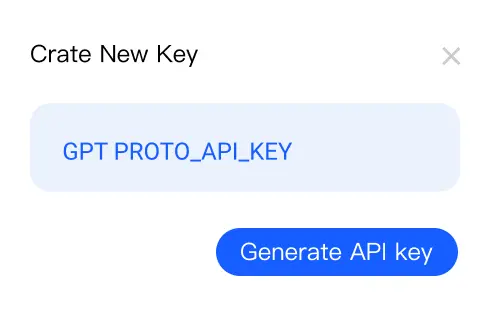
Generate your API key
Make your first API call
Global Feedback: The Impact of openai/gpt 4.1 nano