INPUT PRICE
Input / 1M tokens
file
OUTPUT PRICE
Output / 1M tokens
text
Stop manually digging through PDFs and spreadsheets. With openai/gpt 4.1 available on GPT Proto, you can transform your static documents into a dynamic, searchable knowledge base. Get started today at GPT Proto Models.
The primary challenge with large language models has always been the context window and the potential for hallucinations when dealing with private data. The openai/gpt 4.1 architecture addresses this by utilizing a sophisticated file search tool that acts as a bridge between the model's reasoning capabilities and your specific data repositories. When you deploy openai/gpt 4.1, you are not just using a chatbot; you are implementing a high-speed search engine that understands the nuance of your technical manuals, legal contracts, and research papers.
Unlike standard keyword matching, openai/gpt 4.1 employs semantic search. This means the model understands the intent behind a query. If you ask about fiscal sustainability, openai/gpt 4.1 can locate relevant sections in a document even if those exact words are not present, provided the conceptual meaning exists. This level of expertise ensures that your automated research is both comprehensive and accurate.
To leverage the full power of openai/gpt 4.1, data is ingested into vector stores. These stores index your files—ranging from .pdf and .docx to .py and .json—into multi-dimensional embeddings. When a user submits an input, openai/gpt 4.1 queries these vector stores to extract the most relevant chunks of information. This process reduces latency significantly compared to traditional RAG pipelines, as the model only processes the most relevant data rather than the entire document library.
One of the most critical features of openai/gpt 4.1 is its citation engine. Every time the model generates an answer based on your files, it provides file_citation annotations. This allows users to hover over a claim and see exactly which document and page the information was pulled from. For legal and medical professionals, this transparency makes openai/gpt 4.1 an indispensable tool for maintaining data integrity and audit trails.
"The ability of openai/gpt 4.1 to synthesize information across thousands of pages while maintaining 1:1 citation accuracy is what separates it from earlier iterations of generative AI." - Senior Research Engineer at GPT Proto.
Integrating openai/gpt 4.1 through GPT Proto provides several infrastructure benefits that go beyond the base model. Our platform is designed for high-concurrency environments, ensuring that your file search calls remain stable even during peak usage. Developers can manage their vector stores directly via our dashboard, streamlining the workflow from file upload to response generation. For further technical details, visit our documentation portal.
| Feature | Standard Models | openai/gpt 4.1 on GPT Proto |
|---|---|---|
| Search Method | Keyword only | Hybrid Semantic and Keyword |
| Max File Size | Limited | Optimized for large enterprise datasets |
| Citation Clarity | General summary | Exact file and index mapping |
| Latency | Variable | Low-latency vector retrieval |
On GPT Proto, we believe in clear, usage-based billing. We never use a credit system. Instead, you can simply use the Top-up Balance or Add Funds feature to manage your budget. This allows for precise cost tracking as you scale your openai/gpt 4.1 deployment. Manage your balance at our Billing Center or view your activity on the Dashboard.
By choosing openai/gpt 4.1, you are investing in a future where data is accessible, searchable, and actionable. For more insights into how AI is reshaping industry-specific workflows, check out the GPT Proto Blog.

Detailed analysis of how openai/gpt 4.1 solves critical business challenges.
Challenge: A research firm had over 50,000 trial documents scattered across different formats. Solution: They implemented openai/gpt 4.1 on GPT Proto, centralizing all data into organized vector stores. Result: Research turnaround time decreased by 70%, with scientists receiving cited data in seconds rather than hours.
Challenge: A multinational corporation struggled to track changing regulations in 20 different countries. Solution: By using openai/gpt 4.1 and its metadata filtering capabilities, they created a real-time compliance monitor. Result: The legal team could instantly query regional laws, ensuring 100% compliance accuracy with full source transparency.
Challenge: Developers were spending too much time searching through poorly indexed internal code libraries. Solution: They utilized openai/gpt 4.1 to search through their .py and .js repositories using semantic queries. Result: Internal documentation became 'living' text, with openai/gpt 4.1 providing code snippets and explanations that were always up to date.
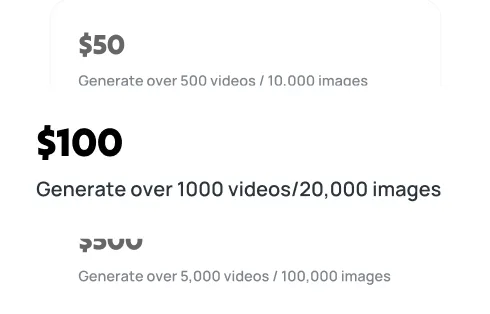
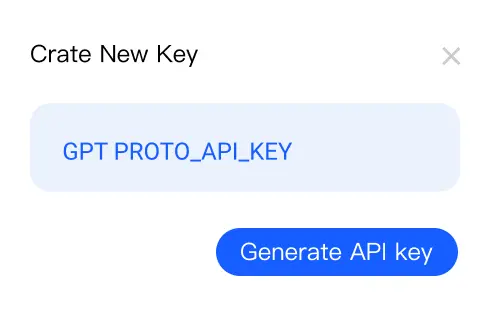
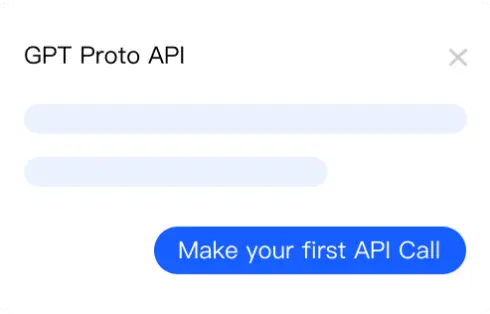
Follow these simple steps to set up your account, get credits, and start sending API requests to gpt 4.1 via GPT Proto.

Sign up
Top up
Generate your API key
Make your first API call
GPT-5.4 is OpenAI's latest AI model, combining advanced reasoning, coding, and built-in Computer Use in one. Learn what's new, how it compares to GPT-5.2, and how to access it affordably via GPT Proto.

GPT-5.3-Codex delivers massive performance gains and recursive self-improvement for developers. Discover how this model changes the AI landscape today.

Explore how GPT-5.3 Codex and the new Codex app are transforming the coding landscape with recursive intelligence and multi-tasking agentic capabilities. Learn how to optimize costs and leverage multi-modal workflows for maximum developer productivity in the new era of AI.
Discover how OpenAI and Anthropic redefined AI Coding on February 5, 2026. Explore the recursive power of GPT-5.3 and the multi-agent collaboration of Claude 4.6, and learn how these tools are automating software development for enterprises globally.
Global Professional Reviews for openai/gpt 4.1