INPUT PRICE
Input / 1M tokens
text
OUTPUT PRICE
Output / 1M tokens
text
Chat
curl --location --request POST 'https://gptproto.com/v1/chat/completions' \
--header 'Authorization: GPTPROTO_API_KEY' \
--header 'Content-Type: application/json' \
--data-raw '{
"model": "gpt-5-nano",
"messages": [
{
"role": "user",
"content": "Who are you?"
}
],
"stream": false
}'Response
curl --location --request POST 'https://gptproto.com/v1/responses' \
--header 'Authorization: GPTPROTO_API_KEY' \
--header 'Content-Type: application/json' \
--data-raw '{
"model": "gpt-5-nano",
"input": [
{
"role": "user",
"content": [
{
"type": "input_text",
"text": "Write a short poem about artificial intelligence and its impact on humanity."
}
]
}
]
}'Developers looking for a balance between extreme speed and operational cost-efficiency should browse GPT 5 Nano and other models available on our platform. This model isn't trying to be a world-class philosopher; it's designed to be a high-performance workhorse for the boring but essential tasks that keep businesses running.
In the world of production AI, raw capability often takes a backseat to cost-at-scale. GPT 5 Nano shines when the output schema is strict and the inputs are well-defined. According to early benchmarks, GPT 5 Nano actually outperforms the GPT-5.4 Mini variant on xHigh reasoning tasks, a surprising result for a model of its size. This makes GPT 5 Nano a unique choice for routing and extraction tasks where you need a bit more 'brain' than a standard small model but don't want to pay for a full GPT-5.2 instance.
The speed of GPT 5 Nano is a talking point in the community. While some users find it slower than expected for a 'nano' designation, there is a technical workaround. By setting the reasoning parameter to 'minimal', you can significantly boost response times. This makes GPT 5 Nano highly effective for real-time applications like optical scraping or finding specific data points on complex websites. You can monitor your API usage in real time to see how these latency shifts affect your overall performance.
The primary value of GPT 5 Nano lies in its ability to handle high-volume, low-complexity tasks without breaking the bank. If you're doing simple documentation management, autofill, or formatting, using a larger model is just throwing money away. GPT 5 Nano acts as an outsourced tool for template management, saving human hours on repetitive work. It's built for those who need to manage your API billing with a focus on high throughput and low per-token costs.
"GPT 5 Nano isn't going to write your next novel, but it will extract 10,000 entities from messy PDFs faster and cheaper than almost anything else in the GPT-5 family. For classification, it's the current sweet spot in the API ecosystem."
However, it is vital to acknowledge the limitations. GPT 5 Nano is prone to confident wrong answers when faced with ambiguous inputs or multi-step reasoning. It is not recommended for complex coding projects. In recent testing, GPT 5 Nano struggled with import paths and async requirements in database sessions. For those specialized tasks, you might want to learn more on the GPTProto tech blog about how to chain smaller models with larger ones for better accuracy.
When choosing between models, you need to look at the trade-offs between reasoning depth and cost. The following table highlights how GPT 5 Nano stacks up against more traditional choices on the GPTProto platform.
| Feature | GPT 5 Nano | GPT-4o (Standard) | GPT-5.2 Pro |
|---|---|---|---|
| Primary Use | Extraction & Classification | General Purpose | Complex Reasoning |
| Cost per 1M Tokens | Lowest | Moderate | High |
| Speed (Minimal Reasoning) | Very Fast | Fast | Moderate |
| Coding Ability | Basic/Formatting | Advanced | Frontier-Level |
| Availability | API-Only | Web & API | Web & API |
To get the most out of GPT 5 Nano, you should focus on prompt clarity. Smaller models don't handle fluff well. Use clear, focused prompts and keep the instructions direct. If you are struggling with hallucinations, try narrowing the scope of the task. Instead of asking GPT 5 Nano to 'write a script', ask it to 'format this JSON object' or 'classify this text into these three categories'. This reduction in scope helps GPT 5 Nano stay on track and deliver the high-speed results you expect.
For those building complex AI agents, GPT 5 Nano is an excellent choice for a 'router' model. It can quickly analyze a user request and decide which larger model should handle the actual execution. You can try GPTProto intelligent AI agents to see how this tiered architecture works in practice. Integrating GPT 5 Nano as the first line of defense in your AI stack can drastically reduce your operational costs while maintaining high responsiveness.
Finally, remember that GPT 5 Nano is currently an API-only model. This means you won't find it in a standard chat interface. To start building, you should read the full API documentation provided by GPTProto. This will give you the specific endpoints and parameter settings needed to activate the 'minimal reasoning' mode and ensure your implementation is as fast as possible. If you encounter issues with import paths or async database sessions, refer to the troubleshooting guides available in our developer portal.
One of the biggest hurdles in AI development is the complexity of credit systems. On GPTProto, we offer a straightforward approach that lets you use GPT 5 Nano without worrying about confusing credit conversions. This stable pricing model is perfect for production environments where budget predictability is key. Whether you are performing optical scraping or massive data classification, the cost remains transparent.
As you scale your project, you might also want to earn commissions by referring friends to the platform. GPT 5 Nano is a great entry point for new developers because of its low barrier to entry and immediate utility for common business problems. Stay updated with the latest AI industry updates to see how GPT 5 Nano continues to evolve and how it compares to upcoming releases like Gemini Flash variants.

Discover how businesses are using GPT 5 Nano to solve complex problems at scale.
A news aggregator needed to categorize 100,000 articles daily into 50 sub-categories. By implementing GPT 5 Nano with minimal reasoning, they reduced their monthly API costs by 70% compared to GPT-4o while maintaining 95% classification accuracy.
A fintech startup used GPT 5 Nano to perform optical scraping on messy invoice PDFs. By providing a strict JSON schema, GPT 5 Nano successfully extracted dates, amounts, and vendor names at a fraction of the cost of larger models.
A customer support platform integrated GPT 5 Nano as a first-tier router. The model analyzes incoming tickets and decides whether to send them to an automated response bot or escalate to a high-reasoning model for complex technical issues.
Follow these simple steps to set up your account, get credits, and start sending API requests to gpt 5 nano via GPT Proto.
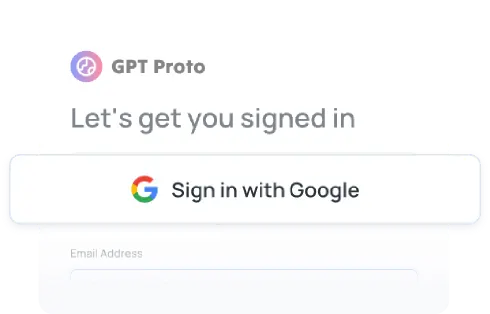
Sign up
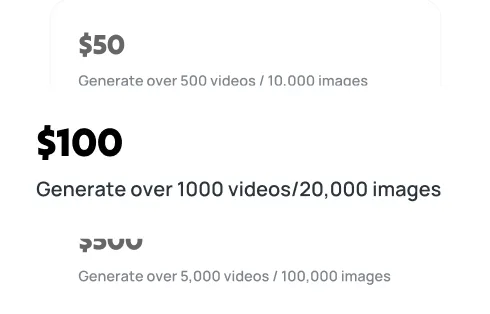
Top up
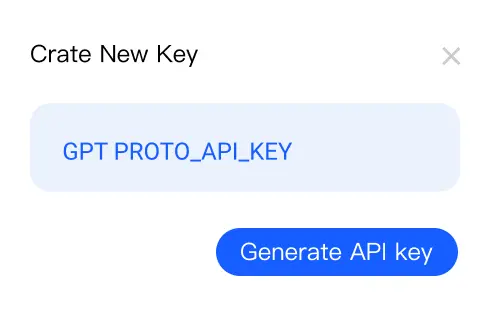
Generate your API key
Make your first API call
Discover GPT-5-nano's August 2025 release, expert predictions, and early API access opportunity. Get the latest updates on OpenAI's AI models.

Hitting GPT's message cap can interrupt your work. Learn why these limits exist, how to fix them, and why GPT Proto is suitable for uninterrupted AI access.

Learn how the repetitive need to copy keys for different AI providers creates security risks and reduces developer productivity in the generative AI era.

This comprehensive guide provides readers with everything they need to know about GPT-5 Mini, OpenAI's lightweight and cost-effective AI model variant.
Developer Feedback on GPT 5 Nano