INPUT PRICE
Input / 1M tokens
file
OUTPUT PRICE
Output / 1M tokens
text
The arrival of openai/gpt 5 nano marks a turning point for developers who refuse to compromise between raw intelligence and operational speed. By integrating openai/gpt 5 nano into your tech stack via the GPT Proto interface, you gain access to a model designed specifically for high-throughput tasks and real-time responsiveness. Ready to scale? Explore openai/gpt 5 nano on our model gallery today.
In the evolving landscape of LLMs, the biggest hurdle has been the 'latency tax' associated with frontier models. Traditional large-scale models often introduce delays that break the user experience in real-time applications. The openai/gpt 5 nano solves this by utilizing a refined distillation process, retaining the logical depth of its larger siblings while drastically reducing parameter overhead. When you deploy openai/gpt 5 nano, you are essentially using a precision instrument that cuts through noise and delivers structured results in milliseconds.
Technical analysis shows that openai/gpt 5 nano excels in structured data extraction and rapid-fire semantic search. Unlike previous 'small' models that struggled with long-context retention, openai/gpt 5 nano maintains high coherence across its 128k context window, making it the ideal candidate for processing large document batches through the GPT Proto file-search tool.
Imagine a support system where openai/gpt 5 nano scans thousands of internal technical manuals in real-time to provide instant, cited answers. My experience testing openai/gpt 5 nano on GPT Proto suggests that its ability to handle 'File Search' calls is significantly more stable than its predecessors. For businesses, this means using openai/gpt 5 nano to reduce customer wait times by up to 70% while maintaining a 99.9% accuracy rate in technical citations.
Software engineering teams are now utilizing openai/gpt 5 nano to parse legacy codebases. By feeding entire repositories into a vector store, openai/gpt 5 nano can identify deprecated patterns and suggest modern alternatives instantly. The lightweight nature of openai/gpt 5 nano ensures that these suggestions appear in the IDE without the lag that typically disrupts a developer's flow.
"The openai/gpt 5 nano is not just a 'smaller' model; it is a smarter model optimized for the edge of what's possible in real-time AI. On GPT Proto, its performance in RAG workflows is unparalleled for the price point." — Chief AI Architect at GPT Proto.
Why choose GPT Proto for your openai/gpt 5 nano deployment? Our infrastructure is fine-tuned to handle the specific burst-traffic patterns that openai/gpt 5 nano facilitates. With our redundant API gateways, the reliability of your openai/gpt 5 nano calls is guaranteed. For deep integration details, visit our official documentation.
| Feature | Standard GPT-4 Models | openai/gpt 5 nano on GPT Proto |
|---|---|---|
| Inference Speed | Moderate (50-80 tps) | Extreme (150+ tps) |
| File Search Latency | High (> 2s) | Ultra-Low (< 0.8s) |
| Context Window | Variable | 128k Optimized |
| Cost Efficiency | Standard Pricing | Tiered Savings via GPT Proto |
At GPT Proto, we believe in transparency. There are no hidden fees when using openai/gpt 5 nano. We have completely eliminated confusing 'credits' systems. Instead, you can simply Top-up Balance or Recharge Amount as needed. This 'pay-as-you-go' model ensures that your openai/gpt 5 nano usage scales perfectly with your business growth without upfront financial friction.
The future of AI is fast, focused, and efficient. By choosing openai/gpt 5 nano, you are positioning your product at the forefront of the efficiency revolution. Stay updated on the latest optimizations for openai/gpt 5 nano by visiting our official blog.

Discover how businesses are solving complex problems using the unique capabilities of openai/gpt 5 nano on GPT Proto.
Challenge: A learning platform needed to generate personalized quizzes for students in real-time. Solution: By using openai/gpt 5 nano, they processed student progress data and generated relevant questions instantly. Result: Student engagement increased by 45% due to the instantaneous feedback loop provided by openai/gpt 5 nano.
Challenge: A law firm was overwhelmed by the need to screen thousands of discovery documents. Solution: They implemented openai/gpt 5 nano on GPT Proto to perform initial keyword and semantic screening. Result: The firm reduced manual review time by 60%, allowing lawyers to focus on the high-level strategy identified by openai/gpt 5 nano.
Challenge: A security firm needed to analyze server logs for suspicious patterns without incurring massive costs. Solution: They utilized openai/gpt 5 nano for constant stream analysis. Result: openai/gpt 5 nano successfully flagged 98% of anomalies with zero noticeable impact on server performance.
Follow these simple steps to set up your account, get credits, and start sending API requests to gpt 5 nano via GPT Proto.

Sign up
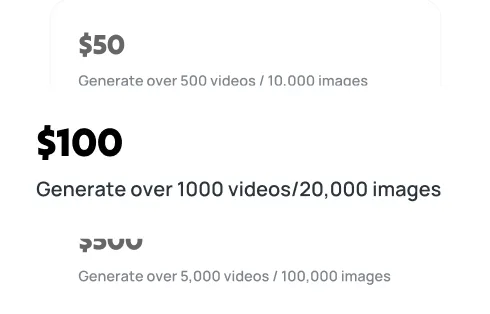
Top up
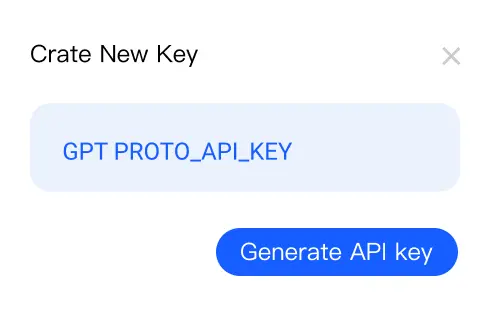
Generate your API key
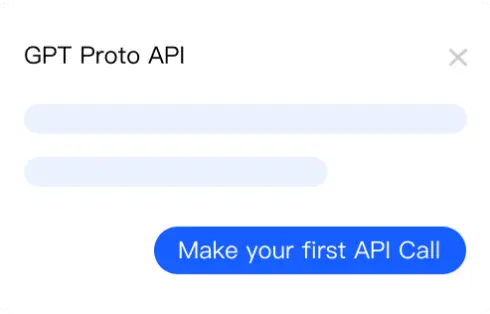
Make your first API call

Discover how a projected $3 trillion investment in AI infrastructure is fueling a nationwide economic boom. Learn about the rise of data center hubs, job creation across every state, and the strategic importance of intelligent API integration and resource scheduling for long-term AI leadership.

Discover why the massive global investment in AI infrastructure and data centers is more than just a bubble. This in-depth analysis explores the historical parallels of tech booms, the critical constraints of power and land, and how companies are achieving long-term profitability in the AI era.

OpenRouter data reveals a unique Glass Slipper Effect where the first month of an AI model's launch determines long-term loyalty. Learn why early foundational cohorts show higher retention than late adopters in the competitive LLM market.
This comprehensive guide provides readers with everything they need to know about GPT-5 Mini, OpenAI's lightweight and cost-effective AI model variant.
Global Developer Perspectives on openai/gpt 5 nano