INPUT PRICE
Input / 1M tokens
image
OUTPUT PRICE
Output / 1M tokens
text
The latest evolution of the OpenAI ecosystem brings more than just faster text; it introduces native multimodality that fundamentally changes how we interact with visual data. Unlike older systems that bolted vision on top of text, models like gpt-image-1 and GPT-5.2 are built to 'see' and 'think' within the same neural architecture.
In the world of professional AI development, reliability is everything. When you use the OpenAI API, you aren't just getting raw intelligence; you're getting a predictable infrastructure. Developers are moving away from self-hosted solutions because OpenAI handles the heavy lifting of scaling and latency optimization. It's much easier to focus on your app's features when you don't have to manage a cluster of GPUs just to run a vision model.
With the introduction of models like GPT-4.1-mini and GPT-5.2, the cost-to-performance ratio has reached a sweet spot. These models are exceptionally good at extracting structured data from messy images, such as receipts, handwritten notes, or complex diagrams. You can manage your API billing on GPTProto with total transparency, paying only for the tokens you actually use rather than being forced into a restrictive monthly tier.
OpenAI models haven't just gotten smarter; they've become more visual. The shift from separate vision encoders to native multimodality in models like gpt-image-1 means the AI actually understands spatial context, not just labels. It's the difference between a bot that knows there is a 'cat' in a photo and one that understands the cat is sitting on a fragile glass table.
While open-source models have made massive strides, OpenAI remains the gold standard for zero-shot performance in multimodal tasks. Most open-source vision models struggle with 'hallucinations' when asked about small text or specific spatial reasoning. OpenAI has significantly mitigated these issues. For example, in tasks requiring precise object counting or color identification in varied lighting, GPT-4.1 and GPT-5.2 consistently outperform the competition.
| Model Category | Feature Focus | Integration Ease | Best For |
|---|---|---|---|
| OpenAI GPT-5.2 | Extreme Reasoning | Very High | Complex Decision Systems |
| OpenAI Vision | Image Analysis | High | OCR & Visual Search |
| OpenAI Image-1 | Creation | High | Creative Assets |
| Competitor SOTA | Speed | Medium | Simple Classification |
Integration is another area where OpenAI wins. You can read the full API documentation to see how simple it is to pass a Base64 string or a URL. The developer experience is built around getting to production fast, not wrestling with proprietary formats.
Efficiency is key when scaling your project. One of the best ways to save money is to use the 'detail' parameter wisely. When you set 'detail' to 'low' in your OpenAI API call, the model processes a 512x512 version of the image for a flat rate of roughly 85 tokens. This is perfect for dominant color detection or general scene descriptions.
However, if you need to read fine print or identify small objects, you'll need the 'high' setting. This splits the image into 512px tiles. To keep your OpenAI costs down, try to crop your images to the specific area of interest before sending them. This reduces the number of tiles generated and keeps your token count low. You can monitor your API usage in real time on the dashboard to see exactly how these adjustments impact your bottom line.
Pricing for the newer OpenAI models follows a patch-based logic. For the 'mini' series, OpenAI calculates how many 32px x 32px patches are needed to cover the image. If an image is huge, it gets scaled down to a maximum cap—usually around 1536 tokens. This is a big departure from older models and offers much more granular control over your spending.
For the flagship models like GPT-4.1 and GPT-5, the cost is a mix of base tokens and tile tokens. For example, a standard 1024x1024 image in high-detail mode costs 765 tokens on GPT-4o. Keeping track of these numbers is essential for high-volume apps. If you're looking for more technical deep dives, you can learn more on the GPTProto tech blog where we break down tokenomics for every major model.
With gpt-image-1, OpenAI has moved beyond the DALL·E 3 paradigm. This is a natively multimodal model. It doesn't just translate your text into an image; it uses its massive world knowledge to understand the context of your request. If you ask for a specific gemstone, the model 'knows' how that stone reflects light because of its multimodal training, not just because it read a description of it. This results in much higher instruction following and realistic textures.
Security is a non-negotiable factor for modern businesses. When using OpenAI through GPTProto, you benefit from enterprise-grade security. Your data remains your data. OpenAI has strict policies against using API-submitted data to train their base models, ensuring that your proprietary images and prompts stay private. This makes OpenAI a safe choice for healthcare, legal, and financial sectors that need to process sensitive visual information without risking data leaks.
If you're looking to expand your toolkit further, you can try GPTProto intelligent AI agents which often use OpenAI as their primary reasoning engine. For those looking to grow their business, don't forget to join the GPTProto referral program to earn commissions while sharing these powerful tools with your network. To stay updated on the fast-moving world of AI, you can always check the latest AI industry updates on our news page.

How businesses are using OpenAI vision and reasoning to solve complex problems.
Challenge: A retail giant needed to identify mislabeled products on shelves across 500 stores. Solution: They implemented a mobile app powered by the OpenAI vision API to scan shelves in real-time. Result: Inventory errors dropped by 40%, and staff saved thousands of hours previously spent on manual audits.
Challenge: An ad agency struggled to turn verbal mood boards into high-fidelity visuals quickly. Solution: Using gpt-image-1 within OpenAI, they enabled designers to generate contextual images that understood brand-specific lighting and composition. Result: Pitch deck turnaround time was reduced from 3 days to 4 hours.
Challenge: A law firm had decades of handwritten notes that were unsearchable and difficult to read. Solution: They used the high-detail vision mode of OpenAI to perform advanced OCR on messy handwriting. Result: 100,000+ pages were converted into searchable text with 95% accuracy, enabling instant legal discovery.
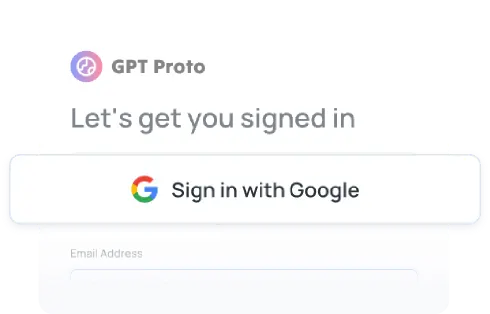
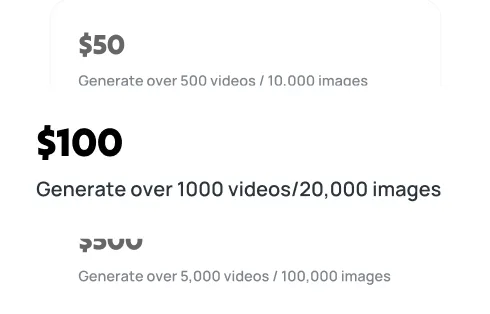
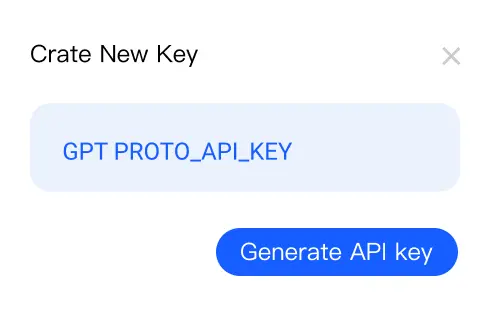
Follow these simple steps to set up your account, get credits, and start sending API requests to gpt 5.1 codex via GPT Proto.
Sign up
Top up
Generate your API key
Make your first API call
Discover OpenAI's GPT-5.1 with improved reasoning, 8 personality modes, and better instruction following. Learn how this update transforms AI conversations for developers and businesses.

Compare Gemini 3 Pro and ChatGPT 5.1 in the ultimate 2025 AI showdown. Discover which model leads in reasoning, coding and multimodal tasks.
Discover GPT 5.1, OpenAI's newest update featuring warmer conversations, adaptive reasoning, and customizable tones. Learn about GPT 5.1 Instant and Thinking models.

GPT-5.3-Codex delivers massive performance gains and recursive self-improvement for developers. Discover how this model changes the AI landscape today.
Developer & User Reviews for OpenAI API