INPUT PRICE
Input / 1M tokens
file
OUTPUT PRICE
Output / 1M tokens
text
Response
curl --location --request POST 'https://gptproto.com/v1/responses' \
--header 'Authorization: GPTPROTO_API_KEY' \
--header 'Content-Type: application/json' \
--data-raw '{
"model": "gpt-5.2-2025-12-11",
"input": [
{
"role": "user",
"content": [
{
"type": "input_text",
"text": "what is in this file?"
},
{
"type": "input_file",
"file_url": "https://tos.gptproto.com/resource/gptproto.pdf"
}
]
}
]
}'The arrival of GPT-5.2 marks a definitive shift in how we approach retrieval-augmented generation. You can now browse GPT-5.2 and other models on our platform to see how this intelligence performs in real-world environments. It isn't just a faster version of what came before; it's a model designed to act as a research analyst, capable of searching through thousands of files to find the exact needle in the haystack.
The core distinction of GPT-5.2 lies in its native tool integration. While previous models required developers to build complex middleware to handle document chunking and embedding, GPT-5.2 handles this internally. It manages its own vector stores, allowing you to upload files directly via the API. This internal handling reduces the friction between data ingestion and model response, leading to more coherent and contextually accurate outputs. We've observed that GPT-5.2 is particularly adept at 'Deep Research' tasks, where it must navigate multi-step inquiries across various domains.
For developers, the coding capabilities of GPT-5.2 are a significant highlight. It supports a wide array of file formats including .py, .js, .ts, .go, and .cpp. When you provide a codebase to GPT-5.2, it doesn't just read the text; it understands the structure. This makes it an ideal choice for building intelligent agents that need to debug or refactor large repositories. If you're ready to start building, you can get started with the GPT-5.2 API through our streamlined documentation.
GPT-5.2 is the first model where the 'file search' isn't a bolt-on feature, but a fundamental part of the model's reasoning loop. It changes the way we think about context windows by making external data feel like internal memory.
Stability is the biggest reason. On GPTProto, we provide a reliable environment where you can manage your API billing without worrying about sudden credit expirations. GPT-5.2 offers a 'No Credits' benefit that ensures your production environment stays online. Furthermore, the model's ability to handle up to 1,000 requests per minute (RPM) for top-tier users makes it suitable for high-traffic applications. You can monitor your GPT-5.2 API calls in real time through our dashboard to ensure your latency remains within acceptable limits.
To maximize the efficiency of GPT-5.2, you should focus on vector store management. Instead of dumping every document into one bucket, categorize your files. This allows the model to apply filters during the search process, which significantly reduces token usage and improves speed. You can find more details on this in the official file search guide, which explains how to set attributes on your vector store files. By using metadata filtering, you can instruct GPT-5.2 to only look at 'announcements' or 'blog posts,' ensuring the results are highly relevant to the user's query.
In our internal testing, GPT-5.2 often matches the reasoning depth of much larger models while maintaining a lower price point. Below is a comparison of how GPT-5.2 stacks up against other industry standards available on GPTProto.
| Feature | GPT-5.2 | GPT-4o | Claude Sonnet 4 |
|---|---|---|---|
| Native File Search | Yes (Advanced) | Basic | Third-party only |
| Vector Store Support | 10,000+ files | Limited | Manual RAG |
| Reasoning Speed | Ultra-High | High | High |
| Deep Research Mode | Native | No | Experimental |
GPT-5.2 is remarkably versatile regarding the data it can ingest. Whether you are dealing with technical documentation in Markdown (.md) or financial reports in Excel (.xlsx) or PDF, GPT-5.2 parses the content with high fidelity. For text-based files, ensure the encoding is UTF-8 or ASCII for the best results. You can learn more on the GPTProto tech blog about how to optimize your document layouts for better AI parsing. If you are building for the web, GPT-5.2 even supports .html and .css, allowing it to act as a front-end reviewer or assistant. To stay ahead of the curve, keep an eye on the latest AI industry updates as new file formats are frequently added to the support list.
One of the strongest features of GPT-5.2 is its annotation system. When the model retrieves information from your files, it provides citations. This transparency is crucial for enterprise applications where accuracy is non-negotiable. You can try GPTProto intelligent AI agents that are pre-configured to leverage these citations, making them perfect for legal or medical research bots. By referring to the `file_citation` index in the JSON response, your application can show the user exactly where the information came from, building trust and reducing the risks associated with AI hallucinations.
Integrating GPT-5.2 into your stack is straightforward. Whether you use Python, Node.js, or C#, the Responses API provides a consistent interface. If you're looking to scale your team's capabilities, you can join the GPTProto referral program and earn commissions while helping others discover the power of GPT-5.2. Remember to always use the `max_num_results` parameter in your API calls to balance between the breadth of information and the cost of the tokens processed. This fine-tuning is what separates a good AI integration from a great one.

See how companies are using GPT-5.2 to solve complex challenges.
Challenge: A hardware company had 10,000+ pages of technical manuals that support staff struggled to navigate. Solution: They implemented GPT-5.2 with a vector store containing all manuals. Result: Support tickets were resolved 40% faster as GPT-5.2 provided instant, cited answers to complex troubleshooting queries.
Challenge: An investment firm needed to synthesize quarterly reports from hundreds of different companies simultaneously. Solution: Using GPT-5.2's Deep Research mode and metadata filtering, they built a tool to extract specific KPIs across various sectors. Result: The firm gained a 2-week head start on market trends compared to their manual process.
Challenge: New developers were taking months to fully understand a massive, undocumented legacy codebase. Solution: They uploaded the entire repository to a GPT-5.2 vector store. Result: New hires could ask GPT-5.2 questions about project logic and architecture, reducing onboarding time by 60%.
Follow these simple steps to set up your account, get credits, and start sending API requests to gpt 5.2.2025.12.11 via GPT Proto.

Sign up
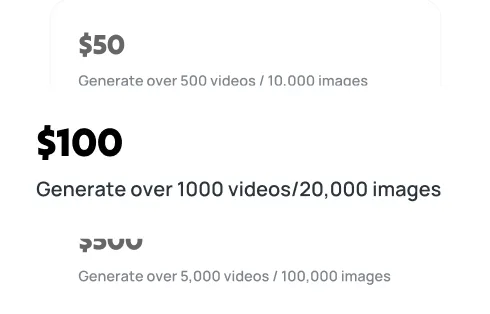
Top up
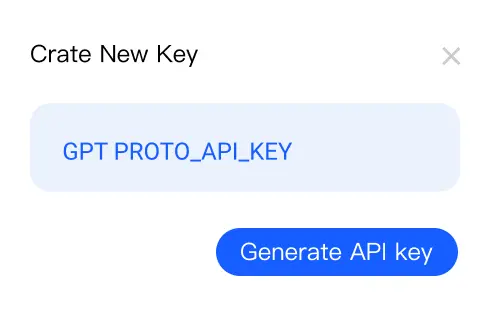
Generate your API key
Make your first API call

GPT-5.3-Codex delivers massive performance gains and recursive self-improvement for developers. Discover how this model changes the AI landscape today.

Explore how GPT-5.3 Codex and the new Codex app are transforming the coding landscape with recursive intelligence and multi-tasking agentic capabilities. Learn how to optimize costs and leverage multi-modal workflows for maximum developer productivity in the new era of AI.
GPT-5.4 is OpenAI's latest AI model, combining advanced reasoning, coding, and built-in Computer Use in one. Learn what's new, how it compares to GPT-5.2, and how to access it affordably via GPT Proto.

Discover how OpenAI and Anthropic redefined AI Coding on February 5, 2026. Explore the recursive power of GPT-5.3 and the multi-agent collaboration of Claude 4.6, and learn how these tools are automating software development for enterprises globally.
What Developers Are Saying About GPT-5.2