INPUT PRICE
Input / 1M tokens
image
OUTPUT PRICE
Output / 1M tokens
text
The arrival of GPT-5.2 marks a definitive shift in how we approach multimodal AI integration. You can now explore all available AI models on GPTProto to see how this specific version stacks up against its predecessors. Unlike older systems that bolted vision onto text, GPT-5.2 is natively multimodal, meaning it understands the relationship between pixels and language at a fundamental level.
I have spent considerable time testing the vision logic in GPT-5.2, and the accuracy in identifying small objects or complex textures is staggering. While earlier versions might struggle with the nuances of rose quartz versus amethyst in a cluttered image, GPT-5.2 uses its expanded world knowledge to make highly accurate calls. This makes GPT-5.2 perfect for industries where visual fidelity is non-negotiable.
When you provide an image as input—whether through a fully qualified URL, a Base64-encoded string, or a file ID—the model doesn't just 'look' at it. It processes the visual data in 32px x 32px patches. For a standard 1024x1024 image, GPT-5.2 calculates 1024 tokens. If the image is larger, it intelligently scales the input while preserving the aspect ratio to stay within a 1536-patch budget. This system ensures that GPT-5.2 remains efficient even when handling high-resolution photography.
The primary reason to switch to the GPT-5.2 API is the native integration of image generation and analysis. You no longer need to hop between DALL-E and GPT; everything happens in one place. According to the official OpenAI vision and image documentation, this native approach allows for better instruction following. If you ask the model to 'generate an image of a cat hugging an otter with an orange scarf,' the model's visual understanding of those objects ensures the result is lifelike and anatomically plausible.
Stability is another factor. By using GPTProto, you can monitor your API usage in real time without worrying about sudden credits expiration. Our platform provides a stable gateway to GPT-5.2, allowing you to focus on building features rather than managing individual provider accounts. The GPT-5.2 model also introduces a 1.62x multiplier for its mini variants, providing a cost-effective path for high-volume classification tasks.
"GPT-5.2 isn't just a vision model; it's a visual reasoner. It understands the spatial relationships in a way that makes it actually useful for UI design and complex document auditing."
If you want to save money, you should understand the 'detail' parameter. By setting GPT-5.2 to 'low' detail, the model processes a 512px x 512px version of your image for a flat fee of 85 tokens. This is perfect for classifying dominant colors or general shapes. However, if your application needs to read small text or identify specific parts of an engine, 'high' detail is mandatory. In high-detail mode, GPT-5.2 scales the shortest side to 768px and tiles the image into 512px squares.
Managing costs shouldn't be a headache. You can manage your API billing through our unified center, which supports a flexible pay-as-you-go model. This is especially helpful when working with GPT-5.2, as image-heavy requests can consume tokens faster than pure text. Always remember to enlarge small text within your images before uploading to ensure the vision system can interpret it correctly.
| Feature | GPT-5.2 (GPTProto) | GPT-4o Standard | Claude 3.5 Sonnet |
|---|---|---|---|
| Input Type | Native Multimodal | Vision-Augmented | Vision-Augmented |
| Image Generation | Natively Integrated | External DALL-E 3 | Not Integrated |
| Token Logic | 32x32 Patching | 512x512 Tiling | Varies |
| Billing Stability | No Credits / Pay-as-you-go | Monthly / Credit-based | Varies |
No model is perfect, and GPT-5.2 has its quirks. It still struggles with precise spatial localization, such as identifying the exact coordinates of every piece on a crowded chessboard. It is also blocked from solving CAPTCHAs for safety reasons. Furthermore, non-Latin alphabets in images—like Japanese or Korean—may see lower accuracy rates compared to English text. If you're building for international markets, I recommend pre-processing images to increase the contrast of any text elements.
To get started, you should read the full API documentation to understand the JSON schema for multimodal messages. GPTProto simplifies this by providing a consistent interface for GPT-5.2 and other top-tier models. You can also learn more on the GPTProto tech blog where we post deep-dives into prompt engineering for vision tasks. Don't forget to join the GPTProto referral program to earn commissions while you build with the world's most advanced AI.

How companies are solving complex problems using GPT-5.2 vision and generation.
Challenge: A retail warehouse struggled with manual stock counts of small items. Solution: Using GPT-5.2 high-detail vision to analyze shelf photos and identify specific SKU labels. Result: Audit time reduced by 70% with a 95% accuracy rate in object recognition.
Challenge: A design house needed to quickly iterate on pattern variations. Solution: Leveraging GPT-5.2 native image generation to create high-fidelity prototypes based on textual descriptions of textures and styles. Result: Prototyping cycles dropped from weeks to hours.
Challenge: Users needed a way to understand complex environmental scenes in real-time. Solution: Integrating GPT-5.2 into a mobile app to provide descriptive, context-aware audio captions of live photos. Result: Users reported significantly better spatial understanding thanks to the model's world knowledge.
Follow these simple steps to set up your account, get credits, and start sending API requests to gpt 5.2.2025.12.11 via GPT Proto.
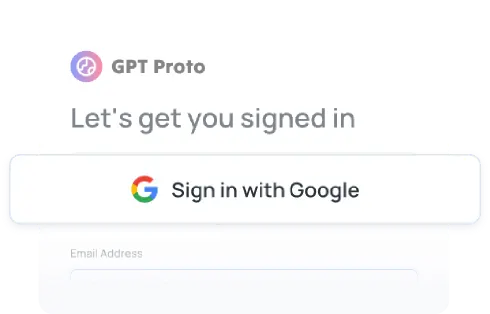
Sign up
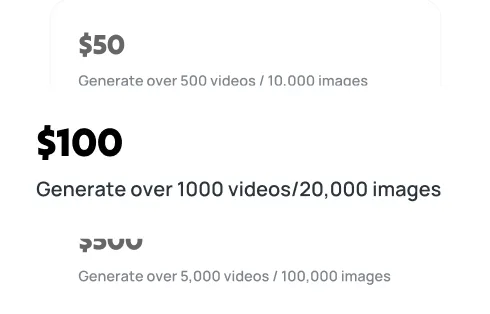
Top up
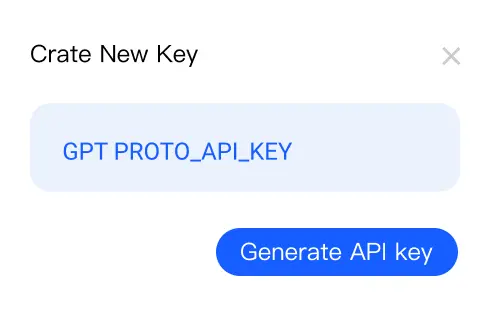
Generate your API key
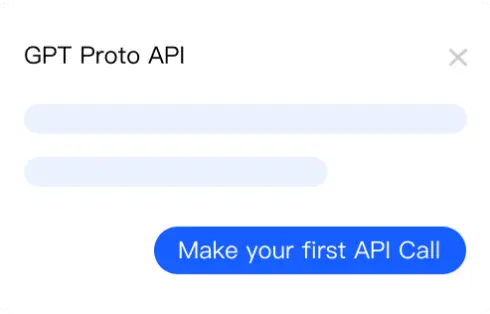
Make your first API call
OpenAI released GPT-5.2 on December 11, 2024, with three versions offering major improvements in coding, spreadsheets, and reasoning. Learn what's new and how to access it affordably through GPT Proto.
Compare GPT 5.2 and Gemini 3 models. Learn their capabilities, pricing, and which AI is best for your needs. Detailed feature comparison inside.
GPT-5.3-Codex delivers massive performance gains and recursive self-improvement for developers. Discover how this model changes the AI landscape today.
Explore how GPT-5.3 Codex and the new Codex app are transforming the coding landscape with recursive intelligence and multi-tasking agentic capabilities. Learn how to optimize costs and leverage multi-modal workflows for maximum developer productivity in the new era of AI.
Developer Reviews for GPT-5.2 Integration