INPUT PRICE
Input / 1M tokens
image
OUTPUT PRICE
Output / 1M tokens
text
Chat
curl --location --request POST 'https://gptproto.com/v1/chat/completions' \
--header 'Authorization: GPTPROTO_API_KEY' \
--header 'Content-Type: application/json' \
--data-raw '{
"model": "gpt-5.2-chat-latest",
"messages": [
{
"role": "user",
"content": [
{
"type": "text",
"text": "What is in this image?"
},
{
"type": "image_url",
"image_url": {
"url": "https://tos.gptproto.com/resource/cat.png"
}
}
]
}
],
"max_tokens": 300
}'Response
curl --location --request POST 'https://gptproto.com/v1/responses' \
--header 'Authorization: GPTPROTO_API_KEY' \
--header 'Content-Type: application/json' \
--data-raw '{
"model": "gpt-5.2-chat-latest",
"input": [
{
"role": "user",
"content": [
{
"type": "input_text",
"text": "What is in this image?"
},
{
"type": "input_image",
"image_url": "https://tos.gptproto.com/resource/cat.png"
}
]
}
]
}'Developers looking for the most versatile multimodal performance often turn to the explore all available AI models page to find OpenAI solutions. This guide breaks down exactly how these models function, specifically focusing on the recent shifts in vision processing and pricing structures.
The OpenAI ecosystem has moved beyond simple text prediction. With the introduction of native multimodal models like GPT-5.2 and GPT-Image-1, the OpenAI API now processes visual inputs with an inherent understanding of world knowledge. Unlike earlier specialized models that required separate pipelines, these newer versions treat pixels as first-class citizens alongside text tokens.
When you use OpenAI for visual tasks, the model doesn't just 'see' shapes; it understands context. If you provide a photo of a gemstone collection, the OpenAI model identifies specific stones like amethyst or jade based on its training, rather than just describing 'purple rocks.' This level of sophistication is why many engineers prefer to read the full API documentation before deploying complex visual analysis tools.
OpenAI has fundamentally changed how its models ingest images. The current generation uses a 'patch' system to tokenize visual data. For instance, the OpenAI GPT-4.1-mini and GPT-5.2 models divide images into 32px x 32px segments. This granular approach allows the OpenAI API to maintain high accuracy even when processing intricate details. By using OpenAI through a stable provider like GPTProto, you can manage your API billing without worrying about sudden credit expirations or complex overhead.
Calculating the cost of an OpenAI request involves more than just counting words. For vision-enabled OpenAI models, the token cost is derived from the image dimensions. The formula involves calculating the number of 32px x 32px patches required to cover the image. If the patch count exceeds 1536, OpenAI scales the image down to fit within that limit. This ensures that even high-resolution files don't result in astronomical costs, though it's vital to monitor your API usage in real time to stay within budget.
"The transition from DALL-E's specialized generation to GPT-Image-1's native multimodal understanding marks a significant milestone for the OpenAI API, allowing for better instruction following and realistic detail without needing external reference images." — Senior AI Architect at GPTProto.
Different models within the OpenAI family have specific multipliers. For example, gpt-4.1-mini has a multiplier of 1.62, while gpt-4.1-nano uses 2.46. Understanding these nuances is critical for teams looking to scale. You can find more detailed breakdowns and deep-dive tutorials and guides on our technical blog.
To get the most out of the OpenAI API, you must master the 'detail' parameter. You can specify 'low', 'high', or 'auto'. Setting OpenAI to 'low' detail mode caps the cost at 85 tokens by processing a 512px version of the image. This is perfect for identifying dominant colors or basic shapes. However, if your OpenAI application requires reading text or identifying small objects, 'high' detail is mandatory. You can find more info on these parameters in the OpenAI vision documentation which covers these specifics in depth.
| OpenAI Model Variant | Primary Use Case | GPTProto Advantage |
|---|---|---|
| GPT-5.2 | Complex Reasoning & Vision | No Credits Required |
| GPT-4.1-Mini | Cost-Effective Analysis | High Stability API |
| GPT-Image-1 | Native Image Generation | Unified Billing Dashboard |
| o4-Mini | Speed-Optimized Vision | Direct Integration Support |
Despite the power of the OpenAI API, developers should be aware of specific constraints. OpenAI models are not designed for interpreting medical images like CT scans and should never be used for medical advice. Additionally, OpenAI systems are programmed to block CAPTCHA submissions for safety reasons. If you are handling non-Latin alphabets or rotated text, the OpenAI model might struggle with accuracy.
Spatial reasoning is another area where OpenAI currently faces challenges. Identifying exact chess positions or precise pixel-level localization is not always perfect. Keeping up with latest AI industry updates will help you stay informed as OpenAI releases patches to address these visual reasoning gaps. For creators, the explore AI-powered image and video creation section offers tools that abstract these technical hurdles.
Integration with OpenAI via GPTProto means you can avoid the 'Pay-as-you-go' credit trap. Instead of buying credits that expire, you use flexible pay-as-you-go pricing that matches your actual consumption. This is especially beneficial for high-volume vision tasks where token counts can fluctuate. If you're building a team, don't forget to join the GPTProto referral program to earn commissions while your colleagues build their own OpenAI-powered apps.

Explore how leading companies utilize OpenAI vision and multimodal capabilities.
Challenge: A retail chain needed to audit shelf stock manually, which was slow and error-prone. Solution: They implemented OpenAI via GPTProto to analyze photos of shelves in high-detail mode. Result: The OpenAI API accurately identified missing items and misplaced stock, reducing audit time by 85%.
Challenge: An educational platform lacked descriptive alt-text for thousands of complex diagrams. Solution: They utilized OpenAI GPT-5.2 to generate context-aware descriptions for every visual element. Result: The platform achieved full accessibility compliance, and OpenAI provided superior descriptions compared to basic OCR tools.
Challenge: A manufacturing plant needed to detect micro-cracks in metal components that human inspectors often missed. Solution: By using the OpenAI API with custom prompting on GPTProto, they processed high-resolution macro photos. Result: The OpenAI model identified defects with 99% accuracy, significantly lowering the rate of faulty products reaching customers.
Follow these simple steps to set up your account, get credits, and start sending API requests to gpt 5.2 chat latest via GPT Proto.
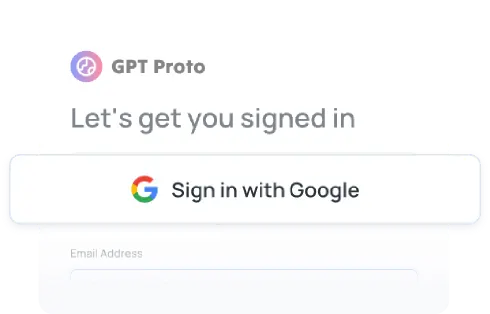
Sign up
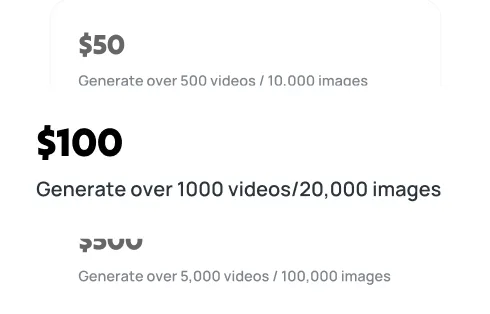
Top up
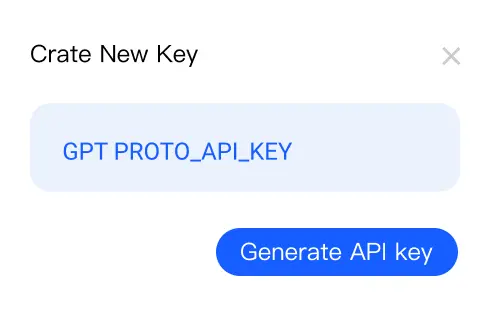
Generate your API key
Make your first API call
Learn how to use OpenAI's GPT-Image-1 for professional image generation. Master text-to-image, inpainting, and API integration with this comprehensive guide.
Explore GPT Image 1.5's breakthrough capabilities including 4x faster generation, precise editing, and advanced text rendering. See real examples, pricing, and honest performance analysis.
Unlock gpt-5 image model. Dive into its image creation features, analyze its cost-effectiveness, and see a comparison with other AI image tools.

Discover the key differences between GPT-4o and GPT-4 in our comprehensive December 2025 guide. Compare pricing, performance, multimodal capabilities, and learn which OpenAI model best fits your needs.
Developer Reviews for OpenAI API on GPTProto