INPUT PRICE
Input / 1M tokens
image
OUTPUT PRICE
Output / 1M tokens
text
The latest updates to the OpenAI ecosystem have introduced native multimodal capabilities that change how we think about visual data. If you want to browse OpenAI and other models, you will find that the vision endpoints are now more integrated than ever, allowing for both visual understanding and creative output in a single workflow.
Modern language models aren't just for text anymore. With OpenAI vision capabilities, models can 'see' and interpret the world with remarkable accuracy. Whether you are using gpt-4.1-mini or the flagship GPT-5.2, the ability to analyze objects, shapes, and textures is built into the core architecture. This native multimodality means the model doesn't just treat an image as an attachment; it understands the visual context alongside your text prompts. When you send a request to the OpenAI api, you can provide images via fully qualified URLs or Base64-encoded strings, enabling real-time analysis of anything from UI mockups to natural scenery.
OpenAI has shifted the paradigm from simple OCR to true visual reasoning. The way the models now handle 32x32 patches allows for a more granular understanding of spatial relationships that previous generations simply couldn't touch.
Accuracy is the primary reason teams choose the OpenAI platform for production-grade apps. While smaller models might struggle with fine details, the OpenAI vision engine offers a 'detail' parameter that lets you control the fidelity of the analysis. By setting this to 'high', the model scales the image to fit a 2048px square and then analyzes 512px tiles to ensure nothing is missed. This is particularly useful for complex technical diagrams or identifying specific attributes in product photography. To ensure your system remains stable, you can manage your API billing on GPTProto without worrying about restrictive monthly credits.
Cost management is a vital part of any AI strategy. OpenAI tokens for image inputs are calculated based on the dimensions of the file. For instance, in gpt-4.1-mini, the system calculates the number of 32px x 32px patches required to cover the image. If your image is 1024x1024, it results in 1024 tokens. However, you can significantly reduce expenses by using the 'low' detail setting. This tells the model to process a 512px version of the image for a flat rate of 85 tokens. For those looking for the most up-to-date OpenAI vision cost calculations, using low fidelity is the smartest way to handle simple classification tasks without burning through your budget.
When working with gpt-4.1-mini, the calculation logic is quite specific. The api calculates raw patches by taking the ceiling of the width and height divided by 32. If this exceeds 1536 patches, the image is scaled down. Each model also has a multiplier; for example, gpt-5-mini uses a 1.62x multiplier on the patch count. This technical transparency allows you to predict exactly what an OpenAI call will cost before you hit the endpoint. You can monitor your API usage in real time to stay within your operational limits.
Even with its power, the OpenAI vision system has specific guardrails and technical boundaries. It is not designed for specialized medical imagery like CT scans, and it can struggle with non-Latin alphabets in some contexts. Spatial reasoning—such as pinpointing the exact coordinates of a chess piece—remains a challenge. Additionally, the OpenAI system blocks CAPTCHA submissions for safety reasons. To get the most out of your integration, it is recommended to read the full API documentation to understand how to bypass issues with rotated text or panoramic 'fisheye' distortions that might confuse the model's perspective.
There is a significant difference between the old DALL·E 3 approach and the new GPT-image-1 model. While DALL·E is a specialized generator, GPT-image-1 is natively multimodal. This means it uses its broad world knowledge to create more realistic details. If you ask it to generate a cabinet of semi-precious stones, it knows to include amethyst and jade without you needing to specify them. This deep understanding makes the OpenAI creative suite far more intuitive. For developers, this means less time spent on complex prompt engineering and more time on actual product features.
| Feature | OpenAI Flagship (GPT-5.2) | OpenAI Mini (4.1-mini) | Standard Alternatives |
|---|---|---|---|
| Input Type | Multimodal (Text/Image) | Multimodal (Text/Image) | Text Only |
| Cost Logic | 768px Shortest Side | 32px Patch Grid | Flat Token Rate |
| Base Tokens | 70-85 | Scaled by Dim | Variable |
| Best Use Case | High Fidelity Analysis | Fast Classification | Simple Chat |
To stay ahead of these rapid changes, you should check the latest AI industry updates regularly. The transition to 'Flex processing' and 'Batch' modes for the OpenAI api provides even more ways to scale while keeping overhead low. Whether you are building agents or simple tools, these visual capabilities are the next step in creating truly interactive software.

How businesses are solving real-world challenges using OpenAI visual intelligence.
Challenge: A major retailer had 100,000 product images that needed detailed SEO tags for color, material, and style. Solution: They implemented the OpenAI api with gpt-4.1-mini in high-detail mode to batch-process the entire library. Result: They reduced manual tagging time by 95% and improved search relevancy by 30%.
Challenge: A social media app wanted to provide real-time audio descriptions of user-uploaded images. Solution: Utilizing OpenAI vision capabilities, they created a streaming pipeline that converts images to descriptive text instantly. Result: The app became significantly more accessible, gaining 50,000 new monthly active users from the accessibility community.
Challenge: An electronics manufacturer needed to detect micro-cracks in circuit boards that were too small for standard cameras. Solution: They used the OpenAI GPT-5.2 model with high-resolution tiling to inspect macro photos of the boards. Result: Defect detection rates rose by 12%, saving the company millions in potential recall costs.
Follow these simple steps to set up your account, get credits, and start sending API requests to gpt 5.2 pro 2025.12.11 via GPT Proto.

Sign up
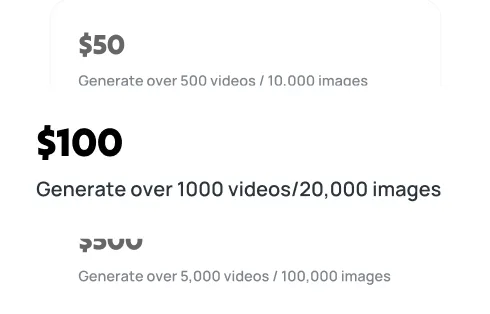
Top up
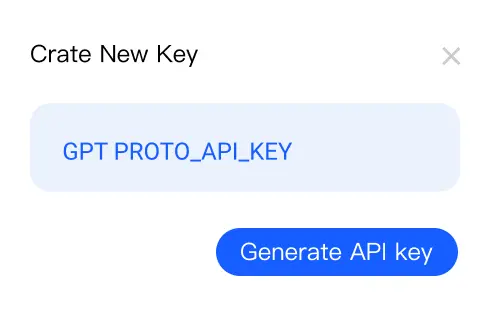
Generate your API key
Make your first API call
GPT-5.3-Codex delivers massive performance gains and recursive self-improvement for developers. Discover how this model changes the AI landscape today.

Explore how GPT-5.3 Codex and the new Codex app are transforming the coding landscape with recursive intelligence and multi-tasking agentic capabilities. Learn how to optimize costs and leverage multi-modal workflows for maximum developer productivity in the new era of AI.
OpenAI released GPT-5.2 on December 11, 2024, with three versions offering major improvements in coding, spreadsheets, and reasoning. Learn what's new and how to access it affordably through GPT Proto.
Compare GPT 5.2 and Gemini 3 models. Learn their capabilities, pricing, and which AI is best for your needs. Detailed feature comparison inside.
OpenAI User Reviews & Integration Feedback