INPUT PRICE
Input / 1M tokens
file
OUTPUT PRICE
Output / 1M tokens
text
Response
curl --location --request POST 'https://gptproto.com/v1/responses' \
--header 'Authorization: GPTPROTO_API_KEY' \
--header 'Content-Type: application/json' \
--data-raw '{
"model": "gpt-5.2-pro",
"input": [
{
"role": "user",
"content": [
{
"type": "input_text",
"text": "what is in this file?"
},
{
"type": "input_file",
"file_url": "https://tos.gptproto.com/resource/gptproto.pdf"
}
]
}
]
}'The launch of GPT-5.2 marks a significant evolution in how developers handle massive datasets within AI applications. If you want to build smarter agents, you should browse GPT-5.2 and other models available on our platform to see the performance difference firsthand. This model isn't just a minor update; it's a specialized engine for the Responses API that makes file search faster and more accurate than ever before.
GPT-5.2 introduces a hosted file search tool that eliminates the need for manual RAG (Retrieval-Augmented Generation) pipeline construction. When you upload files to a vector store, GPT-5.2 uses a combination of semantic and keyword search to pull the most relevant snippets before generating an answer. I've found that the way GPT-5.2 handles file citations is particularly impressive, providing clear annotations that link back to specific parts of your PDFs or Word documents.
For those managing large technical libraries, you can review the official OpenAI file search documentation to understand the underlying vector store mechanics. GPT-5.2 supports a wide array of formats, including .c, .cpp, .docx, and .pdf. The encoding for text-based files must be utf-8 or ascii to ensure GPT-5.2 parses the data correctly. This model can even handle multi-step research tasks, gathering data from multiple online sources if combined with other tools.
Stability and speed are the top reasons my team recommends GPT-5.2 for production environments. Unlike earlier versions that might hallucinate when context windows got crowded, GPT-5.2 remains focused on the provided vector store data. You can read the full API documentation to see how the inclusion of the file_search_call output item streamlines the debugging process for your backend engineers.
GPT-5.2 is the first model where the file search tool feels native rather than bolted on. The latency reduction when querying 10,000+ files is a clear indicator that the retrieval architecture has been rebuilt from the ground up for the GPT-5.2 series.
Using GPT-5.2 also means you get better control over your token usage. By setting the max_num_results parameter, you can tell GPT-5.2 exactly how many chunks to retrieve. This directly impacts your billing, as fewer retrieved chunks mean lower processing costs. You don't have to guess which data is being used; GPT-5.2 tells you exactly what it found and why it used it.
Setting up your knowledge base with GPT-5.2 is a straightforward three-step process. First, you upload your files to the File API with the purpose set to 'assistants'. Second, you create a vector store. Third, you link the file to that store. Once GPT-5.2 sees the vector_store_id in your request, it automatically handles the heavy lifting of indexing and searching.
| Feature | GPT-5.2 on GPTProto | Standard API Access |
|---|---|---|
| Billing Model | Pay-as-you-go (No Credits) | Prepaid Credits/Monthly |
| File Search Support | Native & Optimized | Variable Latency |
| Max Vector Stores | Unlimited | Tier-restricted |
| Real-time Monitoring | Yes | Limited |
To start using these features, you can manage your API billing and top up your account without worrying about expiring credits. GPT-5.2 performs best when your vector stores are well-organized with metadata. For instance, you can use metadata filtering to tell GPT-5.2 to only look at 'announcements' or 'blog' categories within your file set.
The reasoning capabilities in GPT-5.2 allow it to understand complex queries better than its predecessors. If you ask a vague question, GPT-5.2 can formulate multiple search queries to ensure it doesn't miss key information in your documents. This is a huge win for legal and medical applications where nuance is everything. You can find more tips on optimizing these queries by visiting the GPTProto tech blog, where we deep-dive into prompt engineering for retrieval.
GPT-5.2 also introduces better handling of structured outputs. If you need GPT-5.2 to return data in a specific JSON format based on a file it just searched, it does so with much higher reliability. This makes GPT-5.2 an ideal choice for automated data extraction pipelines. We've seen users explore AI-powered image and video creation alongside GPT-5.2 to create full multimodal experiences where the text is grounded in factual, retrieved data.
While GPT-4o is a fantastic generalist, GPT-5.2 is a specialist in 'Deep Research'. The retrieval precision in GPT-5.2 is noticeably higher, especially when dealing with technical documentation like source code in .java or .ts files. GPT-5.2 also supports higher rate limits—up to 1000 RPM for Tier 5 users—making it the choice for high-traffic enterprise apps. If you want to see how GPT-5.2 fits into your current workflow, you can track your GPT-5.2 API calls in real time through our intuitive dashboard. The transition to GPT-5.2 is seamless, as it follows the familiar OpenAI library structure while offering vastly superior retrieval logic.

How industry leaders are leveraging GPT-5.2 to solve complex data challenges.
Challenge: A financial firm needed to audit thousands of internal policy documents for regulatory compliance. Solution: They implemented GPT-5.2 with a massive vector store containing all policy PDFs. Result: GPT-5.2 identified non-compliant clauses in minutes, a task that previously took a team of auditors weeks to complete.
Challenge: A SaaS company struggled with high support ticket volume for complex API issues. Solution: They linked their entire GitHub documentation and codebase to a GPT-5.2 powered support bot. Result: GPT-5.2 provided accurate code snippets and troubleshooting steps, reducing ticket escalation by 45%.
Challenge: An investment firm required daily synthesis of market trends from hundreds of research reports. Solution: They used GPT-5.2 for multi-step research tasks, allowing the model to query both its internal knowledge base and recent uploads. Result: GPT-5.2 produced comprehensive, cited market summaries that allowed analysts to make faster, data-backed decisions.
Follow these simple steps to set up your account, get credits, and start sending API requests to gpt 5.2 pro via GPT Proto.

Sign up
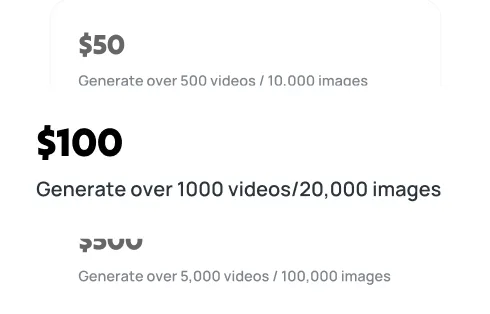
Top up
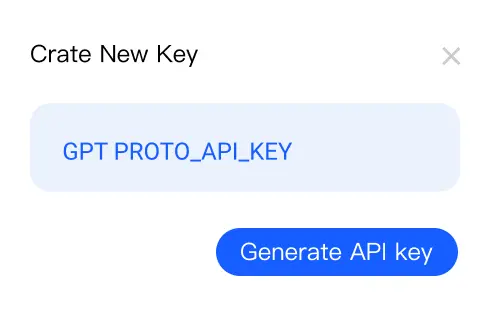
Generate your API key
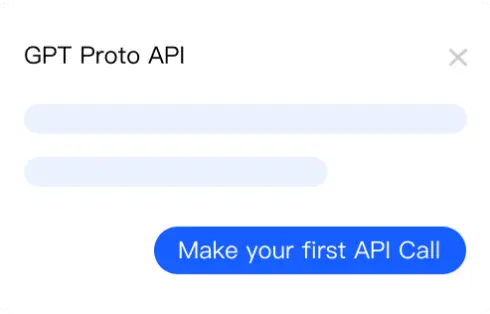
Make your first API call
OpenAI released GPT-5.2 on December 11, 2024, with three versions offering major improvements in coding, spreadsheets, and reasoning. Learn what's new and how to access it affordably through GPT Proto.
Compare GPT 5.2 and Gemini 3 models. Learn their capabilities, pricing, and which AI is best for your needs. Detailed feature comparison inside.

GPT-5.3-Codex delivers massive performance gains and recursive self-improvement for developers. Discover how this model changes the AI landscape today.

Explore how GPT-5.3 Codex and the new Codex app are transforming the coding landscape with recursive intelligence and multi-tasking agentic capabilities. Learn how to optimize costs and leverage multi-modal workflows for maximum developer productivity in the new era of AI.
What Developers Are Saying About GPT-5.2