INPUT PRICE
Input / 1M tokens
file
OUTPUT PRICE
Output / 1M tokens
text
The arrival of openai/o3 marks a significant milestone in the evolution of Large Language Models, introducing a 'thinking' architecture that prioritizes logic over speed. You can begin integrating this powerhouse today at GPT Proto Models.
For years, AI models operated primarily on 'System 1' thinking—fast, intuitive, but prone to logical fallacies and hallucinations when faced with non-linear problems. The openai/o3 model changes this dynamic by implementing a 'System 2' approach. By spending more time processing internally before generating a response, openai/o3 can navigate complex mathematical proofs and intricate coding architectures with a level of accuracy that standard generative models simply cannot match. This makes openai/o3 the ideal choice for developers who have grown frustrated with the superficial reasoning found in traditional GPT iterations.
Researchers utilize openai/o3 to parse through vast datasets and peer-reviewed literature. Unlike previous models that might miss subtle correlations, openai/o3 maintains a high degree of contextual integrity across long-form documents. By applying openai/o3 to biochemical simulations, laboratories can predict reaction outcomes with fewer iterations, as the model internally validates hypotheses before presenting its final conclusion. This rigorous internal check is the hallmark of the openai/o3 experience.
In the world of software engineering, a bug often isn't just a syntax error; it is a logical flaw across multiple microservices. When you prompt openai/o3 with a full-stack codebase, it doesn't just look for typos. It reasons through the data flow. By using openai/o3 on GPT Proto, engineering teams can identify race conditions and memory leaks that standard linting tools and even senior engineers might overlook during a manual review. The deliberative nature of openai/o3 ensures that the proposed solution considers the entire system's stability.
"The openai/o3 model isn't just another incremental update; it is a fundamental restructuring of how machines process logic. On GPT Proto, we see openai/o3 consistently outperforming specialized symbolic solvers in competitive programming and higher mathematics."
Integrating openai/o3 into your existing tech stack requires a platform that understands the nuances of long-inference tokens. GPT Proto offers an optimized environment where openai/o3 can perform its extensive chain-of-thought processing without being interrupted by timeout errors common on less stable providers. Our specialized API documentation at docs.gptproto.com provides detailed guides on how to manage the unique output headers generated by openai/o3, ensuring your application remains responsive while the model 'thinks'.
| Feature | Standard Models (GPT-4o) | openai/o3 on GPT Proto |
|---|---|---|
| Reasoning Type | Pattern Recognition | Chain-of-Thought / System 2 |
| Math & Logic Accuracy | Moderate (60-70%) | Elite (90%+) |
| Context Window | 128k Tokens | 128k Tokens (Enhanced Retrieval) |
| Coding Performance | Code Generation | Logic Debugging & Architecture |
| Platform Uptime | Variable | 99.9% Enterprise SLA |
At GPT Proto, we believe in complete transparency for professional users. To access openai/o3, you never have to worry about confusing monthly subscriptions or hidden tiers. Simply navigate to your dashboard to Add Funds to your balance. Because openai/o3 consumes different resources based on its internal 'thinking' time, our platform provides real-time monitoring of your Top-up Balance, allowing you to scale your usage exactly according to your project's needs. We strictly follow a pay-as-you-go model—no credits, no expiration, just pure performance.
The era of AI that guesses is ending; the era of AI that reasons has arrived with openai/o3. Stay ahead of the curve and explore our latest benchmarks and community insights at the GPT Proto Blog. Start your journey with openai/o3 today and transform how your organization solves its most difficult problems.

Discover how the deep reasoning of openai/o3 is solving high-stakes challenges across diverse industries.
Challenge: A pharmaceutical startup needed to identify potential molecular inhibitors for a new protein target but faced months of simulation time. Solution: By deploying openai/o3 on GPT Proto, the team performed rapid logical filtering of molecular structures, utilizing the model's internal reasoning to predict binding affinities. Result: The team narrowed down 10,000 candidates to 5 viable leads in just 48 hours.
Challenge: Urban planners in Singapore needed to optimize traffic light sequences to reduce congestion during monsoon rains. Solution: They used openai/o3 to analyze multi-modal traffic data and weather patterns simultaneously. Result: Using openai/o3 enabled a 15% reduction in average commute times by accounting for complex non-linear variables that simpler models ignored.
Challenge: A big-four accounting firm was struggling with the manual labor required to cross-reference international tax law across multiple jurisdictions. Solution: They implemented a custom tool powered by openai/o3 on GPT Proto to conduct deep-reasoning audits of financial statements. Result: Audit accuracy increased by 40%, and the time spent on manual verification was reduced by 70%.
Follow these simple steps to set up your account, get credits, and start sending API requests to o3 via GPT Proto.

Sign up
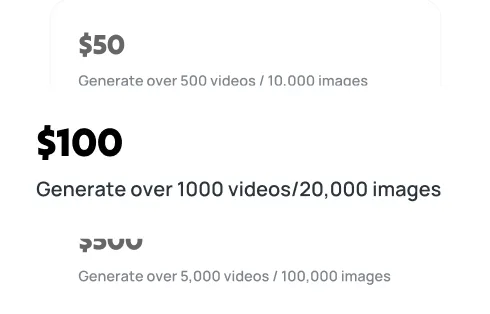
Top up
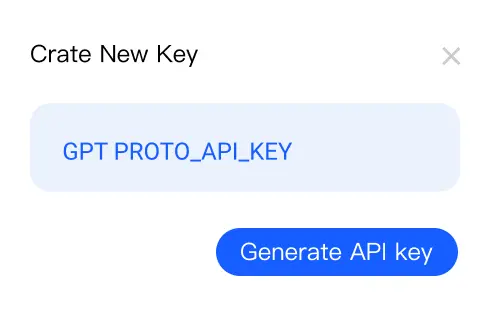
Generate your API key
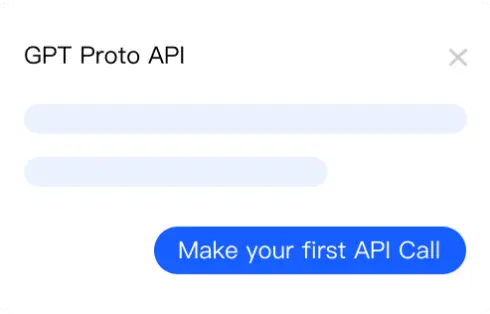
Make your first API call

Discover how a projected $3 trillion investment in AI infrastructure is fueling a nationwide economic boom. Learn about the rise of data center hubs, job creation across every state, and the strategic importance of intelligent API integration and resource scheduling for long-term AI leadership.
Discover why the massive global investment in AI infrastructure and data centers is more than just a bubble. This in-depth analysis explores the historical parallels of tech booms, the critical constraints of power and land, and how companies are achieving long-term profitability in the AI era.

OpenRouter data reveals a unique Glass Slipper Effect where the first month of an AI model's launch determines long-term loyalty. Learn why early foundational cohorts show higher retention than late adopters in the competitive LLM market.

Explore Andrej Karpathy's 2025 insights on the evolution of LLMs. From the rise of RLVR and o3 models to the democratization of software via vibe coding and the thickness of the application layer, discover why the future of AI is moving beyond the chatbox and into autonomous agents.
Professional Perspectives: openai/o3 User Experiences