INPUT PRICE
Input / 1M tokens
text
OUTPUT PRICE
Output / 1M tokens
text
Response
curl --location --request POST 'https://gptproto.com/v1/responses' \
--header 'Authorization: GPTPROTO_API_KEY' \
--header 'Content-Type: application/json' \
--data-raw '{
"model": "o3",
"tools": [
{
"type": "web_search_preview"
}
],
"input": [
{
"role": "user",
"content": [
{
"type": "input_text",
"text": "What are the latest breakthroughs in quantum computing and their potential applications?"
}
]
}
]
}'The o3 model stands out as a high-logic reasoning engine that bridges the gap between older architectures and the latest thinking models. You can browse o3 and other models on our platform to find the exact performance tier your application needs.
I've found that o3 handles complex logical chains with a level of depth that many later models don't quite replicate. While newer versions might be faster, o3 was specifically built to be OpenAI's most advanced reasoning model before the GPT-5 cycle began. This makes o3 particularly effective for data scientists who need to trace intricate transaction histories or legal professionals analyzing dense documents. The o3 reasoning process is slower than a standard turbo model, but the trade-off is a much more thorough investigation of the prompt's requirements. When you use the o3 ai engine, you aren't just getting a text generator; you're getting a logical processor that thinks through the steps of a problem before providing an answer. This o3 feature is what makes it a precursor to the modern thinking models we see today.
The o3 model remains one of the most interesting logic engines ever released; its poetic output combined with heavy-duty reasoning creates a unique signature that even newer models struggle to mimic exactly.
Integrating the o3 api into your workflow allows for a level of precision that is rare in the ai world. Many developers prefer o3 because it is often more cost-effective to run than the absolute latest frontier models while maintaining high utility for coding and math. On our platform, you can manage your API billing with a flexible pay-as-you-go system, making o3 an affordable choice for scaling complex logic tasks. Unlike some experimental builds, o3 has a proven track record of handling multi-step searches and internet-based data gathering. For example, o3 can be used to scan web records to find specific historical transaction mentions, providing a level of detail that generic models might overlook. If you want to get started, you can read the full API documentation to see how to implement o3 into your current environment.
Users often ask how o3 compares to its successors. In many tests, o3 performs better than later models in pure logical deduction, even if it has a higher latency. The o3 model was only available for a few months before the GPT-5 rollout, which has made it somewhat of a 'hidden gem' for those who know how to access it. On GPTProto, we ensure o3 remains available for those who value its specific reasoning profile. To see how it stacks up, check the comparison table below.
| Feature | o3 Reasoning | Standard GPT-4o | GPTProto Advantage |
|---|---|---|---|
| Logic Depth | Extreme | High | Access both via one API |
| Writing Style | Poetic & Detailed | Concise | No monthly limits |
| Search Accuracy | Very High | Moderate | Real-time tracking |
| Inference Cost | Medium | Low | Pay-as-you-go |
To maximize the utility of o3, you need to understand its quirks. Because o3 likes to 'think' out loud, providing it with structured system prompts helps guide its reasoning. However, you must watch out for hallucinations. The o3 model is known to occasionally invent details if it isn't grounded properly. I recommend using o3 for drafting and logic, then using a faster model for simple verification. You can track your o3 API calls in our dashboard to monitor how many tokens these longer reasoning chains consume. If you are building a creative application, o3 is also surprisingly good at poetry and long-form narrative. It has a 'soul' that many find reminiscent of early Opus models, giving o3 a distinct advantage in the ai creative space.
The primary difference is the architecture. The o3 model was the peak of reasoning before the architecture shifted toward the 5.2-Thinking style. Some users find o3 to be more stable for specific math problems compared to later versions that might try to be too clever. If you want to stay informed with AI news, you'll see that many enterprise users still demand o3 despite it being behind a paywall elsewhere. At GPTProto, we believe in giving you the choice. Whether you're using o3 for its logical prowess or its poetic flair, it remains a vital tool in any developer's ai stack. Don't forget to earn commissions by referring friends who might be looking for this specific reasoning model for their own projects.

Discover how the o3 reasoning model solves complex industrial challenges.
Challenge: A financial firm needed to find a specific mention of a transaction in historical records. Solution: Using o3, they performed a reasoning-heavy internet search that synthesized multiple sources. Result: o3 successfully identified the transaction date and details that standard searches missed.
Challenge: A creative agency wanted an AI with a less 'robotic' and more 'poetic' voice for a campaign. Solution: They utilized the o3 model’s unique writing style to generate long-form copy. Result: The o3 outputs required minimal editing and provided a sophisticated tone that resonated with the target audience.
Challenge: A tech company had to refactor a complex logic flow in a legacy codebase. Solution: They fed the logic into the o3 api to identify structural flaws. Result: o3 mapped out the logical errors and proposed a multi-step fix that improved system stability significantly.
Follow these simple steps to set up your account, get credits, and start sending API requests to o3 via GPT Proto.

Sign up
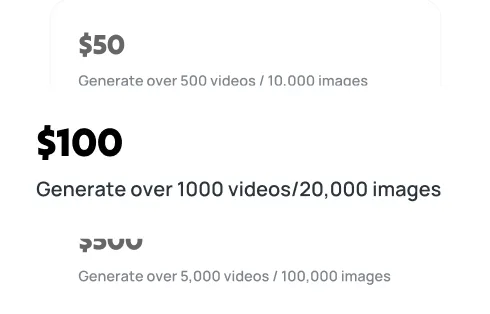
Top up
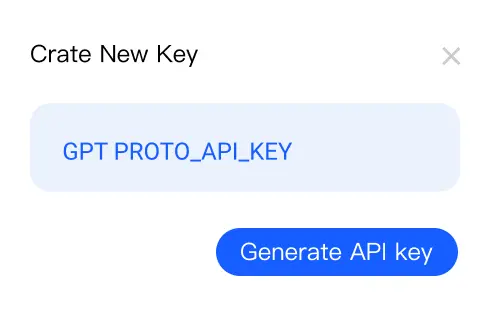
Generate your API key
Make your first API call

Discover how a projected $3 trillion investment in AI infrastructure is fueling a nationwide economic boom. Learn about the rise of data center hubs, job creation across every state, and the strategic importance of intelligent API integration and resource scheduling for long-term AI leadership.

Discover why the massive global investment in AI infrastructure and data centers is more than just a bubble. This in-depth analysis explores the historical parallels of tech booms, the critical constraints of power and land, and how companies are achieving long-term profitability in the AI era.

OpenRouter data reveals a unique Glass Slipper Effect where the first month of an AI model's launch determines long-term loyalty. Learn why early foundational cohorts show higher retention than late adopters in the competitive LLM market.
User Feedback on o3 Performance