The Evolution of Claude and the Dawn of the Autonomous Agent
There is a specific kind of exhaustion that comes with following Silicon Valley’s relentless release cycles. Just as we finish wrapping our heads around one breakthrough, the next one arrives, promising to change everything we thought we knew about productivity. This week, that lightning strike came from Anthropic with the release of Opus 4.6. While the naming convention suggests a minor incremental update, the reality is far more profound. This version of Claude represents a fundamental shift in how we interact with machines, moving away from simple chat boxes toward something far more ambitious: a digital colleague capable of independent thought and collaborative action.
When you first sit down to experiment with this new iteration of Claude, you realize that the conversation has changed. We are no longer just asking a machine to summarize a document or fix a syntax error in a line of Python. We are now asking Claude to inhabit our operating systems, to navigate our browsers, and to work in teams. The release of Opus 4.6 isn't just about higher scores on a spreadsheet; it is about the practical realization of the "Agentic Era." It is a moment where the software stops waiting for our every command and starts anticipating the workflow required to finish a job.
In this deep dive, we are going to explore why these updates matter to the average person, the developer, and the business leader. We will look at the staggering jump in logic and reasoning capabilities, the massive expansion of the memory window, and the debut of "Agent Teams" within the coding environment. More importantly, we will discuss how tools like Claude are becoming the backbone of a new economy, and how platforms like GPT Proto are making this high-level intelligence accessible to everyone without breaking the bank.
The story of Claude has always been one of steady, principled growth. While other models focused on being flashy or provocative, Anthropic built a reputation for reliability and "Constitutional AI." With Opus 4.6, they have maintained that core identity while finally letting the horse run full speed. The result is a model that doesn't just feel smarter—it feels more capable of actually doing things in the real world.
The Metric Leap: From Chatbot to Digital Operator
To understand why this update is such a big deal, we have to look at the benchmarks, but we have to look at them through a human lens. Traditionally, we measured AI by how well it could pass a bar exam or a medical board test. But in the age of Opus 4.6, those tests are becoming obsolete. What matters now is "Agentic Capability." This refers to the ability of Claude to function in an environment where the answer isn't just a string of text, but a series of actions.
Take, for instance, the Terminal-Bench 2.0. This is essentially a playground for AI where it has to solve complex problems within a computer terminal. It involves parsing difficult instructions, interacting with an environment, and automating workflows. The previous version of Claude was already impressive, but the leap to 4.6 shows a jump from 59.8% to 65.4%. In the world of high-level machine learning, a 5.6% jump in terminal coding isn't just a tweak; it’s the difference between an intern who needs their hand held and a junior developer who can be trusted with a task overnight.
But perhaps the most startling improvement is in the OSWorld benchmark. This measures how well Claude can use a computer just like a human does—clicking icons, navigating folders, and using graphical interfaces. Scoring a 72.7% here means that Claude is becoming a true "computer use" agent. We are moving toward a future where you don't open an app to do a task; you tell your AI what you want, and it operates the computer for you. The implications for accessibility and administrative efficiency are staggering.
"The shift from 66.3% to 72.7% in OSWorld benchmarks indicates that Claude is no longer just observing our digital world; it is learning to master the very tools we use to build it."
Breaking the Logic Barrier with ARC AGI 2
If you really want to see where the soul of this update lies, you have to look at the ARC AGI 2 scores. This benchmark is designed to test "novel problem-solving." It’s not about what Claude has memorized from the internet; it’s about how Claude handles a problem it has never seen before. It tests abstract reasoning, the ability to see a pattern in a vacuum, and the capacity to innovate on the fly.
The previous model sat at a respectable 37.6%. It was smart, but it often hit a wall when faced with truly alien logic puzzles. Opus 4.6 has shattered that wall, soaring to 68.8%. This is a monumental achievement. It suggests that Claude is developing a form of flexible intelligence that mirrors human cognitive flexibility. When a system can nearly double its score on the hardest logic test in the industry, we have to stop calling it a "stochastic parrot" and start treating it as a reasoning engine.
For the business owner or the creative professional, this means Claude is significantly better at handling nuance. It means when you give it a messy, disorganized project with conflicting goals, it is more likely to find a creative path through the chaos. It’s the difference between a tool that follows instructions and a partner that understands intent. This leap in logic ensures that Claude remains at the absolute top of the food chain for complex professional work.
Below is a quick comparison table to visualize these shifts across the different versions of the model:
| Benchmark Category |
Opus 4.5 Performance |
Opus 4.6 Performance |
Impact for Users |
| Terminal Coding (Agentic) |
59.8% |
65.4% |
Faster, more reliable code automation. |
| Computer Use (OSWorld) |
66.3% |
72.7% |
Better at navigating GUI and OS tasks. |
| Agentic Search (Browser) |
67.8% |
84.0% |
Drastically better research and data synthesis. |
| ARC AGI 2 (Logic) |
37.6% |
68.8% |
Human-like reasoning for novel problems. |
The One-Million-Token Context Window: A Memory Revolution
While the logic improvements are the "brain" of this update, the context window is the "memory." In the previous version, Claude supported a 200,000-token window. For context, that is about the size of a very thick novel. It was already industry-leading. But with this release, Anthropic has expanded that window to a staggering 1 million tokens. That is a five-fold increase that changes the fundamental math of how we use AI.
Why does this matter? Imagine you are a developer working on a massive codebase with tens of thousands of lines of code. Previously, you might have had to pick and choose which files to show Claude, hoping it wouldn't lose the thread of the overall architecture. Now, you can effectively drop the entire project into the prompt. Claude can hold the entire map of your software in its head at once, allowing it to spot bugs that only appear across multiple distant modules.
For researchers and legal professionals, this is a game-changer. You can upload five years of quarterly reports, dozens of legal briefs, or an entire series of medical journals, and ask Claude to find the common thread. When the memory is this large, the AI doesn't just "respond" to you; it "cohabitates" your data. The risk of hallucinations also drops significantly when the model doesn't have to rely on compressed memories of the text but can actually "see" the entire dataset simultaneously.
In practice, this means Claude becomes the ultimate institutional memory tool. Large enterprises often struggle with knowledge silos where one department doesn't know what the other is doing. By feeding an entire organization’s documentation into a high-context instance of Claude, you create a central intelligence that knows everything the company knows. It is no longer just a chatbot; it is a living, breathing encyclopedia of your specific business.

The Rise of Agent Teams in Claude Code
Perhaps the most exciting "experimental" feature of this release isn't in the model itself, but in how it interacts with other instances of itself. Anthropic has introduced "Agent Teams" within Claude Code. In the past, if you wanted to do several things at once, you had to open different windows and manually move information back and forth. Even "sub-agents" were limited because they were usually subordinate to a main controller, which created a bottleneck.
The new Agent Teams feature allows multiple versions of Claude to work as peers. They each have their own context window, their own tasks, and—most importantly—the ability to talk directly to each other. It’s like moving from a single genius working in a basement to a high-functioning engineering team in a war room. One instance of Claude might be focused on writing the front-end code, while another is simultaneously stress-testing the security protocols, and they are chatting in the background to ensure they stay aligned.
This decentralized approach solves the "latency" of human management. Usually, a human has to be the middleman. With Agent Teams, Claude can parallelize tasks. If you have a deadline in two hours and a project that needs four hours of work, you can now deploy a team of agents to tackle the workload in half the time. It is a glimpse into a future where "management" might mean managing swarms of AI agents rather than managing individuals.
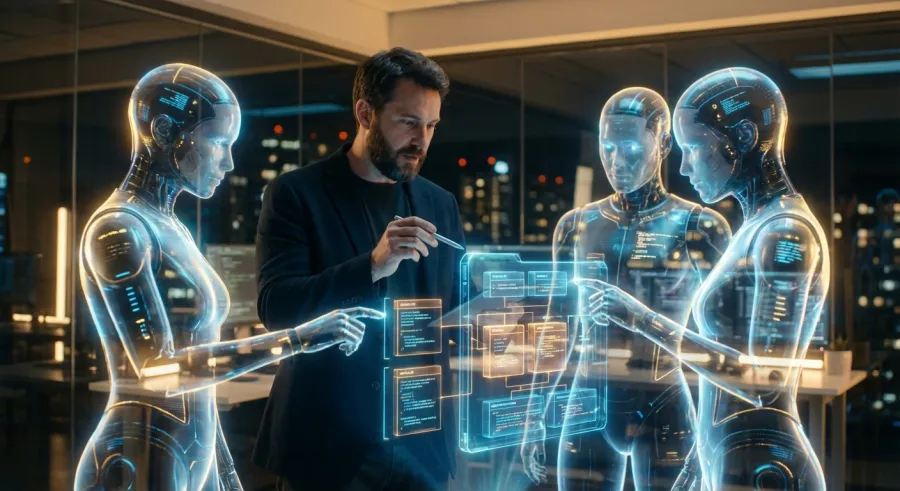
- Parallel Processing: Tasks are completed simultaneously rather than sequentially.
- Independent Contexts: Each agent has its own memory space, preventing "noise" from one task affecting another.
- Direct Peer Communication: Agents resolve conflicts and share updates without waiting for human intervention.
- Scalability: You can scale the complexity of a project by simply adding more specialized agents to the team.
Practical Integration: The GPT Proto Advantage
As these models become more powerful, they also become more resource-intensive. Running a 1-million-token window on a model as smart as Claude Opus 4.6 isn't cheap. For startups and independent developers, the cost of accessing these top-tier APIs can quickly become a barrier to innovation. This is where the strategic integration of platforms like GPT Proto becomes essential for anyone serious about staying competitive.
GPT Proto acts as a vital bridge between these cutting-edge models and the people who need them. One of the most significant hurdles in the AI space is the fragmented nature of the market. You might want the reasoning of Claude for your logic-heavy tasks, but the image generation of Midjourney for your marketing, and perhaps a cheaper model for simple customer service. Managing multiple accounts, billing cycles, and API formats is a logistical nightmare. GPT Proto simplifies this by providing a unified standard—a single interface to access all the major models, including the new Claude 4.6.
Beyond convenience, there is the matter of the bottom line. GPT Proto offers a massive economic advantage, often providing up to 60% off mainstream API prices. For an enterprise looking to deploy Claude across a workforce of 500 people, those savings aren't just a bonus—they are the difference between a project being viable or getting shelved. With smart scheduling, you can set your system to use Claude in "Performance-First" mode for high-stakes tasks and switch to more cost-effective models for routine work, all through one dashboard.
When you use Claude through a unified platform, you also benefit from the "Write once, integrate all" philosophy. You don't have to rewrite your entire software stack every time a new version comes out. Whether you are leaning into the agentic capabilities of the latest Opus model or testing the waters with a different vendor, the interface stays consistent. It allows businesses to focus on what they are building, rather than the plumbing of the AI world.
Why 2025 is the Year of the Agent
If 2023 was the year we discovered what LLMs could say, and 2024 was the year we learned what they could see, 2025 is shaping up to be the year we see what they can do. The improvements we see in Claude today are a signal that the "Chatbot" era is over. We are entering the "Operator" era. This isn't just about a model having a higher IQ; it’s about it having a higher EQ for the digital environment.
Think about how we currently use the internet. We spend hours searching for the right flights, comparing insurance policies, or digging through documentation to find a specific setting in a software tool. These are high-friction, low-creativity tasks. The agentic search improvements in Claude (jumping from 67.8% to 84%) suggest that we are very close to a world where we can simply say, "Plan my business trip to Tokyo, find the best hotel within walking distance of the office, and make sure the flight has Wi-Fi." Claude won't just give you a list of links; it will perform the search, navigate the booking sites, and present you with a final itinerary.
This autonomy is what makes Opus 4.6 a watershed moment. By mastering the browser, the terminal, and the operating system, Claude is positioning itself as the primary interface between the human and the digital world. We are moving toward a "Natural Language OS," where the complex commands of the past are replaced by simple, conversational intent.
"The ultimate goal of AI isn't to replace the human mind, but to liberate it from the mechanical drudgery that clogs our daily lives. With these new agentic features, Claude is taking a massive step toward that liberation."
The Developer's Perspective: A New Workflow
For those of us who spend our days staring at code, the Claude update feels like a massive quality-of-life improvement. The frustration of "context drift"—where the AI starts forgetting the beginning of your conversation once you reach the middle—is one of the biggest productivity killers. By expanding to 1M tokens, Claude has effectively eliminated that problem for all but the most gargantuan projects. You can now engage in deep, multi-day coding sessions without ever having to "re-explain" the project to your assistant.
Furthermore, the Claude Code CLI (Command Line Interface) is becoming much more than a simple autocompleter. With the addition of experimental Agent Teams, the workflow looks something like this: You initiate a task, and Claude spawns specialized agents to handle different parts of the repo. One agent handles the documentation, another refactors the legacy code, and a third writes unit tests. Because they can communicate with each other, they ensure that the documentation actually matches the refactored code.
This level of coordination was previously only possible with a human lead developer overseeing multiple juniors. Now, a single developer can act as a high-level architect, directing a small army of Claude instances. It shifts the bottleneck from "how fast can I type" to "how clearly can I think." It’s a exhilarating and slightly terrifying shift that will likely redefine what it means to be a "senior" engineer in the next couple of years.
Addressing the Skepticism: Safety and Control
Of course, giving an AI the ability to control your terminal and browse the web on your behalf comes with risks. This is why the "Anthropic approach" is so important. Throughout the development of Claude, there has been a heavy emphasis on safety protocols. When you use the agentic features, you aren't giving the model a blank check. There are layers of confirmation and safety boundaries that ensure the AI doesn't go rogue on your filesystem.
The improvement in the ARC AGI 2 logic scores also plays into safety. A smarter model is a more controllable model. Hallucinations often happen because a model doesn't have the logic to realize its answer is impossible. By increasing the reasoning floor, Claude becomes more self-aware of its own limitations. It is more likely to tell you "I don't have permission to do that" or "I'm not sure about that step" rather than confidently making a mistake.
Trustworthiness is the currency of the AI age. As we move tasks from our screens into the hands of agents, we have to be certain that the agent understands the "why" as well as the "how." Claude continues to lead the pack in this regard, proving that you don't have to sacrifice safety to achieve world-class performance. For enterprises that are hesitant to let AI near their core data, these safety features are the primary reason they choose Claude over more aggressive, less-regulated alternatives.
The Economic Reality of the Intelligence Boom
As we look at the breathtaking capabilities of Claude Opus 4.6, we also have to talk about the reality of the "AI Tax." Innovation is expensive. The electricity, the hardware, and the brainpower required to maintain these models are immense. For the average user or a small business, the direct costs can be intimidating. If you are using Claude to its full potential—running teams of agents and utilizing 1M token windows—your API bills could easily run into the thousands of dollars a month.
This is where the ecosystem around these models becomes as important as the models themselves. A platform like GPT Proto isn't just a convenience; it’s an economic necessity. By leveraging volume discounts and smart routing, they allow users to access Claude at a fraction of the cost. They provide the "Smart Scheduling" that allows you to be a savvy consumer of intelligence. Why use the most expensive model to draft a routine email? Save the power of Claude Opus 4.6 for the high-level strategy and the complex code refactoring where its logic is truly needed.
The democratization of AI isn't just about making the tools available; it’s about making them affordable. If only the top 1% of companies can afford to use Claude in its most advanced form, the "AI divide" will only grow wider. Platforms that offer unified standards and cost-efficient access are the ones that will ensure the small-town developer has the same firepower as the Silicon Valley giant. That is the real promise of this technology—the flattening of the global playing field.
Conclusion
The release of Claude Opus 4.6 is a clear signal that we have moved past the honeymoon phase of generative AI. We are no longer just playing with a toy that can write poems or generate funny images. We are looking at the foundational architecture of the next generation of work. With its massive logic gains, its sprawling 1-million-token memory, and its ability to work in collaborative teams, Claude has set a new bar for what a digital assistant can be.
For those who have been waiting for the right moment to integrate AI into their professional lives, the wait is over. The tools are now stable enough, smart enough, and—thanks to platforms like GPT Proto—affordable enough to be used at scale. Whether you are a solo coder looking for a team of agents to help you ship your first app, or a large enterprise looking to synthesize decades of data, the current version of Claude is ready to do the heavy lifting.
As we move into the latter half of the year, expect to see the "Agentic" trend accelerate. We will see more models following the path Claude has blazed, moving deeper into our browsers and operating systems. The friction of the digital world is finally starting to evaporate, leaving us more room to do what humans do best: think, create, and lead. The era of the agent is here, and it is more capable than we ever imagined.
Original Article by GPT Proto
"We focus on discussing real problems with tech entrepreneurs, enabling some to enter the GenAI era first."