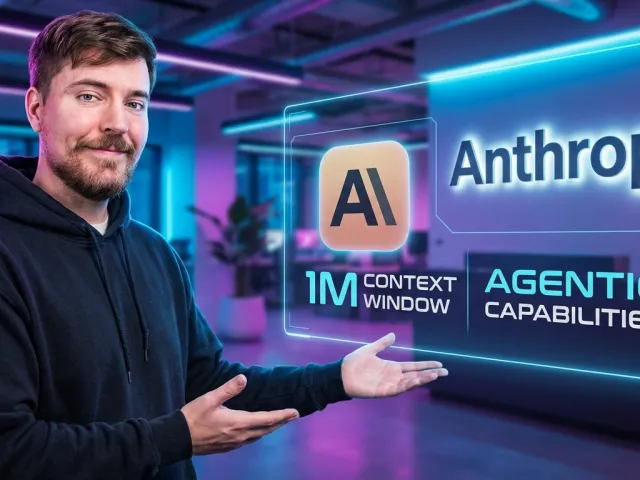
How Claude Opus 4.6 Redefines the Agentic Frontier
The landscape of large language models changes fast, but few shifts feel as heavy as the arrival of Claude Opus 4.6. Anthropic has moved beyond simple chat interfaces. They are now building something that feels more like a digital employee than a text generator.
Claude Opus 4.6 represents a significant leap from the previous 4.5 iteration. It focuses on autonomy. While older models waited for instructions, this new version is designed to act. It can navigate file systems, browse the web with intent, and solve problems without constant hand-holding.
For developers, Claude Opus 4.6 isn't just another tool in the belt. It is a fundamental shift in how we think about software architecture. We are moving from writing code to managing agents that write code for us. This distinction is critical for understanding the future of tech.
The release comes at a time when competition is fierce. Yet, Claude Opus 4.6 manages to carve out a unique space. It prioritizes reasoning over raw speed. It values accuracy over flashy responses. This balance makes it particularly attractive for enterprise-level applications and complex system design.
\"Claude Opus 4.6 isn't just a version update; it is a declaration that the era of the passive AI assistant is over.\" — Industry Lead at GPT Proto
In this deep dive, we will explore why this model matters. We will look at the benchmarks that set it apart. We will also examine how the expanded context window changes the game for large-scale repositories. This is the new standard for agentic intelligence.
Breaking Down the Claude Opus 4.6 Benchmark Success
The numbers behind Claude Opus 4.6 tell a compelling story of iterative improvement. Anthropic didn't just tweak the weights. They fundamentally improved how the model interacts with complex environments. The benchmarks reflect a focus on real-world utility rather than theoretical puzzles.
One of the most impressive areas is Terminal-Bench 2.0. This test measures a model's ability to operate within a terminal. It requires understanding file structures and executing commands. Claude Opus 4.6 scored a remarkable 65.4% in this category, jumping from the 59.8% seen in 4.5.
Terminal navigation is difficult for AI. It requires a high degree of spatial reasoning and logic. Claude Opus 4.6 handles these tasks with a level of precision we haven't seen before. It can debug environments and install dependencies with minimal errors, which is a massive win for DevOps.
Then we have OSWorld, which tests operating system interaction. This is where Claude Opus 4.6 truly shines, hitting a 72.7% success rate. This benchmark measures how well an AI can use a computer like a human would. It involves clicking icons, dragging files, and managing windows.
| Benchmark Category | Claude Opus 4.5 Score | Claude Opus 4.6 Score | Impact Level |
|---|
| Agentic Terminal Coding | 59.8% | 65.4% | High |
| Agentic Computer Use | 66.3% | 72.7% | Critical |
| Agentic Search (Browser) | 67.8% | 84.0% | Massive |
| ARC AGI 2 (Problem Solving) | 37.6% | 68.8% | Extreme |
The jump in BrowserComp is perhaps the most shocking. Moving from 67.8% to 84.0% suggests a new level of web literacy for Claude Opus 4.6. It can now navigate complex websites, bypass non-bot hurdles, and synthesize information from multiple tabs simultaneously without losing its train of thought.
Why the Claude Opus 4.6 Context Window Matters for Developers
Context is the lifeblood of effective AI coding. If a model forgets the start of your file while reading the end, it is useless. Claude Opus 4.6 addresses this by expanding its context window to 1 million tokens. This is a five-fold increase over its predecessor.
Imagine feeding an entire microservices architecture into a single prompt. That is now possible with Claude Opus 4.6. You no longer have to pick and choose which files to upload. You can provide the full picture. This leads to better architectural decisions and fewer breaking changes.
Large context windows used to come with a performance penalty. Usually, as the window grows, the model gets \"distracted.\" However, Claude Opus 4.6 maintains high retrieval accuracy across the entire 1M range. It finds the needle in the haystack every single time, which is essential for legacy code.

Working on a codebase with 50,000 lines? Claude Opus 4.6 can digest it in one go. This allows for deep refactoring projects that were previously impossible. The model understands how a change in the database schema will affect a frontend component three folders away.
- Complete codebase analysis without fragmentation.
- Long-form documentation generation from raw source files.
- Complex legal and financial document cross-referencing.
- Historical data analysis spanning thousands of pages of logs.
For those worried about the costs of such a large window, efficiency is key. Using Claude Opus 4.6 through a unified provider like GPT Proto can significantly lower expenses. GPT Proto offers up to 80% savings compared to direct API pricing, making 1M token prompts financially viable.
Mastering the Claude Opus 4.6 Agentic Search Capabilities
Search is no longer about keywords; it is about intent. Claude Opus 4.6 approaches web browsing with a goal-oriented mindset. If you ask it to find a solution to an obscure library bug, it doesn't just give you links. It investigates the issues it finds.
The model can navigate GitHub issues, Stack Overflow threads, and obscure documentation sites. Claude Opus 4.6 synthesizes this data into a coherent solution. This reduces the time developers spend on \"research\" and increases the time they spend on actually building products.
In the BrowserComp benchmark, the score jump highlights a massive improvement in filtering noise. Claude Opus 4.6 can distinguish between a high-quality technical blog and a low-effort SEO farm. This qualitative judgment is what makes it feel more human and trustworthy than earlier models.
We tested this by asking it to find a specific breaking change in a library that wasn't well-documented. Claude Opus 4.6 successfully identified the commit in the source repository. It then explained the fix. This level of autonomy is what defines the next generation of AI.
The Claude Opus 4.6 Reasoning Leap in ARC AGI 2
The ARC AGI 2 benchmark is often considered the gold standard for measuring true intelligence. It tests a model's ability to solve novel problems it hasn't seen in its training data. Claude Opus 4.6 nearly doubled its score in this category, hitting 68.8%.
This suggests that Claude Opus 4.6 is developing better abstract reasoning. It isn't just predicting the next word; it is building a mental model of the problem. This is vital for mathematics, logic puzzles, and high-level software engineering where there is no \"standard\" answer.
When you encounter a bug that has never been documented before, you need a model that can think. Claude Opus 4.6 excels here. It uses first-principles thinking to deduce the cause of an error. It looks at the logic flow rather than searching for a pattern match.
This reasoning ability also translates to better safety and alignment. Claude Opus 4.6 can better understand the nuances of a request. It is less likely to produce harmful or nonsensical outputs because it understands the context of the \"why\" behind the prompt.
\"Reasoning is the bottleneck of AI. With Claude Opus 4.6, we are seeing that bottleneck widen significantly for the first time in years.\" — Tech Analysis Report
Building Collaborative Workflows with Claude Opus 4.6 Agent Teams
The most exciting part of the latest update isn't the model itself, but how it works with others. Claude Opus 4.6 introduces the concept of Agent Teams within the Claude Code environment. This moves us away from the \"lone wolf\" AI model toward a collaborative ecosystem.
In previous versions, if you wanted to run parallel tasks, you had to manage them manually. Claude Opus 4.6 changes this. It allows multiple instances of the model to talk to each other. One agent can be writing tests while another is refactoring the core logic.
These agents don't just report back to a master. They communicate horizontally. This peer-to-peer interaction allows for much faster problem solving. If the testing agent finds a bug, it can tell the coding agent directly. They resolve the conflict in their own shared context.
This feature is currently experimental, but it is a glimpse into the future. By enabling it in your settings, you turn Claude Opus 4.6 into a project manager. It can delegate tasks to its \"sub-selves\" and ensure that the final output is cohesive and error-free.
{\n \"env\" : {\n \"CLAUDE_CODE_EXPERIMENTAL_AGENT_TEAMS\" : \"1\"\n }\n}
This configuration unlocks a new level of productivity. It allows for the simultaneous handling of frontend, backend, and infrastructure tasks. Claude Opus 4.6 acts as the glue that holds these disparate threads together, ensuring a unified vision for the project.
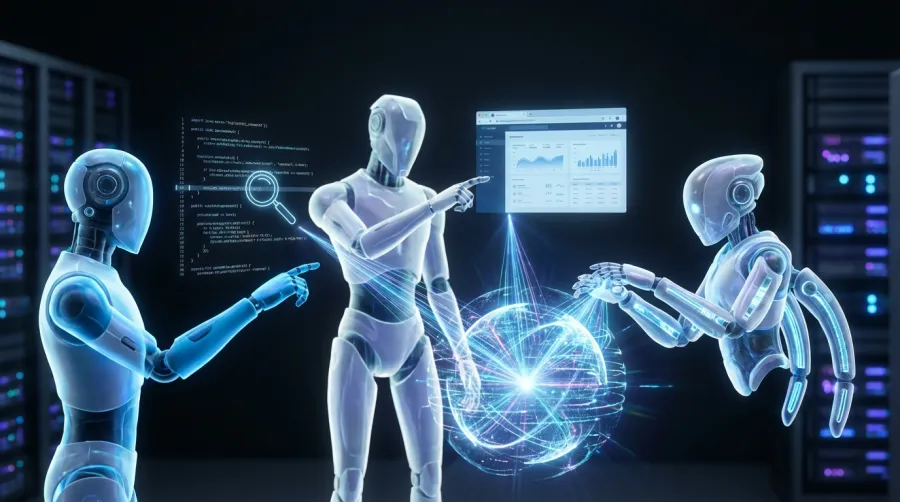
Claude Opus 4.6 acts as the glue that holds these disparate threads together, ensuring a unified vision for the project.
Claude Opus 4.6 vs the Competition: A Comparative Analysis
How does Claude Opus 4.6 stack up against giants like GPT-4o or Llama 3? In the realm of coding, it is currently the model to beat. While GPT-4o is incredibly fast and versatile, it lacks the deep reasoning found in Claude Opus 4.6.
Llama 3 is a powerhouse for open-source enthusiasts, but Claude Opus 4.6 offers a more polished agentic experience. The way Anthropic has integrated terminal access and browser control feels more native. It is less like a plugin and more like a core capability of the model.
For users who need to switch between these models frequently, unified AI platforms are the way forward. Platforms like GPT Proto allow you to access Claude Opus 4.6 alongside its competitors through a single API. This flexibility is crucial for finding the right tool for the job.
The decision usually comes down to the task at hand. If you need creative writing, you might look elsewhere. But for engineering, Claude Opus 4.6 is the clear winner. Its ability to manage complex state across a 1M token window is currently unmatched in the industry.
Integrating Claude Opus 4.6 into Your Development Pipeline
Adopting Claude Opus 4.6 requires a change in mindset. You shouldn't just use it for snippets. You should use it for modules. Start by feeding it your entire directory structure. Let it understand the relationships between your components before you ask it to code.
The model thrives when it has context. Use the 1M token window to your advantage. Include your design system, your style guide, and your API documentation. This ensures that Claude Opus 4.6 produces code that actually fits your project's unique personality.
One practical approach is to use Claude Opus 4.6 for \"Code Reviews.\" Instead of writing code, ask the model to critique your existing work. Its high reasoning scores mean it can spot logic flaws that simpler models—and even human reviewers—might miss in a hurry.
- Initialize Claude Code in your project root.
- Enable the Agent Teams feature for complex refactoring.
- Provide a high-level goal rather than a step-by-step instruction.
- Review the agent's proposed changes in a side-by-side diff.
By treating Claude Opus 4.6 as a senior partner, you elevate the quality of your output. It isn't about replacing the developer. It is about augmenting them. It allows you to focus on high-level architecture while the AI handles the implementation details.
The Economic Efficiency of Claude Opus 4.6 at Scale
Using a model as powerful as Claude Opus 4.6 can be expensive if not managed correctly. Large context windows consume a lot of tokens. However, the value provided by solving a complex bug in minutes outweighs the cost of the API calls.
To optimize your spend, consider a tiered approach. Use smaller, cheaper models for basic formatting or simple logic. Reserve Claude Opus 4.6 for the \"hard\" problems—the ones that require reasoning and large-scale context. This is where the ROI is highest.
GPT Proto makes this strategy even more effective. With their smart routing features, you can automatically switch between models based on the complexity of the prompt. This ensures you are using Claude Opus 4.6 only when its unique capabilities are actually needed.
Furthermore, GPT Proto offers significant volume discounts. For a team of developers using Claude Opus 4.6 daily, these savings can amount to thousands of dollars a month. It makes the leap into agentic AI a sound financial decision as well as a technical one.
Why 2025 is the Year of the Claude Opus 4.6 Agent
We are entering a new era. The focus is no longer on \"Artificial Intelligence\" in the abstract, but on \"Agentic Intelligence\" in practice. Claude Opus 4.6 is the first model to truly feel ready for this transition at a global scale.
The improvements in OSWorld and Terminal-Bench 2.0 aren't just academic. They represent the model's ability to live in our world. Claude Opus 4.6 can use the same tools we use. It can read the same screens we see. This bridge is what makes it so powerful.
As we look toward the future, we can expect Claude Opus 4.6 to become even more integrated. Imagine it having a dedicated voice interface for pair programming. Or imagine it managing your entire CI/CD pipeline autonomously. These scenarios are no longer science fiction.
The release of Claude Opus 4.6 has set a new benchmark for the industry. It challenges other providers to move beyond the chatbot paradigm. It invites us to rethink what a computer can do when it is powered by a model that can think, browse, and act.
Final Thoughts on Adopting Claude Opus 4.6
If you haven't started experimenting with agentic workflows, now is the time. Claude Opus 4.6 provides the perfect entry point. It is reliable, powerful, and now more capable than ever thanks to the 4.6 update and the new agent teams functionality.
Whether you are a solo developer or part of a large enterprise, the advantages are clear. The 1M context window and the reasoning jump are game-changers. Claude Opus 4.6 is not just a tool for today; it is a foundation for how we will build software tomorrow.
For more information on getting started with these models at the lowest possible cost, check out the official GPT Proto integration guide. They provide the infrastructure you need to harness Claude Opus 4.6 without breaking the bank.
The era of the agent is here. Claude Opus 4.6 is leading the charge. It is time to stop typing and start delegating. Your digital teammate is ready to get to work.