
The landscape of Generative AI is shifting rapidly from experimental hype to rigorous economic reality. As we approach 2025, global hyperscalers are pouring billions into infrastructure, yet the market focus is narrowing specifically on cost-efficiency and tangible value. This report analyzes the critical transition towards multimodal models and autonomous agents that define the next era of technology. We explore how enterprises are overcoming the integration "fragmentation tax" through unified solutions like GPTProto, ensuring that Generative AI becomes a driver of operational profit rather than just a budget drain. Discover the new boundaries of digital transformation.
2026-02-03
Generative AI 2025: Mapping Enterprise Frontiers
Explore the shifting landscape of Generative AI in 2025. This in-depth report covers hyperscaler capex surges, the rise of multimodal AI agents, and how platforms like GPTProto are redefining cost efficiency for global developers in the new era of intelligent enterprise workflows.
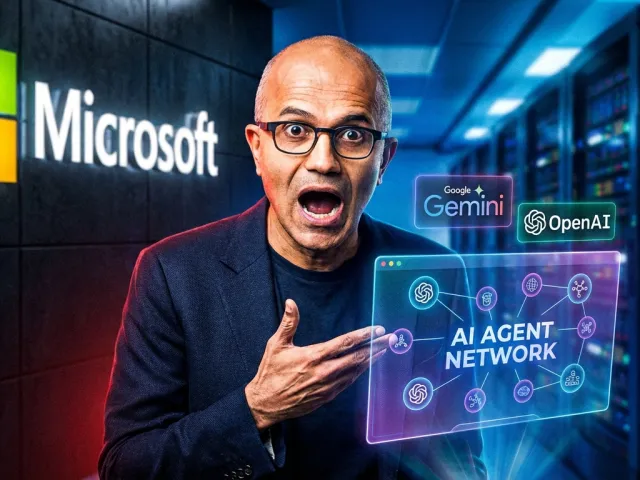
Table of contents
Beyond the Hype: The Evolution of the Global Generative AI Ecosystem
Since the pivotal summer of 2024, a profound divergence has gripped the global technology markets. The initial euphoria surrounding Generative AI, which once lifted all boats in a rising tide of speculative fervor, has evolved into a more discerning and logically rigorous phase. We have moved decisively past the "Proof of Concept" era and entered the era of "Economic Viability." In this new landscape, the performance of hardware providers and application developers has begun to decouple, revealing a stark truth: the winners of the next decade in Generative AI will not merely be those with the most GPUs, but those who can transform raw compute into seamless, value-driven workflows.
According to the latest research from Horizon Insights, the industry is witnessing a "re-centralization" of power among the "Big Five" cloud giants, even as a vibrant ecosystem of specialized agents and multimodal tools emerges. This report explores the boundaries of large model applications, the shifting tides of capital expenditure, and the rise of a new architecture for digital work powered by Generative AI.
The Great Capex Acceleration: A $250 Billion Gamble
The financial backbone of the Generative AI revolution is the unprecedented surge in Capital Expenditure (Capex) by the world’s largest internet platforms. In early 2024, the projected growth rate for Capex among the "Hyperscalers"—Microsoft, Google, Amazon, and Meta—hovered around 30%. By the third quarter, that figure had been aggressively revised upward to 55%. This is not merely a cyclical uptick; it is a structural "arms race" that has become a prerequisite for survival in the Generative AI age.
The logic driving this spending is rooted in the robust health of the underlying "old" economy—specifically online advertising. Companies like Google and Meta are leveraging the massive cash flows generated by their core advertising businesses to fund their Generative AI ambitions. This provides a "cash flow cushion" that allows them to sustain high-intensity investment cycles even as the ROI on Generative AI applications remains in its nascent stages. Projections suggest that this momentum will carry into 2026, with Capex growth maintained at approximately 50%.
However, the nature of this spending is changing. While 2023 was the year of buying H100s, 2025 and 2026 are becoming the years of "Vertical Integration." Google, for instance, has completed a full-stack evolution. By aligning its TPU v7 chips, the TensorFlow compiler stack, and the Gemini model series with its multi-billion-user applications like Gmail, Maps, and YouTube, Google has created a self-sustaining loop. This "closed-loop" efficiency is what allowed Gemini to claw back market share from ChatGPT, growing its traffic share from a mere 5.6% a year ago to 13.7% by late 2025, showcasing the competitive volatility of the Generative AI market.
The Divergence of Costs and the Rise of the "Unified API"
As the model landscape fragments into specialized players—OpenAI for general reasoning, Anthropic for coding, DeepSeek for cost-efficiency, and Gemini for multimodal integration—enterprises and developers utilizing Generative AI are facing a "fragmentation tax." The burden of maintaining multiple API integrations, managing disparate billing cycles, and optimizing for ever-changing token pricing is becoming a significant friction point in digital transformation.
This is where the principle of cost-efficiency and intelligent scheduling becomes the decisive factor for the next generation of Generative AI startups. In a market where the standard token price for top-tier models like GPT-4o or Claude 3.5 Sonnet remains a significant overhead, a new tier of infrastructure providers is emerging to bridge the gap.
For instance, forward-thinking developers are increasingly turning to platforms like GPT Proto to mitigate these structural costs. By offering mainstream Generative AI model API calls at approximately 60% of the official rate, GPT Proto has effectively commoditized the access layer. Their "Developer Zero-Burden" philosophy—integrating once to access a global library of models through a unified response format—mirrors the "Model-as-Infrastructure" trend we see in the enterprise sector. For startups navigating the transition from seed to scale, the ability to utilize intelligent calling strategies through the GPT Proto Dashboard is no longer a luxury; it is a tactical necessity to avoid the "Capex trap" that is currently squeezing legacy software firms. You can explore their extensive model library at GPT Proto Models to see how this unified integration works in practice.
Multimodality: The Core Driver of Agency
If 2023 was about Large Language Models (LLMs), then 2025 is about Large Multimodal Models (LMMs). Visual perception is the primary sense through which humans interact with the physical world, and its integration into Generative AI is what transforms a "Chatbot" into an "Agent."
The rapid evolution of visual recognition and understanding is the single most important driver of Generative AI Agent efficiency. Google’s "Nanobanana" model (an internal moniker for its latest visual-centric Gemini iteration) recently surpassed OpenAI in image editing and spatial reasoning benchmarks. The implications for downstream industries—gaming, short video production, education, and mobile hardware—are transformative for the Generative AI ecosystem.
The logic of "replacing" downstream applications is shifting. Instead of Generative AI models rendering software obsolete, we are seeing models assisting software to form a new ecosystem based on "Node-Based Logic."

Platforms like ComfyUI and Figma are leading this charge. By connecting different functional "nodes"—one for image generation, one for style transfer, one for vectorization—designers can create complex, automated workflows that were previously impossible. This is the "Automated UI" dream: moving from "Design-to-Code" to a seamless "Idea-to-Product" pipeline powered by advanced Generative AI.
"Even as model capabilities continue to improve, the tools and application platforms remain paramount. Take the Excel agent: it is not just a simple UI wrapper, but a Generative AI model situated in the application middle layer. We have deeply integrated the IP of the GPT series into the core layer of the Office system, allowing it to natively understand all components and operational logic of Excel."
— Satya Nadella, CEO of Microsoft
The Sector Deep Dive: From Creative Media to Enterprise SaaS
The "AI penetration rate" varies wildly across sectors, creating a patchwork of maturity in Generative AI adoption.
1. Creative Media and the "Short Video" Revolution
The "AI Manga/Anime" (Manju) industry is perhaps the most advanced case study in industrialization. Traditionally, producing a single minute of animated content cost between 2,000 and 5,000 RMB and required an 11-step process involving scriptwriting, storyboarding, and manual coloring. With the introduction of the Generative AI toolchain (Setting Understanding -> Image Synthesis -> Post-processing), these steps have been condensed into 5 core phases. The result? A 60% to 80% reduction in costs and a 90% reduction in production time.
Domestic players like Kuaishou, with its Kling AI model, have achieved phenomenal success. Kling 2.5 Turbo now ranks at the top of global video generation leaderboards, rivaling OpenAI’s Sora and Luma AI’s Ray. Kuaishou’s Generative AI revenue has already exceeded 1 billion RMB on an annualized basis, driven by a 41% surge in AI-enhanced e-commerce and advertising services. In this sector, the boundary between "User-Generated Content" and "AI-Generated Content" is effectively dissolving.
2. Enterprise Management: The ServiceNow and Palantir Model
In the world of B2B SaaS, the narrative is different. While valuations for traditional SaaS companies have seen a pullback, those who have successfully integrated Reinforcement Learning (RL) with Generative AI LLMs are thriving. ServiceNow was the first to propose an AI Agent workflow based on nodes. Their "Now Assist" tool saw its usage grow 55 times in just six months, adding $500 million in ACV (Annual Contract Value) by late 2025.
Similarly, Palantir has seen its North American commercial revenue explode by 121%. Their secret lies in the realization that enterprise Generative AI is not about "chatting" with data, but about orchestrating it. The "Foundry" and "AIP" platforms allow companies to build "Digital Twins" of their operations, where AI agents can simulate decisions before they are executed in the real world.
3. The "Data Infrastructure" Rebound
For a long time, the market was concerned that the "Cloud Service Provider" (CSP) layer would capture all the value, leaving "Data Infra" players like Snowflake and Datadog in the dust. However, as enterprises move from "PoC" (Proof of Concept) to "Scale," they are hitting a "Data Wall." Generative AI models are only as good as the data they consume. This has triggered a massive rebound in demand for professional data infrastructure to solve issues of data quality, governance, and privacy. We are now entering a new upward cycle for Data Infra, as work-loads shift from simple queries to intensive vector searches and real-time data streaming required by Generative AI.
Domestic vs. International: The Asymmetric War
The gap between Chinese domestic models and their overseas counterparts (primarily the US "Big Three": OpenAI, Google, Anthropic) is narrowing, particularly in multimodal Generative AI applications. Because domestic compute resources are more constrained, Chinese developers have been forced to become world leaders in efficiency optimization.
The Chinese internet ecosystem has several unique advantages for Generative AI deployment:
- Naturally Closed-Loop Ecosystems: Platforms like WeChat (Tencent) and Douyin (ByteDance) control the entire user journey, from discovery to payment. This makes the integration of AI agents much smoother than in the fragmented Western web.
- High Data Availability: A massive population of free users generates a wealth of content that, combined with relatively looser IP management, provides a rich training ground for visual and video Generative AI models.
- The "Late-Mover" Cost Advantage: By following the architectural breakthroughs of models like DeepSeek, domestic firms can achieve 90% of the performance at a fraction of the R&D cost.
In the mobile terminal space, the battle between "OS-level AI" (Apple Intelligence, ByteDance’s Doubao phone) and "Super App Agents" (WeChat + Agent) is the next major frontier. While the "OS + App" approach offers the ultimate integration, it faces massive hurdles in local compute requirements and privacy. Conversely, the "Super App + Agent" model, led by Tencent, leverages the cloud to run everything, offering high precision and a lower barrier to entry for users adopting Generative AI.
The "Hallucination" Barrier in Education and Healthcare
Despite the progress, the "Application Boundary" remains rigid in high-stakes fields like education. In these scenarios, "Polite Nonsense" (AI hallucinations) is intolerable. The gap between "being able to solve a problem" and "knowing how to teach a human to solve it" is still vast in the context of Generative AI.
Duolingo serves as a cautionary tale. Their aggressive push to replace human content creators with AI led to a temporary dip in content quality and user trust. The market has realized that in education, Generative AI must be a "co-pilot" for the workflow (grading, lesson planning, personalized practice) rather than a replacement for the pedagogical core. TAL (Tomorrow Advancing Life) in China has taken a more nuanced approach, using AI to transform the "Homework" scenario—using multimodal tech to recognize handwritten paper assignments with high accuracy, thereby augmenting the existing teacher-student relationship rather than replacing it.
Conclusion: From Toys to Tools
As we look toward 2026, the "Boundaries of Large Models" are no longer defined by the number of parameters, but by the integration of workflows. The era of the standalone AI app is ending; the era of the Generative AI embedded ecosystem has begun.
For the C-suite and the developer community, the mandate is clear: focus on Scenario Landing. Whether it is through the deployment of 3D generative models in gaming (like Unity's Sentis) or the optimization of API costs through unified platforms like GPT Proto, the goal is to move Generative AI from the "Experimental" budget to the "Operational" budget.
The tech titans have laid the infrastructure. They have spent the billions. Now, the value accrues to those who can build the "Connective Tissue"—the agents, the nodes, and the intelligent schedulers that turn raw intelligence into economic output. The road ahead is no longer about finding the "Magic Model"; it is about mastering the Generative AI toolchain.
Original Article by GPT Proto
"We focus on discussing real problems with tech entrepreneurs, enabling some to enter the GenAI era first."
All-in-One Creative Studio
Generate images and videos here. The GPTProto API ensures fast model updates and the lowest prices.
Start Creating
Related Models

claude-opus-4-8-thinking/text-to-text
Claude Opus 4.8 Thinking is Anthropic's most advanced model, featuring deep reasoning blocks for complex logic. Use Claude for high-accuracy coding, agentic workflows, and 200k context tasks via our high-performance API at GPTProto.com.
$ 20
20% off
Market: $ 25
claude-opus-4-8-thinking/web-search
Claude Opus 4.8 Thinking API is Anthropic's premier model for complex logic and agentic tasks. With a 200k context window and internal reasoning blocks, it delivers high-accuracy coding and nuanced data analysis for enterprise-grade solutions.
$ 20
20% off
Market: $ 25
claude-opus-4-8-thinking/file-analysis
ai claude opus 4.8 thinking is Anthropic's pinnacle reasoning model. Featuring a 200,000 token context window and specialized thinking blocks, it masters complex coding, legal analysis, and agentic workflows with unmatched logical precision.
$ 20
20% off
Market: $ 25
claude-opus-4-8/text-to-text
Claude Opus 4.8 offers top-tier reasoning and long-context handling. Use Claude for deep research or complex coding tasks. Opus 4.8 integrates via our unified API for reliable performance and easy scaling across diverse AI applications.
$ 20
20% off
Market: $ 25