The Great Decoupling: How 2025 Redefined the Logic and Economics of Intelligence
For nearly a decade, the story of Artificial Intelligence was dominated by brute force. The narrative was guided by a single, almost dogmatic principle: the Scaling Laws. This meant that to enhance intelligence, more parameters, GPUs, and electricity were required. But as we close the chapter on 2025, history will note this year as the time when the "Scaling Monolith" fractured. We have now stepped into an age of surgical precision, algorithmic refinement, and, significantly, a radical democratization of advanced reasoning.
As Sebastian Raschka, a keen observer in the field, indicated in his year-end analysis, 2025 marked a maturation rather than a slowdown in progress. The shift was from the "Shock and Awe" phase associated with generative AI to an era of "Utility and Optimization." Instead of models that are merely larger than GPT-4, we began to see models that were significantly smarter and more cost-effective. This evolution has redefined the technology landscape, compelling CTOs and developers to reevaluate their technological stacks, financial allocations, and strategies moving forward.
The DeepSeek Shockwave: Breaking the $500 Million Myth
The year kicked off with a seismic shift emerging not from Silicon Valley but from the DeepSeek team. The launch of DeepSeek R1 in early 2025 did more than deliver another benchmark-topping open-weight model; it shattered long-held economic assumptions within the industry. For years, conventional wisdom suggested that a "frontier" model needed an investment of $500 million to $1 billion in computational resources. DeepSeek demonstrated that through algorithmic innovation—particularly with Reinforcement Learning with Verifiable Rewards (RLVR)—remarkable reasoning capacities could be achieved for just around $5 million.
This "DeepSeek Moment" shifted the emphasis from expensive pre-training (harvesting knowledge from the internet) to more economical post-training (instructing a model on reasoning). By employing Group Relative Policy Optimization (GRPO), developers could instill "System 2" thinking—the deliberative reasoning akin to how humans solve math problems—without the hefty overhead associated with traditional techniques like PPO (Proximal Policy Optimization). This breakthrough essentially decoupled intelligence from financial resources, enabling smaller entities to compete on a global scale.
By utilizing math and code compilers as 'verifiers,' we’re finally empowering models to learn from their internal logic instead of merely imitating human patterns.
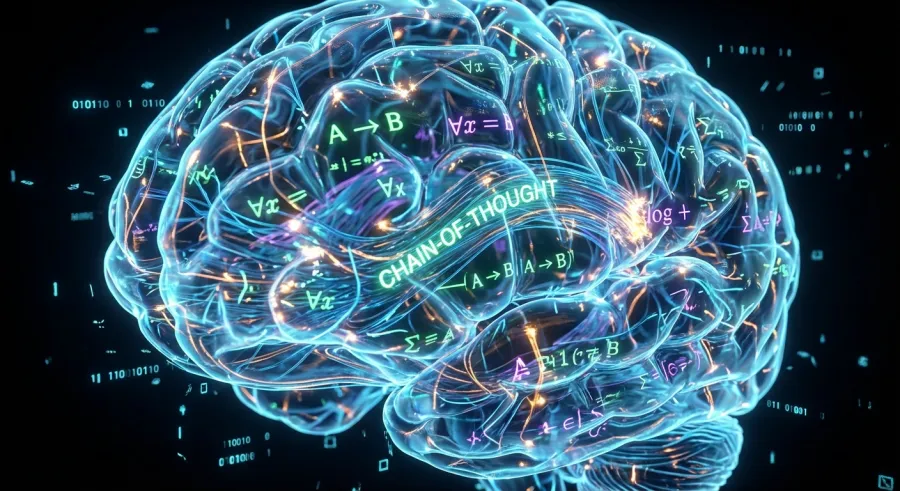
"The 'V' in RLVR acts as the bridge between stochastic guessing and deterministic truth. By using math and code compilers as 'verifiers,' we are finally enabling models to learn from their own logic rather than simply mimicking human patterns."
The Token Economy: Navigating the 60% Cost Frontier
This significant reduction in training costs sparked another wave of innovation: the decline of inference pricing. In 2025, the "API-ization" of everything reached a fevered pace. With emerging models like DeepSeek, Qwen 3, and Llama 4 contending for supremacy, the cost per million tokens experienced a dramatic drop. For enterprises, the return on investment for AI integration has finally turned positive. However, this fragmentation introduced a fresh dilemma for developers: the paradox of choice.
When the competition was merely between OpenAI and Anthropic, integration was straightforward. Today, a compelling application might require DeepSeek for reasoning, Claude for creativity, and a local Llama for safeguarding data privacy. Consequently, the industry infrastructure has had to evolve. Developers are no longer in search of a single model; they need a unified integration layer. Platforms such as GPT Proto have become vital in this transformed economy, providing access to leading models at around 60% of the conventional price. These platforms facilitate a unified response format (supporting Official, OpenAI, and GPT Proto standards), allowing developers to switch models seamlessly without any maintenance hiccups, effectively shielding them from the "model wars" of 2025.
For startups in 2025, the goal is simple: Extreme Cost-Efficiency. If you can access a reasoning-heavy API for 40% less than its standard rate through an integrated documentation pipeline, your runway extends significantly. This is not merely a technical edge; it’s an essential survival tactic in a crowded marketplace.
Architectural Divergence: Beyond the Standard Transformer
Although the "Decoder-only Transformer" still reigns supreme, 2025 witnessed a remarkable turn in AI architecture. We are no longer confined to a one-size-fits-all model. Instead, we observe a growing specialization of "brains" tailored to specific tasks. A significant trend is the widespread adoption of Mixture-of-Experts (MoE) and Multi-head Latent Attention (MLA).
MoE permits a model to boast extensive capacity (e.g., 600B parameters) while remaining "sparse" in activation—only a small fraction of its parameters are activated for any given query. This leads to performance akin to GPT-4 with the speed of a much smaller model. Concurrently, innovations like Gated DeltaNets and Mamba-2 layers are tackling the "Quadratic Bottleneck" that afflicts traditional attention frameworks, enabling models to efficiently process extensive "long-context" documents. In 2025, we observed models confidently managing context windows of 2 million tokens, rendering "Search" and "RAG" (Retrieval-Augmented Generation)—once dominant technologies—almost obsolete.
Perhaps the most unexpected architectural evolution originated from Text Diffusion Models. While diffusion has traditionally been associated with image generation (such as with Midjourney), models like Gemini Diffusion and LLaDA 2.0 have demonstrated that diffusion technologies can be leveraged for text, achieving ultra-low latency. In fast-paced applications like "Ghostwriter" code completion, where every millisecond of delay is a complication, these diffusion-based text models are starting to surpass traditional autoregressive transformers.
Benchmaxxing and the Crisis of Trust
As models showcased increased intelligence on paper, 2025 also highlighted growing skepticism toward conventional evaluation methods. The term "Benchmaxxing" emerged to describe the cynical approach of over-optimizing a model to perform well on standard benchmarks (like MMLU or HumanEval) while failing to deliver adequate performance in less structured, real-world scenarios. With testing datasets contaminating training data, achieving a high benchmark score in 2025 is becoming less a badge of honor and more a "minimum entry requirement."
Sebastian Raschka emphasizes that the only real benchmark is Human-in-the-loop Utility. Does the model genuinely decrease the time it takes a senior engineer to deploy a feature? Does it alleviate the stress for a technical writer? In this environment, the "Reasoning Trace" (the model's ability to explain its reasoning) has become the gold standard. When models such as o1 or DeepSeek R1 demonstrate their "Chain of Thought," they build a layer of trust that raw answers cannot provide. It allows human overseers to identify logical discrepancies early, transforming AI from a "Black Box" to a "Glass Box."
The Agentic Shift: From Chatbot to Co-Pilot
If 2023 was the year of the "Chatbot" and 2024 marked the era of "RAG," then 2025 is undeniably recognized as the year of the Agent. We have transitioned from merely "talking" to AI to actively "tasking" it. This transformation has been propelled by significant advancements in Tool Use. Modern LLMs are now natively trained to engage with search engines, Python interpreters, and external APIs.
This evolution has profound ramifications for enterprise security. In 2025, the "Edge" emerged as the new battleground. Companies are increasingly hesitant to send proprietary data to a central cloud system. This has ushered in a surge in Local Tool Use, where open-weight models are deployed on-premises, enabling them to navigate internal databases and execute code within a secure "sandbox." This "Local-First" AI movement is gaining momentum, driven by the democratization of high-quality weights from entities like Mistral and Qwen, who have adopted 2025’s efficient architectures, making local deployment achievable on consumer-grade hardware.
For those overseeing these intricate, multi-model agent workflows, the GPT Proto Dashboard provides an indispensable monitoring layer. As agents carry out numerous background tasks, tracking Usage and Token Analytics in real-time has become essential—it’s the only method to ensure that an autonomous agent doesn't inadvertently deplete the company’s cloud budget.
The Human Factor: Partnership vs. Outsource
A sobering reflection from 2025 concerns the psychological implications of AI on the creative and technical workforce. We’re witnessing a growing phenomenon known as "LLM Burnout." When a developer relies on AI to generate 90% of their code, the work can lose its depth. The act of "doing" is where learning occurs; if AI performs all tasks, the human element merely becomes one of "Quality Assurance."
Raschka advocates for a more sustainable model: The Chess Partner Approach. Similar to how grandmasters utilize AI engines to explore new strategies instead of merely dictating the next move, top developers in 2025 engage LLMs as sparring partners. They use AI to produce boilerplate, identify edge-case bugs, or elucidate intricate legacy codebases while maintaining the "Architectural Intent." An experienced developer using an LLM will consistently surpass a novice who simply issues a prompt because the expert understands when the AI is fabricating a "perfect-looking" but fundamentally flawed solution. Employing AI as a partner—akin to a chess engine for a grandmaster—serves as a more sustainable model compared to outsourcing all thinking to the AI.
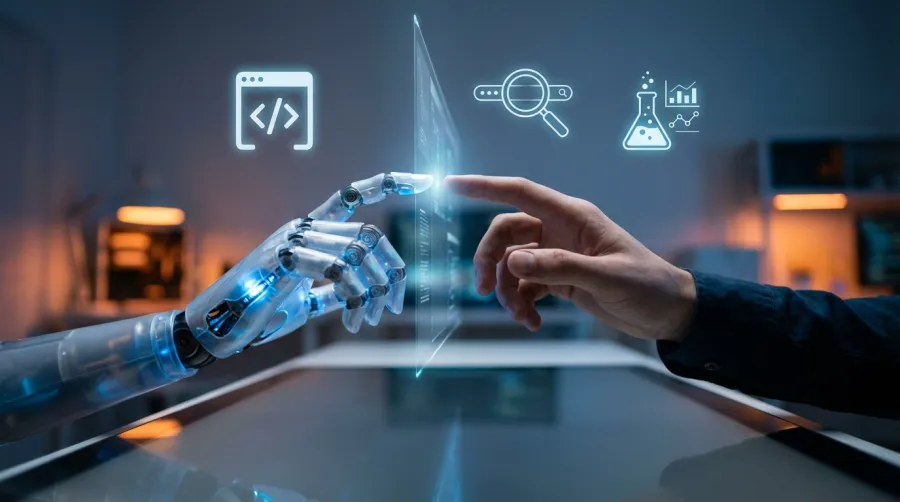
"AI should not be used to outsource thinking; it should be employed to delegate mundane tasks, liberating minds for the 'Deep Work' that epitomizes human expertise."
Predictions for 2026: The Road Ahead
Looking ahead to 2026, the trajectory of Large Language Models appears clear: we are progressing toward Continual Learning. Currently, models remain "frozen" in time at the conclusion of their training. The forthcoming frontier is the model capable of learning from interactions in real-time without necessitating a full retraining cycle.
- The End of Classical RAG: As smaller models gain expansive context windows and improved "needle-in-a-haystack" recall, the elaborate structures of vector databases and retrieval pipelines will simplify. Data will no longer require retrieval; it will simply be "included" in prompts.
- RLVR for Everything: The success of Reinforcement Learning with Verifiable Rewards in math and coding will be adapted to various fields. Expect to find "Verifiable Rewards" applicable to chemistry, legal compliance, and architectural design.
- Inference Scaling is the New Pre-training: Future gains in "intelligence" will not derive from larger models but from those allocated more "thinking time" during generation phases. Investing $1 in compute for a 10-minute "Deep Think" will soon become standard for high-stakes decisions.
Conclusion
2025 marked a watershed moment for the AI industry. We moved beyond the simplistic "bigger is better" mentality to embrace a more intricate landscape focused on efficiency, reasoning, and authentic integration. The threshold for entry has never been lower, yet the complexity of choice has reached unprecedented heights. Whether deciding between a diffusion-based text model, a reasoning-focused MoE, or navigating the economics of millions of tokens via intelligent billing centers, the true victors of the upcoming era will be those who excel at the Integration of Intelligence.
The silicon terrain is no longer dominated by those with the highest number of GPUs; it's about who can deploy them most judiciously. As we venture into 2026, the "State of the LLM" is robust, diverse, and increasingly economical. The tools are in our hands. The costs have diminished. The only remaining bottleneck is human creativity.
Original Article by GPT Proto
"We focus on discussing real problems with tech entrepreneurs, enabling some to enter the GenAI era first."