
OpenAI has fundamentally reshaped the global technology landscape, evolving rapidly from a non-profit research lab into the dominant force in artificial intelligence. This strategic transformation is defined by the release of the GPT model family, the viral success of ChatGPT, and groundbreaking multi-modal advancements like Sora. In this analysis, we dissect the roadmap guiding OpenAI, from the shift away from symbolic AI to the internal governance challenges under Sam Altman. We also explore the fierce competitive dynamics involving Google and DeepSeek, and how enterprises can leverage optimization layers like GPTProto to manage infrastructure costs while scaling toward Artificial General Intelligence.
2026-02-03
OpenAI Strategy: Product Roadmap from ChatGPT to AGI
Explore the rise of OpenAI, from the transformer revolution to the development of ChatGPT and Sora. Learn about the five levels of AGI, the battle against DeepSeek and Gemini, and how platforms like GPTProto optimize API costs for developers and scaling enterprises in the GenAI era.
Table of contents
The Dawn of a New Intelligence: How OpenAI Changed Everything
History is often punctuated by singular moments that divide time into "before" and "after." For the modern digital economy, that moment arrived quietly in November 2022. There was no grand televised launch or massive marketing campaign, yet within five days, one million users had flocked to a simple text interface. By January, that number hit 100 million. The release of ChatGPT signaled that OpenAI had successfully cracked the code on consumer AI adoption.
Before this inflection point, Artificial Intelligence was largely the domain of academic papers and backend algorithms used for ad targeting. Suddenly, it was tangible. It was writing Python scripts, composing sonnets, and explaining quantum physics. But to truly grasp the magnitude of this shift, one must look beyond the chatbot interface. This is a story about the most consequential startup of the 21st century and its relentless pursuit of AGI.
OpenAI represents a unique case study in aggressive product scaling, philosophical pivots, and high-stakes corporate maneuvering. As we move deeper into the GenAI era, understanding the company's trajectory is no longer optional for business leaders—it is a survival requirement. This deep dive explores the technical foundations, the economic engines, and the future roadmap of the entity that is redefining human-machine interaction.

The Virtuous Cycle: Engines of Exponential Growth
The speed at which OpenAI innovates is not accidental; it is the result of a meticulously engineered feedback loop. In the tech world, this is known as a "virtuous cycle," where multiple compounding factors accelerate one another. For generative AI, four distinct engines are firing simultaneously.
First, algorithmic efficiency is improving. Researchers are discovering new "recipes"—like the Mixture of Experts (MoE) architecture—that allow models to be smarter without requiring a linear increase in size. Second, hardware is evolving. The GPUs provided by NVIDIA are becoming exponentially more powerful, enabling the training of models that were theoretically impossible just five years ago.
Third, the data flywheel is spinning. As millions of users interact with ChatGPT, OpenAI harvests invaluable feedback data (RLHF), which fine-tunes the model's responses to be more helpful and less hallucination-prone. Finally, capital influx allows for massive bets. Investments from partners like Microsoft fuel the acquisition of more chips and talent, restarting the cycle at a higher velocity.
- Algorithmic Innovation: Moving from dense models to sparse models that activate only necessary parameters.
- Hardware Scaling: Utilizing H100 and Blackwell clusters to reduce training time from months to weeks.
- Data Supremacy: Leveraging proprietary datasets and partnerships to overcome the limits of public web data.
- Capital Injection: Securing multi-billion dollar tranches to build the physical infrastructure of the future.
From Symbolic Logic to Neural Networks: The Pivot
To appreciate the current dominance of OpenAI, we must understand the failure of what came before. for decades, the field was dominated by "Symbolic AI." This approach relied on human programmers manually coding the rules of the world. If you wanted a computer to recognize a dog, you had to program rules about tails, fur, and barks.
This method was inherently brittle. The real world is messy and full of exceptions, and Symbolic AI crashed whenever it encountered something undefined. The industry eventually pivoted to "Deep Learning," a paradigm where the machine is not told the rules but is instead shown examples. By analyzing millions of images or text snippets, the neural network infers the patterns itself.
OpenAI bet the farm on this approach, specifically on the hypothesis that "scale is all you need." They believed that if you made these neural networks large enough and fed them enough data, intelligence would simply emerge. The results, from GPT-3 onwards, proved them right. The system didn't just learn grammar; it learned reasoning, coding, and translation, simply by predicting the next token in a sequence.
The Shift in AI Paradigms
| Feature | Symbolic AI (Old Guard) | Generative AI (OpenAI Era) |
|---|---|---|
| Core Mechanism | Manually programmed logic rules. | Statistical pattern recognition. |
| Adaptability | Rigid; fails with unknown inputs. | Fluid; generalizes to new scenarios. |
| Development | Human-labor intensive coding. | Compute-intensive training runs. |
| Dominant Use | Calculations, Chess, Routing. | Creative writing, Coding, Art. |
The Transformer Architecture: The Secret Sauce
The technical foundation of OpenAI rests on a specific neural network architecture called the Transformer. Originally introduced by Google researchers in the paper "Attention Is All You Need," the Transformer solved a critical problem in linguistics: context.
Previous models read text sequentially, often "forgetting" the beginning of a sentence by the time they reached the end. The Transformer introduced "Self-Attention," a mechanism that allows the model to analyze an entire paragraph simultaneously, weighing the relationship between every word. This allows the AI to understand that "bank" refers to a financial institution and not a river edge, based solely on surrounding words.
While Google invented the architecture, OpenAI was the entity that pushed it to its absolute limits. They scaled the parameter count from millions to billions and eventually trillions. This brute-force scaling, combined with Reinforcement Learning from Human Feedback (RLHF), turned a raw statistical engine into a polished product capable of nuanced conversation.
Governance and the Sam Altman Saga
The corporate history of OpenAI is as dramatic as its product releases. Founded in 2015 as a non-profit, the organization's original charter was to build safe AGI for the benefit of humanity, free from the profit motives that drive public corporations. Early backers included Elon Musk and Sam Altman.
However, the reality of training Large Language Models (LLMs) collided with this idealism. The compute costs were astronomical. To survive, the company restructured into a "capped-profit" entity, allowing it to raise billions from Microsoft. This created a tension between the safety-focused board and the commercial-focused leadership. This tension exploded in late 2023 with the sudden firing and rapid reinstatement of CEO Sam Altman.
Today, OpenAI operates with a unique, somewhat convoluted structure. Microsoft holds a significant financial interest but does not control the board. The mission remains AGI, but the path there is paved with commercial products. Altman's return solidified a strategy that embraces rapid deployment and iteration, a philosophy that sometimes clashes with the "safety-first" advocates in the broader AI community.
The Economics of Intelligence: Optimizing with GPT Proto
While the capabilities of models like GPT-4o are impressive, the cost of accessing this intelligence is a major barrier for businesses. API fees are calculated per "token" (roughly 0.75 words), and for an enterprise processing millions of customer queries, these costs can spiral out of control. Vendor lock-in is another significant risk; building an entire infrastructure around OpenAI makes it difficult to switch if a competitor releases a cheaper or faster model.
This market reality has given rise to optimization platforms like GPT Proto. These middleware solutions act as an intelligent layer between the application and the raw AI models. GPT Proto enables developers to integrate a single standardized API that can route traffic to different models based on complexity and cost.
For example, a simple user greeting doesn't require the immense brainpower (and cost) of GPT-4; it can be handled by a lighter, cheaper model. GPT Proto automates this routing, offering significant savings—often up to 60% off standard list prices—through volume aggregation and smart scheduling. As the "Intelligence Economy" matures, tools that manage latency and optimize token spend are becoming as critical as the models themselves.
"In the API economy, efficiency is the difference between a profitable SaaS product and a burn-rate disaster. Smart routing is the future of GenAI deployment."
Product Roadmap: From Chatbots to Reasoning Agents
The product evolution at OpenAI follows a clear trajectory: from simple text generation to complex reasoning and eventually, autonomous action. The GPT (Generative Pre-trained Transformer) series has moved through distinct "grades" of capability.
GPT-3 was a probabilistic text generator. GPT-4 introduced logic and reduced hallucinations. The current frontier involves "Reasoning Models," such as the o1 series. unlike standard LLMs that spit out an answer immediately, reasoning models are designed to "think" before they speak. They generate a hidden chain of thought, evaluating multiple paths and correcting errors internally before presenting a final answer.
The next phase involves "Agents." These are systems that don't just talk but do. An agentic model from OpenAI won't just tell you how to book a flight; it will access the airline's API, select the seat, and process the payment. This shift from information to action is the core of the upcoming product roadmap.
The 5 Levels of AGI Progression
- Level 1: Chatbots – Conversational AI capable of natural dialogue (Current State).
- Level 2: Reasoners – Systems that can solve problems as well as a human PhD (The o1 Frontier).
- Level 3: Agents – AI that can execute multi-step actions on behalf of a user.
- Level 4: Innovators – AI capable of inventing new technologies or discovering scientific principles.
- Level 5: Organizations – AI that can autonomously manage the operations of an entire organization.
Infrastructure Warfare: Project Stargate
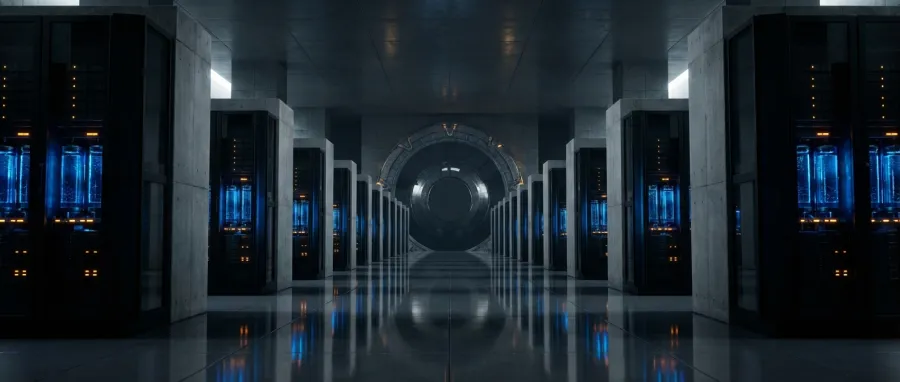
Software is only as good as the hardware it runs on. The demand for AI compute is currently outstripping global supply. OpenAI is deeply involved in solving this physical bottleneck. The sheer amount of data being processed—projected to reach hundreds of zettabytes by the late 2020s—requires a complete reimagining of data center architecture.
Reports indicate that OpenAI and Microsoft are planning a massive infrastructure project codenamed "Stargate." This $100 billion supercomputer installation would be exponentially more powerful than any current data center. The goal is to create a training cluster large enough to handle GPT-5 and beyond, cementing the company's lead against resource-rich competitors like Google and Amazon.
Multi-Modal Mastery: Sora and the Omni Future
Text was just the beginning. The strategy at OpenAI is now firmly focused on "multimodality"—the ability of a single model to process text, audio, images, and video interchangeably. The release of GPT-4o ("o" for Omni) showcased a model that could converse in real-time with emotional inflection, essentially mimicking a human voice call.
Simultaneously, the introduction of Sora stunned the creative world. Sora is a diffusion model capable of generating high-fidelity, one-minute video clips from simple text prompts. It understands physical interactions, lighting, and camera motion. This moves OpenAI into direct competition with Hollywood and the video game industry.
The implication is a future where the barrier to content creation collapses. A single user, equipped with these tools, could theoretically produce a feature film or a fully voiced interactive application. This capability expands the company's total addressable market from "knowledge work" to "entertainment and media."
The Competitive Landscape: Hyperscalers vs. Open Source
Despite its early lead, OpenAI faces a crowded battlefield. The competition creates a pincer movement from two sides: proprietary giants and open-source rebels.
On one side is Google with its Gemini models. Google has a distinct advantage: distribution. Gemini is being baked into Android, Workspace, and Search, giving it billions of touchpoints that ChatGPT lacks. Google also owns its own chip infrastructure (TPUs), reducing reliance on NVIDIA.
On the other side is the open-source movement, led by Meta's Llama series. Mark Zuckerberg's strategy is to commoditize the AI model itself, making the "brain" free for anyone to use and modify. This threatens the OpenAI business model by offering a free alternative to paid APIs. Additionally, nimble competitors like DeepSeek have proven that high-performance models can be trained for a fraction of the cost, challenging the assumption that only companies with $100 billion can compete.
Key Competitors
| Competitor | Flagship Model | Strategic Threat to OpenAI |
|---|---|---|
| Gemini Ultra | Deep ecosystem integration (Android/Docs). | |
| Meta | Llama 3 | Open-source availability commoditizes the tech. |
| Anthropic | Claude 3.5 | Strong focus on safety and large context windows. |
| DeepSeek | DeepSeek-R1 | Extreme cost-efficiency and reasoning capabilities. |
The Data Wall and Copyright Battles
A looming challenge for OpenAI is the "Data Wall." The internet contains a finite amount of high-quality human text, and LLMs devour it voraciously. Experts predict that AI developers may run out of fresh public data by 2026. If models start training on AI-generated content, they risk "model collapse," where the output becomes garbled and generic.
To circumvent this, OpenAI is aggressively securing licensing deals with publishers like News Corp, Axel Springer, and Reddit. These deals provide a moat: legal access to high-quality, real-time human data that open-source competitors cannot easily replicate. Simultaneously, the company is facing lawsuits from authors and artists claiming copyright infringement, the outcomes of which will define the legal framework of the AI age.
Monetization: The Platform Play
The business model of OpenAI is evolving into a classic platform strategy. Revenue is generated through three primary channels. First, the consumer subscription (ChatGPT Plus) serves as a recurring revenue cash cow. Second, the Enterprise tier offers privacy-focused instances for corporations.
The third and most strategic channel is the API platform. By encouraging developers to build apps on top of their models, OpenAI takes a cut of every transaction. This is similar to Apple's App Store model. However, developers must be wary of costs, necessitating the use of aggregators like GPT Proto to maintain margins. The goal is to become the underlying operating system of the AI economy, where every digital interaction quietly pays a toll to the model provider.
Conclusion: The Road Ahead
The journey of OpenAI is far from over. As the company pushes toward GPT-5 and eventually AGI, it will continue to disrupt industries, challenge legal frameworks, and redefine labor. The transition from chatbots to reasoning agents marks the beginning of a new chapter where AI becomes a proactive partner rather than a passive tool.
For businesses and developers, the lesson is clear: agility is paramount. The landscape changes weekly. Leveraging flexible infrastructure and cost-optimization tools will be the key to surviving the transition. We are witnessing the birth of a new form of digital intelligence, and OpenAI is currently sitting in the driver's seat.
Original Article by GPT Proto
"We focus on discussing real problems with tech entrepreneurs, enabling some to enter the GenAI era first."
All-in-One Creative Studio
Generate images and videos here. The GPTProto API ensures fast model updates and the lowest prices.
Start Creating
Related Models

claude-opus-4-8-thinking/text-to-text
Claude Opus 4.8 Thinking is Anthropic's most advanced model, featuring deep reasoning blocks for complex logic. Use Claude for high-accuracy coding, agentic workflows, and 200k context tasks via our high-performance API at GPTProto.com.
$ 20
20% off
Market: $ 25
claude-opus-4-8-thinking/web-search
Claude Opus 4.8 Thinking API is Anthropic's premier model for complex logic and agentic tasks. With a 200k context window and internal reasoning blocks, it delivers high-accuracy coding and nuanced data analysis for enterprise-grade solutions.
$ 20
20% off
Market: $ 25
claude-opus-4-8-thinking/file-analysis
ai claude opus 4.8 thinking is Anthropic's pinnacle reasoning model. Featuring a 200,000 token context window and specialized thinking blocks, it masters complex coding, legal analysis, and agentic workflows with unmatched logical precision.
$ 20
20% off
Market: $ 25
claude-opus-4-8/text-to-text
Claude Opus 4.8 offers top-tier reasoning and long-context handling. Use Claude for deep research or complex coding tasks. Opus 4.8 integrates via our unified API for reliable performance and easy scaling across diverse AI applications.
$ 20
20% off
Market: $ 25