
The AI landscape is undergoing a massive transformation as we enter a more mature era. Developers are moving beyond simple OpenAI brand loyalty toward a sophisticated strategy focused on execution and efficiency. This shift marks the transition from experimentation to a deployment phase where multi-model orchestration becomes the standard. Today, successful builders prioritize sustainable value over hype, utilizing diverse tools to achieve high-impact results. In this deep dive, we explore how OpenAI remains a cornerstone while the industry embraces model agnosticism, lean startup structures, and the emerging philosophy of vibe coding to redefine digital innovation.
2026-02-10
The Strategic Shift: Beyond OpenAI Brand Loyalty
Learn how the AI landscape is maturing in 2025 as developers move beyond OpenAI brand loyalty. This deep dive covers the rise of model orchestration, lean startups achieving massive revenue, and why the transition to a deployment phase is creating new opportunities for builders.
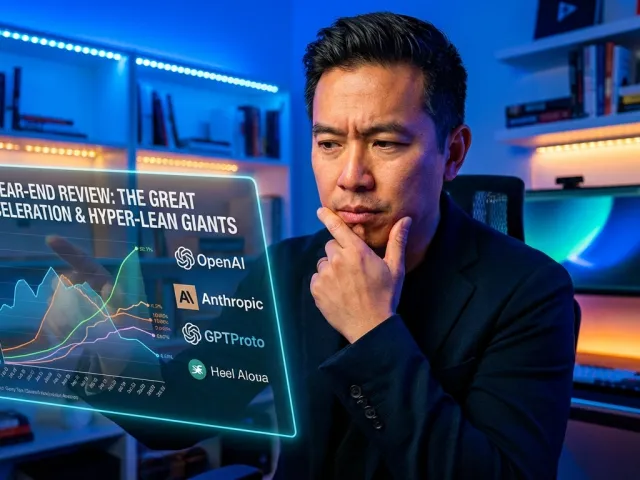
Table of contents
The Great AI Deceleration: A New Reality for Builders
For the past two years, the technology world felt strapped to a rocket ship. We watched OpenAI release groundbreaking updates that fueled a global hype machine. However, as we approach the mid-point of 2025, a fundamental shift has occurred. The wild era of total wonder is being replaced by a practical focus on strategic execution.
This isn't a slowdown in progress. Instead, it is a maturing of the ecosystem where OpenAI is no longer the only game in town. We are moving from being mere prompt engineers to becoming true systems designers. Experts observe that founders are moving away from the monolithic shadow of OpenAI toward a nuanced, multi-layered approach to software development.
In this landscape, the dominance of OpenAI is challenged by a shift in founder priorities. Developers now ask which model fits their specific budget and workflow rather than which is simply the "smartest." This transition marks the end of the model wars and the beginning of a massive application gold rush focused on utility.
To navigate this, we must look at the truths emerging from the tech trenches. These are the new laws of physics for the digital economy. Whether you are a solo dev or a CEO, the way you interact with OpenAI and its competitors is changing forever. Efficiency and reliability have become the primary metrics for success.
The Rise of "Golden Retriever" Energy in Development
Recent data regarding API usage reveals a stunning reversal in developer behavior. For years, OpenAI was the default choice for every application. If you built an AI app, you started with GPT-4. However, Anthropic has seen its usage jump by over 50% recently as founders seek specific coding capabilities.
Many describe OpenAI as having "Black Cat Energy"—brilliant but occasionally aloof and mysterious. It requires developers to bend to its specific quirks and frequent API shifts. While powerful, OpenAI often feels like a tool that demands the human user adapt to its unpredictable temperament.
Conversely, the "Golden Retriever" energy of models like Claude is about being eager to please. Developers find that while OpenAI is a generalist powerhouse, other models provide a level of compliance and reliability for structured data that is easier to manage. This shift focuses on the developer experience—the vibe of the integration.
- Reliability: Founders report fewer hallucinations in structured output when moving beyond OpenAI.
- Coding Proficiency: In the world of Vibe Coding, diverse models are becoming the gold standard for bug-free snippets.
- Supportive Documentation: The ecosystem surrounding OpenAI is perceived as increasingly consumer-focused, leaving room for developer-centric alternatives.
"The era of brand loyalty in AI is over. Founders choose tools based on the friction-to-output ratio, meaning OpenAI must now compete on ease of use, not just raw power."
The Strategy of Model Orchestration
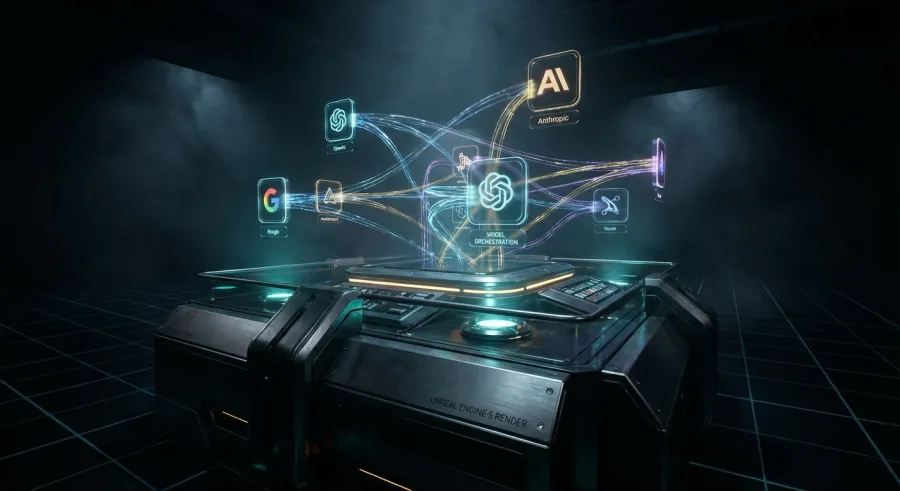
Smart founders are refusing to choose just one provider. We are seeing the birth of the Orchestration Layer. Instead of building on top of OpenAI alone, companies build a switchboard. They use one model for its massive context window and another, like OpenAI, for final summarization and logic.
This "Write Once, Integrate All" philosophy is the new standard. By abstracting the model layer, startups protect themselves from market volatility. If OpenAI experiences an outage, the business doesn't stop. The system simply reroutes traffic. This is where tools like GPT Proto become indispensable for the modern enterprise.
GPT Proto solves the headache of a fragmented API landscape. Instead of managing separate billing and data formats for OpenAI and its rivals, it provides a unified interface. For a startup trying to stay lean, this is a survival strategy. Using GPT Proto allows for smart scheduling and automated model switching.
| Feature | Single Vendor (e.g., OpenAI) | Multi-Model via GPT Proto |
|---|---|---|
| Vendor Lock-in | High | Zero |
| Cost Optimization | Limited to one price list | Up to 60% savings via smart routing |
| Redundancy | None | Automatic failover between models |
| Integration Effort | Proprietary SDK | Unified Standard API |
The economic impact is massive. When you cut API costs by 60% through intelligent switching, you extend your runway significantly. In the cutthroat world of AI, the person with the best margins wins. OpenAI is now just one powerful tool in a very large, diverse toolbox.
Vibe Coding: Moving Past Hand-Written Syntax
We are witnessing a fundamental change in software creation known as Vibe Coding. In the past, being an engineer meant worrying about semicolons and memory management. Today, the modern developer acts like a creative director, using OpenAI to generate vast amounts of code based on high-level descriptions.
This doesn't mean the death of coding; it means the acceleration of it. You can now go from a thought to a web app in an afternoon. This speed of iteration has changed what it means to be a tech person. You no longer need a CS degree to build a platform; you need a vision for OpenAI to execute.
However, there is a catch. While Vibe Coding is incredible for prototypes, it still requires a human in the loop for production-grade reliability. Code generated by OpenAI can be a spaghetti mess under the hood. Successful founders use AI to move fast but maintain rigorous evaluation metrics to ensure products don't break.
The Evolution of the Hyper-Lean Giant
The shrinking size of successful companies is perhaps the most inspiring truth of 2025. Previously, reaching $100 million in revenue required an army of 1,000 employees. Today, companies reach that milestone with just 50 people. The productivity gains from OpenAI and specialized agents are creating a new class of lean giants.
This efficiency is possible because AI takes over middle-management tasks. Content creation, support, and data analysis are handled by OpenAI-powered workflows. This allows human staff to focus entirely on high-level strategy. It is no longer cool to have a massive headcount; it is cool to have massive margins.
This lean approach changes the venture capital landscape. Startups need less money to reach profitability. If your biggest expense is your OpenAI API bill rather than payroll, your business is more scalable. You avoid the cultural debt of a massive organization, allowing you to pivot quickly when the market shifts.

- Gamma: A prime example of reaching scale with a tiny, high-impact team.
- Automated Workflows: Using OpenAI for internal ops rather than hiring more admin staff.
- Fractional Experts: Using AI for legal and accounting tasks that once required expensive retainers.
"The most valuable companies of the next decade will treat human talent as a rare resource used only for things OpenAI cannot yet conceptualize."
The Infrastructure Paradox: Bubbles and Builders
There is much talk about an AI bubble. Critics point to the billions spent on chips and the massive electricity demands of OpenAI data centers. But for an application builder, the bubble is a blessing. Even if infrastructure companies face a correction, the leftover surplus of compute power benefits everyone else.
Think back to the dot-com crash. Thousands of miles of fiber-optic cable were laid. When the bubble burst, that cheap bandwidth allowed Netflix and YouTube to exist. Today, we see a similar surplus. If OpenAI or other labs over-expand, it results in a price war that lowers costs for developers.
The deceleration in model breakthroughs is actually a blessing. In 2024, builders were afraid to start because they feared OpenAI would release a version that made their product obsolete. Now that releases are incremental, the environment is stable enough for long-term architecture. We are in the Deployment Phase.
Bridging the Consumer Trust Gap
Despite the power of these models, we face a curious problem: where is the Uber for AI? Most people still use OpenAI via a web browser, typing manual prompts. We haven't reached the point where we trust an AI agent to handle our bank account without constant human supervision.
This Trust Gap is the biggest obstacle for the coming year. People use OpenAI to summarize reports, but for high-stakes decisions, they want a human. Developers need to focus less on raw OpenAI power and more on user interface and transparency. We need systems that explain their reasoning.
Successful apps will be those that create a proprietary data loop or a seamless workflow. Currently, many specialized apps don't add enough value beyond what the base OpenAI model provides. The next generation must make using the base interface feel like a chore by comparison.
| Application Type | Current Status | The 2026 Challenge |
|---|---|---|
| Content Creation | Saturated | Moving from generic to highly personalized brand voices. |
| Coding Tools | High Adoption | Moving from snippet generation to full-repository management. |
| Customer Support | Functional | Moving from simple chatbots to autonomous problem solvers. |
| Personal Agents | Low Trust | Solving the security hurdles for sensitive financial tasks. |
The key to winning this market is understanding that OpenAI is a utility, like electricity. You don't buy a General Electric app; you buy a toaster that uses GE's power. We are waiting for the appliances of the AI era—tools that solve specific problems so well you forget the LLM exists.
The Power of Vertical Models
For a long time, the industry was obsessed with size. The assumption was that bigger was always better. But 2025 has proven that for specific tasks, a small, fine-tuned model can outperform a giant like OpenAI. This is a game-changer for healthcare, law, and engineering.
By training a smaller model on a specific dataset and using Reinforcement Learning, startups create narrow geniuses. These models are faster and cheaper to run than the generalized intelligence of OpenAI. This creates a massive opportunity for companies with access to unique, proprietary data.
The moat is no longer the ability to train a model; that is now a commodity. The real advantage lies in the data and the specific integration into a professional's workflow. If you can help a lawyer find a clause faster than OpenAI can, you have a business. You don't need to beat them at poetry.
The Frontier: Energy and Space
As we push the limits of what OpenAI can do, we hit a physical wall: energy. In places like California, regulations and power constraints make massive data centers difficult to build. This has led to startups looking at space-based data centers and nuclear fusion to power the next generation of OpenAI rivals.
While it sounds like science fiction, the logic is sound. In space, you have unlimited solar energy and a natural vacuum for cooling. OpenAI leadership has acknowledged that the path to AGI is as much an energy problem as it is a software problem. This hardware side of the revolution is often overlooked.
For the average founder, these cosmic problems are a distraction. The real work happens on Earth, using existing infrastructure. The energy crisis for OpenAI means compute remains a cost, emphasizing the need for efficiency. Whether using smart routing or smaller models, the goal is intelligence per watt.
- Energy Efficiency: Developers now optimize prompts to reduce token count and save money on OpenAI bills.
- Local Inference: Running smaller models on devices to bypass the OpenAI cloud entirely.
- Nuclear Power: The sudden interest in Small Modular Reactors to fuel the AI boom.
- Sustainability: The push for Green AI that doesn't sacrifice performance for impact.
- Edge Computing: Bringing OpenAI-style intelligence to localized IoT devices.
"The future of AI is not just in the code; it’s in the physical reality of how we power the machines that think for us."
The 2027 Outlook: Scaling vs. Human Inertia
There is a famous report predicting that the rapid scaling of OpenAI will lead to a total breakdown of social structures by 2027. However, founders are more skeptical. They point to two major brakes on this train: the Log-Linear Scaling Law and Human Inertia.
First, progress isn't exponential in the way people think. To get a 2x improvement, you often need 10x more data and compute. While OpenAI is still seeing progress, the curve is flattening. We won't wake up to a god-like AI; we will see a slightly better version of what we had last month.
Second, organizations change slowly. Even if OpenAI released a model tomorrow that could do a lawyer's job, it would take a decade for the legal system to adapt. Organizations have cultural debt and bureaucratic friction that act as natural stabilizers. This gives us time to integrate these tools productively.
Conclusion: Rules of the New Game
The final takeaway is that the rules of the game have been written. We know what the tech stack looks like: a multi-model approach managed through platforms like GPT Proto to keep costs down. We know the winning team is small and OpenAI-powered. And we know value lies in deep, vertical applications.
If you have been waiting because the AI world seemed too volatile, now is the time to jump in. The shaking of the OpenAI era has calmed into a steady pulse. The tools are mature, and the infrastructure is ready. It is time for the builders to start creating real-world value.
The transition from marveling at what AI can do to focusing on what you can do with AI is the shift of our generation. As we head forward, winners won't be those with the biggest GPUs, but those with the best insights. The era of the technician is over; the era of the builder using OpenAI has begun.
Original Article by GPT Proto
"We focus on discussing real problems with tech entrepreneurs, enabling some to enter the GenAI era first."
All-in-One Creative Studio
Generate images and videos here. The GPTProto API ensures fast model updates and the lowest prices.
Start Creating
Related Models

claude-opus-4-8-thinking/text-to-text
Claude Opus 4.8 Thinking is Anthropic's most advanced model, featuring deep reasoning blocks for complex logic. Use Claude for high-accuracy coding, agentic workflows, and 200k context tasks via our high-performance API at GPTProto.com.
$ 20
20% off
Market: $ 25
claude-opus-4-8-thinking/web-search
Claude Opus 4.8 Thinking API is Anthropic's premier model for complex logic and agentic tasks. With a 200k context window and internal reasoning blocks, it delivers high-accuracy coding and nuanced data analysis for enterprise-grade solutions.
$ 20
20% off
Market: $ 25
claude-opus-4-8-thinking/file-analysis
ai claude opus 4.8 thinking is Anthropic's pinnacle reasoning model. Featuring a 200,000 token context window and specialized thinking blocks, it masters complex coding, legal analysis, and agentic workflows with unmatched logical precision.
$ 20
20% off
Market: $ 25
claude-opus-4-8/text-to-text
Claude Opus 4.8 offers top-tier reasoning and long-context handling. Use Claude for deep research or complex coding tasks. Opus 4.8 integrates via our unified API for reliable performance and easy scaling across diverse AI applications.
$ 20
20% off
Market: $ 25