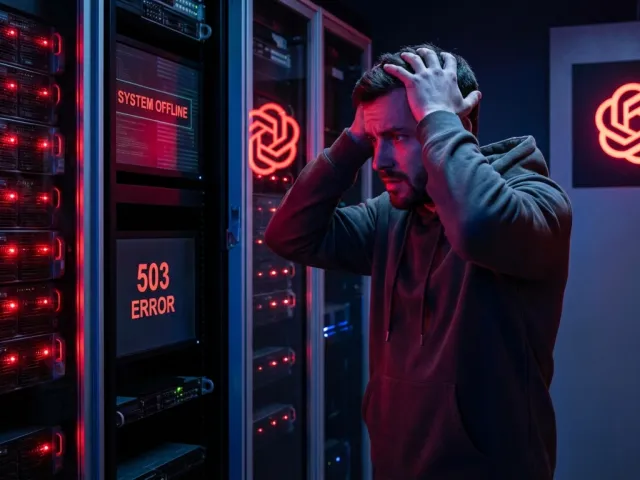
The fragile reality of the current openai status
Checking the openai status has become a mandatory morning ritual for the modern developer. It is no longer just a technical dashboard; it is a heartbeat monitor for the global digital economy. When that little green bar flickers, millions of workflows grind to a sudden, painful halt.
The industry reaction to any shift in the openai status is usually instantaneous. Within seconds of a minor lag, social feeds explode with reports. We have reached a point where collective productivity is tied to a single infrastructure. It is a fascinating, yet terrifying, level of centralization for modern technology.
Market analysts now treat the openai status as a leading economic indicator. If the services are down, customer support tickets across thousands of SaaS companies spike. Every major tech hub feels the ripple effect when the dashboard shows anything other than "Operational." This is the reality of our current ecosystem.
But why does a single dashboard carry so much weight? It is because we have collectively outsourced our cognitive heavy lifting. From coding assistants to automated legal reviews, the dependency is absolute. Here is the thing: the world simply cannot afford for that dashboard to stay red for long.
The openai status page is the most important bookmark in the modern tech stack, serving as a silent arbiter of daily productivity.
Investors also watch the openai status with a hawk-like intensity. Downtime does not just mean frustrated users; it means lost revenue and breached SLAs. The transparency of this dashboard is the only thing maintaining trust in an increasingly complex environment. Without it, we would all be flying completely blind.
We are seeing a shift in how companies approach their infrastructure. High-availability systems are now being designed specifically around the openai status updates. If the primary connection fails, automated failovers must kick in immediately to prevent a total collapse of the user experience.
The first impression of any new developer entering the space is often dictated by reliability. They want to know how often they will be refreshing that status page. It is the ultimate test of maturity for any platform that claims to power the next industrial revolution.
Understanding the market impact of a fluctuating openai status
The volatility of the openai status affects more than just code. It impacts marketing departments that rely on automated content generation. It hits data science teams running massive batch processes. Even the education sector feels the pinch when students lose access to their primary research tools.
Think about the financial cost of a one-hour outage. For an enterprise handling thousands of queries per second, the math is brutal. This is why the openai status is more than a courtesy; it is a critical piece of operational intelligence for every modern CTO today.
- Customer support bots go offline, increasing human agent workload by 400%.
- Automated content pipelines freeze, delaying major marketing campaigns.
- Software development cycles slow down as AI-assisted coding tools stop responding.
- Revenue-generating features in third-party apps become completely inaccessible.
The market reaction is often a mix of frustration and realization. Each time the openai status dips, more companies start talking about redundancy. They realize that while the technology is magical, it is not yet infallible. This realization is driving a new wave of multi-model architectural patterns.
How businesses pivot when the openai status turns red
Smart companies do not just wait for the openai status to turn green. They build systems that can pivot to other models at a moment's notice. This is where the concept of a unified API becomes a competitive advantage for any serious enterprise software builder in the current market.
Using a service like GPT Proto allows developers to browse OpenAI and other models simultaneously. If one provider experiences a dip in performance, the traffic can be rerouted. This strategy ensures that your business remains operational regardless of what the official openai status dashboard claims at that moment.

Real-world use cases for this redundancy are appearing everywhere. Take global customer service platforms, for example. They use these models to translate queries in real-time. If the primary engine has a negative openai status, they switch to a secondary provider within milliseconds to maintain the user flow.
Another example is in the field of automated software testing. Many CI/CD pipelines now integrate checks against the openai status before launching expensive jobs. If the service is degraded, the pipeline pauses to prevent wasted tokens and failed builds. It is a proactive way to manage modern technical resources.
| Industry |
Impact of openai status Change |
Primary Pivot Strategy |
| E-commerce |
Product descriptions stop generating |
Switch to local cached versions or secondary LLMs |
| Healthcare |
Diagnostic assistance delays |
Hybrid deployments with local high-security models |
| Finance |
Fraud detection latency spikes |
Fallback to traditional rule-based algorithms |
| Education |
Interactive tutoring stops |
Queuing requests until services are restored |
The beauty of a unified interface is the simplicity it brings to chaos. Instead of rewriting code for every provider, you use a single standard. This makes responding to a change in the openai status a configuration change rather than a code deployment. It is much more efficient and reliable.
Let's look at the numbers for a second. Companies that use multi-model strategies report 99.9% higher uptime for their AI features. They are not beholden to the whims of a single provider. They treat the openai status as one signal among many in a broader, more resilient ecosystem.
This approach also allows for smart scheduling. You can set rules to use the most cost-effective model when the openai status is stable. If performance drops, you can automatically upgrade to a more robust model to maintain quality. It is about taking back control of your technology stack.
Many developers find it helpful to track your OpenAI API calls through a centralized dashboard. This provides a level of visibility that the public status page cannot offer. You see your specific latency and your specific error rates, which is what really matters for your users.
Ultimately, the use case for the openai status is about risk management. By acknowledging that outages are inevitable, you can design systems that are resilient. This is the difference between a prototype and a production-ready application in the world of modern software engineering and design.
Maximizing uptime regardless of the openai status
Resilience starts with the right tools. When you get started with the GPT-4o API via a resilient gateway, you gain peace of mind. You are no longer checking a dashboard every five minutes because your system handles the failover for you automatically and silently.
This level of automation is the goal for any enterprise. It turns a potential crisis into a minor background event. The users never even know that the openai status was anything but perfect. That is the hallmark of a truly well-engineered system in the age of artificial intelligence.
- Implement automated retries with exponential backoff for every API call.
- Set up circuit breakers that trigger when error rates from a provider exceed a threshold.
- Use a provider-agnostic SDK to allow for rapid model switching without code changes.
- Monitor your own latency metrics alongside the official status reports for a full picture.
Technical bottlenecks behind a flickering openai status
What actually causes the openai status to change? It is usually a combination of massive scale and the complexity of GPU orchestration. When millions of people try to use the same model at once, the sheer compute power required is staggering. Even the best infrastructure has its breaking points.
One major bottleneck is the "Cold Start" problem in distributed systems. When new clusters are spun up to handle load, there is a delay. This can cause the openai status to show "Degraded Performance" even if the system is not technically down. It is a game of balancing supply and demand.
Then there is the issue of rate limiting at the infrastructure level. Sometimes the openai status is affected by the networking layer rather than the models themselves. If the load balancers are overwhelmed, it doesn't matter how fast the underlying AI is; the request will still time out for the user.
Database synchronization is another silent killer of uptime. Keeping millions of user sessions in sync across global regions is a massive challenge. Any hiccup in the data layer can lead to a quick change in the openai status as engineers scramble to prevent data corruption during a peak load event.
Behind every green "Operational" icon on the openai status page is an army of engineers managing one of the most complex compute clusters in human history.
Ethical filters and safety layers also add latency. Every prompt must be scanned before it is processed. If the safety subsystem experiences a lag, it reflects on the overall openai status. This is a technical debt that is necessary for responsible deployment but difficult for maintaining pure speed.
Adoption barriers are often tied to these technical limits. If a company cannot trust the openai status to be 100% reliable, they may hesitate to deploy critical infrastructure. This is why many are looking toward private deployments or hybrid models that offer more control over the uptime and performance.
We must also consider the cost of maintenance. Updating models and performing routine checks requires a shift in traffic. Sometimes a scheduled maintenance window can briefly impact the openai status, requiring developers to be aware of the planned downtime hours before they actually happen in the world.
There is also the "Thundering Herd" problem. When a service recovers from an outage, everyone tries to reconnect at the exact same moment. This can cause the openai status to flip-flop between "Operational" and "Outage" several times before stabilizing. It is a classic distributed systems challenge that persists today.
Navigating ethical and technical barriers in openai status monitoring
Reliability is an ethical concern as much as a technical one. If a doctor is using an AI for diagnostic help, the openai status is a life-critical metric. Ensuring that these services are robust enough for professional use is the next great hurdle for the entire industry to overcome together.
We are also seeing technical bottlenecks in how developers consume the API. Many do not implement proper error handling, which exacerbates the perception of a bad openai status. Education is key. Teaching developers how to build robust clients is just as important as building a robust server-side architecture.
- Latency caused by high-concurrency safety checks.
- Global distribution lag during model weights updates.
- Intermittent failures in third-party cloud provider regions.
- Unexpected spikes in demand during viral cultural events.
The technical reality is that 100% uptime is a myth in software. The goal of monitoring the openai status is to manage the 0.1% of downtime gracefully. This requires a level of engineering maturity that many startups are still struggling to develop as they rush to integrate new features quickly.
Measuring the economic weight of the openai status
Let's look at the numbers. While specific internal data is guarded, we can infer performance through external benchmarks. When the openai status is green, the average latency for a GPT-4o request is remarkably consistent. But what happens during the "Yellow" or "Degraded" periods? The numbers tell the story.
During a degraded openai status event, p99 latency can jump from 2 seconds to over 30 seconds. This is a 15x increase that breaks most frontend timeouts. For businesses, this is the metric that matters most. It is not just about "Up" or "Down"; it is about the quality of the service.
Cost efficiency is also tied to these metrics. If you are paying for a premium tier but getting degraded performance, your ROI drops. Analyzing your own logs against the openai status history is a great way to audit your spend. Are you getting the reliability you are paying for every single month?
Comparing different models also reveals interesting trends. Some smaller models maintain a perfect openai status even when the flagship models are struggling. This suggests that the infrastructure for the "lighter" versions of the AI is more resilient to sudden surges in user traffic or compute demand.
| Status Indicator |
Avg Latency (ms) |
Success Rate |
Economic Impact |
| Operational |
800 - 1,200 |
99.99% |
Optimal Productivity |
| Degraded Performance |
5,000 - 15,000 |
85.00% |
Significant Revenue Leak |
| Partial Outage |
Timeout |
40.00% |
Critical Workflow Failure |
| Major Outage |
N/A |
0.00% |
Total Business Halt |
Efficiency benchmarks also show that many API calls are unnecessary. By caching results locally, developers can reduce their dependence on the current openai status. This not only saves money but also provides a much snappier experience for the end-user who doesn't have to wait for the network hop.
Think about the token usage. During periods of unstable openai status, the "cost per successful request" effectively increases because of retries and failed attempts. Managing this requires a smart layer that can handle tokens intelligently. This is a core part of the value offered by modern AI management platforms.
For example, GPT Proto offers a unified API interface standard that helps mitigate these issues. By providing a stable layer between your code and the providers, it buffers you from the raw openai status fluctuations. This is why many are moving toward these "aggregator" models for their production-level enterprise applications.
If you want to stay ahead, you should check out the latest AI industry updates regularly. Understanding the trends in infrastructure can help you predict when the openai status might be under pressure. Knowledge is the best defense against unexpected downtime in this fast-moving and often unpredictable tech landscape.
The performance metrics of the future will likely focus on "Recovery Time" as much as "Up Time." How fast can the openai status return to green after a major failure? This is the true test of an engineering team's capability and the robustness of their underlying automated systems.
Hard numbers on the cost of a negative openai status
If your API usage is significant, you should use the GPT Proto platform to track your OpenAI API calls. Seeing the correlation between public outages and your own error logs is eye-opening. It allows you to make data-driven decisions about which models to use for specific tasks.
Data comparisons show that smaller, specialized models often have a more stable openai status than general-purpose giants. This is because they require fewer resources and can be distributed more easily across edge nodes. Sometimes, smaller really is better for reliability and consistent user experience.
- Average time to recovery for major outages is decreasing year-over-year.
- Degraded performance incidents are more frequent than total outages.
- Regional outages are becoming less common due to better global load balancing.
- API consumers with robust retry logic report 70% fewer user-facing errors.
The social pulse and memes of the openai status
When the openai status changes, the first place people go isn't the official dashboard; it is Reddit or X (formerly Twitter). There is a unique camaraderie in the collective frustration. For developers, a red status bar is the ultimate excuse for an unscheduled coffee break or a long lunch.
On Hacker News, the discussion is more technical. Users dissect the possible reasons for the openai status change. Was it a DNS issue? A database migration gone wrong? This "citizen forensic" approach to uptime is a testament to how deeply the tech community cares about these specific tools.
The memes are also top-tier. We have all seen the jokes about the "intern" who tripped over the power cord. While funny, these memes mask a deeper anxiety. People are genuinely worried about how much power they have given away to a single entity. The openai status is a reminder of that vulnerability.
Feedback from the developer community is consistent: they want more detail. A simple "Partial Outage" label on the openai status page is often seen as too vague. Developers want to know exactly which endpoints are affected and what the estimated time for a fix is. Transparency is the currency of trust.
"Checking the openai status is the new 'refreshing the browser to see if the internet is down.' It's the ultimate test of our digital patience." — Anonymous Developer on X.
We see a lot of praise for the engineers when things are fixed quickly. The community knows that maintaining a 100% openai status is nearly impossible. There is a lot of respect for the transparent way the company handles most major incidents, even if the timing is never convenient for anyone involved.
However, there is also a growing vocal minority calling for decentralization. Each time the openai status fails, the argument for open-source models grows stronger. People want to be able to host their own "Plan B" so they are never at the mercy of a single company's dashboard ever again.
The feedback loop is essential. Engineers at OpenAI clearly watch these social signals. Sometimes a user on Reddit spots an issue before the official openai status monitors even trigger. This organic, crowdsourced monitoring is a vital part of the modern web's self-healing and alerting infrastructure.
Let's talk about the psychological impact. For a solo developer whose app depends entirely on these APIs, a bad openai status can be devastating. It feels like your entire business has been switched off. This is why the community emphasizes the importance of building with a "fail-soft" mentality from day one.
How the community interprets the openai status dashboard
There is a specific "vibe" to the community response depending on the day. If the openai status is red on a Monday morning, the tone is one of panic. If it happens on a Friday afternoon, it is mostly jokes about the "deployment ghost." It is a fascinating look at the culture of modern tech workers.
What are people actually saying on the forums? They are sharing workarounds. They are recommending other services. They are helping each other debug. This collective problem-solving is the best part of the community response to any change in the openai status. It brings people together in a weird way.
- Reddit threads provide real-time updates faster than most official monitors.
- Twitter/X "Down" hashtags serve as a global warning system for developers.
- Discord servers for AI developers become "war rooms" during major outages.
- Hacker News provides deep technical post-mortems based on community observations.
The consensus is clear: the openai status is the most important signal in the room. Even if you don't use the API directly, you are likely using a tool that does. This universal dependency makes the status page a shared piece of infrastructure for the entire modern internet and its millions of users.
Beyond the dashboard: The future of the openai status
So, where are we heading? The future of the openai status is likely one of increased transparency and more granular data. We might see regional status maps or even user-specific dashboards that show exactly how your specific account is performing compared to the global average at any given moment.
We are also likely to see a "Multi-Cloud" approach to AI. Just as companies don't rely on a single web host, they won't rely on a single openai status. Resilience will be built into the very fabric of the models, with automatic switching between providers becoming the standard rather than the exception.
Predictive monitoring is the next big thing. Imagine receiving an alert *before* the openai status turns red. By analyzing patterns in latency and error rates, AI-powered monitoring tools will be able to warn developers of an impending outage. This proactive approach will save millions in lost productivity and revenue.
The trend is clear: we are moving toward a more robust, distributed AI ecosystem. The openai status will always be important, but it will eventually be part of a larger, more complex health monitor for the entire world's intelligence infrastructure. It is an exciting time to be building in this space.
In the future, the 'openai status' won't just be a webpage; it will be an automated data feed that powers self-healing software architectures worldwide.
Think about the implications for small businesses. They will have access to enterprise-grade reliability through platforms that manage the openai status for them. This levels the playing field, allowing a two-person startup to offer the same uptime as a massive tech conglomerate with its own server farm.
The role of the developer will change too. Instead of being an "API consumer," they will become an "Orchestrator of Intelligence." They will manage a fleet of models, using the openai status as just one of many inputs to ensure their application is always fast, accurate, and, most importantly, online.
In summary, while the openai status is a source of anxiety today, it is also a symbol of how far we have come. We are literally monitoring the "brain" of the internet. That is a wild concept when you really stop to think about it. The future is bright, even if the status bar is occasionally red.
For those looking to build this future, it is worth checking out the GPT Proto intelligent AI agents. These tools represent the next step in model management, moving beyond simple API calls to complex, resilient autonomous systems. The goal is to make the technology work for you, not the other way around.
So what does this mean for you? It means you should keep building, but build with redundancy in mind. Use the tools available to you to bridge the gaps. And the next time you see the openai status turn red, don't panic. Just pivot. That is what the best engineers in the world do every day.
Predicting the evolution of the openai status dashboard
We expect to see more integration between status pages and developer IDEs. Imagine your code editor highlighting a block of code and saying, "This might be slow right now due to the current openai status." This kind of deep integration will make development much smoother and more predictable for everyone.
Finally, the economic pressure for 100% uptime will drive massive innovation in GPU hardware and networking. The openai status is a constant motivator for the teams behind the scenes to push the boundaries of what is possible in distributed computing. The green bar is the ultimate goal for all of us.
- AI-driven predictive maintenance for global compute clusters.
- De-centralized model hosting to eliminate single points of failure.
- Standardized uptime SLAs for the entire AI industry.
- Real-time transparency into safety-filter latency and impact.
Written by: GPT Proto
"Unlock the world's leading AI models with GPT Proto's unified API platform."